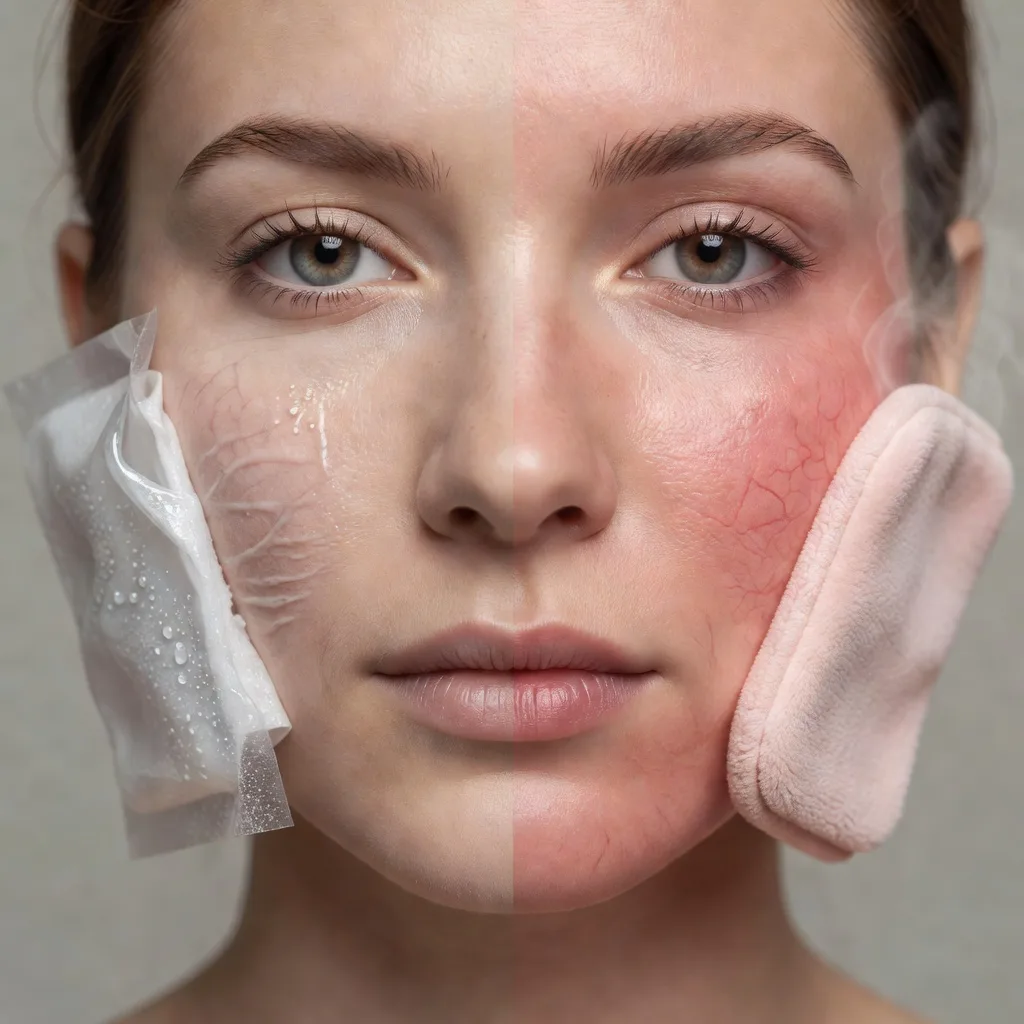
Cold vs Warm Compress for the Face: Effects on Blood Flow and When to Use Each
A cold compress and a warm compress are two of the simplest tools for the face, and they are often recommended for very different problems. Cold for puffy eyes and sunburn, warm for tired muscles and styes. Both work mainly by changing blood flow in the skin, which is why using the wrong one at the wrong time can make things worse rather than better.
Part of our guide to lifestyle and skin. Start with: How Diet Impacts the Skin Microbiome: What the Science Actually Shows
A cold compress narrows blood vessels in the skin, which reduces blood flow, swelling and redness and can numb soreness. It suits puffiness, mild swelling, sunburn, itching and heat-related redness. A warm compress widens blood vessels, increasing blood flow to the area, which relaxes muscles, softens oil and helps with blocked eyelid glands or styes. Use cold for 10 to 15 minutes wrapped in a cloth, warm at a comfortable temperature, and avoid both on broken skin, very sensitive skin or areas with reduced sensation. Warmth can worsen rosacea and flushing, while cold can irritate skin if applied directly or too long.
In short, cold calms and shrinks, while warm opens and relaxes. The best choice depends on what you are trying to treat and how your skin reacts to temperature.
The American Academy of Dermatology recommends cool compresses, baths or showers to relieve the discomfort of sunburn, one of the most common reasons people reach for a cold compress on the face.
This guide explains how temperature changes facial blood flow, when to choose cold or warm, how to use each safely and who should be careful.
Shopping these picks?
Amazon Prime members get fast, free shipping on eligible items, plus Prime Video, Amazon Music and member deals. New members can start with a free trial.
Start a free Prime trialAged 18 to 24? Prime for Young Adults comes with a longer free trial and a lower price after it.
Affiliate link: we may earn a commission at no extra cost to you.
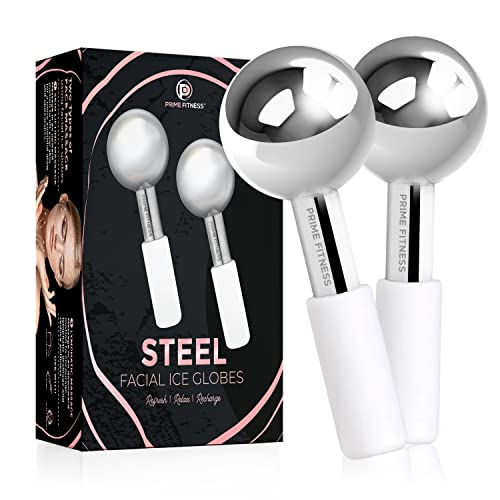
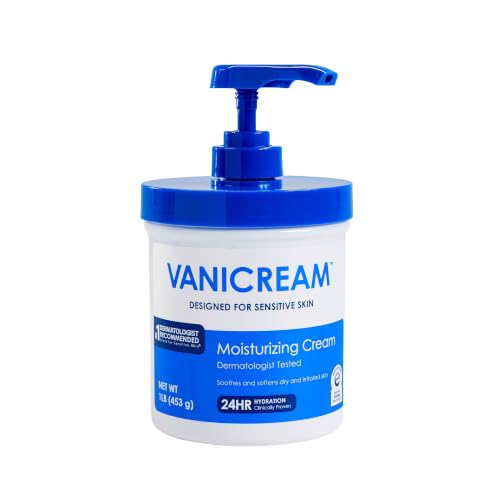
Recommended Cooling Tools and Soothing Skincare




The Short Version
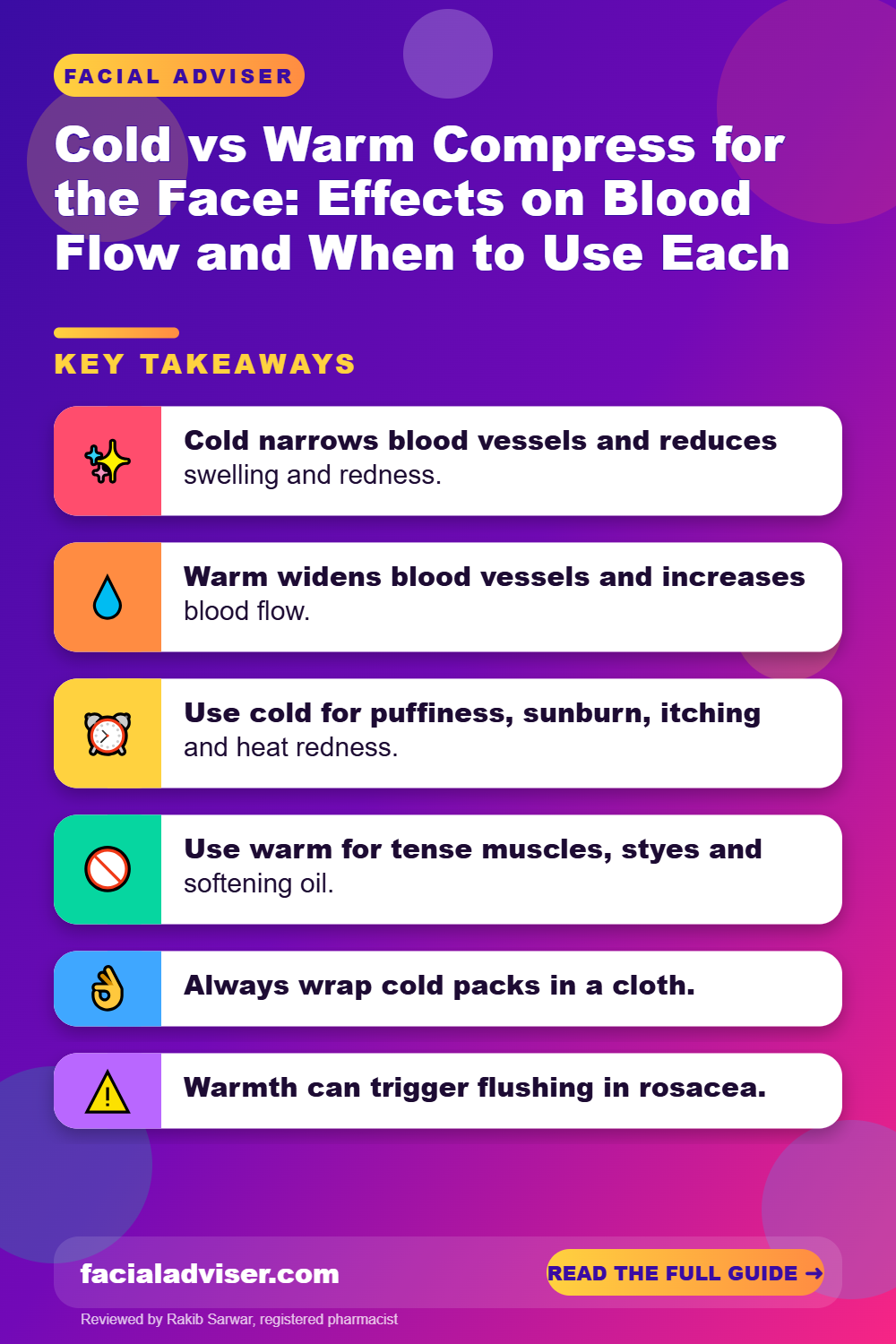
- Cold narrows blood vessels and reduces swelling and redness.
- Warm widens blood vessels and increases blood flow.
- Use cold for puffiness, sunburn, itching and heat redness.
- Use warm for tense muscles, styes and softening oil.
- Always wrap cold packs in a cloth.
- Warmth can trigger flushing in rosacea.
- Limit sessions to about 10 to 15 minutes.
On This Page
- How Temperature Changes Facial Blood Flow
- When to Use a Cold Compress
- When to Use a Warm Compress
- When to Avoid Each
- How to Use a Cold or Warm Compress on Your Face Safely
- Choosing by Skin Type and Condition
- Can You Alternate Cold and Warm?
- Fitting Compresses Into a Skincare Routine
- Common Myths About Hot and Cold on the Face
- Dos and Don’ts
- Honest Limits
- When to See a Doctor
- Common Questions
- Where This Leaves You
How Temperature Changes Facial Blood Flow
The face has a dense network of small blood vessels close to the surface, which is why it flushes easily with heat, exercise, spicy food, alcohol and emotion. Temperature is one of the fastest ways to change how much blood flows through those vessels.
| Effect | Cold compress | Warm compress |
|---|---|---|
| Blood vessels | Narrow (vasoconstriction) | Widen (vasodilation) |
| Blood flow | Decreases temporarily | Increases temporarily |
| Swelling | Reduces | Can increase if already inflamed |
| Redness | Reduces briefly | Increases briefly |
| Muscles | Can feel numbing | Relaxes tension |
| Oil in pores and glands | Firms slightly | Softens |
Both effects are temporary, usually lasting minutes rather than hours. Once the compress is removed, blood flow gradually returns to normal. After cold, there can be a brief rebound where the skin looks slightly pink as vessels widen again. Our guide on how to boost facial circulation naturally explains other everyday influences on blood flow.
When to Use a Cold Compress
Cold is most useful when you want to calm, shrink or numb. It works quickly, which is why it is a popular morning trick before makeup or an important meeting.
- Morning puffiness, especially around the eyes.
- Mild swelling after a minor bump or dental work, as advised by your dentist or doctor.
- Sunburn and heat-related redness.
- Itching from bites or mild irritation.
- Soreness after waxing or a facial treatment.
- Hot, flushed skin after exercise or heat exposure.
The American Academy of Dermatology suggests frequent cool baths or showers and a cool, damp washcloth to soothe sunburn. Our guide on the benefits of cold therapy for skin covers cooling methods in more detail.
Cold helps symptoms but does not treat the cause. Persistent puffiness, swelling or itching needs a look at triggers such as allergies, sleep or skincare.
When to Use a Warm Compress
Warmth is most useful when you want to relax, soften or bring blood to an area. It can also simply feel comforting at the end of a long day, especially if you clench your jaw or carry tension in your face.
- Tension in the jaw and cheek muscles.
- Blocked oil glands along the eyelid, such as a stye, as advised by a doctor.
- Softening oil and debris before gentle cleansing.
- Comfort for sinus pressure around the cheeks and forehead.
- Relaxation before a gentle facial massage.
Hold the compress over closed eyes for several minutes and rewarm it as it cools. Warm compresses are a common first step for styes and blocked eyelid glands, but it is worth checking with a doctor or eye care professional if an eyelid bump is painful, getting worse or affects your vision. Our guide on sinuses and facial pressure explains when facial pressure may need medical attention.
When to Avoid Each
Both cold and warm compresses can cause problems in certain situations.
- Avoid warmth on fresh injuries, swelling or active inflammation, as it can increase swelling.
- Avoid warmth if you have rosacea or flush easily, since heat is a common trigger.
- Avoid cold directly on bare skin, which can cause ice burns.
- Avoid both on broken skin, open wounds or infected areas unless advised by a doctor.
- Be careful with both if you have reduced sensation, poor circulation or conditions such as Raynaud’s.
Never apply ice or frozen packs directly to the face, and never use water that is hot enough to feel uncomfortable. Both can damage skin, especially on the thin skin around the eyes.
Children and older adults may be less able to judge temperature, so check compresses carefully before using them on others. If a compress ever leaves skin white, numb, blistered or very red, stop and let the skin recover.
How to Use a Cold or Warm Compress on Your Face Safely
Choose cold or warm
Cold for swelling, redness and itching; warm for tension and softening.
Prepare the compress
Use a gel pack or cloth soaked in cool water, or a cloth in comfortably warm water.
Wrap cold packs
Always place a thin cloth between a cold pack and your skin.
Test the temperature
Check on your wrist or hand before placing it on your face.
Apply gently
Rest it on the area without pressing hard.
Limit the time
Keep sessions to about 10 to 15 minutes.
Moisturise afterwards
Apply a gentle moisturiser to protect the skin.
For puffy eyes, keep a gel eye mask or two metal spoons in the fridge rather than the freezer. Fridge-cold is soothing without the risk of freezing the delicate skin under the eyes.
Use clean cloths for each session, especially near the eyes, to avoid spreading bacteria. Reusable gel packs should be wiped down after each use and stored in a clean bag in the fridge or freezer. If you use a warm compress, rewarm the cloth in clean water rather than reusing the same water for a long session, and keep it well away from children’s reach if you heat water on the stove.
Choosing by Skin Type and Condition
Your skin type and any conditions you have affect which temperature suits you.
| Skin or condition | Cold | Warm |
|---|---|---|
| Rosacea or easy flushing | Often soothing if not too cold | Usually best avoided |
| Acne-prone skin | Can calm red, swollen spots briefly | Can soften oil before cleansing |
| Eczema | Cool compresses can ease itching | Heat can worsen itching |
| Dry or sensitive skin | Brief use, then moisturise | Lukewarm only |
| Puffy morning skin | Helpful | Not helpful |
If you have rosacea, heat from hot water, saunas and warm compresses is a common trigger. Our guide on facial flushing after exercise explains how heat affects facial blood vessels.
For eczema, cool compresses followed by a thick, fragrance-free moisturiser can calm itching and reduce the urge to scratch, which helps the skin heal. The American Academy of Dermatology explains that contact dermatitis and other itchy rashes often feel better with cool, soothing care.
Can You Alternate Cold and Warm?
Some people alternate warm and cold, sometimes called contrast therapy, to feel refreshed. There is little good evidence that this improves skin health, though some find it pleasant. The rapid switch between vessel widening and narrowing may leave skin looking rosy for a while, which some people mistake for a lasting improvement.
If you try it, keep temperatures moderate, finish with cool rather than warm if you want less redness, and skip it altogether if you have rosacea, broken capillaries or sensitive skin. It is not a treatment for any skin condition.
Fitting Compresses Into a Skincare Routine
A cold compress works well in the morning, before moisturiser and makeup, to reduce puffiness. A cooled roller or gel mask for a few minutes is usually enough. A warm compress fits best in the evening before cleansing, when softening oil and relaxing the face is more useful.
After either, apply a moisturiser suited to your skin, ideally while the skin is still slightly damp. Cold can leave skin feeling slightly tight, and warm water can dry the surface. Daily sunscreen is still the most important step for long-term skin health, whatever else you add.
Common Myths About Hot and Cold on the Face
- Myth: cold water closes pores. Pores do not open and close; cold only makes skin feel tighter briefly.
- Myth: steam or heat opens pores. Warmth softens oil but does not change pore size.
- Myth: ice facials remove wrinkles. They can reduce puffiness for a short time but do not change wrinkles.
- Myth: more cold is always better. Very cold or long exposure can damage skin.
- Myth: warm compresses detox the skin. The body does not remove toxins through facial pores in this way.
These myths are common on social media, where ice facials and steaming routines are often shown with dramatic before-and-after photos. The visible effects are real but short-lived, and they mostly come from changes in blood flow and fluid rather than lasting changes in the skin.
Our guide on whether cold water closes pores explains the pore myth in more detail.
Dos and Don’ts
Good Habits
- Use cold for swelling and redness
- Use warm for tension and softening
- Wrap cold packs in a cloth
- Test the temperature first
- Moisturise afterwards
Common Mistakes
- Put ice directly on skin
- Use hot water on the face
- Use warmth on fresh swelling
- Use heat if you have rosacea
- Leave compresses on for long periods
Honest Limits
Cold and warm compresses change blood flow only briefly. They can make skin look and feel better for a while, but they do not cure puffiness, rosacea, acne or aging. If you need a compress every day to feel comfortable, it is worth looking for the underlying cause, such as allergies, poor sleep, a skin condition or a product that irritates your skin.
Research on compresses for cosmetic skin concerns is limited. Most advice is based on how blood vessels respond to temperature and on practical dermatology guidance. People also differ in how sensitive they are to temperature, so what feels soothing for one person may feel uncomfortable for another.
When to See a Doctor
- Facial swelling is sudden, severe or on one side only.
- You have swelling of the lips, tongue or throat, or trouble breathing.
- An eyelid bump is painful, spreading or affects vision.
- Redness, warmth and pain suggest infection.
This article is for general information and does not replace professional medical advice. Seek emergency care for facial swelling with breathing difficulty, and see a doctor for severe, persistent or one-sided swelling.
Common Questions
Is a cold or warm compress better for puffy eyes?
A cold compress, since it narrows blood vessels and reduces swelling.
Does a warm compress increase blood flow to the face?
Yes, warmth widens blood vessels temporarily.
Can I put ice directly on my face?
No, always wrap it in a cloth to avoid ice burns.
Is a warm compress good for acne?
It can soften oil before cleansing, but do not use it on inflamed spots for long.
Should I use cold or warm for sunburn?
Cool compresses soothe sunburn.
Is heat bad for rosacea?
Heat is a common trigger for rosacea flushing.
How long should I use a compress?
About 10 to 15 minutes.
Can I use a warm compress for a stye?
It is a common first step, but see a doctor if it worsens.
Does cold therapy tighten pores?
It may make skin feel tighter briefly but does not change pore size.
Can I alternate hot and cold on my face?
You can, but evidence for skin benefits is limited.
Where This Leaves You
A cold compress narrows blood vessels to reduce swelling, redness and itching, while a warm compress widens them to relax muscles and soften oil. Choose cold for puffiness, sunburn and heat redness, and warm for tension and blocked eyelid glands.
Always wrap cold packs, keep warm compresses comfortable, limit sessions to about 15 minutes and avoid heat if you have rosacea. See a doctor for sudden, severe or one-sided swelling.

Written by
Registered pharmacist and founder of Facial Adviser. Rakib's pharmacy training covers how skincare actives work and interact; a later course in cosmetology turned that into a focus on facial treatments and skincare products. He plans, researches and edits every guide on the site and checks health claims against sources such as the American Academy of Dermatology, the FDA and the NIH. He is not a dermatologist; see the Editorial Policy and Medical Disclaimer.
About · Editorial policy · How we choose products · Medical disclaimer · Contact
Keep reading: Diet, sleep, stress and skin
- How Diet Impacts the Skin Microbiome: What the Science Actually Shows
- Can Vitamin D Deficiency Cause Acne? What Studies Show
- Can Iron Deficiency Cause Pale Skin? Signs, Tests and Fixes
- How Hormones Control Oil Production in Your Skin
- Facial Nerve Sensitivity: Why Your Face Stings, Burns or Flushes
- What Alcohol Does to Your Face Overnight (and Over Time)