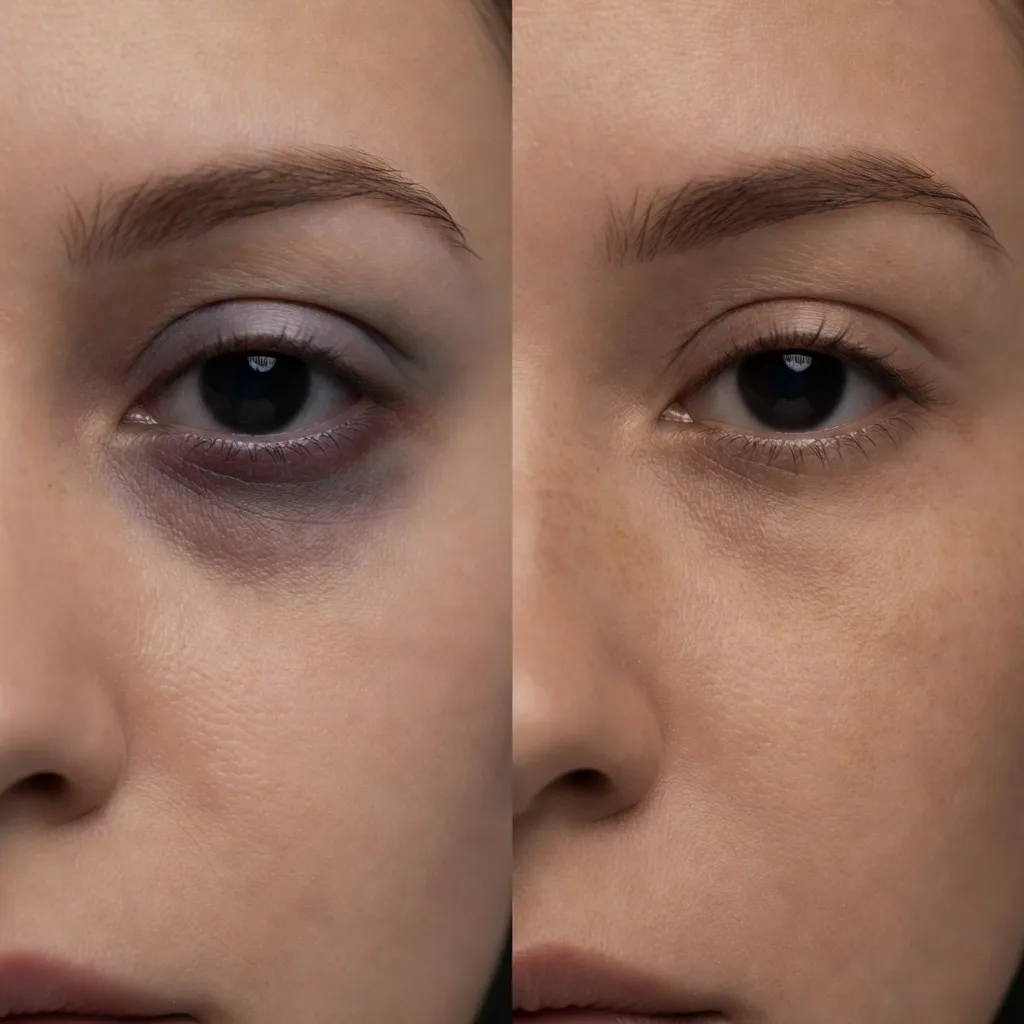
Dark Circles vs Hyperpigmentation Under Eyes: How to Tell Them Apart
Dark under-eyes are one of the most common skin concerns, but the darkness is not always the same thing. Some of it is shadow, some is blood vessels showing through thin skin, and some is true pigment in the skin itself. The words dark circles and hyperpigmentation are often used for all of these, which makes choosing the right treatment confusing.
Part of our guide to makeup how-to. Start with: How to Choose the Right Eye Makeup Color for Your Eyes and Skin
Dark circles is a broad term for any darkness under the eyes, while under-eye hyperpigmentation is one specific cause of it: extra melanin that makes the skin brown or grey-brown. Other types of dark circles come from blood vessels showing through thin skin, which looks blue, purple or pink, and from shadows cast by a tear trough, hollowing or puffiness. A quick way to tell them apart is to gently stretch the skin: pigment stays the same colour, vessels may fade slightly and shadows change with lighting and head position. Pigment responds best to sun protection and brightening ingredients, vascular darkness to sleep, cooling and time, and structural shadows to professional treatments such as fillers.
In short: hyperpigmentation is one cause of dark circles, and knowing which type you have tells you what will actually help.
A systematic review in Dermatologic Surgery grouped periorbital darkness into pigmentary, structural, vascular and mixed types, and found that topical creams and peels were most useful for pigment-based darkness, fillers for volume loss and lasers for some vascular and pigment cases.
This guide explains the differences, how to check which type you have and which treatments fit each.
Shopping these picks?
Amazon Prime members get fast, free shipping on eligible items, plus Prime Video, Amazon Music and member deals. New members can start with a free trial.
Start a free Prime trialAged 18 to 24? Prime for Young Adults comes with a longer free trial and a lower price after it.
Affiliate link: we may earn a commission at no extra cost to you.
Recommended Products for Under-Eye Darkness and Pigment
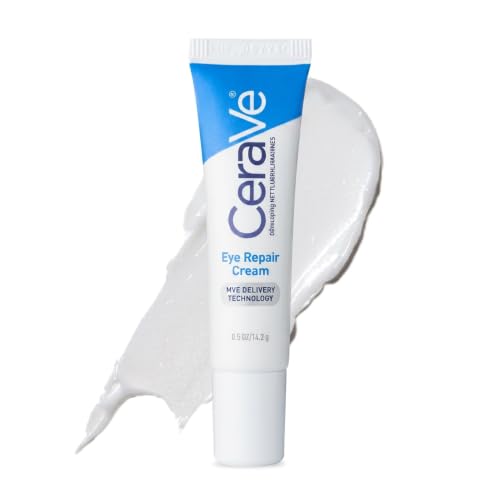
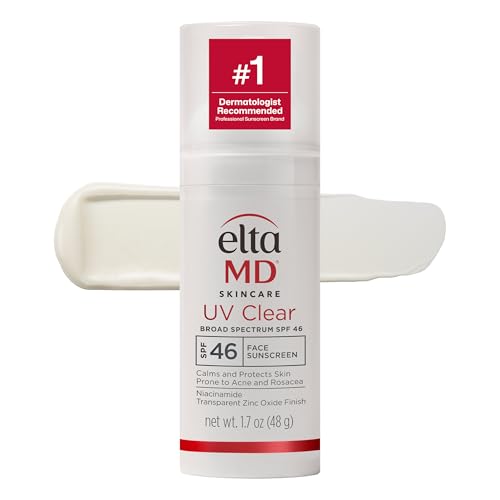


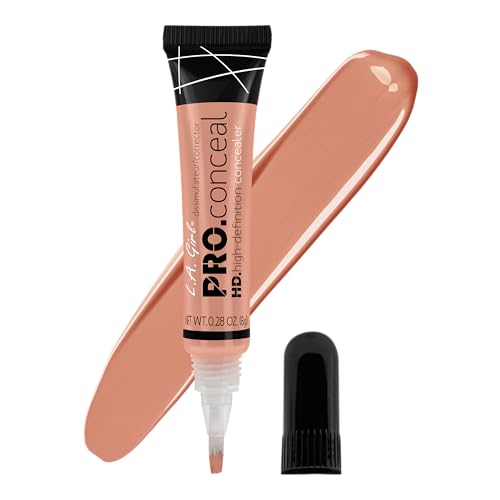

Quick Answer
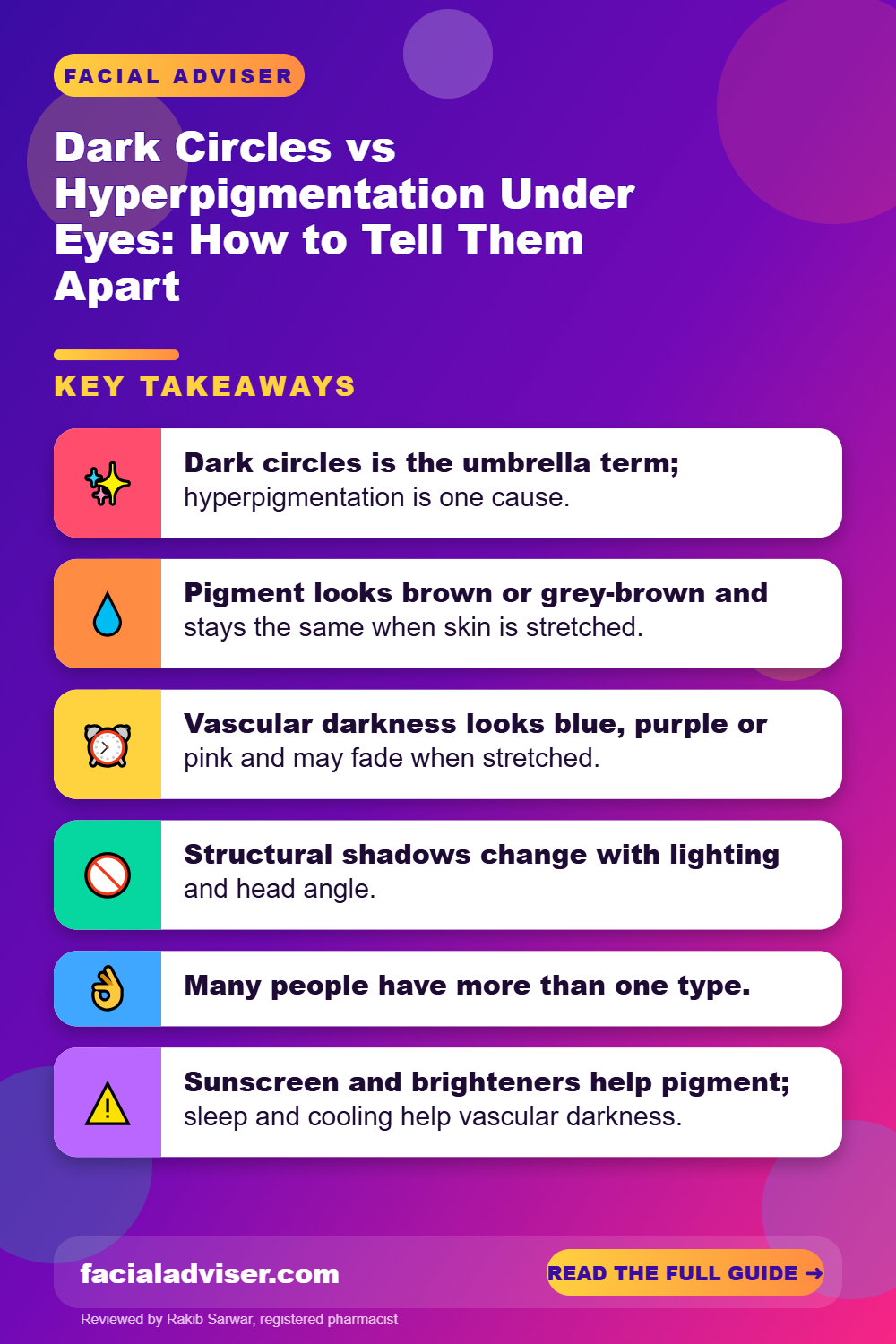
- Dark circles is the umbrella term; hyperpigmentation is one cause.
- Pigment looks brown or grey-brown and stays the same when skin is stretched.
- Vascular darkness looks blue, purple or pink and may fade when stretched.
- Structural shadows change with lighting and head angle.
- Many people have more than one type.
- Sunscreen and brighteners help pigment; sleep and cooling help vascular darkness.
- Hollows and deep shadows respond best to professional treatment.
In This Guide
- Dark Circles vs Hyperpigmentation at a Glance
- What Under-Eye Hyperpigmentation Is
- What Other Kinds of Dark Circles Are
- How to Check Which Type of Under-Eye Darkness You Have
- How to Treat Under-Eye Hyperpigmentation
- How to Treat Vascular and Structural Dark Circles
- Covering Each Type With Makeup
- Preventing Under-Eye Darkness From Getting Worse
- Under-Eye Darkness Across Skin Tones
- Dos and Don’ts
- Honest Limits
- When to See a Dermatologist
- Your Questions, Answered
- Where This Leaves You
Dark Circles vs Hyperpigmentation at a Glance
This comparison shows how the main types of under-eye darkness differ. Use it alongside the home checks further down to narrow down which types you have.
| Feature | Pigment (hyperpigmentation) | Vascular | Structural (shadow) |
|---|---|---|---|
| Colour | Brown, grey-brown | Blue, purple, pinkish | Dark grey shadow |
| Stretch test | Colour stays | May lighten slightly | Shadow reduces or disappears |
| Changes with light | Little | A little | A lot |
| Common triggers | Sun, genetics, rubbing, allergies | Thin skin, tiredness | Tear trough, ageing, volume loss |
| More common in | Medium to deep skin tones | Fair skin | Any skin, especially with age |
| Best approach | Sunscreen, brighteners, peels | Sleep, cooling, hydrating care | Fillers or surgery |
Most people have a mix of types, and the balance can change with age, season and lifestyle. For example, you might have some brown pigment plus a hollow that casts a shadow, which is why a single product rarely solves everything. Treating the most noticeable type first usually gives the biggest visible improvement.
What Under-Eye Hyperpigmentation Is
Under-eye hyperpigmentation is extra melanin in the skin around the eyes. It is often inherited and is especially common in people with medium to deep skin tones. It may extend onto the upper eyelids and sometimes across the inner corner of the eye towards the nose.
- Genetics: many families share the same pattern of under-eye pigment.
- Sun exposure: UV light increases melanin production, including around the eyes.
- Rubbing and scratching: friction from allergies or habit can darken the skin.
- Inflammation: eczema or dermatitis around the eyes can leave darker skin behind.
- Hormones: can play a part alongside other pigment changes on the face.
Because pigment sits in the skin, it does not change much with sleep or hydration. It responds slowly, over weeks to months, to daily sun protection and brightening ingredients. Consistency matters more than strength: a gentle product used every day usually does more than a harsh one used occasionally.
What Other Kinds of Dark Circles Are
When the darkness is not pigment, it usually comes from blood vessels or shadows. These types tend to change from day to day, which is a helpful clue.
- Vascular darkness: very thin lower eyelid skin lets the blue or purple colour of vessels and muscle show through. It often looks worse when you are tired, unwell or have allergies.
- Structural shadows: a tear trough, loss of volume under the eyes or puffy bags can cast a shadow that looks like a dark circle.
- Puffiness: swelling from salt, alcohol, allergies or poor sleep creates a shadow below it.
- Ageing: skin thins and loses support over time, making vessels and hollows more visible.
Our guides on whether dehydration causes dark circles and puffy eyes after salty food cover two common everyday triggers.
How to Check Which Type of Under-Eye Darkness You Have
These simple checks at home can point you in the right direction. A dermatologist can confirm the type, sometimes using a special lamp or magnifier to see how deep the pigment sits.
Use natural light
Stand facing a window without makeup.
Look at the colour
Brown or grey-brown suggests pigment; blue or purple suggests vessels.
Do the stretch test
Gently stretch the skin sideways with a clean finger and watch the colour.
Tilt your head
Look down and then up; if the darkness changes a lot, shadows are involved.
Check the other areas
Pigment may also appear on eyelids; puffiness may sit below the darkness.
Take photos over a week
Compare mornings after good and poor sleep.
Note triggers
Record allergies, rubbing, sun exposure and late nights.
Take your comparison photos in the same spot and light each day. Changes in lighting can make shadows look much worse or better than they really are.
How to Treat Under-Eye Hyperpigmentation
Pigment-based darkness responds to steady, gentle care. Results take time, usually two to three months or more, and stopping sun protection can undo progress quickly.
- Daily sunscreen: apply around the eyes, taking care not to get it in them, and wear sunglasses.
- Brightening ingredients: vitamin C, niacinamide, azelaic acid, alpha arbutin and tranexamic acid may help fade pigment over time.
- Stop rubbing: treat allergies and avoid rubbing or scratching the eyes.
- Prescription options: a dermatologist may suggest stronger creams, chemical peels or lasers.
The skin around the eyes is thin and easily irritated. Keep face serums with acids or strong actives at least a finger width away from the lash line unless the product is designed for the eye area, and stop if you get stinging, redness or watering. Do not use bleaching creams bought without a prescription around the eyes.
The Dermatologic Surgery review found that topical creams and chemical peels were useful for pigment-based darkness. You can read the review abstract on PubMed.
How to Treat Vascular and Structural Dark Circles
When the darkness comes from vessels or shadows, brightening creams have little effect. Other approaches work better, and some of the most effective ones are simple lifestyle changes.
| Type | At-home help | Professional options |
|---|---|---|
| Vascular | Sleep, cooling compresses, hydrating eye cream, allergy control | Some lasers |
| Puffiness | Less salt and alcohol, sleeping with head raised, caffeine eye gel | Treating underlying causes |
| Tear trough or hollowing | Light-reflecting concealer | Fillers or fat grafting |
| Skin laxity | Retinoid eye creams used gently | Laser resurfacing or eyelid surgery |
According to the same review, fillers and fat grafting worked best for darkness caused by volume loss, and eyelid surgery for excess loose skin. These are medical procedures with risks and recovery time, so they are worth discussing with a board-certified dermatologist or surgeon who can assess your eye area in person.
Covering Each Type With Makeup
Makeup can hide any type of under-eye darkness while treatments work. The trick is to match the corrector to the colour you see and keep the layers thin.
- Brown pigment on lighter skin: a peach or salmon corrector under concealer.
- Brown or grey pigment on deeper skin: an orange or red corrector under concealer.
- Blue or purple vessels: peach or bisque corrector, then a concealer matching your skin.
- Shadows and hollows: a light-reflecting concealer only in the hollow, not over the whole area.
Our guide on how colour correctors neutralise undertones explains how to choose and apply them. Set concealer with only a light dusting of powder, because heavy powder settles into fine lines and can make the area look grey.
Preventing Under-Eye Darkness From Getting Worse
You cannot change genetics, but you can stop most types of under-eye darkness from getting worse. These habits help whichever type you have.
- Wear sunscreen and wraparound sunglasses every day, including on cloudy days, because UV light reaches the skin through cloud cover.
- Treat allergies and eczema around the eyes.
- Avoid rubbing your eyes, especially when removing makeup.
- Get regular sleep, limit alcohol and keep salty meals away from bedtime to reduce morning puffiness.
- Use gentle, fragrance-free products around the eyes.
Makeup removers and wipes can cause rubbing. Hold an oil cleanser or micellar water on a pad over the eye for a few seconds, then wipe gently downward rather than scrubbing.
Under-Eye Darkness Across Skin Tones
The same type of dark circle can look quite different depending on your skin tone, which is one reason advice online can be confusing.
- Fair skin: vascular darkness is common and often looks blue, purple or pinkish because the skin is thin and light.
- Light to medium skin: a mix of vascular and pigment types is common, sometimes with a brownish tint and some shadow.
- Medium to deep skin: pigment-based darkness is especially common and often looks brown, grey-brown or ashy.
- All skin tones: hollows and tear troughs cause shadows as skin loses volume with age.
People with deeper skin tones should be particularly cautious with strong peels, lasers and bleaching agents around the eyes, because irritation can trigger more pigment. A dermatologist experienced in treating skin of colour can recommend options that lower this risk, such as gentler brightening ingredients and careful sun protection.
Dos and Don’ts
Try This
- Identify the type of darkness first
- Wear sunscreen and sunglasses daily
- Be patient with brightening products
- Treat allergies and stop rubbing
- See a dermatologist for hollows and deep shadows
Avoid This
- Expect one product to fix every type
- Put strong acids close to the lash line
- Use unprescribed bleaching creams near the eyes
- Rub or scrub the under-eye area
- Ignore sudden or one-sided darkening
Honest Limits
Research on under-eye darkness is limited, and many studies are small. The Dermatologic Surgery review itself noted a scarcity of high-quality evidence and advised interpreting results carefully.
Home checks such as the stretch test are helpful but not perfect, and most people have more than one type of darkness. Topical products can fade pigment slowly but will not change the shape of the eye area, and results vary a lot from person to person. For a clear diagnosis and a realistic plan, a dermatologist is the best next step.
When to See a Dermatologist
- Under-eye darkness is getting darker or spreading.
- Darkness appears suddenly or on one side only.
- You have itching, scaling or a rash around the eyes.
- You want to discuss peels, lasers, fillers or prescription creams.
This article is for general information and does not replace professional medical advice. See a doctor promptly for sudden, painful or one-sided changes around the eyes, and a board-certified dermatologist for diagnosis and treatment of under-eye darkness.
Your Questions, Answered
What is the difference between dark circles and hyperpigmentation?
Dark circles is a broad term; hyperpigmentation is one cause, from extra melanin.
How can I tell if my dark circles are pigment?
Pigment looks brown and stays the same when you stretch the skin.
Why are my dark circles blue or purple?
Thin skin lets blood vessels show through.
Can dark circles be caused by shadows?
Yes, tear troughs, hollows and puffiness cast shadows.
What helps under-eye hyperpigmentation?
Sunscreen, brightening ingredients and sometimes peels or lasers.
Does vitamin C help dark circles?
It may help pigment-based darkness over time.
Can fillers fix dark circles?
They can help darkness caused by hollowing.
Is under-eye hyperpigmentation genetic?
Often yes, especially in medium to deep skin tones.
Does lack of sleep cause hyperpigmentation?
No, but it can make vascular darkness more visible.
How long do under-eye brighteners take to work?
Usually two to three months or more.
Where This Leaves You
Dark circles is an umbrella term for under-eye darkness, while hyperpigmentation is one specific cause from extra melanin. Vascular darkness and structural shadows are the other common types, and many people have a mix.
Check which type you have with the stretch and lighting tests, protect the area from sun, be gentle and patient, and see a dermatologist for hollows, deep shadows or any sudden change.

Written by
Registered pharmacist and founder of Facial Adviser. Rakib's pharmacy training covers how skincare actives work and interact; a later course in cosmetology turned that into a focus on facial treatments and skincare products. He plans, researches and edits every guide on the site and checks health claims against sources such as the American Academy of Dermatology, the FDA and the NIH. He is not a dermatologist; see the Editorial Policy and Medical Disclaimer.
About · Editorial policy · How we choose products · Medical disclaimer · Contact
Keep reading: Eye makeup
- How to Choose the Right Eye Makeup Color for Your Eyes and Skin
- How to Fix Translucent Under-Eye Skin: Visible Veins and What Really Helps
- How to Blend Eyeshadow on Hooded Eyes So It Actually Shows
- Why Some Mascaras Smudge (and How to Stop Raccoon Eyes)
- What Causes Mascara Clumping and How to Get Clean, Separated Lashes
- 10 Tips to Prevent Creasing Under Eyes (Concealer That Stays Smooth)
- How to Properly Put On Face Makeup: The Right Order, Step by Step
- How to Choose Lipstick Shade: Undertone, Skin Tone and Testing Tips