Makeup Tips for Women Over 60: A Fresher, Lighter Approach
If the makeup that worked for you for decades suddenly looks heavier, settles into lines, or seems to make you look tired rather than refreshed, you are not imagining it. Skin changes with age, and makeup that suited it at 40 may not suit it at 60 and beyond.
Part of our guide to makeup how-to. Start with: How to Properly Put On Face Makeup: The Right Order, Step by Step
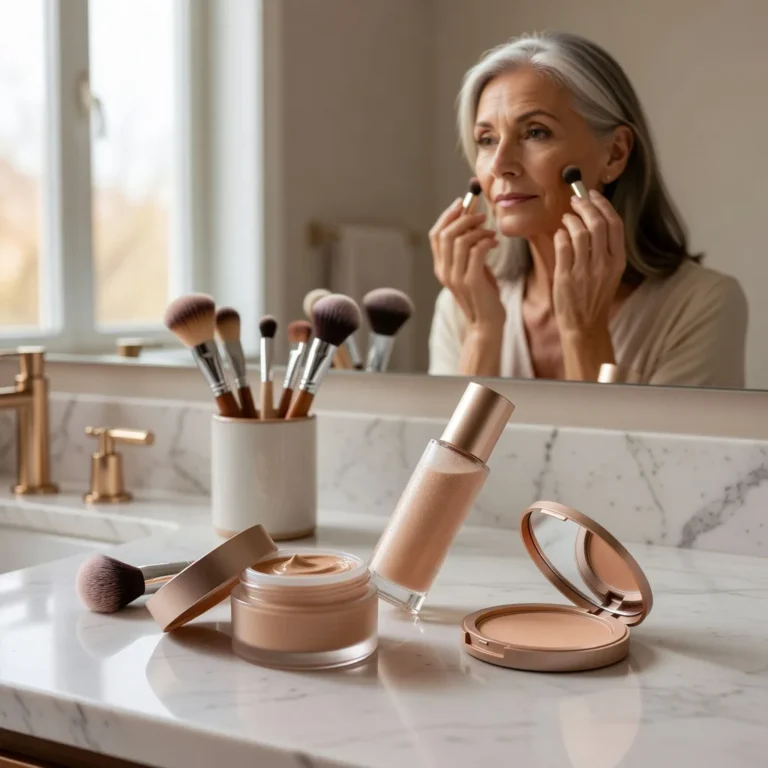
After 60, the most flattering makeup is usually lighter, creamier, and more targeted: hydrated skin, a thin base, concealer only where needed, defined brows, cream blush placed higher on the cheeks, and lips with a little definition. Heavy powder, thick foundation, and very matte or glittery formulas tend to exaggerate texture.
The reasons are partly biological. Skin gets thinner and drier with age, produces less oil, and loses collagen. The American Academy of Dermatology notes that women lose about 30 percent of their skin’s collagen in the first five years after menopause. Less collagen and oil means products are more likely to cling to dry areas and sink into lines.
This is not about hiding your age. It is about choosing formulas and techniques that work with your skin as it is now, so you look like yourself, just brighter and more rested. Many women find they actually need fewer products now, not more.
This guide covers a quick way to review your current routine, what to change in skin prep, base, eyes, brows, cheeks, and lips, tips for glasses and tools, and when skin changes are worth showing a dermatologist.
Shopping these picks?
Amazon Prime members get fast, free shipping on eligible items, plus Prime Video, Amazon Music and member deals. New members can start with a free trial.
Start a free Prime trialAged 18 to 24? Prime for Young Adults comes with a longer free trial and a lower price after it.
Affiliate link: we may earn a commission at no extra cost to you.
Recommended Makeup for Mature Skin



In Brief
- Mature skin is usually drier and thinner, so lighter, creamier makeup tends to look more natural.
- The AAD notes women lose about 30 percent of skin collagen in the first five years after menopause.
- Hydrating skin well before makeup is the biggest single improvement for most people.
- Use concealer where needed instead of heavy all-over foundation.
- Brows often thin with age, and filling them lightly frames the face.
- Place cream blush slightly higher on the cheeks for a lifted look.
- Lip liner helps prevent lipstick from bleeding into fine lines around the mouth.
What This Covers
- How Skin Changes After 60
- A Quick Review of Your Current Routine
- Skin Prep Matters More Than Ever
- Base: Lighter, Creamier, More Targeted
- Eyes and Brows
- Cheeks and Lips
- If You Wear Glasses
- Tools That Make It Easier
- What to Swap as Your Skin Changes
- What Makeup Can and Cannot Do
- Skin Changes Worth Showing a Dermatologist
- Frequently Asked Questions
- The Bottom Line
How Skin Changes After 60
Several changes affect how makeup looks and wears:
- Drier skin: oil production falls, especially after menopause, so skin can feel tight and look dull.
- Thinner skin: collagen and elastin decline, making skin more delicate and lines more visible.
- Uneven tone: sun damage can show up as spots, redness, or uneven pigment.
- Changes in the eyes: eyelids may become hooded, and lashes and brows often thin.
- Lips: lips may lose some fullness and definition, and fine lines around the mouth can cause lipstick to bleed.
None of these mean you have to stop wearing makeup. They simply mean some products and techniques will work better than others.
A Quick Review of Your Current Routine
Before buying anything new, look at what you already use.
Apply your usual makeup and wait an hour
Then look in natural daylight with a handheld mirror. This shows how makeup wears, not just how it looks right after applying.
Check for settling
Look at the lines around your eyes, mouth, and forehead. If makeup has collected there, your base or powder may be too heavy or too dry.
Check for dry patches
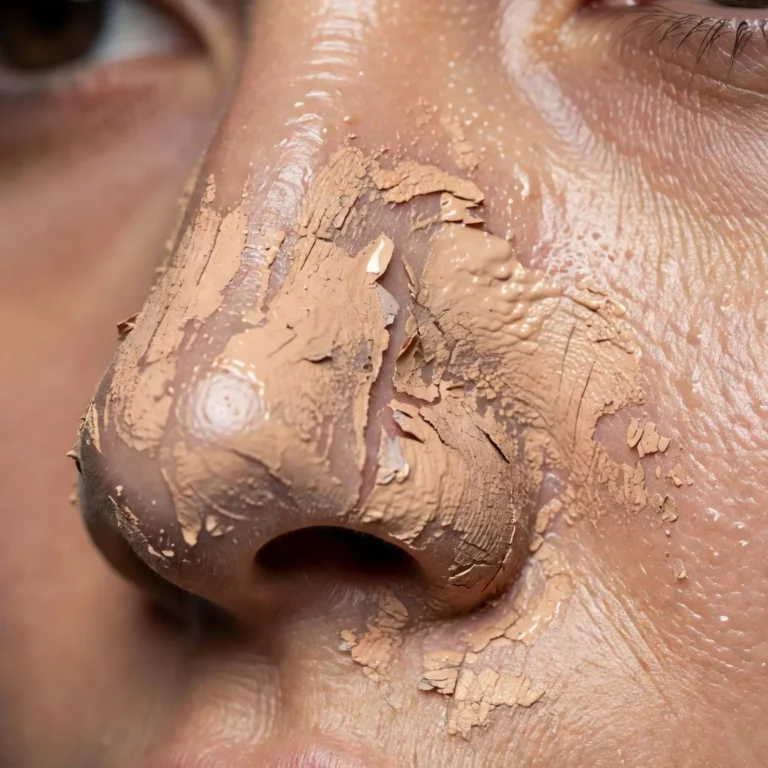
Look for flakes or areas where foundation clings, often around the nose and cheeks. This points to a need for more hydration or a creamier formula.
Look at your color
Notice whether your blush, lipstick, and eyeshadow brighten your face or look harsh. Very dark or very frosty shades often look heavier now.
Keep, change, or drop
Keep products that look fresh after an hour, change those that settle or cling, and drop anything you no longer need.
Good lighting makes a huge difference. Apply makeup facing a window or a daylight-balanced light, and use a magnifying mirror only for details, not the full face.
Skin Prep Matters More Than Ever
Well-hydrated skin is the foundation of fresh makeup after 60. Cleanse gently, then apply a hydrating serum if you like and a moisturizer suited to your skin. Many people benefit from a richer cream in the morning than they used when younger.
Always apply broad-spectrum sunscreen of SPF 30 or higher in the morning. It protects against further sun damage and can double as a primer if it has a smooth texture.
Give skincare a few minutes to absorb before makeup. If you use a retinoid at night, you may need extra hydration during the day. Our guide to starting retinol smoothly explains how to manage dryness.
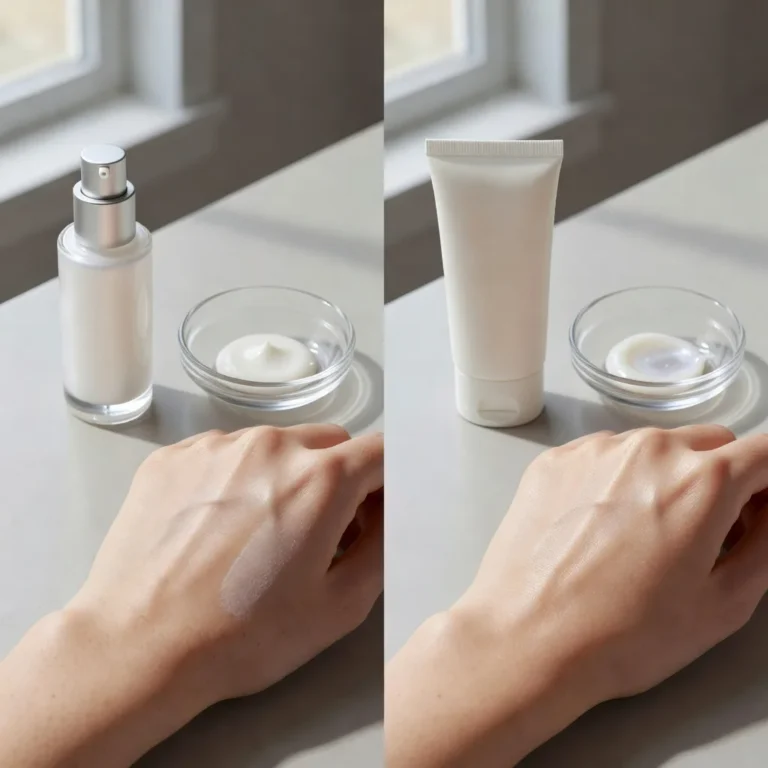
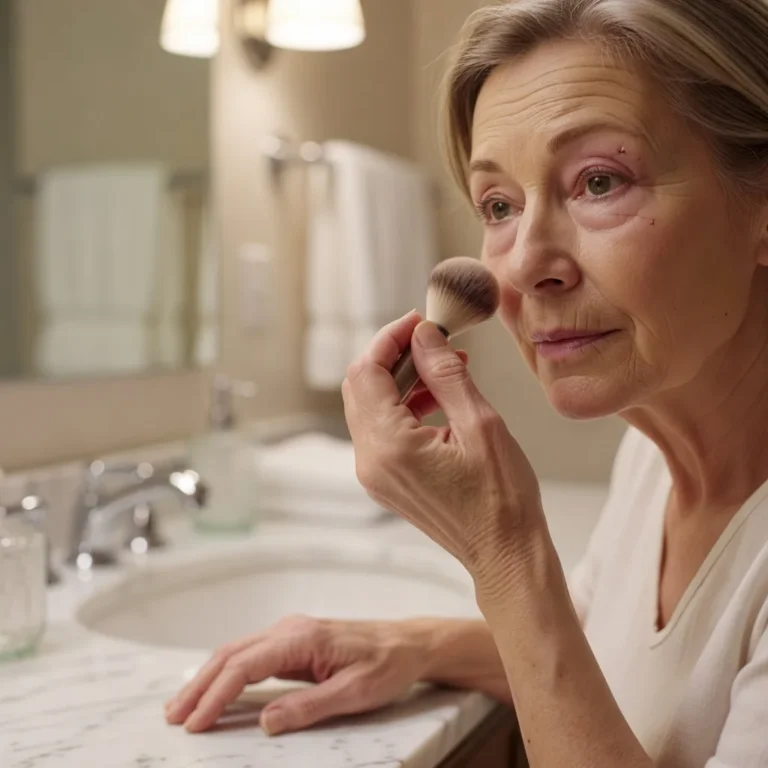
A simple trick is to apply moisturizer, wait a minute, then press a second thin layer onto areas that tend to look dry, such as around the nose, mouth, and under the eyes. Those are the spots where makeup most often clings or settles.
Base: Lighter, Creamier, More Targeted
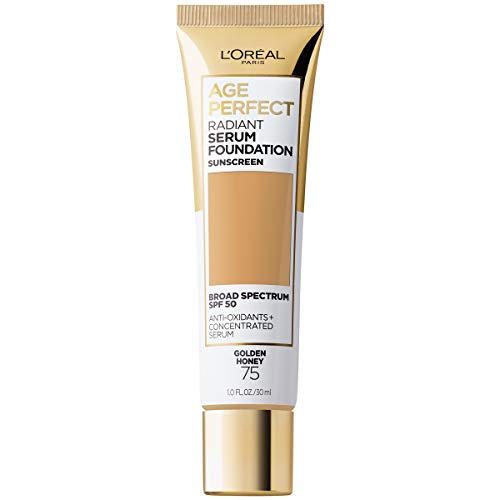
Heavy, full-coverage foundations can look mask-like and collect in lines. Instead, try a hydrating, light- to medium-coverage foundation, serum foundation, or tinted moisturizer.
Apply a small amount with fingers or a damp sponge, focusing on the center of the face, where redness and uneven tone are most common, and blend outward. Use concealer only where you need it: the inner corners of the eyes, around the nose, and on spots.
Use powder sparingly. If you need it, press a very light layer of finely milled translucent powder only on the T-zone. Heavy powder dries out mature skin and makes lines more visible.
If makeup looks heavy by midday, our guide to fixing cakey makeup has quick fixes.
Eyes and Brows
Eyes often benefit from subtle definition rather than heavy color.
- Use matte or satin eyeshadows in soft neutrals. Very shimmery shades can highlight crepey texture.
- If your lids are hooded, apply a slightly deeper shade just above the crease, where it will show when your eyes are open.
- Use a soft pencil or powder liner close to the upper lash line rather than a heavy liquid line.
- Curl lashes gently and apply mascara mainly to the roots and upper lashes.
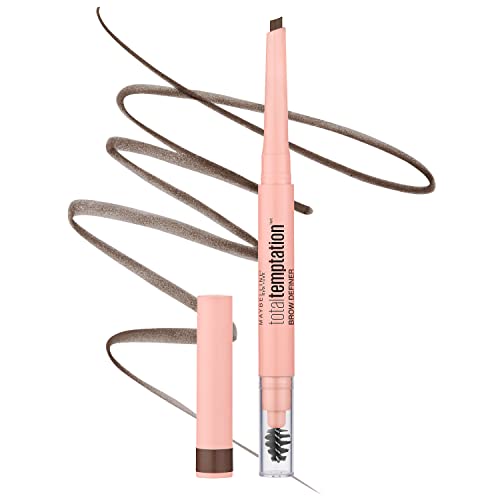
- Fill brows lightly with a pencil or powder in a shade close to your natural hair color, using small, hair-like strokes.
Brows frame the face, and thinning brows are one of the most common age-related changes. Filling them softly can make a bigger difference than any eyeshadow.
Cheeks and Lips
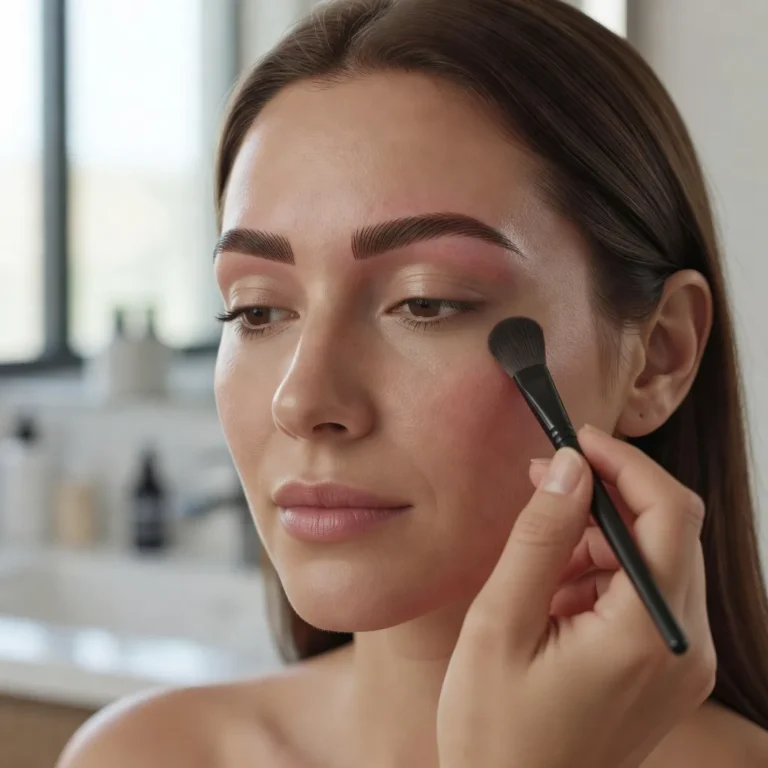
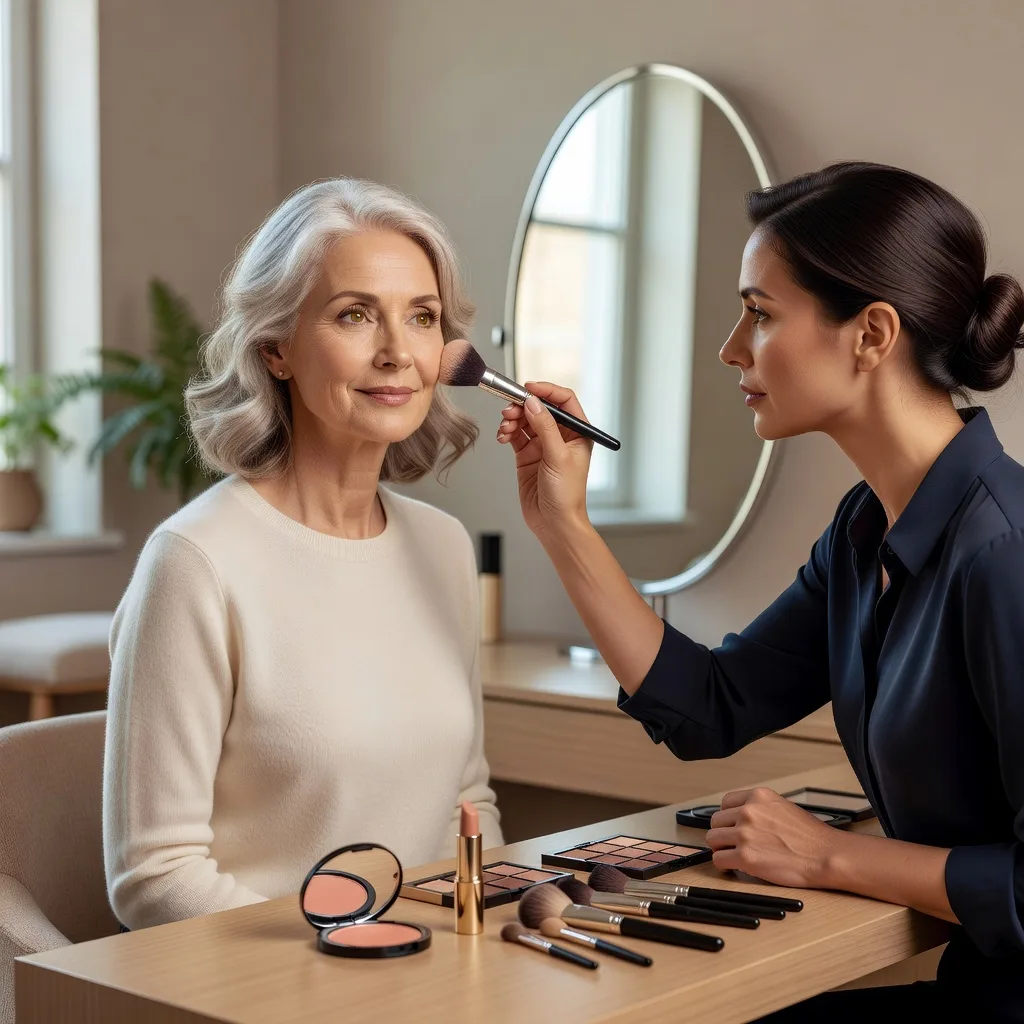
Cream blush looks fresh on mature skin because it melts in rather than sitting on top. Smile slightly and tap blush onto the upper part of the cheeks, then blend upward toward the temples. Placing blush higher gives a lifted look.
Choose soft rose, peach, or berry shades rather than very pale or very bright colors.
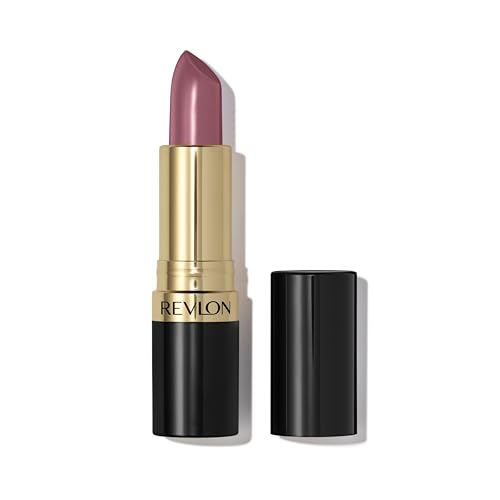
For lips, start with a lip balm, then line the lips with a pencil that matches your lip color or lipstick. Lip liner creates a barrier that helps prevent color from bleeding into fine lines. Choose creamy, hydrating lipsticks over very matte or long-wear liquid formulas, which can be drying.
Try This
- Use cream blush higher on the cheeks.
- Line lips before applying lipstick.
- Choose satin or creamy lipstick finishes.
- Blot lipstick lightly for a softer look.
- Carry a lip balm for touch-ups.
Avoid This
- Apply blush low on the cheeks.
- Use very dark lip liner with a light lipstick.
- Choose very matte, drying lip formulas.
- Use heavy glitter or frosted finishes.
- Skip lip balm under lipstick.
If You Wear Glasses
Many people over 60 wear glasses for reading or all day, and frames change how makeup looks.
- Reading glasses and magnifying lenses make eyes look larger, so keep eye makeup soft and well blended, and check for mascara smudges.
- Distance lenses can make eyes look smaller, so a little more definition with liner and mascara at the outer corners can help.
- Frames cast shadows under the eyes, so a touch of brightening concealer at the inner corners balances them.
- Nose pads rub off foundation, so keep the nose base light and set it with a little powder.
- Strong frames pair well with defined brows, which keep the face from looking washed out behind them.
If you need glasses to see your face clearly while applying makeup, a magnifying mirror with good lighting can help, but step back and check the overall effect at a normal distance before you finish.
Tools That Make It Easier
The right tools help if your eyesight or hand steadiness has changed.
Fingers are often the easiest tool for cream foundation, concealer, and blush, since they warm the product and give you good control. A damp sponge helps blend edges softly. Short, chunky pencils for brows and lips are easier to hold than very thin ones, and mechanical pencils avoid the need for sharpening.
For mascara, resting your elbow on a table steadies your hand. For eyeliner, looking down into a mirror placed below eye level makes it easier to reach the lash line without pulling the lid.
What to Swap as Your Skin Changes
| Product | May have worked before | Often works better after 60 |
|---|---|---|
| Foundation | Full-coverage matte | Light, hydrating, or serum foundation |
| Powder | All over | Light, only on T-zone |
| Eyeshadow | Frosty or glittery | Matte or soft satin |
| Eyeliner | Heavy liquid line | Soft pencil or powder |
| Blush | Powder, low on cheeks | Cream, higher on cheeks |
| Lips | Very matte or long-wear liquid | Creamy lipstick with liner |
You do not have to change everything at once. Swapping just your foundation and blush often makes the biggest difference.
What Makeup Can and Cannot Do
Makeup can even out tone, add color, and frame your features, but it cannot erase wrinkles or reverse sagging skin. Trying to cover lines with heavy products usually draws more attention to them.
| Belief | Reality |
|---|---|
| More coverage hides wrinkles | Heavy layers tend to settle into lines |
| Primers fill in wrinkles | They can blur slightly but not fill deep lines |
| Mature skin should avoid all shimmer | Soft satin finishes can add a healthy glow |
| You need anti-aging makeup | Formula and technique matter more than claims |
| Less makeup makes you look older | Lighter makeup often looks fresher |
For a lighter everyday routine, see our guide on how to wear the least amount of makeup.
Skin Changes Worth Showing a Dermatologist
Skin cancer risk rises with age and sun exposure, so it is worth paying attention to your skin while doing your makeup. See a dermatologist if you notice:
- A new spot, or a mole that changes in size, shape, or color.
- A sore that does not heal or bleeds easily.
- Rough, scaly patches on sun-exposed skin.
- A shiny, pearly, or waxy bump.
- Persistent redness, itching, or rashes from makeup.
- Sudden dryness or skin changes along with other health symptoms.
Do not cover a changing spot with makeup and hope it goes away. Early checks make skin cancers much easier to treat.
Medical disclaimer: This article is for general information and is not a substitute for professional medical advice. See a dermatologist about any new or changing skin spots.
Frequently Asked Questions
What is the best foundation for women over 60?
A light, hydrating, or serum foundation usually looks more natural than heavy full-coverage formulas.
Should women over 60 use powder?
Sparingly. A light dusting on the T-zone is usually enough.
How can I stop lipstick from bleeding into lines?
Use lip liner around the edges and choose creamy rather than very glossy or very oily formulas.
What eyeshadow is best for mature eyes?
Matte or soft satin shades in neutral tones usually look best.
How do I apply makeup to hooded eyes?
Place a slightly deeper shade just above the crease so it shows when your eyes are open.
Is cream blush better than powder for mature skin?
Often yes. Cream blush blends into skin and looks more natural.
Where should I put blush after 60?
Slightly higher on the cheeks, blended toward the temples, for a lifted look.
Should I fill in my eyebrows?
Lightly filling thinning brows helps frame the face.
Can I still wear shimmer?
Soft satin or subtle shimmer on the high points of the face can look lovely. Avoid chunky glitter.
How do I keep makeup from settling into wrinkles?
Hydrate skin well, use thin layers of creamy products, and use very little powder.
The Bottom Line
After 60, skin tends to be drier and thinner, so lighter, creamier makeup usually looks fresher than heavy coverage and powder. Hydrate well, use a light base and targeted concealer, fill in thinning brows, place cream blush higher on the cheeks, and line your lips before lipstick.
Review your routine in daylight and swap the products that settle or cling. And while you are looking closely at your skin, keep an eye out for new or changing spots and show them to a dermatologist.

Written by
Registered pharmacist and founder of Facial Adviser. Rakib's pharmacy training covers how skincare actives work and interact; a later course in cosmetology turned that into a focus on facial treatments and skincare products. He plans, researches and edits every guide on the site and checks health claims against sources such as the American Academy of Dermatology, the FDA and the NIH. He is not a dermatologist; see the Editorial Policy and Medical Disclaimer.
About · Editorial policy · How we choose products · Medical disclaimer · Contact
Keep reading: Makeup basics and skin
- How to Properly Put On Face Makeup: The Right Order, Step by Step
- How Early Should You Do Your Makeup Before Going Out?
- Are You Supposed to Put Makeup on Your Neck?
- When Can You Wear Makeup After Microblading? A Healing Timeline
- Does Makeup Mess Up Your Skin? What Actually Causes Problems
- Why Can't You Wear Makeup for a Colonoscopy?
- What Can You Use to Make Your Makeup Stay On All Day? 9 Products and Tricks
- How to Get Started as a Freelance Makeup Artist: Training, Kit and Clients