Does Facial Massage Improve Lymph Flow? Evidence and Technique
Lymphatic drainage has become one of the most talked-about skincare rituals online, with videos showing faces looking noticeably slimmer after a few minutes of gentle strokes toward the ears and down the neck. The before-and-after shots can be striking.
Part of our guide to at-home facial devices. Start with: 10 Best Gua Sha Facial Tools (2026): Stone and Steel Picks Compared
Facial massage can help move excess fluid out of the tissues and toward the lymph nodes in the neck, which is why the face often looks less puffy afterwards. The effect is real but temporary, and it is most noticeable when there is extra fluid to move, such as in the morning or after salty food. There is no good evidence that it detoxes the skin, permanently sculpts the face or reshapes the jawline.
Most of the solid research on manual lymphatic drainage comes from medical settings, particularly swelling after surgery and lymphoedema. A few small studies of people who had wisdom teeth or jaw surgery found that gentle drainage massage reduced facial swelling faster. Those results suggest the technique moves fluid, but they do not tell us much about everyday puffiness in healthy faces.
The good news is that a gentle facial massage is low risk, cheap and pleasant. You just need to know what it can and cannot do and how to do it without dragging or bruising the skin.
Below you will find how the facial lymphatic system works, what the studies show, a step-by-step technique, how tools compare with your hands, and when swelling in the face is a reason to see a doctor instead.
Shopping these picks?
Amazon Prime members get fast, free shipping on eligible items, plus Prime Video, Amazon Music and member deals. New members can start with a free trial.
Start a free Prime trialAged 18 to 24? Prime for Young Adults comes with a longer free trial and a lower price after it.
Affiliate link: we may earn a commission at no extra cost to you.
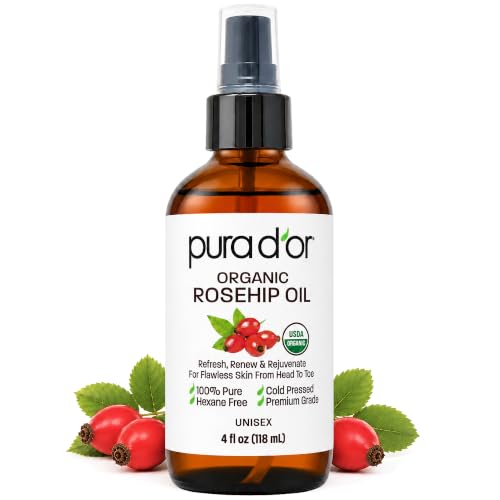
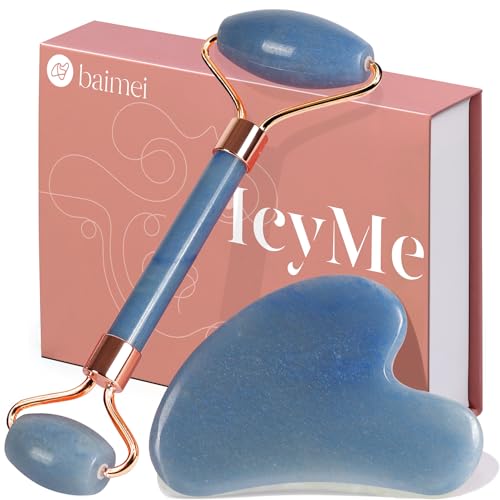
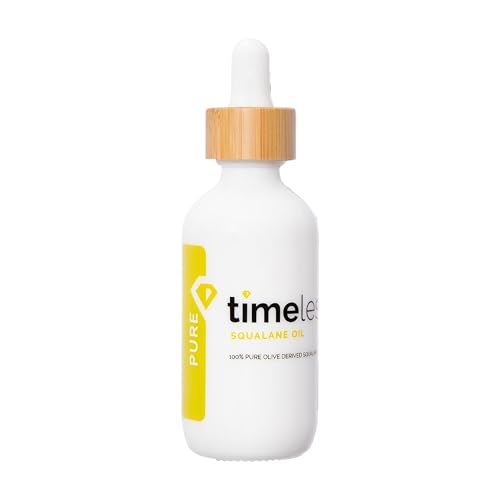
Recommended Tools and Oils for Facial Lymphatic Massage




In Brief
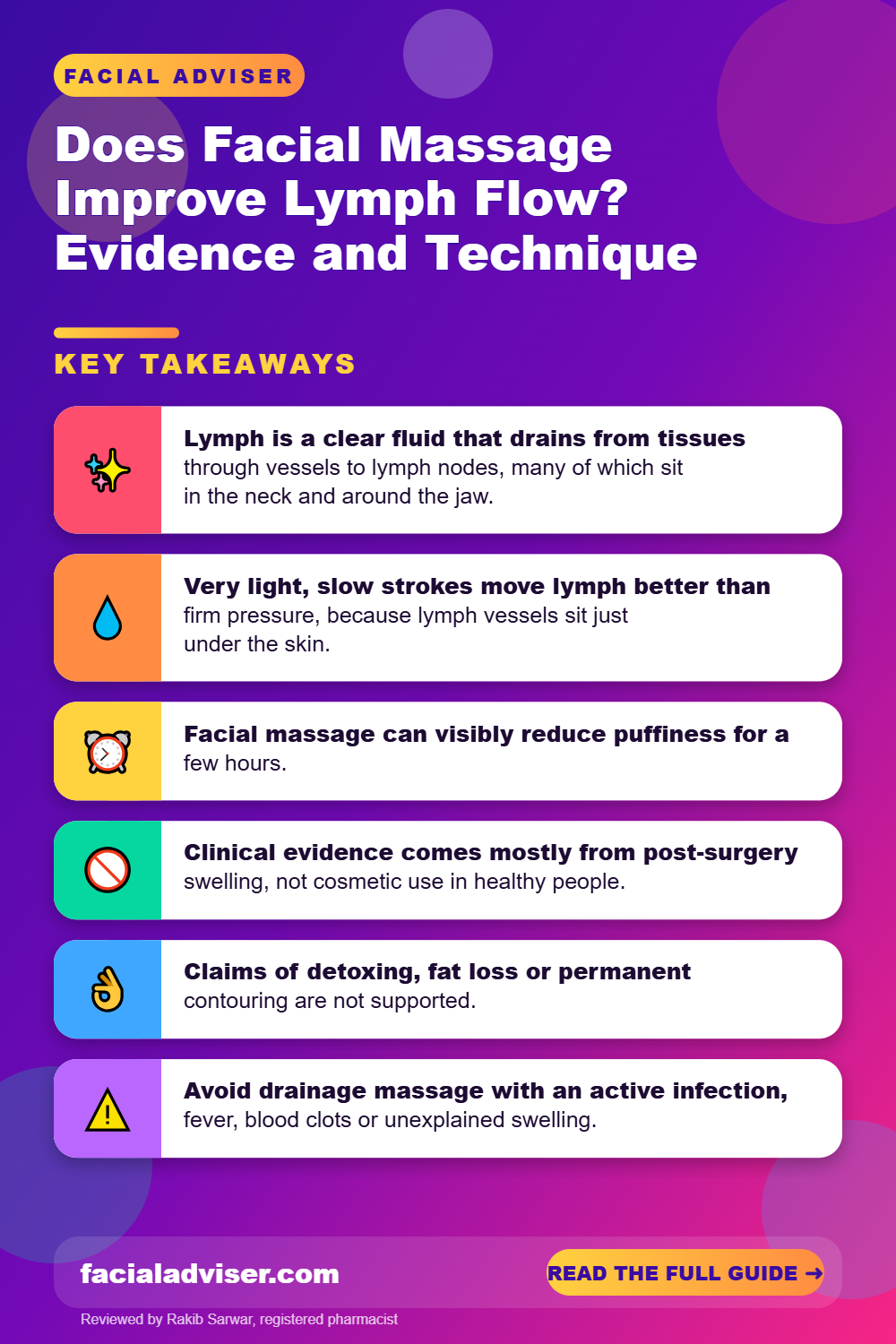
- Lymph is a clear fluid that drains from tissues through vessels to lymph nodes, many of which sit in the neck and around the jaw.
- Very light, slow strokes move lymph better than firm pressure, because lymph vessels sit just under the skin.
- Facial massage can visibly reduce puffiness for a few hours.
- Clinical evidence comes mostly from post-surgery swelling, not cosmetic use in healthy people.
- Claims of detoxing, fat loss or permanent contouring are not supported.
- Avoid drainage massage with an active infection, fever, blood clots or unexplained swelling.
- Persistent puffiness can signal thyroid, kidney, allergy or medication issues that need a doctor.
Jump to a Section
- How Lymph Moves Through the Face
- What the Evidence Shows
- Common Claims Checked
- Is Your Puffiness the Kind Massage Can Help?
- How to Do a Facial Lymphatic Drainage Massage
- Hands, Rollers or Gua Sha?
- Fitting It Into Your Routine
- Dos and Don’ts
- Honest Limits and Safety
- When Facial Swelling Needs a Doctor
- FAQ
- Where This Leaves You
How Lymph Moves Through the Face
Your blood vessels leak a little fluid into the tissues all the time. Most of it is reabsorbed, but some is collected by a network of thin lymphatic vessels that carry it, along with proteins and immune cells, to lymph nodes and eventually back into the bloodstream.
Unlike blood, lymph has no heart to pump it. It moves thanks to small contractions in the vessel walls, muscle movement, breathing and gravity. That is why faces tend to look puffier after lying flat all night and why they usually settle once you are upright and moving.
In the face, lymph generally drains outward and downward, toward nodes in front of the ears, under the jaw and along the sides of the neck. Facial drainage techniques follow those routes, which is why they almost always end with strokes down the neck.
| Area | Drains toward | Massage direction |
|---|---|---|
| Forehead | Nodes in front of the ears | From centre out to the temples |
| Under-eye area | Nodes in front of the ears and under the jaw | From inner corner outward |
| Cheeks and nose | Nodes under the jaw | Out toward the ears, then down |
| Lips and chin | Nodes under the chin and jaw | Out along the jawline |
| Neck | Nodes above the collarbone | Downward toward the collarbone |
What the Evidence Shows
Manual lymphatic drainage was developed as a medical technique and is an established part of managing lymphoedema, where lymph does not drain properly. Its role in cosmetic facial care is much less studied.
Some of the most relevant evidence comes from dentistry and oral surgery. A small study published in Lymphology found that manual lymph drainage reduced swelling and discomfort after the removal of impacted wisdom teeth (Szolnoky et al., 2007). A more recent randomised trial in BMC Oral Health reported similar benefits for swelling, pain and jaw stiffness after lower wisdom tooth surgery (BMC Oral Health, 2025).
These findings suggest gentle facial drainage can speed up the clearance of excess fluid. However, people recovering from surgery have a lot of swelling to move. Someone with slightly puffy eyes on a Monday morning has far less, so the change will be smaller.
Cleveland Clinic makes a similar point, noting that people who do not have lymphoedema may not see meaningful results from lymphatic massage (Cleveland Clinic).
Common Claims Checked
| Claim | Verdict | Explanation |
|---|---|---|
| Reduces morning puffiness | Likely, short-term | Moves excess fluid; effect lasts hours |
| Detoxes the skin | No | Lymph carries fluid and immune cells; massage does not remove toxins |
| Sculpts cheekbones and jaw permanently | No | Any change is fluid shifting, which returns |
| Reduces a double chin | No | Fat is not drained by lymph |
| Improves skin glow | Temporary | Massage briefly increases blood flow to the skin |
| Clears acne | No evidence | Pressing on active breakouts can worsen them |
| Relaxes facial tension | Plausible | Many people find it soothing, especially around the jaw |
Is Your Puffiness the Kind Massage Can Help?
- It is worst when you wake up and improves by midday: good candidate for massage.
- It is worse after salty food, alcohol or a late night: good candidate.
- It is worse during allergy season, with itchy eyes: massage may help a little, but treat the allergy too.
- It is present all day, every day, and has crept up over months: see a doctor before relying on massage.
- It is on one side only, or comes with pain, redness or fever: do not massage; get it checked.
How to Do a Facial Lymphatic Drainage Massage
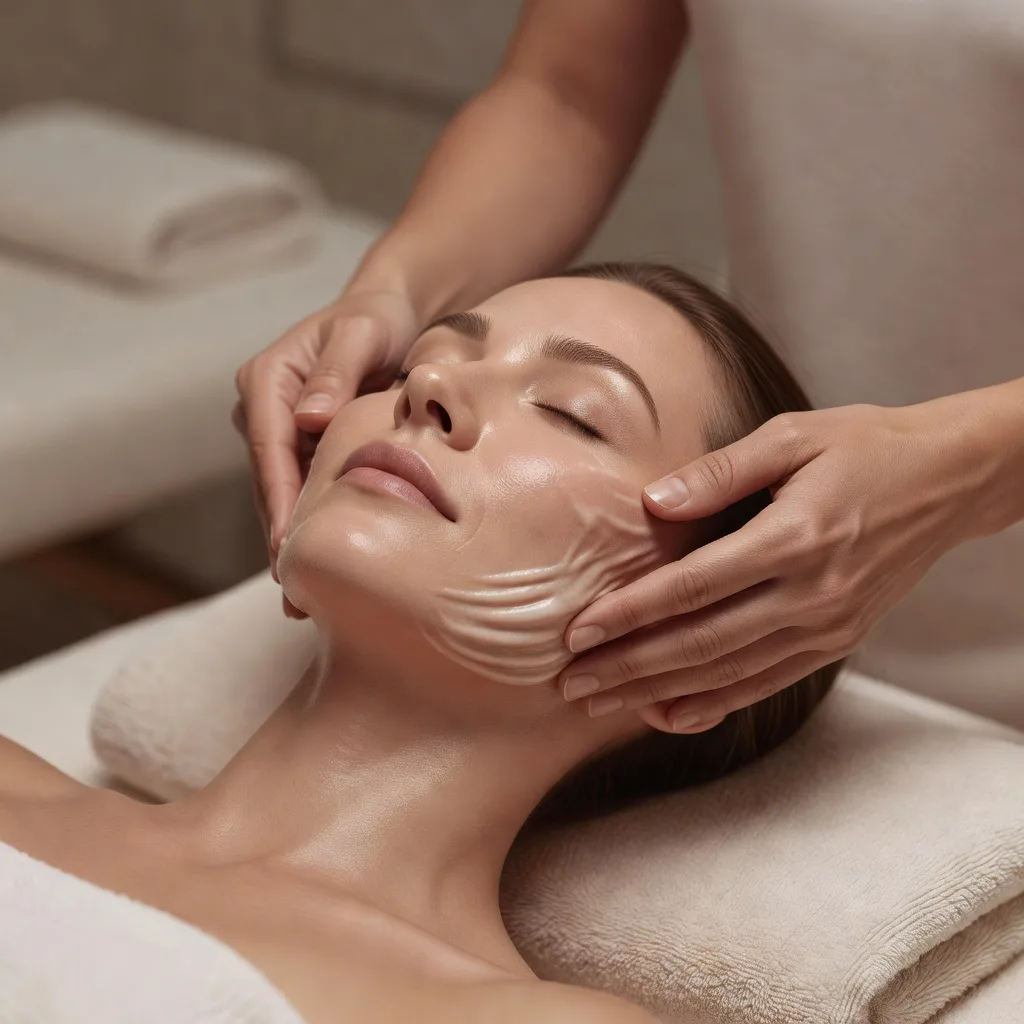
Use clean hands or a clean tool and a few drops of oil or a slippery moisturiser so you glide rather than drag. The pressure should be about the weight of a coin resting on the skin. If you see the skin redden or feel it pull, you are pressing too hard.
Open the neck first
With flat fingers, make slow downward strokes from just below your ears to your collarbone, five times on each side. This clears the path for fluid from the face.
Sweep under the jaw
Glide from the centre of the chin along the jawline toward the ears, then down the neck.
Move across the cheeks
Stroke from beside the nose outward across the cheek to the front of the ear, then down the neck.
Treat the under-eye area lightly
Using your ring finger, glide very gently from the inner corner of the eye outward toward the temple.
Finish with the forehead
Sweep from the centre of the forehead to the temples, then down in front of the ears and down the neck.
Repeat and finish down the neck
Repeat the whole sequence two or three times, always ending with downward neck strokes.
Do it in the morning, sitting upright, for about five minutes. That is when fluid-related puffiness is at its worst and gravity is on your side.
Hands, Rollers or Gua Sha?
Tools are not essential, but some people find them easier or more relaxing.
| Method | Advantages | Drawbacks |
|---|---|---|
| Fingertips | Free, gentle, easy to control pressure | Can drag without enough slip |
| Roller | Quick, easy for beginners, can be chilled | Less precise around the eyes and jaw |
| Gua sha stone or steel | Smooth, even strokes along contours | Easy to press too hard; can bruise |
| Silicone cups | Some enjoy the lifting sensation | Can leave marks; avoid on thin under-eye skin |
If you are choosing between tools, our comparisons of facial roller vs gua sha and facial cupping vs gua sha go into more detail. A chilled tool adds the de-puffing effect of cold, covered in our guide to cold therapy for skin.
Clean tools with mild soap and water after each use, and do not share them. A dirty tool can spread bacteria across the face.
Fitting It Into Your Routine
The best time for a drainage massage is after cleansing and before the rest of your skincare, so your hands are clean and the skin is ready for a few drops of oil. Once you finish, apply your serum and moisturiser as usual, and sunscreen in the morning.
Pair it with the habits that reduce puffiness in the first place: keeping salt and alcohol moderate in the evening, sleeping with your head slightly raised, managing allergies and getting enough sleep. Massage works best as the finishing touch on top of those, not as a substitute.
If you have sensitive or reactive skin, keep an eye on redness. Even light massage can irritate rosacea-prone skin in some people, so shorten sessions or skip the cheeks if they flush afterwards.
Dos and Don’ts
Do
- Use very light, slow pressure
- Start at the neck and finish at the neck
- Use oil or moisturiser for slip
- Keep sessions to around five to ten minutes
- Stay consistent if you enjoy it
Don’t
- Press hard or scrape the skin
- Massage over active acne, cold sores or broken skin
- Massage when you have a fever or infection
- Tug the delicate skin under the eyes
- Use massage to ignore swelling that will not go away
Honest Limits and Safety
Facial drainage is gentle, but it is not for everyone. Cleveland Clinic lists conditions in which lymphatic drainage massage should be avoided, including infections such as cellulitis, fever, blood clots, heart failure and kidney failure. People who have had cancer treatment in the head and neck should only have drainage from a trained lymphoedema therapist.
The other limit is expectations. Any slimming you see is fluid moving, and it will return, often by the next morning. That does not make the practice pointless, but it does make it a maintenance habit rather than a treatment with lasting results.
Do not massage a swollen lymph node, a lump or a painful area of the face or neck. Swelling in these places can have causes that need medical assessment, and pressing on it will not help.
When Facial Swelling Needs a Doctor
See a doctor rather than trying to massage it away if you notice:
- Puffiness that is present all day and has been getting worse over weeks or months
- Swelling around the eyes along with swollen ankles, tiredness or foamy urine, which can relate to kidney problems
- Puffiness with weight gain, feeling cold, dry skin or hair thinning, which can suggest an underactive thyroid
- Swelling on one side of the face, especially with pain, redness or warmth
- Sudden swelling of the lips, tongue or face, or difficulty breathing (seek emergency care)
- A lump in the neck that lasts more than two to three weeks
This article is for general information and does not replace medical advice. If you have a health condition, have had surgery or cancer treatment, or are unsure whether facial massage is safe for you, talk to a doctor or a qualified lymphoedema therapist first.
FAQ
How long does the effect of facial lymphatic massage last?
Usually a few hours. Fluid tends to build up again overnight, which is why many people make it a morning habit.
How often should I do facial lymphatic drainage?
Daily is fine for most people if the pressure is light. There is no benefit to longer or harder sessions.
Does lymphatic drainage slim the face?
It can make the face look slimmer temporarily by reducing fluid. It does not remove fat or change bone structure.
Is gua sha the same as lymphatic drainage?
Not exactly. Gua sha is a scraping technique that can be done gently for drainage, but traditional body gua sha uses firmer pressure.
Can lymphatic massage get rid of dark circles?
It may reduce puffiness that casts shadows, but it will not change pigmentation or thin skin under the eyes.
Should I use oil for facial lymphatic massage?
Yes, a light oil or moisturiser reduces friction and helps prevent tugging.
Can facial massage cause breakouts?
It can if you use heavy, pore-clogging oils or dirty tools, or massage over active acne.
Is it safe to do lymphatic massage while pregnant?
Gentle facial massage is generally considered low risk, but check with your midwife or doctor, especially if swelling is new or sudden.
Why does my face look puffier in the morning?
Lying flat lets fluid settle in the face overnight. Salt, alcohol and short sleep make it worse.
Do I need a professional for facial lymphatic drainage?
Not for cosmetic use. For medical swelling or lymphoedema, a trained therapist is the right choice.
Where This Leaves You
Facial massage can help move lymph, and the visible result is a face that looks less puffy for a few hours. The research that exists, mostly in people recovering from oral surgery, supports the idea that gentle drainage speeds up the clearance of swelling. It does not support claims of detoxing, fat loss or lasting contouring.
If you enjoy it, keep the pressure feather-light, start and finish at the neck, and treat it as a relaxing morning habit. If puffiness lingers all day, keeps getting worse or comes with other symptoms, a doctor is a better next step than a new tool.

Written by
Registered pharmacist and founder of Facial Adviser. Rakib's pharmacy training covers how skincare actives work and interact; a later course in cosmetology turned that into a focus on facial treatments and skincare products. He plans, researches and edits every guide on the site and checks health claims against sources such as the American Academy of Dermatology, the FDA and the NIH. He is not a dermatologist; see the Editorial Policy and Medical Disclaimer.
About · Editorial policy · How we choose products · Medical disclaimer · Contact
Keep reading: Facial rollers, gua sha and massagers
- Benefits of Facial Yoga: What Science Actually Shows
- Nurse Jamie UpLift Beauty Roller: Does It Sculpt and Depuff?
- Best Vibrating T-Bar Beauty Tool: What It Does and How to Choose One
- 10 Best Gua Sha Facial Tools (2026): Stone and Steel Picks Compared
- 10 Best Facial Massager Rollers (2026): Depuff and Relax at Home
- 10 Best LED Light Therapy Masks (2026): Clearer Skin, Softer Lines
- How to Incorporate Microcurrent Into Your Routine: Gel, Timing and Safety