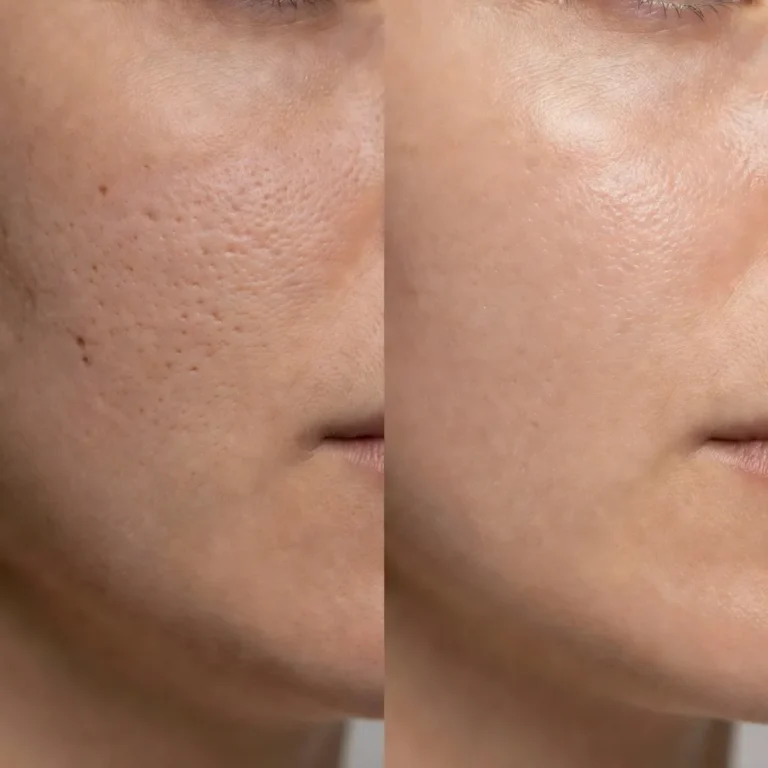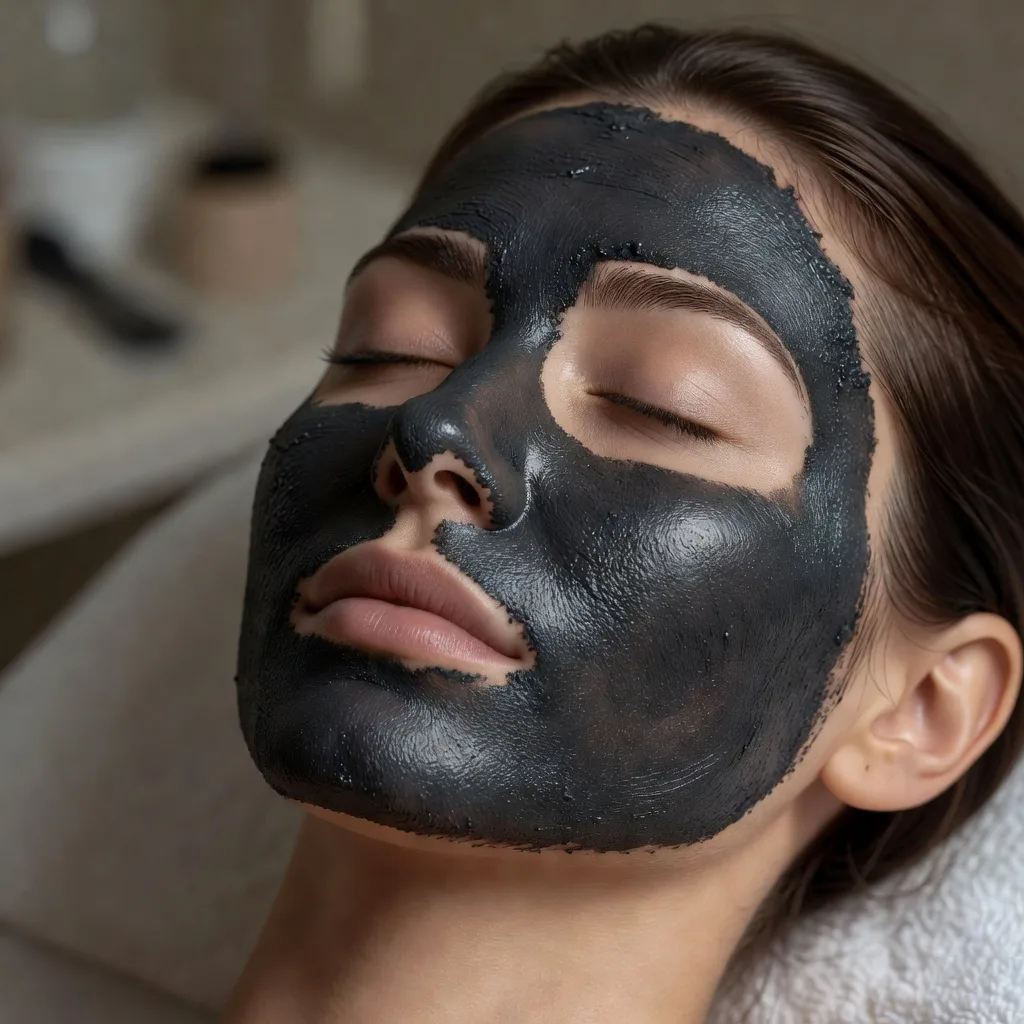
Charcoal Facial: What the Evidence Actually Shows
A charcoal facial’s real mechanism is adsorption, a genuine physical process, not the vague toxin-pulling language marketing often uses.
Part of our guide to facial treatments. Start with: Fruit Facial at Home: Does It Actually Work?
Charcoal’s legitimate medical use is oral ingestion for poisoning, acting inside the gastrointestinal tract, an entirely different route from a mask on intact skin, and independent clinical trial evidence for charcoal facial masks specifically is sparse to essentially absent. Dermatologists have specifically flagged the peeling motion of peel-off masks, not the charcoal ingredient itself, as the real documented skin-barrier risk.
Charcoal itself is inert; over-drying more often comes from other formulation ingredients like clays, alcohol, or the peel-off film base.
This guide covers what legitimate evidence exists, the real peel-off mask risk, and how to choose a gentler formulation.
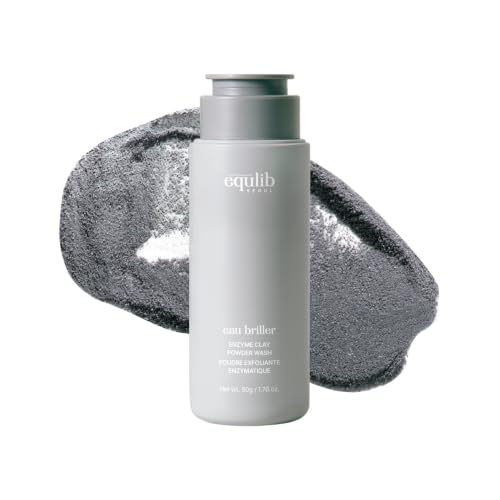
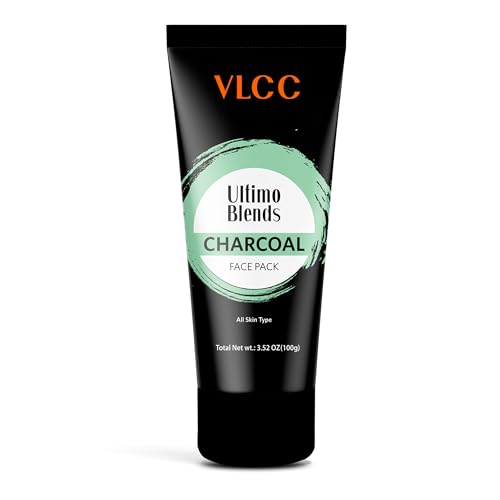
Recommended Wash-Off Charcoal Cleansers and Masks
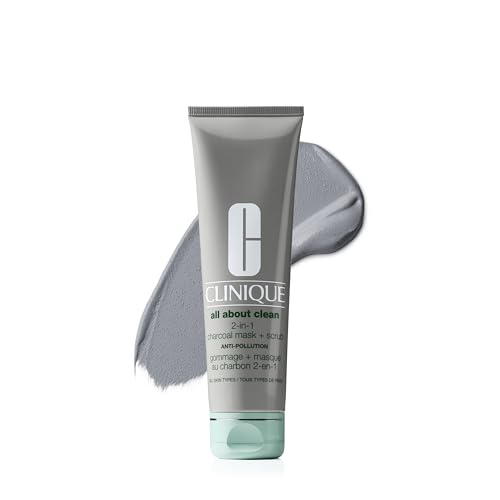


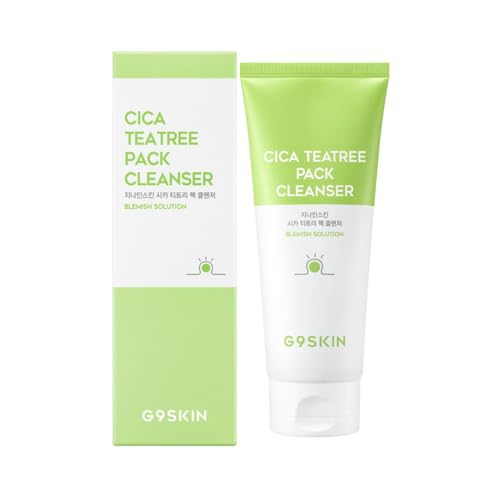
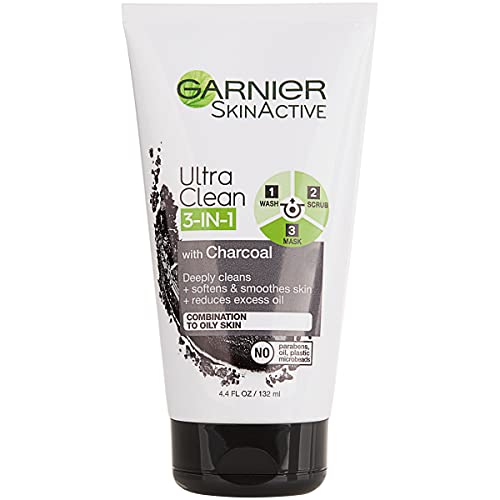
How Activated Charcoal Actually Works
Activated charcoal’s real mechanism is adsorption, not the vague “pulling” language marketing often uses. Molecules stick to the charcoal’s surface through weak physical forces, in a process dermatologists describe precisely as a solid substance attaching other substances to its surface without any true chemical bonding. That process depends on contact time, particle size, pH, and dose. Activated carbon’s adsorptive capacity comes from an extremely high surface-area-to-volume ratio — a well-established materials-science property, not a cosmetic marketing invention.
Shopping these picks?
Amazon Prime members get fast, free shipping on eligible items, plus Prime Video, Amazon Music and member deals. New members can start with a free trial.
Start a free Prime trialAged 18 to 24? Prime for Young Adults comes with a longer free trial and a lower price after it.
Affiliate link: we may earn a commission at no extra cost to you.
Straight Talk
- Activated charcoal works through adsorption, a real physical mechanism, not magnetic “toxin pulling.”
- Charcoal’s legitimate medical use for poisoning works inside the gastrointestinal tract, an entirely different route from a mask on intact skin.
- Independent clinical trial evidence for charcoal facial masks specifically is sparse to essentially absent.
- Peel-off charcoal masks carry a real, dermatologist-documented risk of skin barrier disruption from the physical removal process itself.
- Charcoal itself is inert; over-drying more often comes from other formulation ingredients like clays, alcohol, or the peel-off film base.
- The plausible, defensible claim is mild surface-level oil adsorption — not detoxification of any kind.
Section List
- How Activated Charcoal Actually Works
- Why “Pulling Toxins From Your Bloodstream” Doesn’t Hold Up
- What Legitimate Evidence Exists at the Skin Surface
- The Real Risk: Peel-Off Masks and Barrier Damage
- Over-Drying and What Actually Causes It
- Where Activated Charcoal’s Real Reputation Comes From
- What a Typical Session Looks Like
- Mask, Cleanser, or Scrub: Does the Format Matter
- Who Tends to Benefit Most
- Who Should Modify or Skip It
- When to See a Dermatologist Instead
- A One-Minute Check Before Applying
- Where the Evidence Runs Out
- Frequently Asked Questions
Why “Pulling Toxins From Your Bloodstream” Doesn’t Hold Up
Activated charcoal’s genuine medical use is oral ingestion for acute poisoning or overdose, where it adsorbs toxins inside the gastrointestinal tract before they can be absorbed into the bloodstream. That’s a completely different route of administration from a topical mask sitting on intact, unbroken facial skin. Intact skin’s outermost layer, the stratum corneum, is specifically an effective barrier against outside-in absorption of most substances — a charcoal mask simply has no physiological access to systemic circulation or “toxins in the blood.” This distinction matters: the oral-poisoning evidence base is real and well-established, but it’s irrelevant to what a cosmetic mask sitting on top of skin can plausibly achieve.
What Legitimate Evidence Exists at the Skin Surface
Charcoal’s porous structure can plausibly adsorb surface oil, sebum, and loose debris sitting on the skin’s surface or at the outer mask-contact layer — this is mechanistically reasonable and distinct from the false “detox” framing. However, independent, peer-reviewed clinical trials specifically testing activated-charcoal facial masks for oil control, pore appearance, or acne in humans are sparse to essentially absent from the dermatology literature. If pore appearance specifically is your goal, this look at whether steaming actually unclogs pores is worth reading alongside this guide. Most of what exists is industry or brand-sponsored testing rather than published, independently verified research.
| Use case | Route | Evidence status |
|---|---|---|
| Oral charcoal for poisoning/overdose | Ingested, acts in the GI tract | Well-established medical evidence |
| Topical charcoal mask on intact skin | Applied to skin surface only | Mechanistically plausible for surface oil, but minimal independent human trial data |
The Real Risk: Peel-Off Masks and Barrier Damage
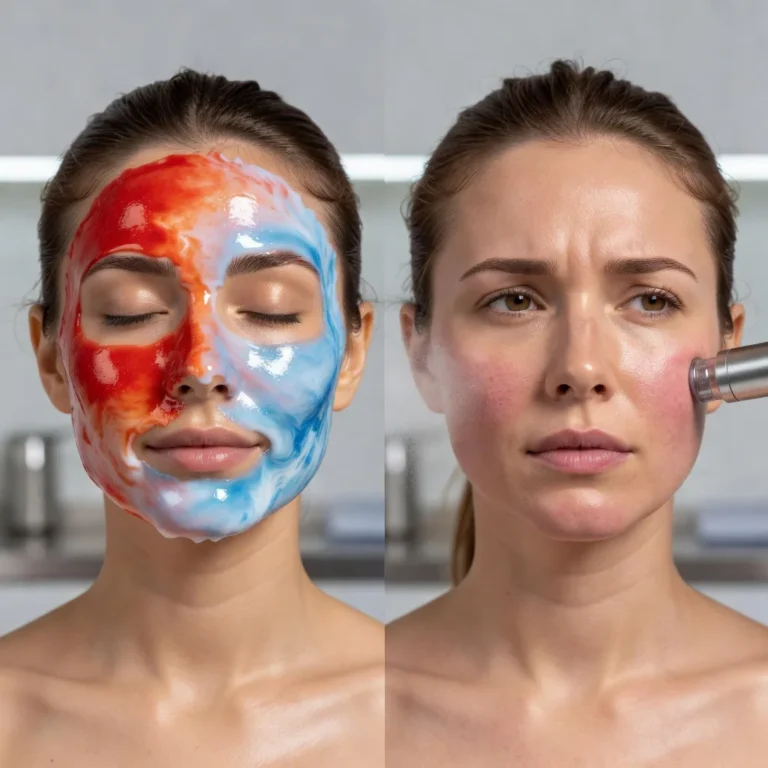
This is a genuinely documented dermatological concern, not internet exaggeration. The forcible peeling motion used to remove a peel-off mask can disrupt the skin barrier and cause real irritation, since the stratum corneum houses the skin’s microbiome, acid mantle, and lipid matrix — all of which can be disturbed by that mechanical removal. Many peel-off formulations also use polyvinyl alcohol, a plastic-film adhesive also used in safety-glass lamination, which some people are sensitive or allergic to. If a mask has ever left your skin feeling unusually reactive afterward, these signs of a damaged skin barrier are worth reviewing before trying a peel-off formula again. That same water- and oil-resistant film base often prevents active ingredients from meaningfully penetrating anyway, undercutting a second layer of marketing claims about “deep-cleaning” peel-off products.
Over-Drying and What Actually Causes It
Charcoal itself is inert and non-irritating. The over-drying and tightness people often associate with charcoal masks more commonly comes from other ingredients in the formulation — clays, high alcohol content, or strong surfactants — or from the mechanical trauma of peeling off a film-based mask, rather than the charcoal itself. This distinction matters when choosing a product: a wash-off charcoal mask with a gentle base ingredient carries a very different risk profile than a peel-off version with a high-alcohol or PVA-film formulation.
| Formulation type | Typical additional ingredients | Relative irritation risk |
|---|---|---|
| Wash-off, kaolin-based | Kaolin clay, mild surfactants | Lower — kaolin is a gentler clay, better tolerated by dry or sensitive skin |
| Wash-off, bentonite-based | Bentonite clay, sometimes added alcohol | Moderate — bentonite absorbs more oil and moisture, can feel more drying |
| Peel-off, PVA-film-based | Polyvinyl alcohol film base | Higher — mechanical removal trauma plus possible PVA sensitivity |
Where Activated Charcoal’s Real Reputation Comes From
Activated charcoal’s adsorptive reputation isn’t invented for skincare marketing — it’s genuinely well-established materials science with a long track record outside cosmetics entirely. The same adsorption mechanism is why activated carbon is used in water filtration systems, gas mask filters, and emergency-medicine poison treatment, all applications where its high surface-area-to-volume ratio and ability to bind a wide range of organic compounds are rigorously documented and independently verified. That legitimate, well-tested reputation in unrelated fields is likely part of why the ingredient felt like a trustworthy addition when skincare brands adopted it — the underlying chemistry is real, even though the specific facial-mask application hasn’t been independently tested the way water filtration or emergency poisoning treatment has.
What a Typical Session Looks Like
Cleanse
Skin is cleansed to remove makeup and surface oil before the mask goes on.Apply the charcoal mask
A wash-off or peel-off formula is spread evenly across the face, avoiding the eye area.Wait
The mask sits for the manufacturer’s recommended time, typically 10 to 20 minutes.Remove and moisturize
Wash-off masks are rinsed with warm water; peel-off masks are gently peeled starting from the edges, followed by moisturizer.
Mask, Cleanser, or Scrub: Does the Format Matter
Charcoal shows up in several different product formats, and the practical risk profile differs meaningfully between them. A wash-off mask, left on for 10 to 20 minutes, gives the charcoal the longest contact time with surface oil, similar in principle to the honey-mask contact-time logic — more time in contact with skin means more opportunity for adsorption before rinsing. A charcoal-infused cleanser is rinsed away within a minute, limiting how much adsorption realistically has time to occur. A charcoal scrub adds mechanical exfoliation on top of the adsorption mechanism, which can be a genuine benefit for surface debris removal but also introduces its own separate irritation risk from physical abrasion, distinct from either the charcoal ingredient or a peel-off film’s removal trauma. As with honey, no controlled study has directly compared these formats against each other for charcoal specifically, so format choice is best driven by your skin’s tolerance for contact time and mechanical exfoliation rather than a claim that any one format is proven superior.
Who Tends to Benefit Most
People with oilier skin who want a mild, occasional surface oil-adsorbing treatment are a reasonable fit for a wash-off charcoal mask specifically. It’s best approached as a light maintenance step rather than an active treatment for acne, detoxification, or any deeper skin concern.
Do
- Choose a wash-off formula over a peel-off one if you want to minimize mechanical skin trauma
- Check the full ingredient list rather than assuming charcoal alone explains a product’s drying effect
- Treat any oil-adsorbing benefit as mild and temporary, not a deep-pore “detox”
Don’t
- Believe marketing claims about charcoal “pulling toxins from your bloodstream”
- Use a peel-off mask frequently if you have sensitive or already-compromised skin
- Expect independent clinical trial proof of charcoal’s benefit for acne or pore size specifically
Who Should Modify or Skip It
Anyone with sensitive, dry, or already barrier-compromised skin should be cautious with peel-off charcoal masks specifically, given the documented mechanical-trauma risk from the removal process. A known sensitivity or allergy to polyvinyl alcohol is also a direct reason to choose a wash-off formula instead.
When to See a Dermatologist Instead
A charcoal facial is a cosmetic maintenance step, not a treatment for a diagnosed skin condition. See a board-certified dermatologist if you have persistent acne, unexplained irritation that doesn’t resolve after stopping a peel-off mask, or any skin concern a surface-level mask clearly isn’t designed to address.
A One-Minute Check Before Applying
Before you apply a charcoal mask, ask: is this a wash-off or peel-off formula, and does your skin tolerate mechanical peeling well? Do you have any known sensitivity to polyvinyl alcohol or high-alcohol formulations? Is your skin currently irritated, sunburned, or freshly exfoliated? A “yes” to irritation, or uncertainty about the formula type, is worth checking before applying.
Where the Evidence Runs Out
Be honest about the evidence: activated charcoal’s adsorption mechanism is real, well-established materials science, but no peer-reviewed clinical trial specifically testing topical charcoal facial masks on human skin was found. The plausible claim is mild surface oil adsorption; the documented real risk is mechanical barrier disruption from peel-off removal, which is arguably a bigger legitimate concern than any benefit claim charcoal itself offers.
Frequently Asked Questions
Does charcoal actually pull toxins out of your skin?
No — that claim describes a route only relevant to oral ingestion for poisoning, not a topical mask on intact skin.
How does activated charcoal actually work?
Through adsorption, where molecules stick to its highly porous surface via physical forces, not any kind of chemical toxin extraction.
Are peel-off charcoal masks bad for your skin?
The peeling removal process itself is a documented real risk for skin barrier disruption and micro-trauma, more than the charcoal ingredient.
Does charcoal reduce oil and shine?
It’s mechanistically plausible for mild surface oil adsorption, though independent human clinical trial evidence is minimal.
Why does my charcoal mask make my skin feel tight and dry?
That’s more often caused by other ingredients like alcohol or clay, or by the peel-off film’s mechanical removal, than by the charcoal itself.
Is charcoal safe for sensitive skin?
Wash-off charcoal formulas are generally reasonable, but peel-off versions carry more risk for sensitive or barrier-compromised skin.
Does charcoal help with acne?
No dedicated clinical trial has confirmed a direct acne benefit, though mild oil adsorption is a plausible, unproven mechanism.
What’s in peel-off masks that causes irritation?
Many use polyvinyl alcohol, a plastic-film adhesive some people are sensitive to, plus the physical trauma of the peeling motion itself.
How often should I use a charcoal mask?
Occasional use, generally once or twice weekly, is reasonable for a wash-off formula; more frequent peel-off use raises barrier-disruption risk.
Is a charcoal facial worth trying?
A wash-off version is a low-risk way to get mild surface oil control, but the detox and deep-cleaning marketing claims aren’t backed by clinical evidence.

Written by
Registered pharmacist and founder of Facial Adviser. Rakib's pharmacy training covers how skincare actives work and interact; a later course in cosmetology turned that into a focus on facial treatments and skincare products. He plans, researches and edits every guide on the site and checks health claims against sources such as the American Academy of Dermatology, the FDA and the NIH. He is not a dermatologist; see the Editorial Policy and Medical Disclaimer.
About · Editorial policy · How we choose products · Medical disclaimer · Contact
Keep reading: DIY and ingredient facials
- Fruit Facial at Home: Does It Actually Work?
- Green Tea Facial: Benefits and Side Effects
- Silver Facial: What the Real Evidence Shows
- What Are Home Remedies to Minimize Large Pores?
- How Much Does Paraffin Wax Treatment Cost?
- Which Fruit Facial Is Good for Oily and Pimple-Prone Skin?
- Facial vs Chemical Peel: Differences, Results and Which to Choose
- What Is the Best Anti-Aging Facial Treatment? Options Compared by Goal