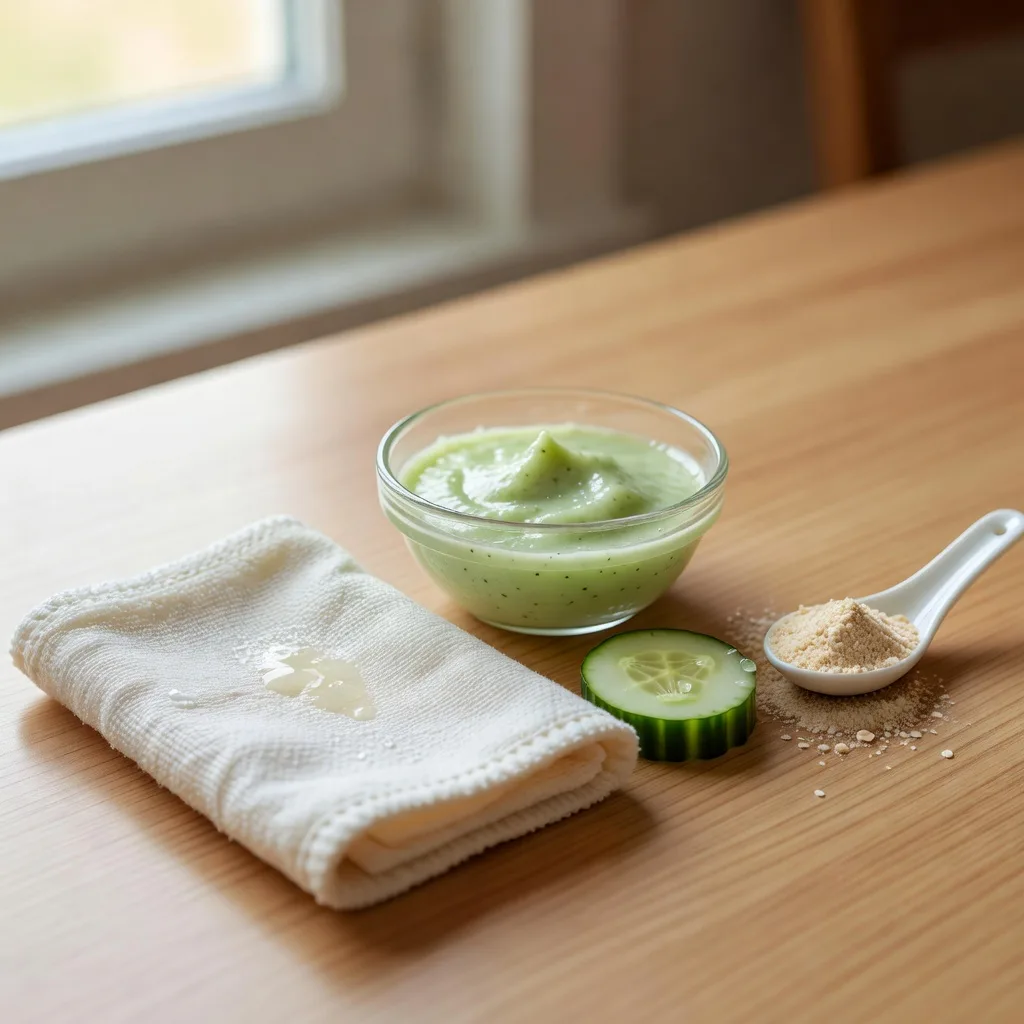
White Bumps on Eyelids: Home Remedies, Causes and When to See a Doctor
Finding a small white or yellowish bump on your eyelid is unsettling, partly because the skin there is thin and partly because it sits so close to your eye. The good news is that most of these bumps are harmless and many clear up without treatment. The less good news is that the most common home remedy people reach for, squeezing, is also the one most likely to make things worse.
Part of our guide to facial treatments. Start with: Fruit Facial at Home: Does It Actually Work?
Most white bumps on eyelids are milia, tiny keratin-filled cysts that are harmless and often fade on their own over weeks to months. Other causes include styes, which are painful infected glands at the lash line, chalazia, which are firmer painless lumps from a blocked oil gland, xanthelasma, which are soft yellow patches that can signal high cholesterol, and syringomas, small benign sweat duct growths. Safe home care means keeping the area clean, using a warm compress for styes and chalazia, and never picking or squeezing. Yellow plaques, growing bumps, vision changes or swelling that spreads need a doctor.
In short: identify the type of bump, use gentle warmth and cleansing for blocked glands, leave milia alone, and let a doctor remove anything that does not settle.
The American Academy of Dermatology acne tips advise against picking and squeezing spots on the face because it pushes debris deeper and can leave scars, and that caution matters even more on delicate eyelid skin close to the eye.
This guide explains how to tell the common eyelid bumps apart, which home remedies are reasonable, what does not work, and which signs mean you should book an appointment.
Shopping these picks?
Amazon Prime members get fast, free shipping on eligible items, plus Prime Video, Amazon Music and member deals. New members can start with a free trial.
Start a free Prime trialAged 18 to 24? Prime for Young Adults comes with a longer free trial and a lower price after it.
Affiliate link: we may earn a commission at no extra cost to you.
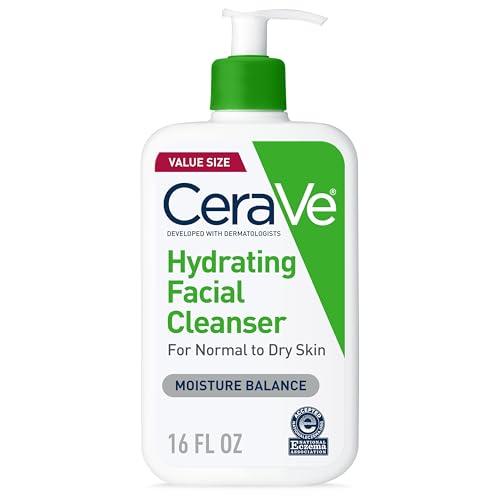
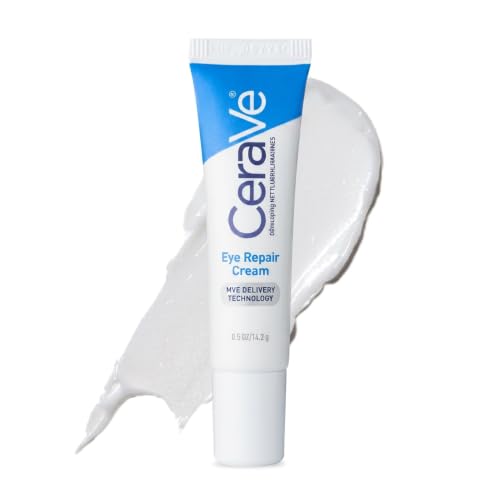
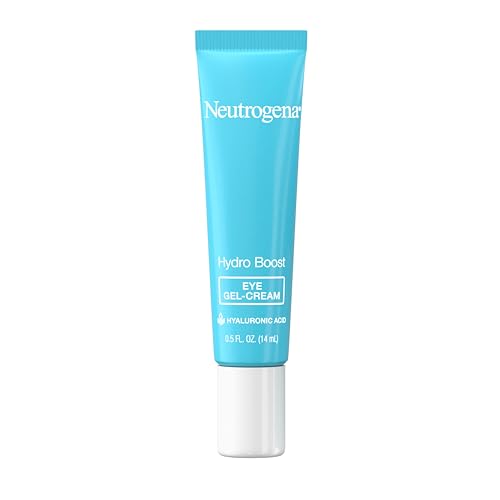
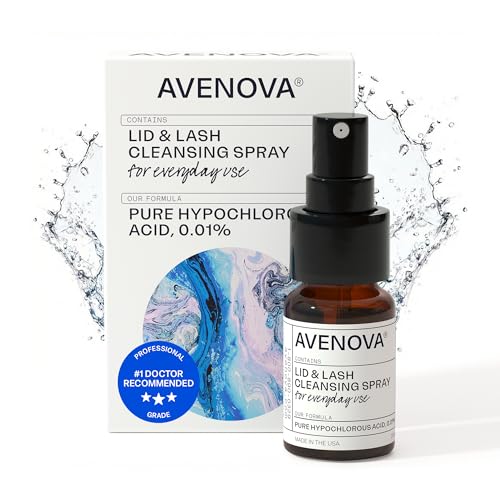
Recommended Gentle Eyelid Care Products



Contents
- What Are the White Bumps on My Eyelids?
- Milia: The Most Common Cause
- Styes and Chalazia: When Warmth Helps
- Xanthelasma and Syringoma: Bumps That Need a Professional
- How to Care for an Eyelid Bump Safely at Home
- Gentle Products That Can Help
- Dos and Don’ts for Eyelid Bumps
- Home Remedies That Do Not Work
- Can You Prevent White Bumps on Eyelids?
- Honest Limits
- When to See a Dermatologist
- FAQ
- The Bottom Line
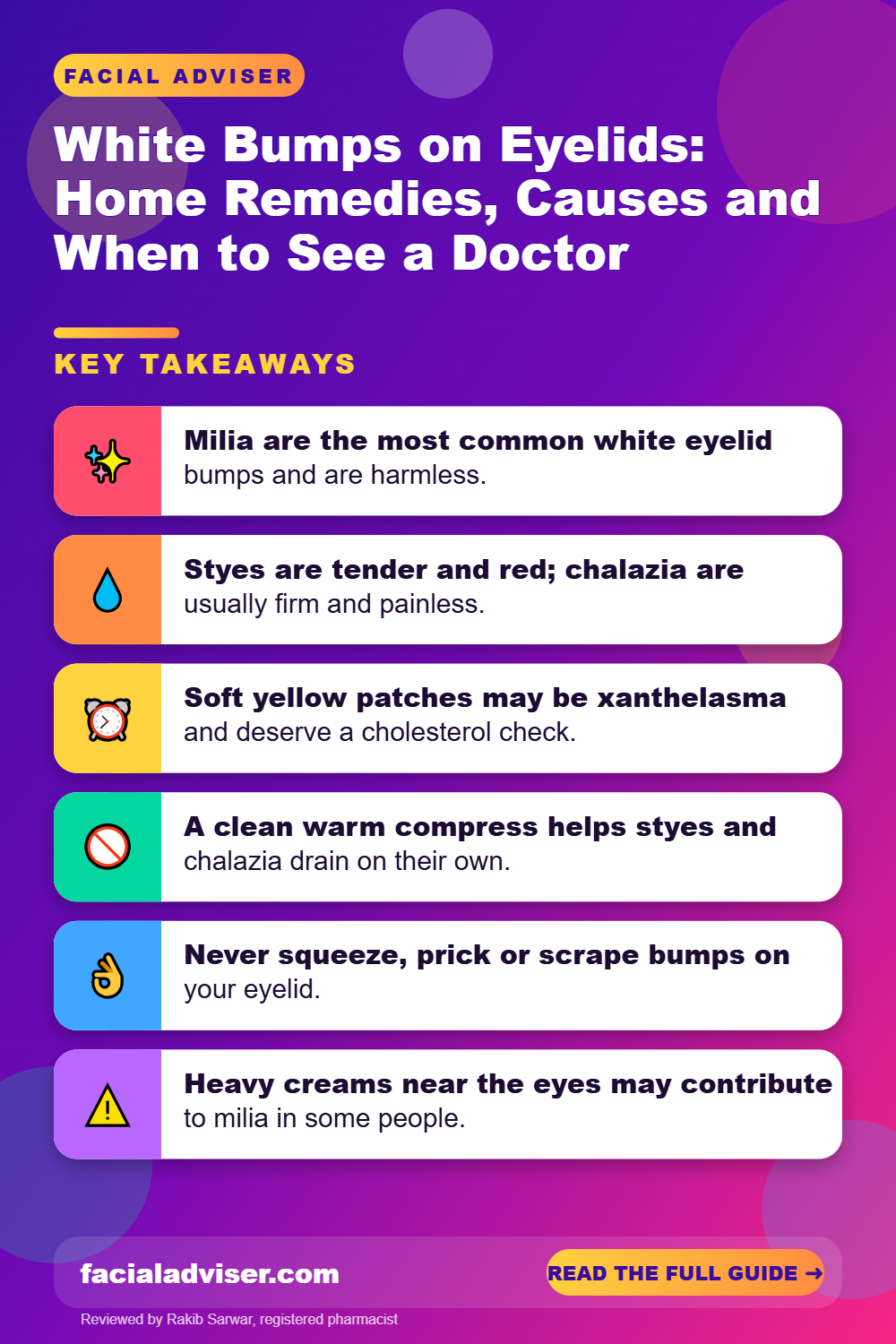
What to Know First
- Milia are the most common white eyelid bumps and are harmless.
- Styes are tender and red; chalazia are usually firm and painless.
- Soft yellow patches may be xanthelasma and deserve a cholesterol check.
- A clean warm compress helps styes and chalazia drain on their own.
- Never squeeze, prick or scrape bumps on your eyelid.
- Heavy creams near the eyes may contribute to milia in some people.
- See a doctor for vision changes, spreading swelling or bumps that grow or bleed.
What Are the White Bumps on My Eyelids?
Several different conditions can look like a white or pale bump on the eyelid. They have different causes and need different care, so it helps to compare their typical features before trying any remedy. This table is a general guide only and cannot replace an examination.
| Type | What it looks like | Pain | Usual course |
|---|---|---|---|
| Milia | Tiny, hard, pearly white dots, often in clusters | None | Often fade over weeks to months |
| Stye (hordeolum) | Red, swollen bump at the lash line, sometimes with a white head | Tender or sore | Usually drains and settles within about a week or two |
| Chalazion | Firm, round lump within the lid, sometimes pale | Usually painless once settled | Can take weeks; may need a doctor if it persists |
| Xanthelasma | Soft, flat yellowish patches near the inner corner | None | Persist or slowly grow; do not resolve alone |
| Syringoma | Small skin-coloured or pale bumps, often lower lids | None | Harmless and long-lasting |
Milia and syringomas are cosmetic concerns rather than health problems. Styes and chalazia come from blocked or infected oil glands in the lid. Xanthelasma is the one type that can point to something beyond the skin, because it is sometimes linked to raised blood fats.
Milia: The Most Common Cause
Milia form when keratin, the protein in the outer skin layer, gets trapped in a tiny pocket under the surface instead of shedding normally. They feel hard, like a grain of sand under the skin, and they do not have an opening you can squeeze.
- They are common at all ages, including in newborns.
- They can follow sun damage, skin trauma, burns or blistering.
- Rich, occlusive creams around the eyes may play a part in some people.
- They are not caused by poor hygiene and are not contagious.
- Trying to pop them rarely works because the keratin is sealed in.
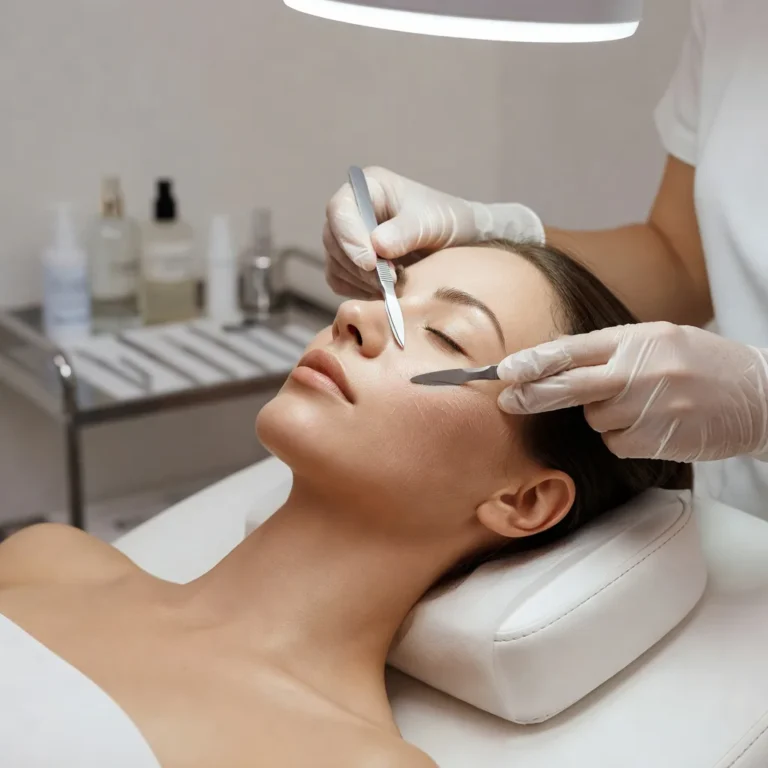
Home care for milia is mostly about patience and not making them worse. Switching to a lighter, fragrance-free eye product, cleansing gently and protecting the area from sun is sensible. Dermatologists can remove stubborn milia quickly with a sterile needle or blade, which is safer than any home attempt so close to the eye.
Styes and Chalazia: When Warmth Helps
A stye is a small infection of an oil gland or lash follicle. It usually starts as a sore, red swelling at the edge of the lid and may develop a white or yellow point. A chalazion forms deeper in the lid when an oil gland becomes blocked, and it is usually firmer and less painful once the early swelling settles.
Warm compresses are the main home remedy for both. Gentle heat softens the thickened oil in the gland so it can drain naturally. Many styes then settle within a week or two, and small chalazia often shrink over several weeks with regular warmth.
A warm compress should feel comfortably warm, never hot. The eyelid skin is thin and burns easily, so test the temperature on the inside of your wrist first.
A stye that points with a white head may drain by itself during or after a compress. If it does, clean the area gently with a fresh cloth and keep up the warmth; do not press to force more out. Our guide on cold vs warm compresses for the face explains why warmth suits blocked glands while cold is better for puffiness and fresh swelling.
Xanthelasma and Syringoma: Bumps That Need a Professional
Xanthelasma looks different from the other bumps: it forms soft, flat or slightly raised yellow patches, usually near the inner corner of the upper or lower lids. It is made of cholesterol-rich deposits in the skin. It is harmless in itself, but because it can be linked to raised cholesterol, doctors often suggest a blood test.
Syringomas are small benign growths of sweat duct tissue. They are often skin-coloured or slightly pale, appear in clusters on the lower lids and tend to persist. Neither condition responds to home remedies, creams or scrubs.
If you notice yellowish patches, mention them to your doctor even if they do not bother you cosmetically. A simple blood test can show whether your cholesterol or other blood fats are raised, and treating those levels matters for your general health far more than for the patches themselves. Many people with xanthelasma have normal cholesterol, so the patches are not a diagnosis on their own, only a reason to check.
- Treatment options are carried out by doctors and may include laser, surgical removal or other in-office methods.
- Results vary and both conditions can return after treatment.
- Online acid or garlic remedies for these bumps risk burns next to the eye.
How to Care for an Eyelid Bump Safely at Home
These steps suit styes, chalazia and general eyelid care. For milia, the cleansing and no-picking steps apply, but warmth is unlikely to change them much.
Wash your hands
Clean hands reduce the chance of spreading bacteria to the eye.
Remove eye makeup and contact lenses
Leave both out until a stye or chalazion has settled.
Apply a clean warm compress
Hold a warm, damp clean cloth or a heated eye mask on the closed lid for about 10 minutes, several times a day.
Cleanse the lid margin gently
Use a gentle eyelid wipe or a diluted fragrance-free cleanser along the lash line, then rinse.
Leave the bump alone
Do not squeeze, prick or rub, even if a white head appears.
Watch for change
Track size, pain and redness over the next few days and see a doctor if they worsen.
Use a fresh cloth for each compress session and wash it hot afterwards. Reusing a damp cloth can move bacteria back onto the lid.
Gentle Products That Can Help
No product will dissolve milia or cure a stye, but a few simple items make safe home care easier and help keep the lid area comfortable.
| Product | What it can do | What it will not do |
|---|---|---|
| Warm compress eye mask | Holds even, gentle heat for blocked glands | Cure an infection or remove milia |
| Eyelid cleanser or wipes | Clear oil and debris from the lash line | Replace a doctor’s treatment |
| Gentle face cleanser | Clean the face without stripping the eye area | Shrink bumps overnight |
| Fragrance-free eye cream | Moisturise dry lids with less irritation risk | Treat milia or xanthelasma |
Choose light, fragrance-free textures around the eyes. If you are prone to milia, a gel or lotion is usually a better choice than a thick balm. Our guide on how to remove waterproof makeup gently covers eye makeup removal without rubbing.
Dos and Don’ts for Eyelid Bumps
Do
- Use a clean warm compress for styes and chalazia
- Remove eye makeup every night
- Replace old mascara and eyeliner after a stye
- Keep hands away from your eyes
- Book an appointment for any yellow patch
Don’t
- Squeeze, prick or pop the bump
- Use needles, tweezers or blades at home
- Apply acids, scrubs or toothpaste near the eye
- Wear contact lenses during a stye
- Share towels or eye makeup
Home Remedies That Do Not Work
Search for eyelid bumps online and you will find many so-called natural cures. Several are ineffective and some are risky because the eye is only millimetres away.
- Tea bags: a warm tea bag is simply a warm compress; the tea itself adds nothing proven.
- Apple cider vinegar and lemon juice: acidic and can burn the lid or sting the eye.
- Garlic or tea tree oil: common causes of irritation and allergic reactions on thin skin.
- Toothpaste: drying and irritating, and not a treatment for any eyelid bump.
- Home milia extraction: risks infection, scarring and injury to the eye.
Do not use sharp objects near your eye. Home attempts to lance a stye or extract milia can cause infection, scarring and, rarely, eye injury.
Can You Prevent White Bumps on Eyelids?
You cannot prevent every bump, but good habits lower the chance of blocked glands and may reduce milia for some people.
- Clean your lash line gently if you have oily lids or recurring styes.
- Take off eye makeup before sleep and replace eye products regularly.
- Use lightweight eye products rather than heavy occlusive balms.
- Protect the eye area from sun with sunglasses and a suitable sunscreen.
- Wash make-up brushes and do not share eye products.
If you had a stye alongside an eye infection, our article on when to wear makeup after pink eye explains why replacing products matters.
Honest Limits
Home care helps styes and early chalazia, but it does little for milia, syringomas or xanthelasma. Those bumps usually need patience or professional removal, and no cream, oil or scrub has good evidence of clearing them from the eyelids.
It is also not possible to identify a bump reliably from photos or descriptions. Rarely, a lump on the eyelid can be a skin cancer or another condition that looks like a harmless cyst, which is why anything unusual, persistent or changing deserves a proper examination.
When to See a Dermatologist
- Vision changes, eye pain or sensitivity to light.
- Swelling or redness spreading beyond the eyelid, or fever.
- A stye or chalazion that does not improve after about two weeks of warm compresses.
- Yellow patches around the eyes, which may warrant a cholesterol test.
- A bump that grows, bleeds, crusts, changes colour or causes lash loss.
- Frequent recurring styes or chalazia.
This article is for general information and does not replace professional medical advice. See a doctor, ophthalmologist or board-certified dermatologist to diagnose eyelid bumps, and seek urgent care for vision changes or spreading swelling.
FAQ
What are the tiny white bumps on my eyelids?
Most often milia, small harmless keratin cysts.
Can I pop milia on my eyelids?
No; they have no opening and squeezing risks scarring and injury.
What is the best home remedy for a stye?
A clean warm compress several times a day and no squeezing.
How long does a stye last?
Many settle within about one to two weeks.
Is a chalazion the same as a stye?
No; a chalazion is a blocked gland, usually firmer and less painful.
Are yellow bumps on eyelids serious?
They may be xanthelasma, so ask a doctor about a cholesterol check.
Can eye cream cause milia?
Heavy creams may contribute in some people; lighter textures are safer.
Do milia go away on their own?
Often yes, though it can take weeks or months.
Should I wear makeup with a stye?
Avoid eye makeup until it heals and replace old products.
When is an eyelid bump an emergency?
With vision changes, severe pain or swelling spreading around the eye.
The Bottom Line
White bumps on eyelids are usually milia, styes or chalazia, and most are harmless. Warm compresses help blocked glands, while milia, syringomas and xanthelasma need patience or a professional.
Keep the area clean, never squeeze or cut at home, and see a doctor promptly for vision changes, spreading swelling, yellow patches or any bump that grows or does not settle.

Written by
Registered pharmacist and founder of Facial Adviser. Rakib's pharmacy training covers how skincare actives work and interact; a later course in cosmetology turned that into a focus on facial treatments and skincare products. He plans, researches and edits every guide on the site and checks health claims against sources such as the American Academy of Dermatology, the FDA and the NIH. He is not a dermatologist; see the Editorial Policy and Medical Disclaimer.
About · Editorial policy · How we choose products · Medical disclaimer · Contact
Keep reading: DIY and ingredient facials
- Fruit Facial at Home: Does It Actually Work?
- Marshmallow Facial: What the Evidence Shows
- Strawberry Facial: Does the Vitamin C Claim Hold Up?
- Seaweed Facial: What The Science Actually Shows
- Flower Facial: Which Botanical Claims Hold Up
- Banana Facial: The Claim That Doesn't Hold Up
- Ultimate Guide Microdermabrasion: What to Know
- Facial vs Chemical Peel: Differences, Results and Which to Choose