Flower Facial: Which Botanical Claims Hold Up
A flower facial sounds like one gentle, uniform treatment, but rose, chamomile, calendula, and hibiscus each carry a genuinely different evidence base behind their skincare claims.
Part of our guide to facial treatments. Start with: Fruit Facial at Home: Does It Actually Work?
Chamomile has the strongest research of the four, documented anti-inflammatory activity from alpha-bisabolol, though most of that data comes from purified extract rather than steeped tea in a DIY mask. Calendula has real but inconsistent wound-healing evidence, and rose water’s traditional soothing use lines up with plausible, still-preliminary science.
The claim that deserves the most scrutiny is hibiscus marketed as “natural retinol,” a significant overreach that conflates mild acid exfoliation with an entirely different mechanism.
This guide separates each botanical’s real evidence from its marketing, and covers the one allergy self-check worth running before trying chamomile or calendula.
Recommended Products for Botanical Skincare
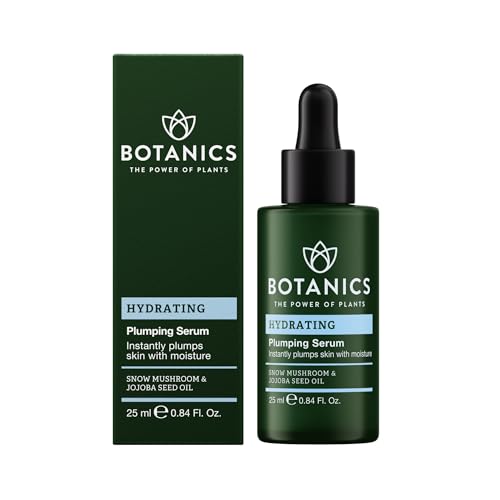
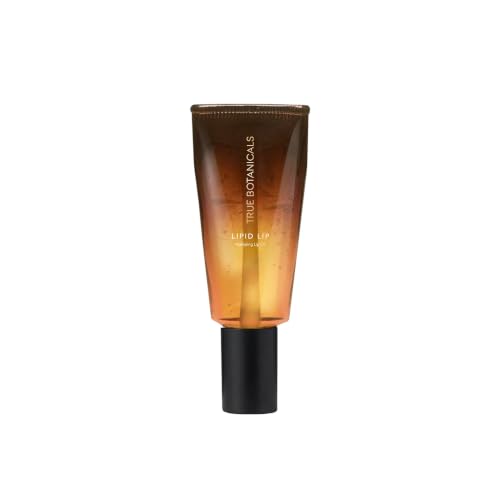

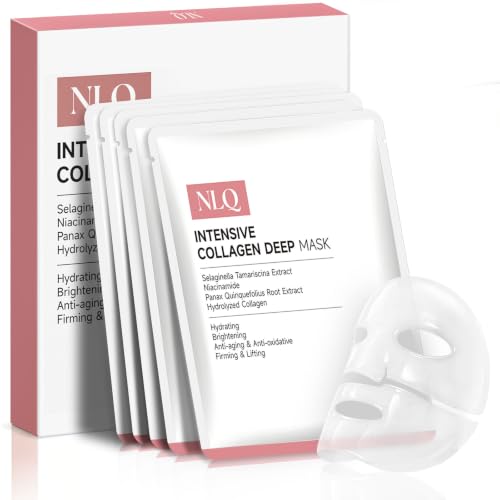
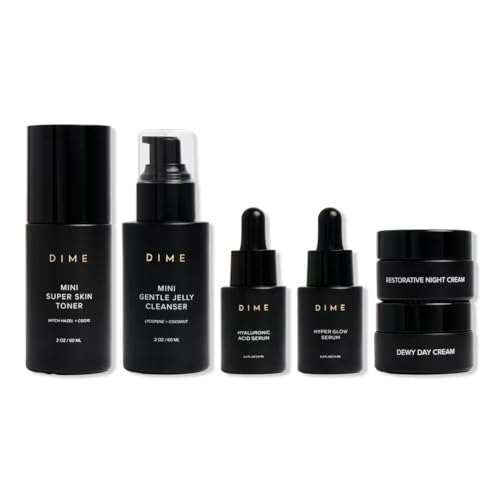
Key Takeaways
- Chamomile has the strongest evidence of any flower ingredient here: alpha-bisabolol has documented anti-inflammatory activity, though most of that data uses purified extract, not steeped tea in a DIY mask.
- Calendula has genuine but mixed wound-healing evidence, helpful for some wound types and inconclusive for others.
- Rose water’s mild acidity is close to skin’s natural pH, a plausible basis for its traditional soothing use, though most supporting studies are still preclinical.
- “Hibiscus works like natural retinol” is a significant overreach, its real, genuine effect is mild AHA-style exfoliation from citric and malic acid content, not retinoid receptor activity.
- Chamomile and calendula are both in the ragweed/daisy plant family, a real cross-reactivity risk for anyone with Compositae plant allergies.
- All four flower ingredients here are cosmetic-only; none are approved to make drug-level performance claims.
- A patch test remains the single most useful precaution across every flower-facial variant.
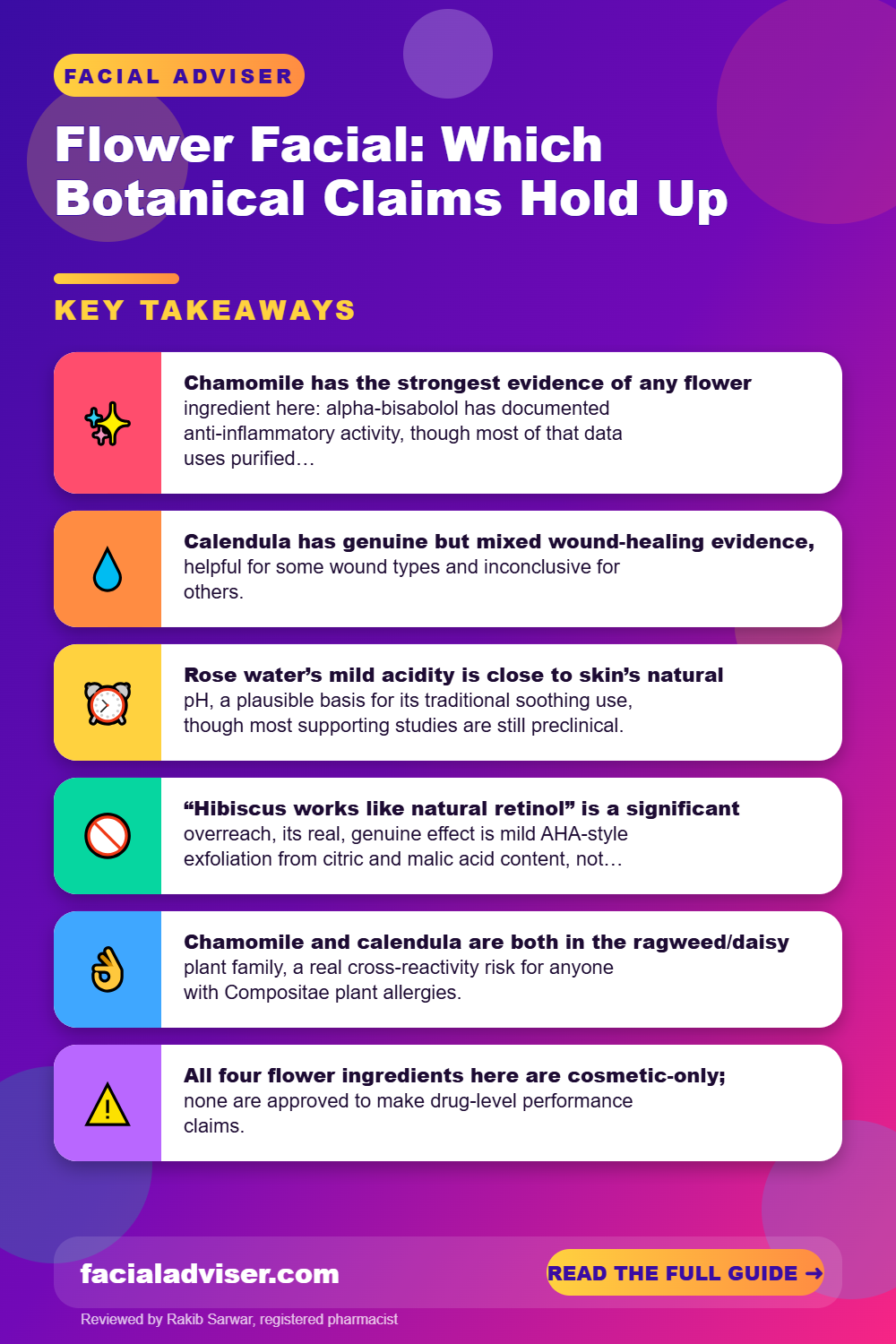
Table of Contents
- What a Flower Facial Actually Involves
- Chamomile: The Best-Evidenced Ingredient Here
- Calendula: Real but Mixed Wound-Healing Evidence
- Rose Water: Traditional Use Meets Preliminary Science
- The “Natural Retinol” Claim, Debunked
- Comparing the Four Flower Ingredients
- Do This, Not That
- How to Try a Flower Facial Safely
- The Ragweed Family Allergy Self-Check
- When to See a Doctor
- Frequently Asked Questions
- The Bottom Line
What a Flower Facial Actually Involves
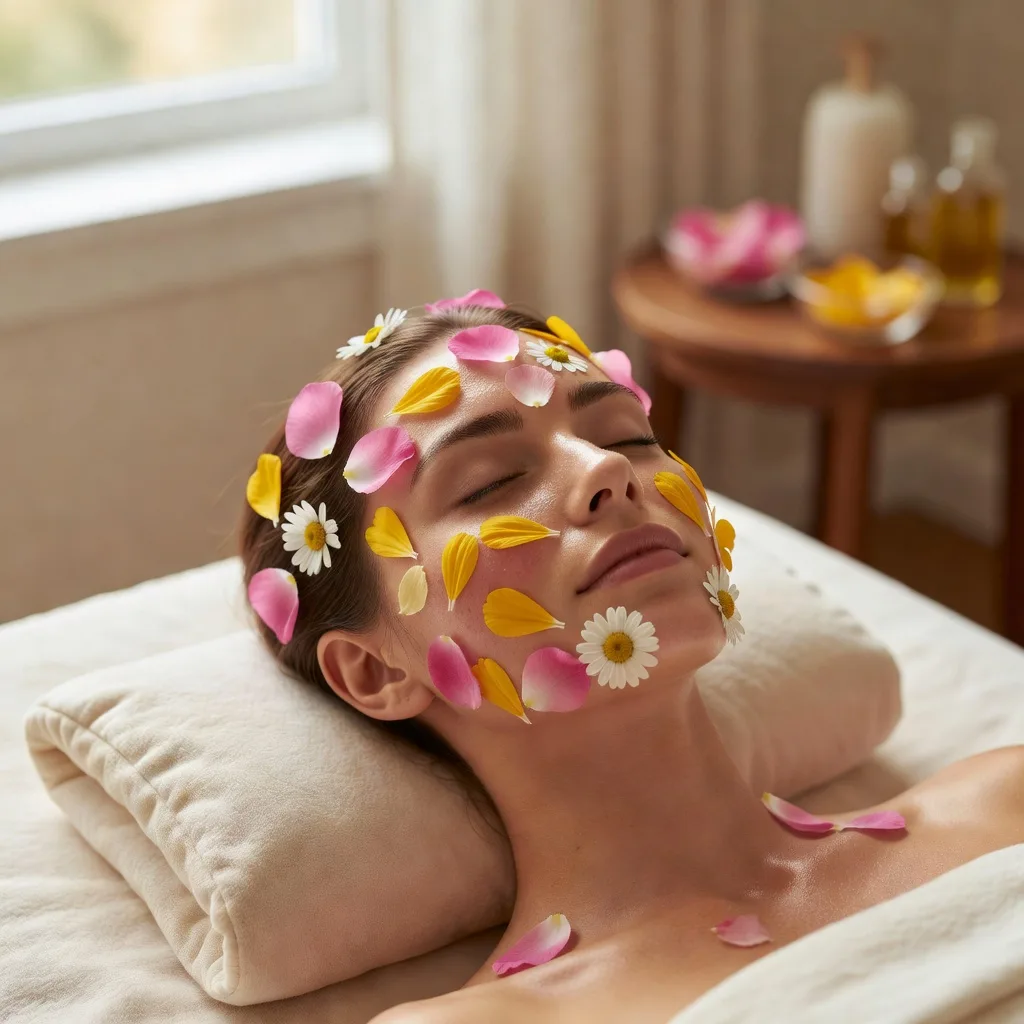
A flower facial typically blends dried or fresh petals, hydrosols like rose water or chamomile tea, or concentrated botanical extracts into a clay, honey, or yogurt base. Spa versions sometimes steam the face over a botanical infusion first, then apply a cream mask carrying concentrated flower extracts, finishing with a rose-water mist. The four ingredients that show up most often, rose, chamomile, calendula, and hibiscus, have genuinely different evidence bases behind them, which is worth separating out rather than treating “flower facial” as one uniform claim.
Shopping these picks?
Amazon Prime members get fast, free shipping on eligible items, plus Prime Video, Amazon Music and member deals. New members can start with a free trial.
Start a free Prime trialAged 18 to 24? Prime for Young Adults comes with a longer free trial and a lower price after it.
Affiliate link: we may earn a commission at no extra cost to you.
That distinction matters because “flower facial” marketing tends to borrow credibility across ingredients: a product might lean on chamomile’s genuinely strong anti-inflammatory research to imply that its hibiscus content is equally well studied, when the two ingredients sit at very different points on the evidence spectrum. Reading past the umbrella term to the specific botanical actually listed on the label is the single most useful habit for evaluating any flower-based product honestly.
Chamomile: The Best-Evidenced Ingredient Here
Chamomile’s active compounds, alpha-bisabolol and apigenin, have real, documented anti-inflammatory activity. A 2022 mechanistic study found alpha-bisabolol alleviated atopic-dermatitis-like inflammation by inhibiting MAPK and NF-kB signaling in mast cells, and other research has shown it reduces pro-inflammatory cytokine production directly. The Cosmetic Ingredient Review Expert Panel has formally reviewed chamomile-derived cosmetic ingredients for safety, which reflects how established this ingredient is in the cosmetic-science literature.
The important caveat is where that evidence comes from. The strongest anti-inflammatory data uses purified bisabolol at defined, controlled concentrations in cell and animal models, not steeped chamomile tea stirred into a honey mask. The mechanism is real; the dose delivered by a DIY preparation is unstandardized and considerably weaker than what’s tested in the underlying research.
Calendula: Real but Mixed Wound-Healing Evidence
Calendula, or marigold, has a genuine, moderate evidence base for wound healing. A systematic review covering 14 studies through 2018, seven animal and seven human clinical trials, found calendula extract produced faster resolution of the inflammatory phase of healing and more granulation tissue formation in acute wounds. But the same review found inconsistent results elsewhere: calendula helped venous ulcers but showed no advantage for diabetic ulcers, and while it looked promising for burns in animal studies, human burn trials found no benefit over standard care. The reviewers explicitly called for larger, better-designed trials.
Note: This is a “real but mixed” evidence story worth stating honestly. Calendula has earned its place in wound-care research, but that doesn’t automatically extend to a blanket anti-aging or general skin-health claim in a facial mask.
Rose Water: Traditional Use Meets Preliminary Science
Rose water’s mild acidity, roughly pH 4.5 to 5.5, sits close to skin’s natural acid mantle, which is a plausible physiological reason behind its long traditional use as a soothing toner. Laboratory work on Rosa damascena extracts has shown genuine antioxidant and antimicrobial activity, and diluted rose hydrosol has been shown to inhibit neutrophil adhesion in lab models, a marker relevant to inflammation control. A broader 2026 narrative review catalogs antioxidant, anti-inflammatory, and other properties of Rosa damascena, but it’s important to note this is a review of cell and animal data, not a body of clinical trials specifically testing plain rose water on human facial skin.
The “Natural Retinol” Claim, Debunked
Warning: Hibiscus marketed as “natural retinol” is the single biggest overreach in this ingredient category, and it’s worth understanding exactly why.
Hibiscus genuinely contains organic acids, citric and malic acid among them, which gives it real, mild AHA-style exfoliating activity. That much is legitimate. But the specific claim that hibiscus acid functions like retinol traces back to industry-sponsored research conducted ex vivo, meaning on isolated skin-tissue samples rather than living human subjects, using a proprietary extract. That’s not the same as an independent, peer-reviewed, in-vivo human trial comparing hibiscus to an actual retinoid on measures like collagen synthesis or retinoid-receptor activation.
Mild AHA exfoliation and pharmacological retinoid activity are mechanistically distinct processes. Retinoids work through nuclear retinoic acid receptors to change gene transcription over time; AHAs work by loosening the bonds holding dead skin cells together on the surface. Having real acid content doesn’t establish retinol-equivalent efficacy, and no independent human trial has shown that equivalence for hibiscus.
Comparing the Four Flower Ingredients
| Ingredient | Best-supported real effect | Evidence quality |
|---|---|---|
| Chamomile | Anti-inflammatory (bisabolol, apigenin) | Strong for purified extract, weak for DIY tea |
| Calendula | Wound-healing support (acute wounds) | Moderate, inconsistent across wound types |
| Rose water | Mild soothing, pH-compatible with skin | Preliminary, mostly preclinical |
| Hibiscus | Mild AHA exfoliation | Real for acid content; not for “retinol” claim |
| Claim | Verdict |
|---|---|
| “Hibiscus works like retinol” | Not supported by independent human trials |
| “Calendula heals all wound types equally” | Not supported, benefit varies by wound type |
| “Chamomile reduces inflammation” | Supported, at purified concentrations |
| “Rose water is soothing due to skin-friendly pH” | Plausible and consistent with known skin physiology |
Do This, Not That
Do
- Patch test any new flower-based product before full-face use
- Treat hibiscus as a mild acid exfoliant, not a retinol substitute
- Use chamomile-based products for their genuine soothing, anti-inflammatory effect
- Check ingredient concentration where labels provide it
- Consider your own history with ragweed or daisy-family plants first
Don’t
- Expect a hibiscus mask to replace a retinoid in your routine
- Assume calendula helps every type of wound or skin concern equally
- Use concentrated rose essential oil directly on skin without dilution
- Ignore a known Compositae plant allergy when trying chamomile or calendula
- Treat DIY tea-based masks as delivering the same dose as purified cosmetic extracts
How to Try a Flower Facial Safely
Patch test 24 to 48 hours ahead
Apply a small amount to your inner forearm and watch for redness, itching, or swelling before using it on your face.
Choose your base ingredient with a purpose in mind
Chamomile for soothing, calendula for a minor healing wound, rose water as a gentle toner, hibiscus for mild exfoliation.
Prepare a fresh mixture
Combine dried or fresh petals or hydrosol with a gentle carrier like plain yogurt or clay.
Tip: Fresher preparations tend to have more consistent (if still unstandardized) active-compound content than ones that have sat around for days.
Apply and wait 10 to 15 minutes
Avoid the eye area, and rinse promptly if you feel stinging rather than mild tingling.
Moisturize afterward
Follow with your normal moisturizer, especially after a hibiscus-based mask given its mild acid content.
The Ragweed Family Allergy Self-Check
This is a genuine, specific risk worth checking before using chamomile or calendula: both are members of the Asteraceae, or daisy/ragweed, plant family. People with a known allergy to ragweed pollen or other Compositae-family plants have a documented, if uncommon, risk of allergic contact dermatitis from topical chamomile or calendula products, and in rare cases a more significant reaction. If you have seasonal ragweed allergies or know you react to daisies, marigolds, or chrysanthemums, that’s the specific self-check that matters here, more than a generic “sensitive skin” concern.
When to See a Doctor
See a doctor or dermatologist if a flower-based product causes swelling, blistering, or a reaction that spreads beyond the application area, or if you have a known Compositae allergy and experience any reaction at all after trying chamomile or calendula. A dermatologist can also help distinguish simple irritation from true allergic contact dermatitis, and can advise whether a more established anti-inflammatory active like azelaic acid might serve your skin concern more reliably than a botanical extract with thinner evidence behind it.
If your main goal with a flower facial is gentle exfoliation rather than soothing, it’s worth comparing hibiscus’s mild acid content against a more established routine step like the one covered in our guide to deep pore cleansing at home, which explains where acid exfoliants fit into a full routine.
Frequently Asked Questions
Is chamomile actually anti-inflammatory?
Yes, its active compound alpha-bisabolol has documented anti-inflammatory activity, though the strongest evidence uses purified extract rather than DIY tea preparations.
Does calendula really heal wounds?
It has moderate evidence for helping acute wounds and venous ulcers, but inconsistent results for diabetic ulcers and burns.
Is hibiscus really “natural retinol”?
No, that claim traces to limited ex vivo industry research; hibiscus has real mild AHA exfoliating activity from its acid content, which is mechanistically different from retinoid activity.
Is rose water backed by science?
Its mild acidity is compatible with skin’s natural pH, and lab studies show antioxidant and antimicrobial activity, though clinical trials on plain rose water specifically are limited.
Who should avoid chamomile or calendula facials?
People with known allergies to ragweed, daisies, or other Compositae-family plants, since chamomile and calendula are in the same plant family.
Can a flower facial replace a retinoid?
No, mild acid exfoliation from ingredients like hibiscus is not equivalent to a retinoid’s receptor-mediated effects.
How long should a flower facial mask stay on?
Most preparations are left on for 10 to 15 minutes before rinsing.
Are flower facial ingredients FDA-regulated?
They’re regulated as cosmetic ingredients, not drugs, and claims implying drug-like performance aren’t permitted.
Is a patch test really necessary for flower facials?
Yes, especially given the documented cross-reactivity risk with ragweed and daisy-family allergies for chamomile and calendula specifically.
What’s the most well-supported flower ingredient?
Chamomile, due to its documented anti-inflammatory compounds, though DIY preparations deliver a weaker, unstandardized dose than the purified extracts studied.
The Bottom Line
Flower facials aren’t one uniform claim, each ingredient carries its own distinct evidence level. Chamomile has the strongest anti-inflammatory research behind it, calendula has real but inconsistent wound-healing evidence, and rose water’s traditional use lines up with plausible, if still preliminary, science.
The one claim worth actively pushing back on is hibiscus as “natural retinol,” which overstates what mild acid exfoliation can do. Patch test first, especially if you have any ragweed or daisy-family allergy, and you can enjoy the genuine soothing benefits these ingredients do offer.

Written by
Registered pharmacist and founder of Facial Adviser. Rakib's pharmacy training covers how skincare actives work and interact; a later course in cosmetology turned that into a focus on facial treatments and skincare products. He plans, researches and edits every guide on the site and checks health claims against sources such as the American Academy of Dermatology, the FDA and the NIH. He is not a dermatologist; see the Editorial Policy and Medical Disclaimer.
About · Editorial policy · How we choose products · Medical disclaimer · Contact
Keep reading: DIY and ingredient facials
- Fruit Facial at Home: Does It Actually Work?
- Banana Facial: The Claim That Doesn't Hold Up
- Pearl Facial: What the Evidence Actually Shows
- Lemon Facial: The Safety Issue Nobody Mentions
- Milk Facial: The Best-Evidenced Natural Facial
- Wine Facial: Does It Actually Work?
- Facial Types: A Guide to 11 Popular Facials and How to Choose One
- Microneedling Facial: Real Results, Explained