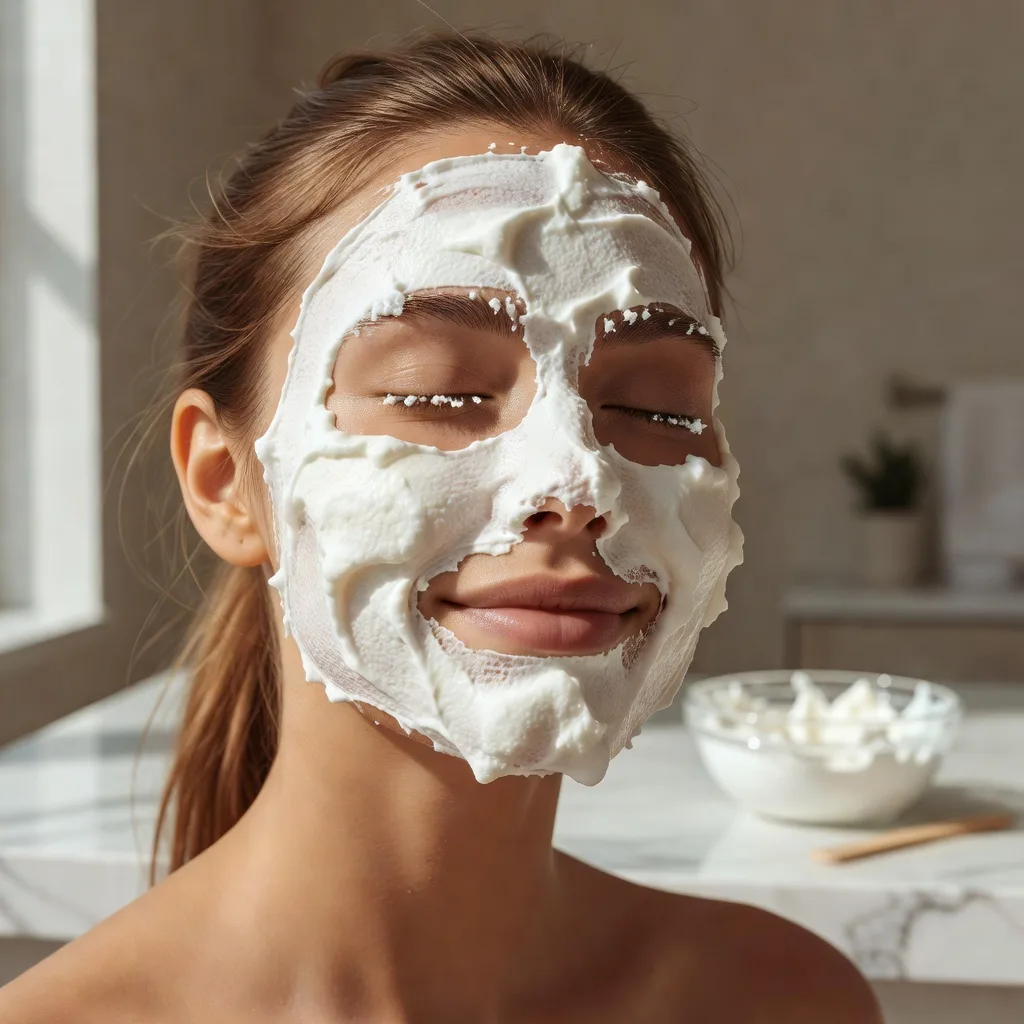
Marshmallow Facial: What the Evidence Shows
A marshmallow facial promises a soothing, calming treatment built around Althaea officinalis root extract, and while part of that promise is genuinely well-founded, the newer anti-inflammatory claims attached to it deserve a closer, more honest look.
Part of our guide to facial treatments. Start with: Fruit Facial at Home: Does It Actually Work?
The real, longstanding property of marshmallow root is its high mucilage content, a demulcent that forms a soothing, moisture-retentive film on skin. That’s well-established plant chemistry, independent of any newer lab research.
A 2020 study did find marshmallow root extract reduced inflammatory markers in human immune cells, but that research was done in a lab cell culture, not on human skin, and the study’s own authors said human clinical validation would still be needed.
This guide separates the genuinely evidenced demulcent benefit from the still-preclinical anti-inflammatory claims, and covers a realistic way to judge whether a marshmallow facial is doing anything for your skin.
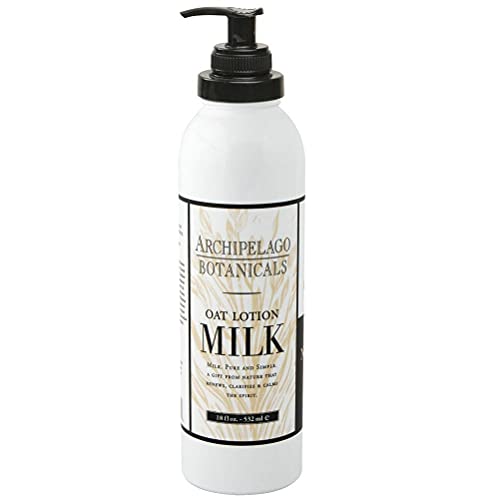
Recommended Marshmallow Facial Products

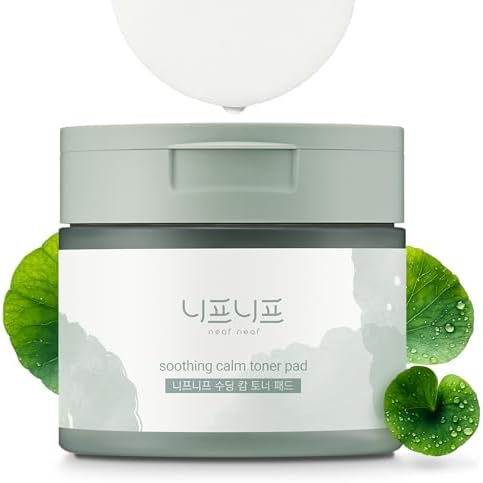
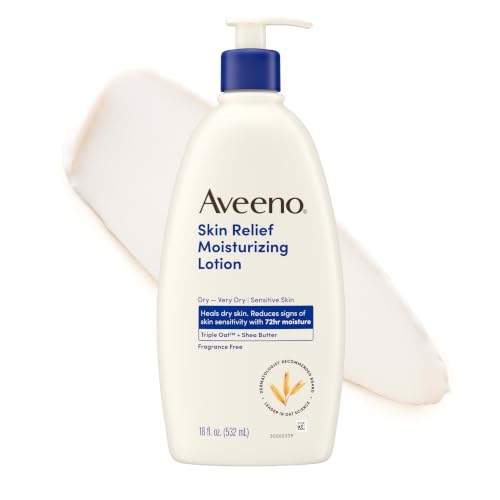

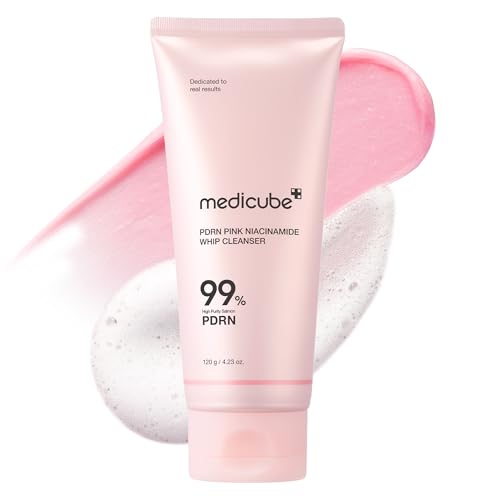

Key Takeaways
- A marshmallow facial uses extract from Althaea officinalis root, whose real, longstanding property is its high mucilage content, a demulcent that forms a soothing, moisture-retentive film on skin.
- A 2020 lab study found marshmallow root extract reduced inflammatory markers and oxidative stress in human immune cells, but this was in vitro, cell-culture research, not a human skin trial.
- The study’s own authors stated that human clinical validation would be necessary to confirm these laboratory observations, an important honesty check missing from most marketing.
- Claims that marshmallow root “heals,” “repairs,” or meaningfully reduces wrinkles go beyond what the current evidence actually supports.
- The most defensible, longest-standing claim is its traditional demulcent, soothing use, which is grounded in real, well-established plant chemistry.
- There’s no validated at-home test for whether marshmallow extract is “working” beyond your own subjective comfort and a standard patch test.
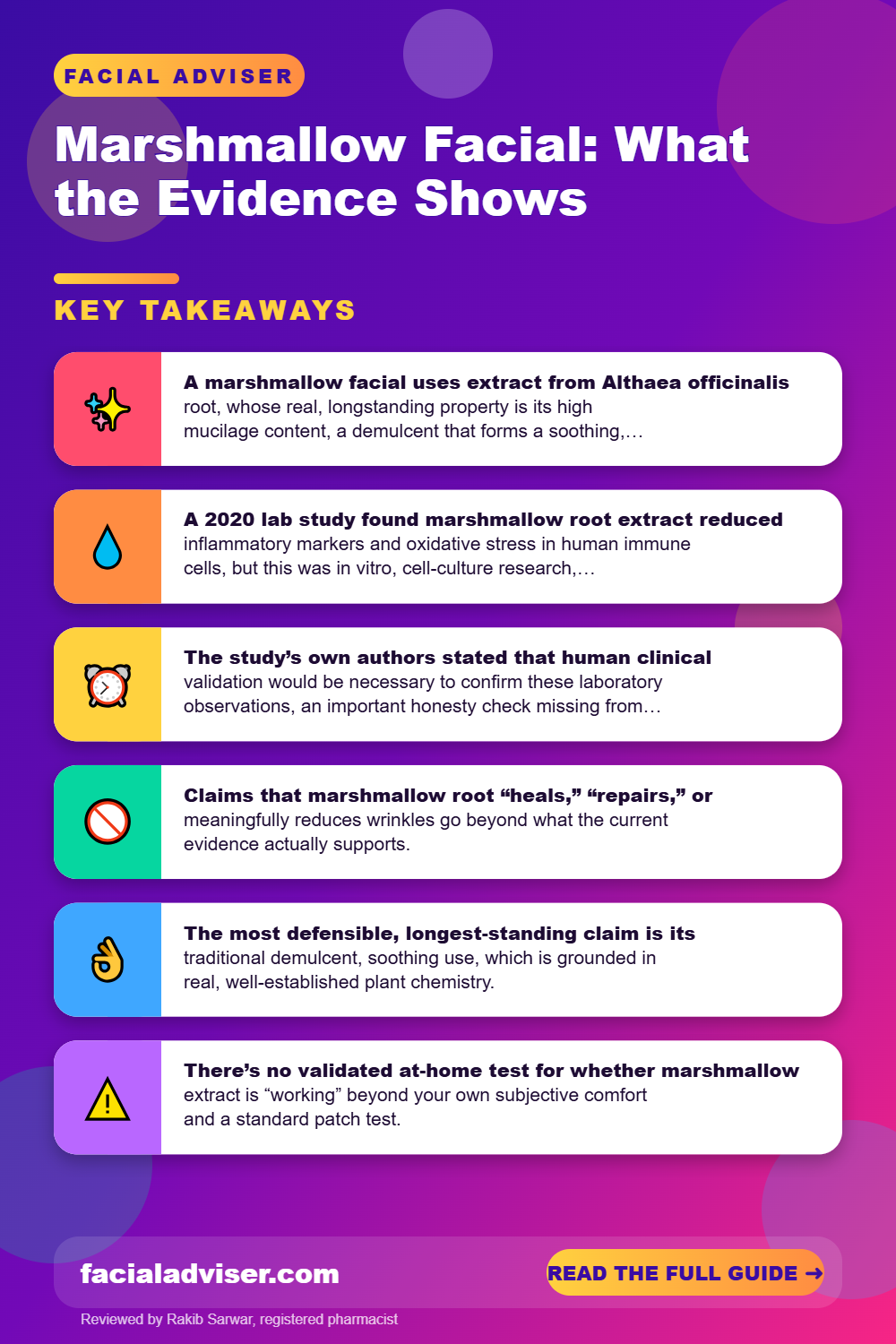
Table of Contents
What Marshmallow Root Actually Contains
Marshmallow facials use extract from Althaea officinalis root, and its real, chemically-grounded property is a high mucilage, or polysaccharide, content. Mucilage is a demulcent, meaning it forms a soothing, moisture-retentive film over skin and mucous membranes. This is well-established botanical chemistry, independent of any newer lab studies, and it’s the most defensible reason a marshmallow facial can genuinely feel soothing.
Shopping these picks?
Amazon Prime members get fast, free shipping on eligible items, plus Prime Video, Amazon Music and member deals. New members can start with a free trial.
Start a free Prime trialAged 18 to 24? Prime for Young Adults comes with a longer free trial and a lower price after it.
Affiliate link: we may earn a commission at no extra cost to you.
What the Research Actually Shows
Beyond the traditional demulcent use, the modern evidence for marshmallow root is entirely preclinical. A 2020 study published in Frontiers in Pharmacology tested marshmallow root extract on human immune cells in a lab setting, not on human skin in a clinical trial, and found it inhibited the release of inflammatory markers TNF-alpha and IL-6, with effects described as comparable to or better than a standard anti-inflammatory drug in that cell model. It also reduced oxidative stress markers by roughly half in stressed cells.
Note: The study’s own authors explicitly stated that “human clinical validation would be necessary to confirm these laboratory observations.” That’s an important, honest caveat: promising cell-culture results don’t automatically translate into a proven cosmetic facial benefit, and no human skin trial confirming these effects for a marshmallow facial currently exists.
A separate in-vitro study examined marshmallow root’s polysaccharides and cellular effects in human epithelial cells, again at the lab bench rather than in a clinical facial-treatment setting.
A Realistic Way to Judge Results
There’s no validated clinical test for whether marshmallow extract is measurably reducing inflammation in your skin at home. What you can reasonably track:
- Subjective comfort and any reduction in visible redness or tightness immediately after use.
- A standard patch test on your inner forearm, waiting 24 hours, before full facial application.
- Whether the soothing sensation lines up with the ingredient’s known demulcent, film-forming action, which is real, rather than a deeper anti-inflammatory claim that isn’t yet clinically confirmed.
Real Claims vs. Exaggerated Claims
| Claim | Evidence status |
|---|---|
| Soothing, moisture-retentive demulcent effect | Well-established traditional and chemical basis |
| Reduces inflammatory markers (TNF-alpha, IL-6) | Shown in vitro (lab cells), not confirmed in human skin |
| Reduces oxidative stress | Shown in vitro, not confirmed in human skin |
| “Heals” or “repairs” skin, reduces wrinkles | Not supported by current evidence |
| Study type | What it tells you |
|---|---|
| In vitro (cell culture) | Plausible mechanism, not proof of real-world skin benefit |
| Human clinical trial | Would confirm whether the lab findings hold up on actual skin (none exists yet for marshmallow facials) |
Do This, Not That
Do
- Value marshmallow extract for its genuine soothing, demulcent properties
- Patch test before full facial use, as with any new ingredient
- Treat the anti-inflammatory lab findings as promising but unconfirmed in human skin
- Use it as a gentle, low-risk addition to a routine, not a primary anti-aging treatment
- Pair it with actives that do have human clinical evidence if that’s your actual goal
Don’t
- Expect marshmallow root to “repair” or meaningfully reduce wrinkles
- Treat in-vitro cell-culture findings as proof of a clinical skin benefit
- Assume it can replace treatments with actual human trial evidence for pigmentation or aging
- Skip a patch test just because the ingredient is generally considered gentle
- Rely on it alone if you’re managing a diagnosed inflammatory skin condition
Trying a Marshmallow Facial
Patch test first
Apply a small amount to your inner forearm and wait 24 hours before facial use.
Cleanse your face
Start with clean, dry skin so the mucilage-rich extract can form its soothing film properly.
Apply and let it sit
Follow product instructions for contact time, typically 10-15 minutes for a mask-style application.
Tip: A marshmallow-based mask can be a gentle option to use after a stronger exfoliating step, like an AHA peel, to help calm the skin afterward.
Rinse gently
Remove with lukewarm water rather than hot water, which can strip the barrier you’re trying to soothe.
Moisturize
Follow with a moisturizer to lock in the hydration the demulcent film provided.
Who Marshmallow Facials Suit Best
Given its genuine demulcent properties and the still-unconfirmed clinical status of its deeper anti-inflammatory claims, a marshmallow facial suits people looking for a gentle, soothing, low-irritation addition to their routine, particularly after a more active treatment like an AHA-based peel. It’s not the right choice if you’re seeking clinically proven results for a specific diagnosed condition.
When to See a Dermatologist
Warning: Persistent redness, itching, or irritation after using any marshmallow-based product warrants stopping use and consulting a dermatologist rather than continuing to self-treat.
If you have a diagnosed inflammatory skin condition, a dermatologist can recommend treatments with actual human clinical trial evidence rather than relying on preclinical findings alone.
Frequently Asked Questions
What does a marshmallow facial actually do?
It applies Althaea officinalis root extract, whose high mucilage content forms a soothing, moisture-retentive film on skin, a genuine demulcent effect.
Is there clinical evidence marshmallow root reduces skin inflammation?
The evidence is preclinical, a 2020 lab study found anti-inflammatory effects in human immune cells, but not in a human skin clinical trial.
Does marshmallow root heal or repair skin?
Claims like this go beyond the current evidence, which supports a soothing demulcent effect and promising but unconfirmed lab findings, not tissue repair.
What is mucilage and why does it matter?
Mucilage is a polysaccharide that forms a soothing, moisture-retentive film, the well-established chemical basis for marshmallow root’s traditional soothing use.
Is marshmallow root safe for sensitive skin?
It’s generally considered gentle, but a patch test is still recommended before full facial use, as with any new ingredient.
Can marshmallow root reduce wrinkles?
No clinical human evidence supports this claim; its established benefit is soothing and moisture retention, not anti-aging.
What’s the difference between in-vitro and clinical evidence?
In-vitro findings come from lab cell cultures and suggest a plausible mechanism; clinical evidence comes from human trials and confirms real-world effects, marshmallow root only has the former for cosmetic use.
When should I use a marshmallow facial in my routine?
It works well as a gentle, calming step, often after a more active treatment like an AHA peel, rather than as a standalone anti-aging treatment.
Can marshmallow root replace treatments with proven clinical evidence?
No, it’s best used alongside actives that have human clinical trial support if you’re targeting a specific, evidenced concern.
What should I do if a marshmallow product irritates my skin?
Stop use and consult a dermatologist, since persistent irritation isn’t consistent with the ingredient’s generally gentle reputation.
The Bottom Line
A marshmallow facial’s real, defensible benefit is its soothing, moisture-retentive demulcent effect, grounded in genuine plant chemistry. Its newer anti-inflammatory and antioxidant claims come from lab studies on cells, not human skin, and the researchers themselves say clinical confirmation is still needed.
Use it for what it reliably delivers, comfort and hydration, and look elsewhere for treatments with actual human trial evidence if you’re targeting a specific, diagnosed skin concern.

Written by
Registered pharmacist and founder of Facial Adviser. Rakib's pharmacy training covers how skincare actives work and interact; a later course in cosmetology turned that into a focus on facial treatments and skincare products. He plans, researches and edits every guide on the site and checks health claims against sources such as the American Academy of Dermatology, the FDA and the NIH. He is not a dermatologist; see the Editorial Policy and Medical Disclaimer.
About · Editorial policy · How we choose products · Medical disclaimer · Contact
Keep reading: DIY and ingredient facials
- Fruit Facial at Home: Does It Actually Work?
- Strawberry Facial: Does the Vitamin C Claim Hold Up?
- Seaweed Facial: What The Science Actually Shows
- Flower Facial: Which Botanical Claims Hold Up
- Banana Facial: The Claim That Doesn't Hold Up
- Pearl Facial: What the Evidence Actually Shows
- What Is the Best Anti-Aging Facial Treatment? Options Compared by Goal
- What Is a Spa Facial?