Mascara for Contact Lens Wearers: What to Look For
Putting mascara on while wearing contact lenses is something many people do daily, but it can be uncomfortable if the wrong formula flakes into your eyes. The safest choice is a mascara that stays put, does not shed fibers and removes easily, combined with a few habits that protect your eyes and your lenses.
Part of our guide to makeup how-to. Start with: How to Choose the Right Eye Makeup Color for Your Eyes and Skin
Many people also ask whether certain brands are safer than others. No brand is perfect for everyone, so the best approach is to test products carefully and stop using any that irritate your eyes.
This guide explains what to look for in mascara if you wear contacts, from tubing and washable formulas to fiber-free options. It covers application order, removal, how often to replace mascara and when to talk to an eye doctor.
Black Friday is coming: shop the deals with Prime
I am Rakib Sarwar, a registered pharmacist with a cosmetology course. I am not an eye doctor, and this article is educational only. Contact lens wearers should follow the advice of their optometrist or ophthalmologist, who knows their eyes and lenses best.
Flaking is the main problem. Tiny bits of mascara that fall into the eye can sit under a lens and cause irritation, redness or scratches. Fibers, glitter and heavy waterproof formulas are the most likely to cause trouble.
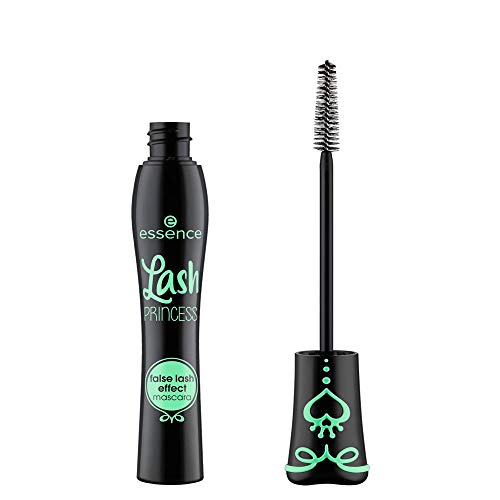
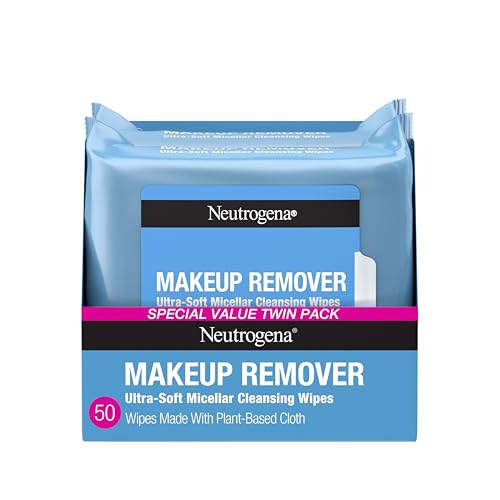
Below you will find a simple routine, a short list of mascaras and a remover, honest limits and signs that you should get help. For eye-friendly removal after a long day, our guides to cleansing balms and micellar waters may help.
Mascaras and Removers to Consider if You Wear Contacts



On This Page
- Why Mascara and Contacts Can Clash
- Which Mascara Types Suit Contact Lens Wearers
- What to Look for on the Label
- Lenses First, Makeup Second
- How to Wear Mascara With Contact Lenses
- Removing Mascara Safely With Lenses
- Hygiene and Replacement
- Honest Limits
- When to See an Eye Doctor
- Questions People Ask
- Where This Leaves You
In Brief
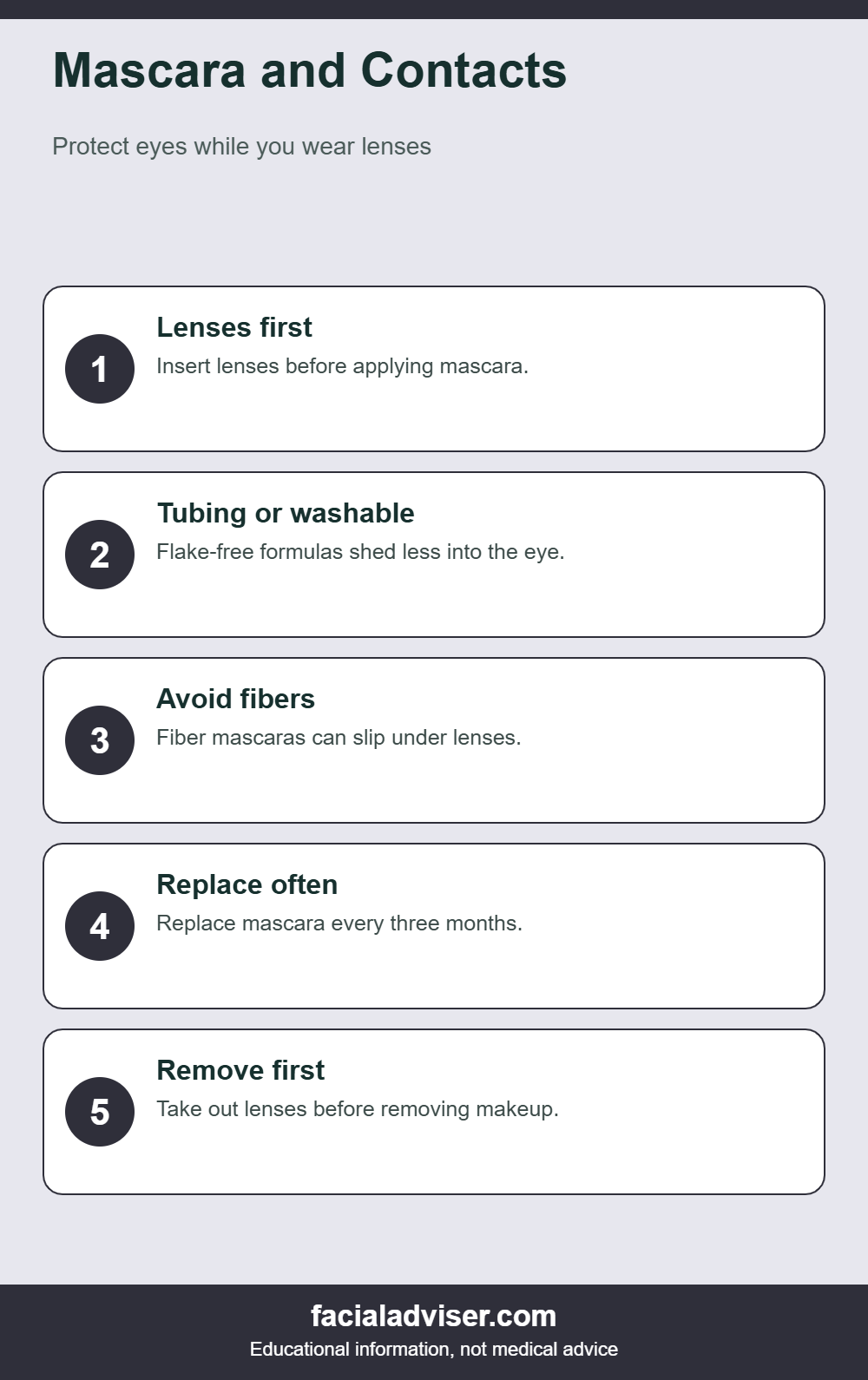
- Insert lenses before applying mascara.
- Choose tubing or washable formulas that flake less.
- Avoid fiber and glitter mascaras if you wear contacts.
- Replace mascara every three months and never share it.
- Remove lenses before taking off makeup.
- See an eye doctor for redness, pain or blurred vision.
Why Mascara and Contacts Can Clash
Contact lenses sit directly on the eye, so any particle that gets under the lens can rub the surface of the cornea. Mascara flakes, fibers and glitter are common culprits. Oily products can also coat a lens and blur vision.
Another issue is oil. Oily lids, heavy eye creams and oil-based removers can transfer to the lens and make vision cloudy. Keep creams away from the lash line and wipe any extra product with a clean tissue before putting lenses back in.
Soft lenses absorb moisture and can also take in small amounts of chemicals from products. Gas permeable lenses are firmer but can scratch if a hard particle gets underneath. Either way, a clean lens and clean lashes are the goal.
Allergy season, air conditioning and long screen hours also dry the eyes. Dry eyes make lenses less comfortable, so mascara can feel worse on those days. Use lubricating drops approved by your eye doctor if needed.
Dry eyes make the problem worse because there is less tear fluid to wash out particles. If your eyes feel gritty or irritated, take your lenses out and rinse as your eye doctor advises.
Ask your eye doctor about the right lens care and makeup habits for your eyes.
Which Mascara Types Suit Contact Lens Wearers
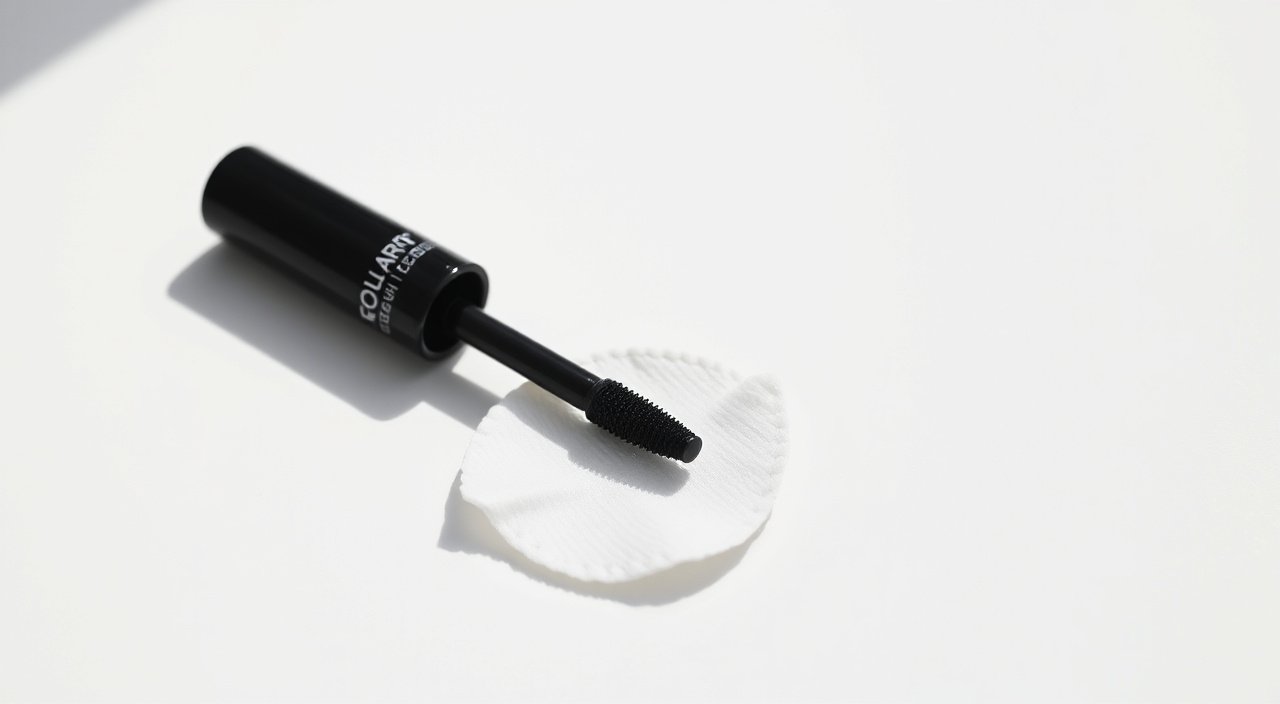
Tubing mascaras form small tubes around lashes and wash off with warm water, so they leave fewer flakes. Washable and water-soluble formulas are also friendly. Hypoallergenic or fragrance-free formulas lower the chance of irritation.
Waterproof formulas are not always needed. If you cry easily or live in a humid place, a tubing or water-resistant mascara may hold up well enough without needing heavy removal.
If you use a primer under mascara, choose a light, fragrance-free one and apply it away from the lash line.
Lash lengthening and volumizing mascaras often have thicker formulas that need more coats. More coats mean more chances to flake, so a single, well-placed coat is usually safer than several heavy layers.
Tubing formulas rely on polymers that wrap around each lash. They resist water and smudging but slide off with warm water and gentle pressure. That is why many people with sensitive eyes like them.
Lash serums and growth products are different from mascaras, and some are not designed for use with lenses. Ask your eye doctor before using them.
Waterproof mascaras hold on well but need oil-based removers, which can leave residue near lenses. Fiber and lash-lengthening formulas are more likely to shed.
| Type | Pros | Watch out for |
|---|---|---|
| Tubing | Flake-free, warm-water removal | Can smudge with oily lids |
| Washable | Easy to remove | May fade by evening |
| Hypoallergenic | Fewer irritants | May cost more |
| Waterproof | Lasts through tears | Harder to remove |
| Fiber | Adds length | Can fall into the eye |
What to Look for on the Label
Look for words like ophthalmologist tested, hypoallergenic, fragrance free or suitable for sensitive eyes, but remember that labels are not a guarantee for every person. Avoid mascaras that list fibers or contain glitter.
Test any new mascara on a day when you can remove your lenses early if needed. Avoid trying a new product before an event or a long trip, because discomfort is harder to deal with when you cannot take your lenses out.
Start with a small, inexpensive mascara and test it for a few days. If your eyes feel comfortable, you can move to larger sizes or other brands. Keep the receipt in case you need to return a product.
Check the brush shape. A smaller brush gives more control at the base of the lashes, while a larger brush can leave product on the lids and increase flaking.
A small brush helps you coat lashes without clumping, which lowers flaking. Replace any mascara that looks dry or clumpy.
Helps
- Tubing or washable formulas
- A clean, fresh wand
- Hypoallergenic labels
Backfires
- Fiber mascara
- Glitter or shimmer
- Old, dry mascara
Lenses First, Makeup Second
Wash your hands and insert your lenses before applying mascara. That way you do not transfer oil or product onto the lens, and you can see how the lens sits. At the end of the day, remove lenses before taking off makeup.
On days you wear extra makeup, such as eyeshadow and liner, apply them in the same order every time. A consistent routine helps you avoid touching your eyes unnecessarily.
Keep a small mirror and a clean tissue nearby. If mascara touches your lid or cheek, fix it before you blink, because wet product spreads and can flake later onto your lens.
Do your lens routine first when your hands are clean, then apply skincare and makeup. This avoids moisturizers or sunscreens touching the lens. If you put on sunscreen before lenses, wash your hands again.
If you wear daily lenses, you can switch to a fresh pair after a messy makeup day. If you wear monthly lenses, clean them as your eye doctor advises.
Keep your eyes open and look straight ahead when applying mascara so you can avoid poking the eye.
Lean closer to the mirror and look slightly down. That keeps the wand away from the lens and reduces blinking.
How to Wear Mascara With Contact Lenses
Take your time and use light layers. One or two coats are enough for most people.
Make sure your lenses are comfortable before you start. If a lens feels off, remove and rinse it first. Applying mascara over a poorly seated lens increases rubbing and discomfort.
Hold the wand horizontally and sweep gently upward. Avoid pumping the wand in the tube, which dries the mascara faster. Use a clean spoolie to remove clumps while mascara is still wet.
If a clump forms, wipe the wand and comb through with a clean spoolie. Dried clumps are more likely to break off and fall into the eye.
Insert lenses first
Wash your hands and put in your lenses.
Curl lashes if you like
Curl before mascara, never after.
Wipe the wand
Remove extra product on a tissue.
Apply light coats
Wiggle the wand at the roots and sweep outward.
Let it dry
Wait before blinking to avoid transfer.
Take lenses out and rinse if your eye feels gritty, burns or turns red. See an eye doctor if symptoms persist.
Removing Mascara Safely With Lenses
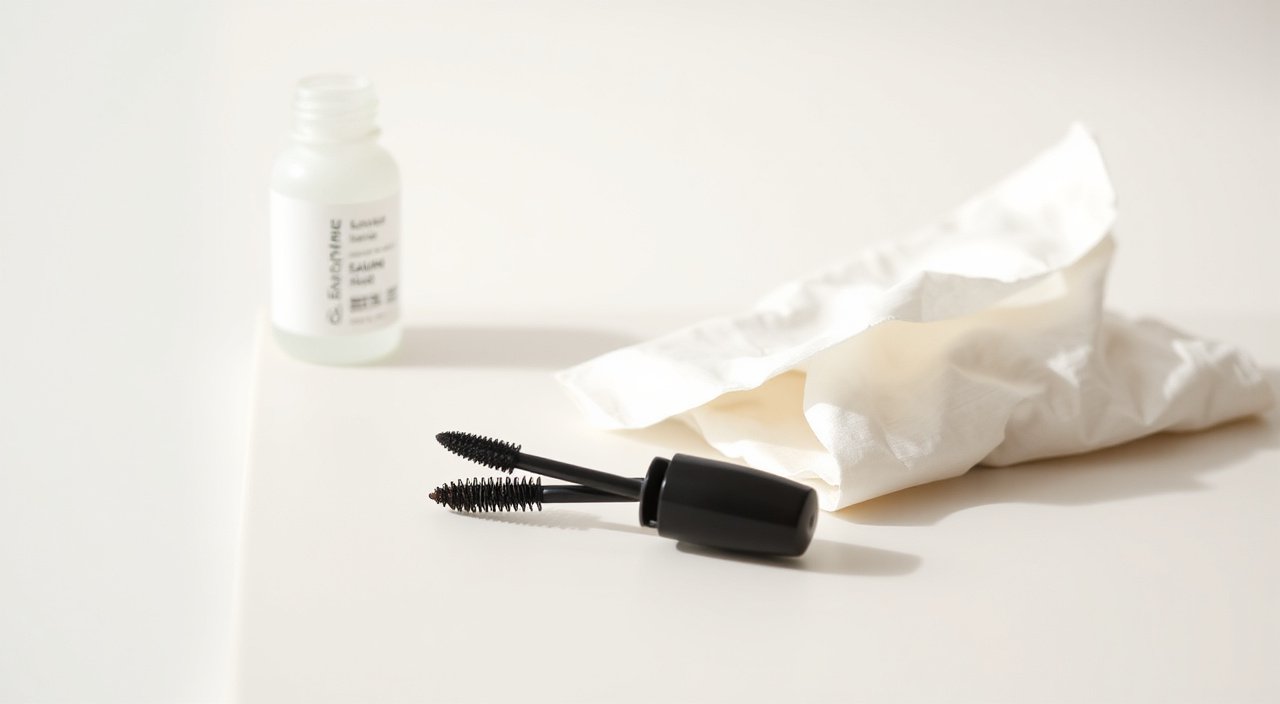
Take your lenses out first. Hold a pad with a gentle remover on the closed eye for several seconds, then wipe downward. Avoid rubbing or tugging.
For the lower lashes, use a cotton swab lightly dampened with remover. This lets you get close to the lash line without rubbing the eye itself.
Soft lenses can pick up residue from oil-based removers. If you use balm or oil near the eyes, make sure your lenses are out and your hands are clean before handling them again.
Replace lenses as directed if they feel coated or cloudy. A damaged or coated lens can irritate the eye.
Rinse your hands and eyes as your eye doctor advises. Do not put lenses back in if you still have residue on your lashes.
Hygiene and Replacement
Mascara can grow bacteria once opened. Replace it about every three months, sooner after an eye infection. Never share mascara or pump the wand in the tube, which pushes air in.
Keep a spare, unopened mascara in a drawer so you can swap without a rush when it is time to replace it. Mark the opening date on the tube so you know when three months have passed.
Store mascara upright in a cool, dry place and close it tightly after use. If you notice a change in smell or texture, replace it right away.
If you have had an eye infection, discard the mascara and other eye makeup you used before and during the infection. This lowers the chance of re-infection.
| Habit | Why it matters |
|---|---|
| Replace every 3 months | Bacteria can grow |
| Do not share | Spreads germs |
| Do not add water or saliva | Adds bacteria |
| Wash hands before lenses | Keeps lenses clean |
Honest Limits
No mascara is guaranteed flake-free, and reactions are personal. Mascara and lenses can still irritate sensitive or dry eyes. Waterproof or long-wear formulas are riskier if you cannot remove them easily.
Eye shape, lid oiliness and blink rate all influence how mascara behaves. Someone with watery eyes may see smudges even with a tubing formula, while someone with very dry eyes may find even gentle products uncomfortable.
Mascara shades also matter. Black is dramatic, while brown-black is softer. Choose what suits your style, but do not choose based on eye safety claims alone.
If you have allergies, contact dermatitis or very dry eyes, talk to an eye doctor about the safest makeup routine.
Online ratings do not measure eye safety. Use them as a guide, not a guarantee.
When to See an Eye Doctor
See an eye doctor if you notice pain, redness, light sensitivity, blurred vision, discharge or a feeling that something is stuck in your eye. These can be signs of an infection or scratch that needs treatment.
If you notice your lenses are cloudy, hard to insert or uncomfortable more often than before, mention your makeup routine to your eye doctor. Residue can shorten lens comfort and may need a change in lens type or schedule.
Bring your lens case and makeup products to your next eye exam if you have recurring irritation. Your doctor can check for allergic reactions and suggest changes.
Do not ignore persistent symptoms. Eye infections can progress quickly.
This article is educational and not medical advice. The author is a registered pharmacist, not an eye doctor, and cannot diagnose eye conditions.
Questions People Ask
Can I wear mascara with contact lenses?
Yes, with careful product choices, lenses inserted first and gentle removal.
What type of mascara is best for contacts?
Tubing, washable and hypoallergenic formulas that flake less.
Should I avoid fiber mascara?
Yes, fibers can fall into the eye and under a lens.
Do I put in lenses or mascara first?
Lenses first, then mascara.
Can waterproof mascara be used?
It can, but it is harder to remove and may leave residue.
How do I remove mascara with lenses?
Take lenses out first, then remove mascara gently.
How often should I replace mascara?
About every three months.
What if mascara flakes into my eye?
Take out the lens and rinse as your eye doctor advises.
Can mascara cause an eye infection?
Old or shared mascara can carry bacteria, so replace it often.
When should I see an eye doctor?
See one for pain, redness, light sensitivity or blurred vision.
Where This Leaves You
Mascara and contact lenses can work together if you choose flake-free formulas, insert lenses first and remove everything gently.
Replace mascara regularly and see an eye doctor if you have pain, redness or vision changes.

Written by
Registered pharmacist and founder of Facial Adviser. Rakib's pharmacy training covers how skincare actives work and interact; a later course in cosmetology turned that into a focus on facial treatments and skincare products. He plans, researches and edits every guide on the site and checks health claims against sources such as the American Academy of Dermatology, the FDA and the NIH. He is not a dermatologist; see the Editorial Policy and Medical Disclaimer.
About · Editorial policy · How we choose products · Medical disclaimer · Contact
Keep reading: Eye makeup
- How to Choose the Right Eye Makeup Color for Your Eyes and Skin
- How to Use Under-Eye Patches: Placement, Timing and Tips
- Under Eye Skin Pinch Test: What It Reveals
- How to Avoid Makeup Creasing Under Your Eyes
- Is It Safe to Put Makeup on Your Waterline?
- Best Way to Do Makeup for Hooded Eyes: Shadow, Liner and Lash Tips
- How to Properly Put On Face Makeup: The Right Order, Step by Step
- How to Choose Lipstick Shade: Undertone, Skin Tone and Testing Tips
Prime for Young Adults: a longer free trial and a lower price after it