Cosmetics vs Toiletries: The Real Difference
Drugstore shelves and product labels use “cosmetics” and “toiletries” almost interchangeably, but in a real cosmetics vs toiletries comparison, is either term actually defined by law once you look past the marketing?
Part of our guide to cosmetic science. Start with: How to Read a Cosmetic Ingredient List: A Beginner Guide
“Cosmetic” is a real, legally defined category under the FD&C Act, decided by intended use — label claims, advertising, and consumer perception, not ingredients alone. “Toiletries” has no legal definition anywhere; it’s a retail merchandising term, and even the FDA’s own consumer guidance never uses the word. A single bar of soap can legally be a cosmetic, a drug, or actual soap under a completely separate regulatory system, depending only on what claims are printed on the label.
The genuinely interesting edge case most people never hear about: most bars sold today as “soap” at a drugstore are not legally soap at all under federal rules, because added moisturizing or fragrance claims push them into cosmetic territory instead.
This guide walks through the actual legal test the FDA uses, the true-soap exception and its three specific requirements, real examples of products that are both cosmetic and drug at once, and where “toiletries” fits into all of it.
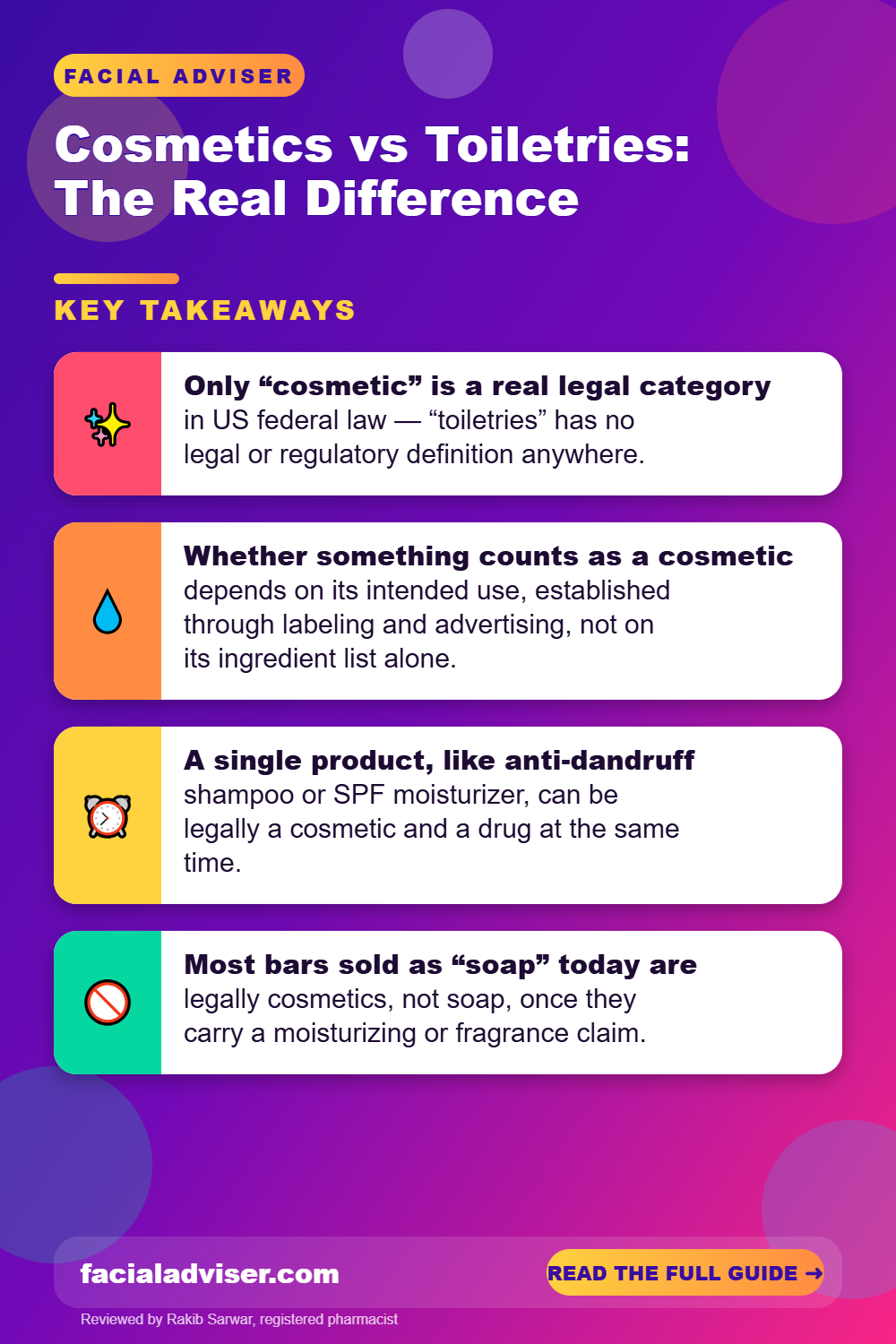
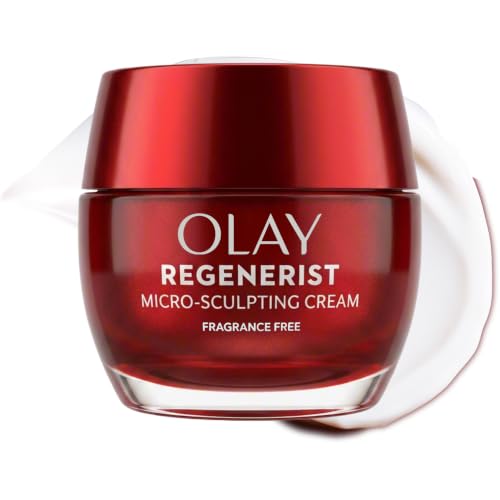
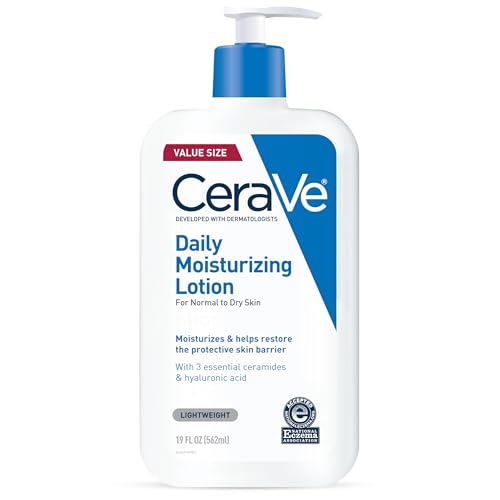
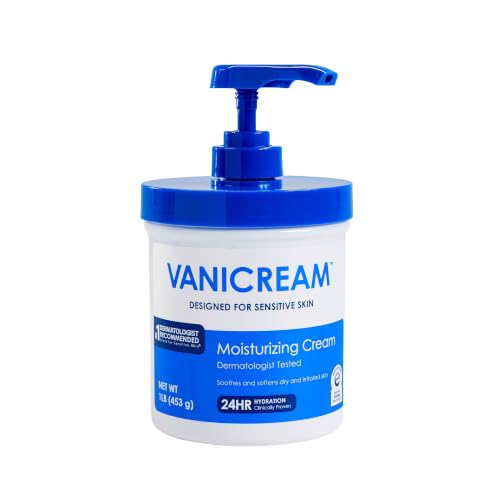
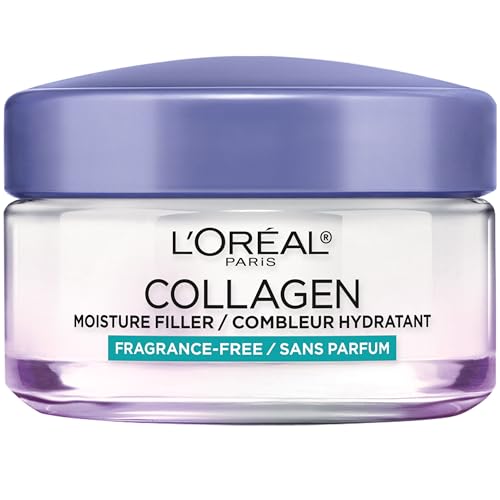
Recommended Everyday Cosmetics and Personal Care Picks


What You Need to Know
- Only “cosmetic” is a real legal category in US federal law — “toiletries” has no legal or regulatory definition anywhere.
- Whether something counts as a cosmetic depends on its intended use, established through labeling and advertising, not on its ingredient list alone.
- A single product, like anti-dandruff shampoo or SPF moisturizer, can be legally a cosmetic and a drug at the same time.
- Most bars sold as “soap” today are legally cosmetics, not soap, once they carry a moisturizing or fragrance claim.
In This Article
- Only One of These Words Means Anything Legally
- The Actual Legal Definition of a Cosmetic
- The Test Is Intended Use, Not Ingredients
- A 2022 Law Changed the Rules
- When a Product Is Both a Cosmetic and a Drug
- The Soap Loophole Almost Nobody Knows About
- The Same Bar of Soap, Three Legal Categories
- Why “Toiletries” Has No Legal Meaning at All
- The Industry’s Preferred Term Instead
- Cosmetic vs. Drug vs. Soap, Side by Side
- Why the Distinction Actually Matters
- Frequently Asked Questions
- The Bottom Line
Only One of These Words Means Anything Legally
Most people assume “cosmetics” and “toiletries” are two labels for roughly the same shelf of products, maybe split by whether something is makeup or hygiene. That assumption is wrong in a specific, correctable way: only one of those two words is a real legal category under US federal law. “Cosmetic” has a statutory definition, a dedicated section of the Federal Food, Drug, and Cosmetic Act, and an entire regulatory apparatus behind it. “Toiletries” appears nowhere in that law, and understanding why changes how you should read a product label.
Shopping these picks?
Amazon Prime members get fast, free shipping on eligible items, plus Prime Video, Amazon Music and member deals. New members can start with a free trial.
Start a free Prime trialAged 18 to 24? Prime for Young Adults comes with a longer free trial and a lower price after it.
Affiliate link: we may earn a commission at no extra cost to you.
The Actual Legal Definition of a Cosmetic
Per the FDA’s own guidance on cosmetics and US law, Section 201(i) of the FD&C Act defines cosmetics as articles intended to be rubbed, poured, sprinkled, or sprayed on, introduced into, or otherwise applied to the human body for cleansing, beautifying, promoting attractiveness, or altering the appearance, along with components of such articles, with soap specifically carved out as an exception. That carve-out for soap turns out to matter far more than it sounds like it should, which the soap section below covers in detail.
The Test Is Intended Use, Not Ingredients
The FDA is explicit that whether something is legally a cosmetic is established through intended use, not through what’s in the bottle. That test runs through three channels: label claims and advertising, consumer perception of what the product is bought and used for, and ingredients with a known therapeutic function, such as fluoride. A jar of the exact same cream could be marketed and sold as a cosmetic moisturizer or, with different claims on the label, cross into drug territory — the formula doesn’t have to change at all for the legal category to shift.
A 2022 Law Changed the Rules
A lot of consumer content still repeats that cosmetics are “barely regulated” in the US, and that used to be closer to true. The 2022 Modernization of Cosmetics Regulation Act, known as MoCRA, added a formal definition of “cosmetic product” as a preparation of cosmetic ingredients with a qualitatively and quantitatively set composition, and gave the FDA real new authorities: facility registration, product listing, adverse event reporting, and mandatory recall authority. Those are genuinely new regulatory teeth as of the 2020s, and any claim that cosmetics operate in a legal vacuum is now out of date.
When a Product Is Both a Cosmetic and a Drug
The FDA gives its own worked examples of products that are legally both a cosmetic and a drug simultaneously, and must satisfy both sets of federal requirements at once. Anti-dandruff shampoo is a cosmetic because it cleanses hair and a drug because it treats dandruff. Fluoride toothpaste is a cosmetic because it cleans teeth and a drug because it prevents cavities. Deodorant that also claims to reduce perspiration is a cosmetic for the fragrance function and a drug for the body-function claim, and a moisturizer with SPF is a cosmetic for beautifying and a drug because UV protection is a drug claim under federal law.
The Soap Loophole Almost Nobody Knows About
This is the most genuinely surprising correction in the whole topic. Under FDA regulation 21 CFR 701.20 and CPSC guidance, a product only qualifies as true soap, exempt from cosmetic regulation and overseen instead by the Consumer Product Safety Commission rather than the FDA, if it passes three tests at once: the bulk of its nonvolatile matter must be an alkali salt of fatty acids, meaning actual saponified fat-and-lye chemistry; its cleaning action has to come specifically from that chemistry, so added synthetic detergents can knock a product out of the category; and it must be labeled, sold, and represented solely as soap, with no cosmetic-style claims like moisturizing or exfoliating and no drug-style claims like killing germs.
The Same Bar of Soap, Three Legal Categories
A concrete example makes the soap rule easier to hold onto than the abstract three-part test alone. Picture the same basic bar sold three different ways.
| How It’s Labeled and Sold | Legal Category | Regulator |
|---|---|---|
| Plain lye-and-fat bar, sold and labeled strictly as “soap,” no other claims | True soap | Consumer Product Safety Commission |
| Same bar, label adds “moisturizing” or fragrance as a selling point | Cosmetic | FDA, under MoCRA |
| Same bar, marketed as “kills 99.9% of germs” or treats body acne | Drug | FDA, under OTC drug monograph rules |
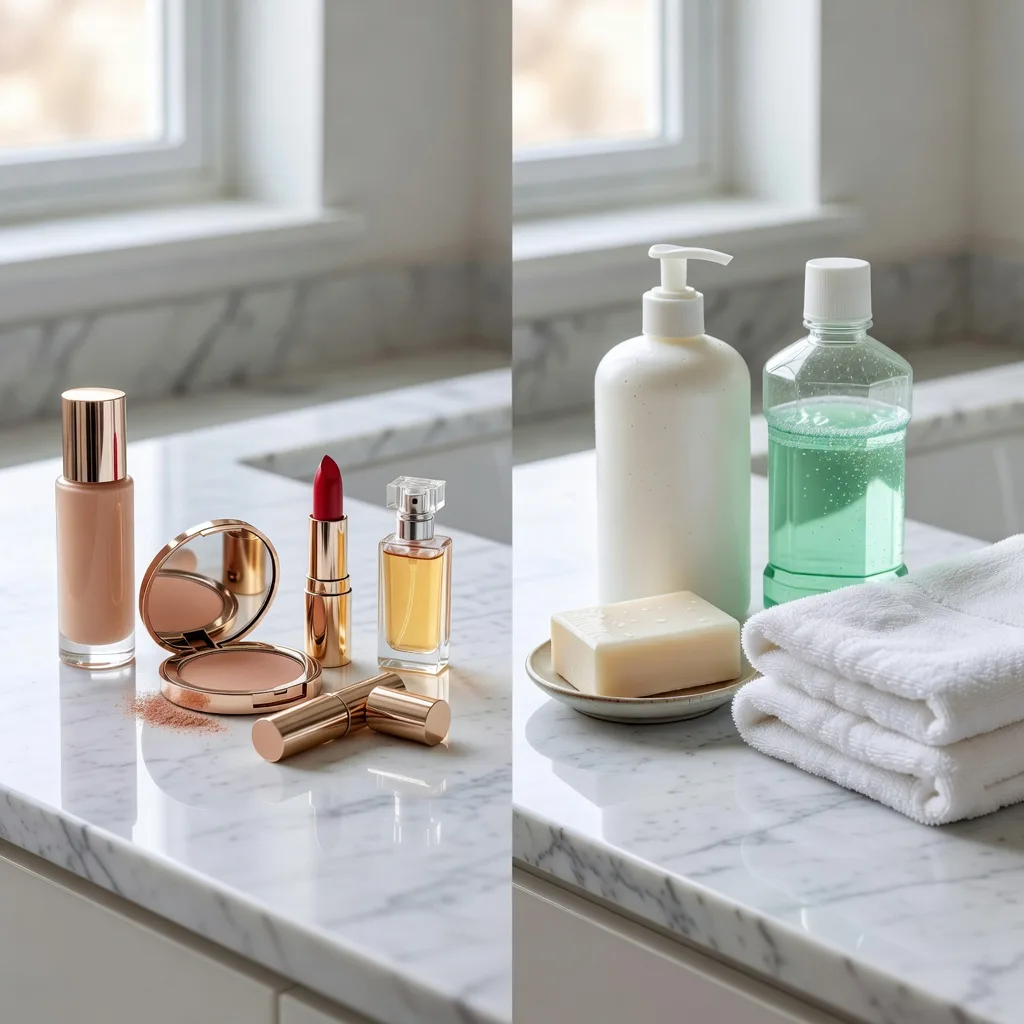
All three of those bars would sit on the same retail “toiletries” shelf, which is exactly the point: that shelf happily mixes products from three legally distinct federal categories, because the shelf label was never a regulatory term to begin with.
Why “Toiletries” Has No Legal Meaning at All
There is no FDA, FTC, or other federal definition of “toiletries.” It is a retail and merchandising term, used by stores and industry publications to group personal hygiene and grooming products, soap, shampoo, toothpaste, deodorant, razors, and sometimes makeup, for shelving and marketing purposes, and it carries no legal weight. The FDA’s own guidance titled “Are All Personal Care Products Regulated as Cosmetics?” never uses the word “toiletries” at all, which is telling: the agency doesn’t recognize the category because federal law only ever recognizes cosmetic, drug, device, dietary supplement, and, through the CPSC, general consumer product.
Do
- Check the actual label claims before assuming a product’s category from where it’s shelved.
- Treat “toiletries” and “personal care” as shopping terms only, not indicators of oversight.
- Look for a Drug Facts panel when a product makes a treatment claim.
Don’t
- Assume a bar labeled “soap” is legally soap without checking its claims.
- Assume a “cosmetic” label means a product was pre-approved by the FDA.
- Treat identical ingredient lists as proof two products share a legal category.
The Industry’s Preferred Term Instead
The closer thing to an industry standard term is “personal care products,” used by the Personal Care Products Council, the main US trade association for the sector. It’s still not a legal category, but it’s the term the industry itself gravitates toward in place of “toiletries,” and it maps somewhat more loosely onto how the FDA talks about the sector in consumer-facing guidance. Neither term substitutes for the actual legal categories underneath them.
Cosmetic vs. Drug vs. Soap, Side by Side
Once the categories are separated out, the practical differences in oversight become clear rather than abstract.
| Category | Regulator | Key Requirement |
|---|---|---|
| Cosmetic | FDA, under the FD&C Act and MoCRA | Facility registration, product listing, adverse event reporting, no pre-market approval required |
| Drug (including dual-status products) | FDA, under drug provisions of the FD&C Act | Stability testing, expiration dating under 21 CFR 211, often an OTC monograph or approval |
| True soap (21 CFR 701.20 test) | Consumer Product Safety Commission | General consumer product safety standards, not FDA cosmetic or drug rules |
Why the Distinction Actually Matters
This isn’t a purely academic point. A product’s actual legal category determines what safety testing and reporting it was subject to, whether a claim on its label had to clear a higher bar, such as an OTC drug monograph, or a lower one, and which federal agency has jurisdiction if something goes wrong. Reading a label with this framework in mind, checking what’s actually claimed rather than assuming from the shelf it sits on, tells you more about a product’s real regulatory status than any “toiletry” or “personal care” label on the aisle ever will.
A short sequence turns this from an abstract framework into something you can actually apply at the shelf:
Read the front-of-pack claim first
A word like “treats,” “prevents,” or “cures” signals a drug claim; words like “cleanses” or “beautifies” alone signal a cosmetic claim.
Check for an active ingredient panel
An FDA-format Drug Facts panel on the back means the product is regulated as a drug, at least in part, regardless of what the front implies.
Look for soap-specific language
A bar labeled only as cleansing soap, with no moisturizing or antibacterial claim, is the one likely to actually qualify as true soap.
Note when both apply
If a product both cleans and treats a condition, such as dandruff or cavities, it is very likely operating under dual cosmetic-and-drug status.
Frequently Asked Questions
Is “toiletries” a legal or regulatory category?
No. There is no FDA, FTC, or other federal definition of the term; it is strictly a retail and merchandising label used for shelving products together.
What makes something legally a cosmetic?
Its intended use, established through label claims, advertising, consumer perception, and any therapeutic ingredient function, not simply what ingredients it contains.
Can a product be both a cosmetic and a drug?
Yes. Anti-dandruff shampoo, fluoride toothpaste, and SPF moisturizer are all FDA examples of products that must meet both cosmetic and drug requirements at once.
Is all soap regulated the same way?
No. Only soap that passes a three-part test on chemistry, cleaning mechanism, and marketing claims counts as true soap under CPSC rules; everything else is legally a cosmetic or drug.
Why is most drugstore soap not legally “soap”?
Because it typically carries moisturizing, fragrance, or antibacterial claims, which moves it out of the narrow true-soap definition and into cosmetic or drug territory instead.
What did MoCRA change in 2022?
It gave the FDA new authorities over cosmetics, including facility registration, product listing, adverse event reporting, and mandatory recall power, closing gaps that existed before.
Does the FDA approve cosmetics before they’re sold?
No pre-market approval is required for ordinary cosmetics, unlike drugs, though manufacturers remain responsible for substantiating product safety.
Who regulates true soap if not the FDA?
The Consumer Product Safety Commission, since true soap is specifically excluded from the FD&C Act’s cosmetic definition.
Is “personal care products” the same as “toiletries”?
They’re used similarly, but “personal care products” is the term the industry’s own trade association favors; neither is a legal category.
Does an ingredient list alone determine a product’s legal category?
No. The FDA’s stated test is intended use, meaning two products with identical ingredients can fall into different categories based on their claims.
The Bottom Line
“Cosmetics” and “toiletries” aren’t parallel categories, and treating them as equivalent obscures a genuinely useful distinction. Only “cosmetic” carries legal weight, defined by intended use rather than ingredients, and reinforced since 2022 by real new FDA authorities under MoCRA. “Toiletries” is a shopping-aisle convenience that happily mixes cosmetics, drugs, and true soap on the same shelf.
The most practical habit to take from this is reading claims, not shelf placement. What a product says it does, on the label and in its advertising, is what actually determines its legal category and the oversight behind it, whether that’s a fragrance-free bar that genuinely qualifies as soap or a “gentle cleansing bar” that, legally speaking, does not.

Written by
Registered pharmacist and founder of Facial Adviser. Rakib's pharmacy training covers how skincare actives work and interact; a later course in cosmetology turned that into a focus on facial treatments and skincare products. He plans, researches and edits every guide on the site and checks health claims against sources such as the American Academy of Dermatology, the FDA and the NIH. He is not a dermatologist; see the Editorial Policy and Medical Disclaimer.
About · Editorial policy · How we choose products · Medical disclaimer · Contact
Keep reading: How cosmetics are made
- How to Read a Cosmetic Ingredient List: A Beginner Guide
- Can Cosmetics Cause Melasma?
- Facial Skin Sensitivity to Fragrance: Allergy vs Irritation and What to Do
- How to Spot Fragrance in an Ingredient List
- Antioxidant Synergy in Skincare: Which Combinations Work?
- The Role of Emulsifiers in Cosmetic Stability: How They Keep Creams Together