What Is a Facial? What Happens, Types, Benefits and Who It Suits
A facial is one of the most popular spa treatments, yet many people are not quite sure what one involves before they book. Is it mainly relaxation, a deep clean or a medical treatment? Will it hurt, and will your skin look better afterwards or worse? The answer depends on the type of facial and your skin, but the basic structure is similar almost everywhere.
Part of our guide to facials: what to expect. Start with: How Often Should You Get a Professional Facial? A Guide by Skin Type and Goal
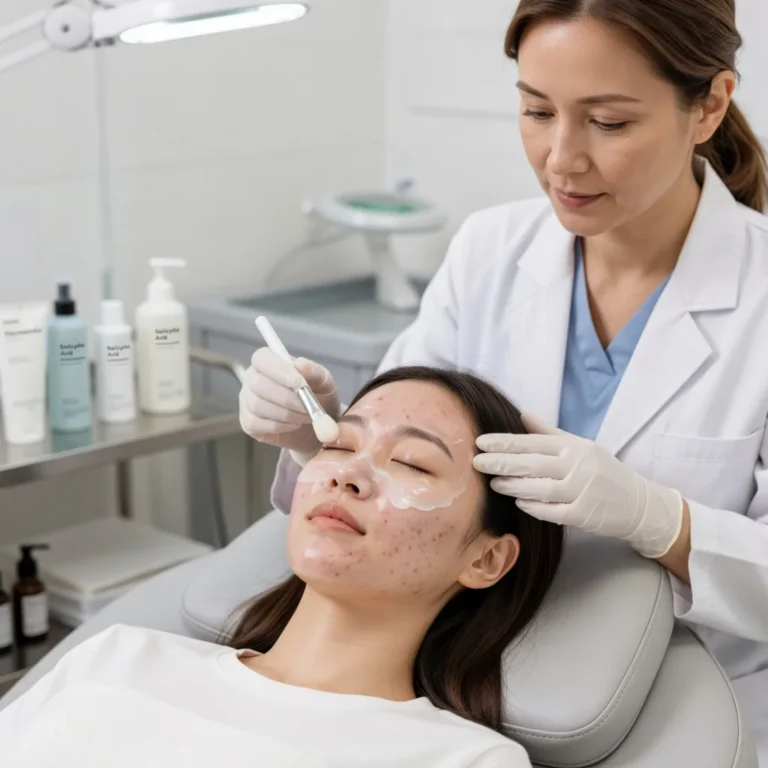
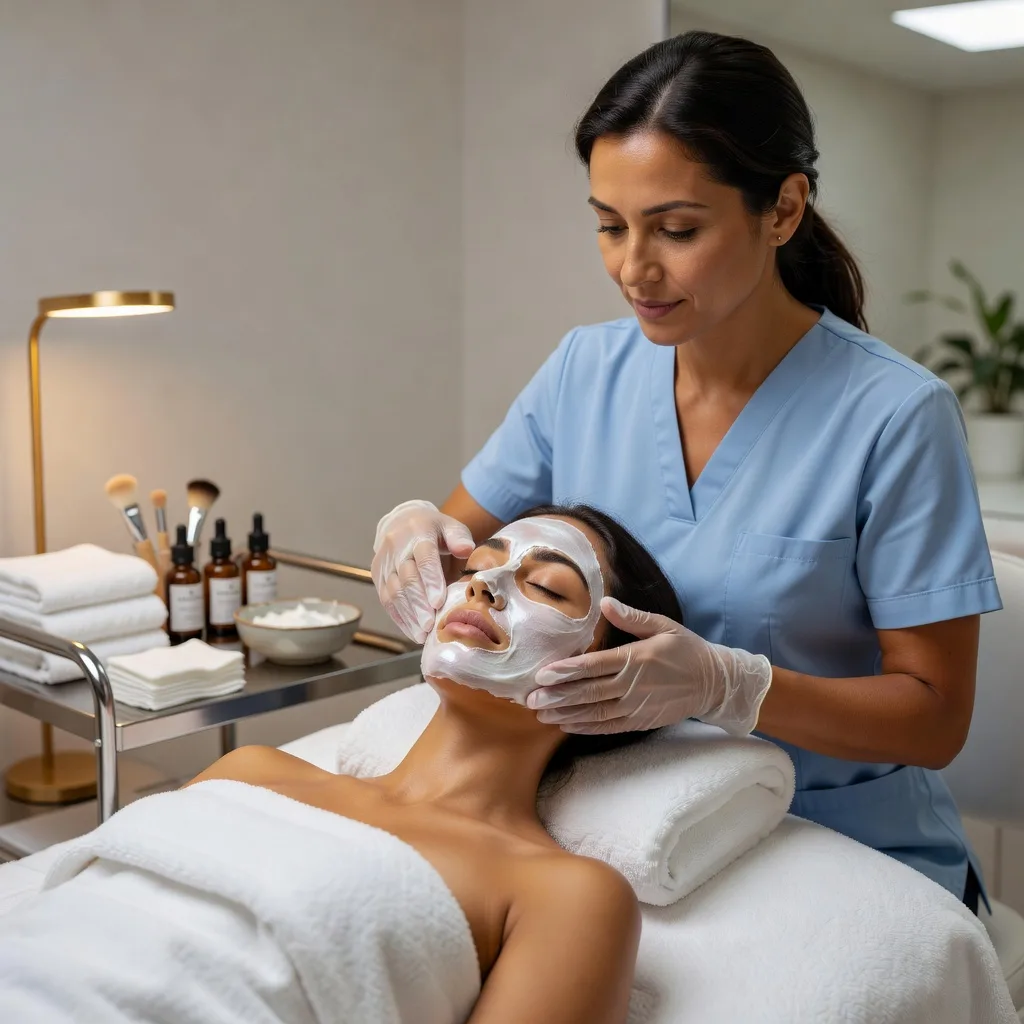
A facial is a professional skin treatment, usually lasting 45 to 90 minutes, in which an esthetician cleanses, exfoliates and treats the skin on your face. Most facials include a skin assessment, double cleansing, exfoliation with a scrub, enzymes or mild acids, steam, extractions of blackheads and clogged pores, a mask suited to your skin, facial massage, and serum, moisturiser and sunscreen to finish. Facials can leave skin cleaner, smoother and more hydrated for a few days to weeks and are relaxing, but they are optional and do not replace a good daily routine.
Facials sit somewhere between a beauty treatment and skincare, and they are popular with people of all ages and genders. They are not medical procedures, although some clinics offer medical-grade facials with stronger peels or devices. Those treatments usually need a consultation first and more careful aftercare. A standard spa facial is gentle and suitable for most skin types.
The American Academy of Dermatology emphasises that daily habits such as gentle cleansing, moisturising and sunscreen are the foundation of healthy skin. A facial works best as an occasional extra on top of those habits.
This guide explains what happens during a facial, the most common types, the real benefits and limits, who should wait, how often to have one and how to care for your skin afterwards.
Shopping these picks?
Amazon Prime members get fast, free shipping on eligible items, plus Prime Video, Amazon Music and member deals. New members can start with a free trial.
Start a free Prime trialAged 18 to 24? Prime for Young Adults comes with a longer free trial and a lower price after it.
Affiliate link: we may earn a commission at no extra cost to you.
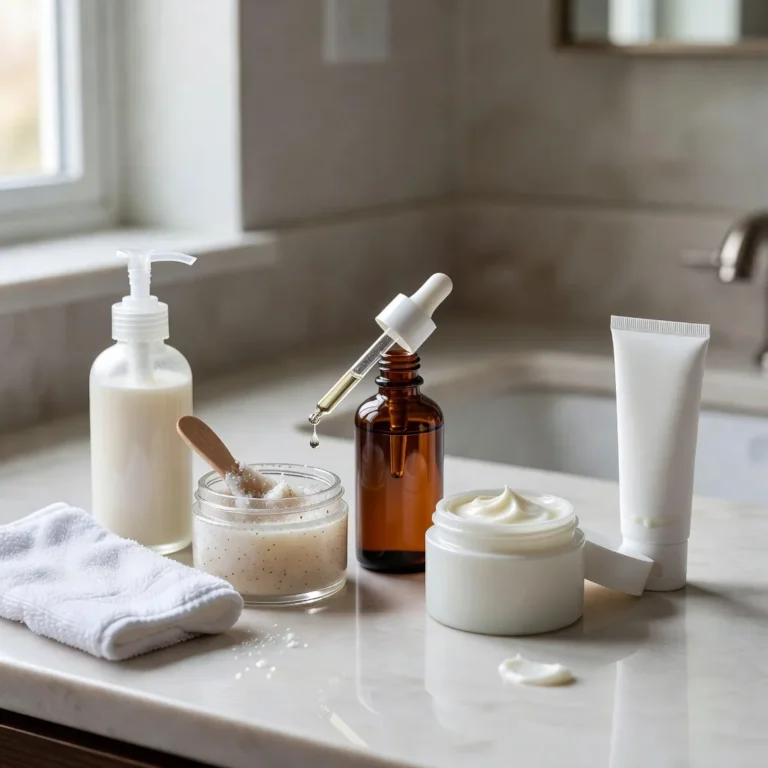
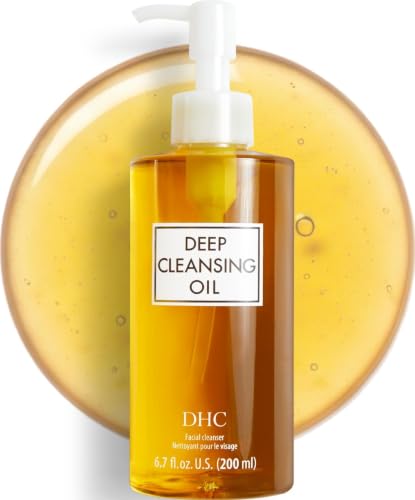
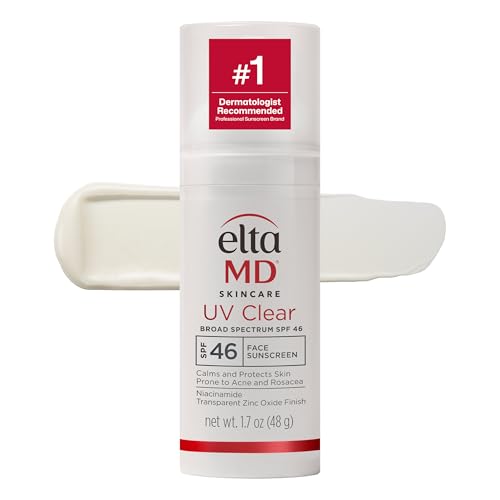
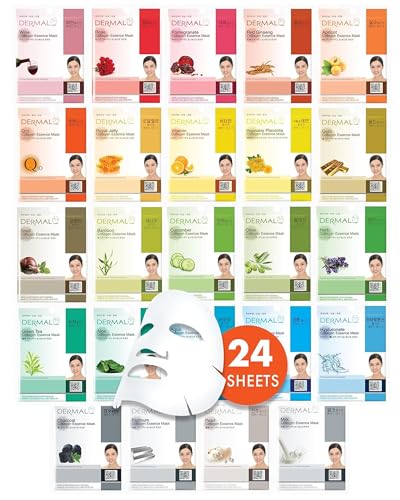
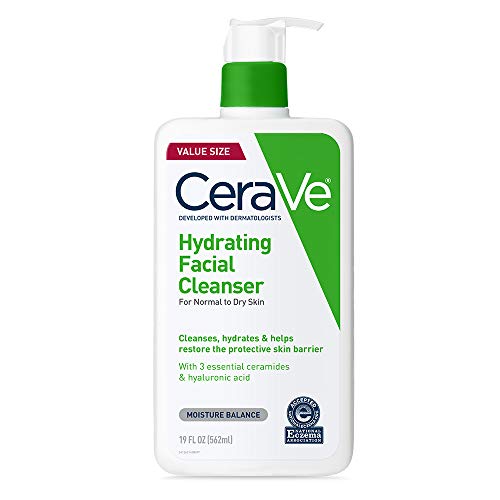
Recommended Products for Facial-Style Care at Home



Quick Answer
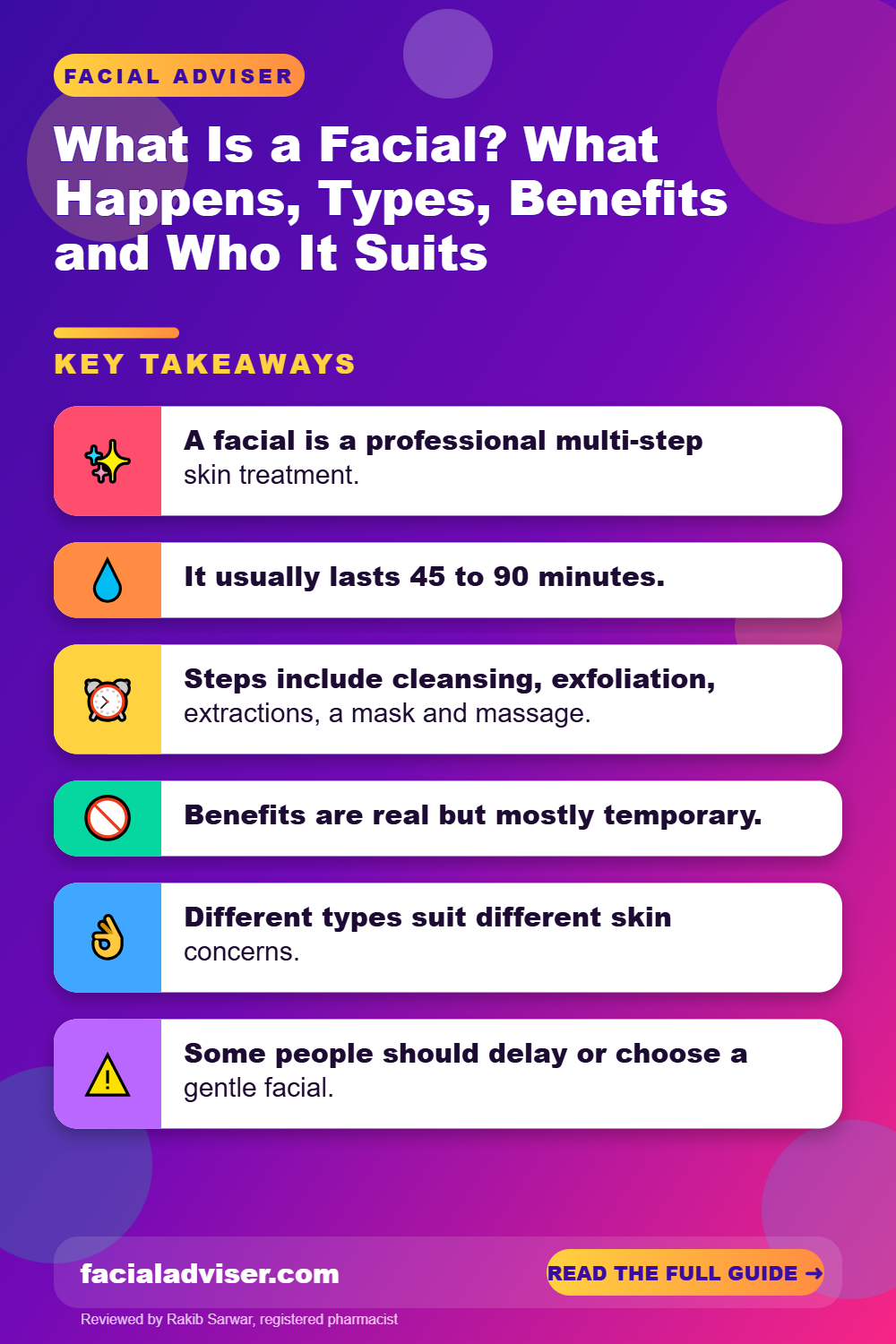
- A facial is a professional multi-step skin treatment.
- It usually lasts 45 to 90 minutes.
- Steps include cleansing, exfoliation, extractions, a mask and massage.
- Benefits are real but mostly temporary.
- Different types suit different skin concerns.
- Some people should delay or choose a gentle facial.
- Daily skincare matters more than occasional facials.
Jump to a Section
- What Happens During a Facial, Step by Step
- Common Types of Facials
- Benefits of a Facial
- What a Facial Cannot Do
- Who Should Wait or Choose a Gentle Facial
- Before Your Facial
- After Your Facial
- How Often Should You Get a Facial?
- Facials Compared With Other Treatments
- Dos and Don’ts
- Honest Limits
- When to See a Dermatologist
- FAQ
- Where This Leaves You
What Happens During a Facial, Step by Step
Consultation
The esthetician asks about your skin, medications, allergies and goals.
Cleansing
Makeup and oil are removed, often with a double cleanse.
Skin analysis
Your skin is examined under a light or magnifier.
Exfoliation
A scrub, enzyme or mild acid removes dead skin.
Steam and extractions
Warmth softens pores before blackheads are gently removed.
Mask and massage
A mask suited to your skin is applied, often with face, neck and shoulder massage.
Finishing products
Serum, moisturiser and sunscreen are applied, with aftercare advice.
The whole process is usually done while you lie comfortably on a treatment bed with your hair covered. Many spas play calm music and dim the lights, and you are welcome to talk or simply rest. Not every facial includes every step. A hydrating facial may skip extractions, while a deep cleansing facial may spend more time on them. The esthetician should explain what they plan to do and adapt it to your skin.
Tell your esthetician if anything feels too hot, stings strongly or hurts. You can ask them to skip extractions, change the pressure of the massage or use fragrance-free products at any point.
Common Types of Facials
Spas and clinics offer many kinds of facials. Names vary, but most fall into a few broad groups.
| Type | What it focuses on | Best for |
|---|---|---|
| Classic or European facial | Cleansing, gentle exfoliation, extractions, mask and massage | Most skin types, first facials |
| Hydrating facial | Moisture-rich masks and serums | Dry, dehydrated or mature skin |
| Deep cleansing facial | Thorough exfoliation and extractions | Oily or congested skin |
| Enzyme or light peel facial | Gentle chemical exfoliation | Dullness and uneven texture |
| HydraFacial-style treatment | Suction cleansing, exfoliation and serum infusion | Congested or dull skin |
| Calming facial | Soothing, fragrance-free products | Sensitive or reactive skin |
| LED or microcurrent facial | Light therapy or low-level current | Add-on for specific concerns |
Our guide on European facials versus basic facials explains two of the most common options, and our guide on which facial is best for glowing skin helps you match a facial to your skin.
Benefits of a Facial
A well-done facial offers several benefits, most of which are immediate and short-lived.
- Cleaner-feeling skin and clearer pores after extractions.
- Smoother texture from exfoliation.
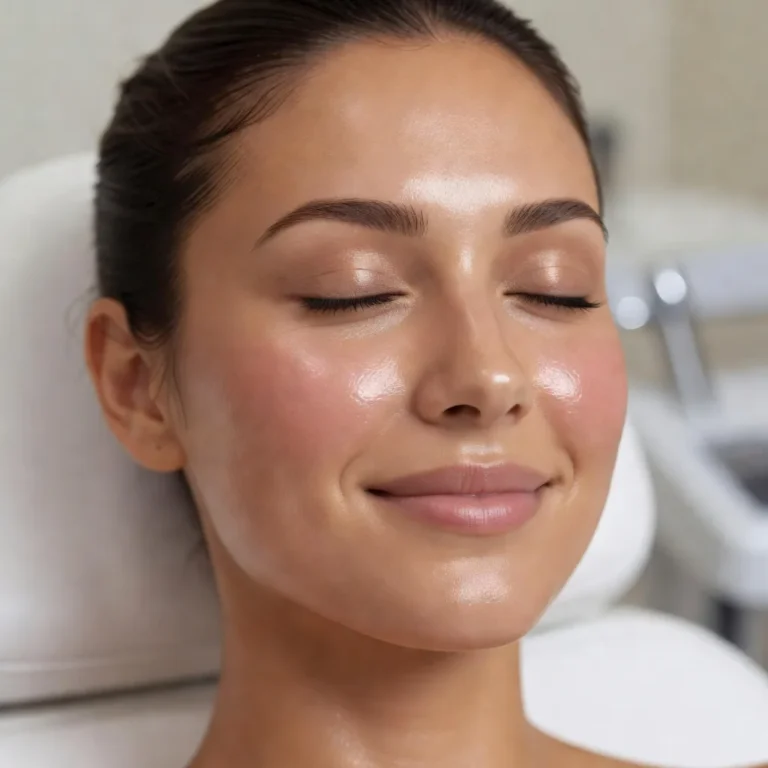
- Extra hydration that makes skin look plumper for a few days.
- Relaxation, reduced tension in the face, neck and shoulders.
- Professional advice on your skin type and home routine.
- A chance to spot concerns you might want a dermatologist to check.
Facials can also be a useful reset if you have neglected your skin for a while, for example after travel or a stressful period, because they remove build-up and give you a clean starting point for a new routine. Many people value the relaxation as much as the skin results. Regular clients also build a relationship with an esthetician who gets to know their skin and can notice changes over time. A facial can be a calm hour away from screens and daily stress, which is a benefit in itself even if the skin changes are temporary.
What a Facial Cannot Do
Facials are often marketed with bold promises. It helps to know what they cannot do.
- They cannot cure acne, rosacea or eczema.
- They do not remove deep wrinkles or lift sagging skin.
- They cannot shrink pores permanently.
- They do not detox the body.
- They do not replace sunscreen or daily skincare.
Be wary of any spa that promises permanent results, guaranteed acne cures or dramatic anti-aging from a single session. For persistent skin conditions, a dermatologist can offer treatments with much stronger evidence. The American Academy of Dermatology notes that daily sun protection is one of the most effective ways to reduce premature skin aging, which no single facial can match.
Who Should Wait or Choose a Gentle Facial
Most people can have a facial, but some should delay or ask for a gentle version.
- Anyone with sunburn, cold sores, open wounds or skin infections.
- People using oral isotretinoin or who have recently stopped it.
- Those using strong prescription retinoids, unless the treatment is adjusted.
- People with flaring eczema, psoriasis or rosacea.
- Anyone who has recently had fillers, lasers or peels on the face.
If you are pregnant, many gentle facials are fine, but tell your esthetician so they can avoid certain ingredients and devices. Lying flat for a long time can also become uncomfortable later in pregnancy, so ask whether the bed can be adjusted. Our guide on whether facials are harmful covers the risks and how to reduce them.
Never have treatments involving needles, blood or injections at unlicensed venues. These carry infection risks and should only be done by trained professionals with sterile equipment.
Before Your Facial
A little preparation helps you get more from the treatment and reduces the chance of irritation.
It is also worth checking the spa’s hygiene and licensing, and asking what products they use if you have sensitive skin. Pause retinoids and exfoliating acids for a few days beforehand, avoid waxing or threading your face for about a week, and do not book on sunburned skin. Arrive with clean skin or light makeup, and bring a list of any medications and allergies. Our guide on how to prepare for a facial has a full checklist.
If this is your first facial, choose a classic or hydrating facial rather than a strong peel. It lets you see how your skin responds to professional products before trying something more intensive.
After Your Facial
Mild redness for a few hours is common, especially after extractions. Some people notice a few small breakouts over the following days as congestion comes to the surface. Skin usually looks its best a day or two after a facial, once any redness has settled, which is why many people book a few days before an event rather than on the day itself.
- Skip heavy makeup for the rest of the day.
- Avoid saunas, hot yoga and intense exercise for about 24 hours.
- Pause retinoids and acids for a few days.
- Use a gentle cleanser, moisturiser and sunscreen.
- Do not pick at spots or flaking skin.
Our guide on what not to do after a facial explains aftercare in more detail. The American Academy of Dermatology also explains how to apply sunscreen, which is especially important after exfoliating treatments.
How Often Should You Get a Facial?
There is no rule that you need facials at all. Many people enjoy one every four to six weeks, which roughly matches how often the skin renews its surface. Others book one before special events or at the change of seasons.
More frequent facials, especially those with strong exfoliation or extractions, can irritate the skin and weaken its protective barrier over time. If you want regular treatments, gentle hydrating facials are safer to repeat often than intensive peels. The best frequency depends on your skin, budget and what you enjoy, not on a fixed schedule.
Between appointments, a simple routine does most of the work: gentle cleansing twice a day, a moisturiser suited to your skin, sunscreen every morning and perhaps a mild exfoliant or mask once or twice a week. Our guide on the difference between cleansing and a facial explains how daily care and occasional treatments fit together.
Facials Compared With Other Treatments
Facials are often confused with other skin and spa treatments. This comparison shows where they fit.
| Treatment | What it does | Who performs it | Downtime |
|---|---|---|---|
| Facial | Cleanses, exfoliates, extracts and hydrates | Esthetician | None to minimal |
| Chemical peel | Uses acids to exfoliate more deeply | Esthetician or dermatologist | Days to weeks, depending on strength |
| Microneedling | Creates tiny channels to stimulate collagen | Trained professional or dermatologist | A few days of redness |
| Laser treatment | Targets pigment, redness or texture | Dermatologist or trained clinician | Varies widely |
| Facial massage | Relaxes muscles and boosts circulation | Massage therapist or esthetician | None |
| Dermaplaning | Removes dead skin and fine hair with a blade | Esthetician or at home | None |
Facials are the gentlest of these options and the most focused on overall skin comfort and relaxation. Treatments such as lasers and microneedling target specific concerns and carry more risk, so they are best discussed with a dermatologist. Our guide on what dermaplaning is explains one popular add-on in more detail.
If you are unsure which treatment suits your goals, start by writing down what bothers you most about your skin, such as dryness, dullness, breakouts or fine lines. That makes it easier for an esthetician or dermatologist to recommend the right option.
Dos and Don’ts
Do
- Choose a licensed esthetician
- Share medications and allergies
- Start with a gentle facial
- Follow aftercare advice
- Keep up daily skincare
Don’t
- Book on sunburned or infected skin
- Expect permanent results
- Squeeze spots at home afterwards
- Book intensive facials too often
- Ignore stinging or burning during treatment
Honest Limits
There is little high-quality research on spa facials as a whole, because treatments vary so much. Most evidence relates to individual steps and ingredients, such as exfoliating acids or moisturisers. That means claims about specific signature facials, special masks or exclusive techniques are usually based on the spa’s own experience rather than independent studies.
Results depend on the provider, the products and your skin, and two people can have very different experiences of the same treatment. A facial can be a pleasant, helpful treat, but it is not necessary for healthy skin, and skipping facials carries no health risk.
When to See a Dermatologist
- You have persistent acne, redness or rashes.
- Your skin reacts badly after facials.
- You notice new or changing moles or spots.
- You want stronger treatments such as medical peels or lasers.
This article is for general information and does not replace professional medical advice. See a dermatologist for skin conditions or before stronger cosmetic treatments.
FAQ
What is a facial?
A professional multi-step skin treatment for the face.
What happens during a facial?
Cleansing, exfoliation, steam, extractions, a mask, massage and moisturiser.
How long does a facial take?
Usually 45 to 90 minutes.
Do facials hurt?
Most steps are relaxing; extractions can be uncomfortable.
Are facials good for your skin?
They can help temporarily, but daily care matters more.
How often should I get a facial?
Many people choose every four to six weeks.
Can a facial cause breakouts?
A few small breakouts afterwards are common.
What should I not do before a facial?
Avoid retinoids, acids, waxing and sunburn.
Which facial is best for beginners?
A classic or hydrating facial.
Can men get facials?
Yes, facials suit all genders and skin types.
Where This Leaves You
A facial is a professional treatment that cleanses, exfoliates, extracts and hydrates the skin, usually with a relaxing massage. It leaves skin cleaner and smoother for a few days to weeks but does not replace daily care.
Choose a licensed esthetician, pick a facial that suits your skin, prepare properly and follow aftercare. Treat facials as an occasional extra on top of gentle cleansing, moisturiser and sunscreen.

Written by
Registered pharmacist and founder of Facial Adviser. Rakib's pharmacy training covers how skincare actives work and interact; a later course in cosmetology turned that into a focus on facial treatments and skincare products. He plans, researches and edits every guide on the site and checks health claims against sources such as the American Academy of Dermatology, the FDA and the NIH. He is not a dermatologist; see the Editorial Policy and Medical Disclaimer.
About · Editorial policy · How we choose products · Medical disclaimer · Contact
Keep reading: Facials: what to expect