Soft vs Sharp Facial Features in Women: How to Tell and Make Up Each
Descriptions of faces as soft or sharp are everywhere in beauty content, from contouring tutorials to style guides that promise to match your makeup, glasses and hairstyle to your features. The ideas can be useful, but they are often presented as strict categories, when most faces are a mix of both. Understanding what the terms mean helps you use them as a practical guide rather than a label.
Part of our guide to facials: what to expect. Start with: How Often Should You Get a Professional Facial? A Guide by Skin Type and Goal
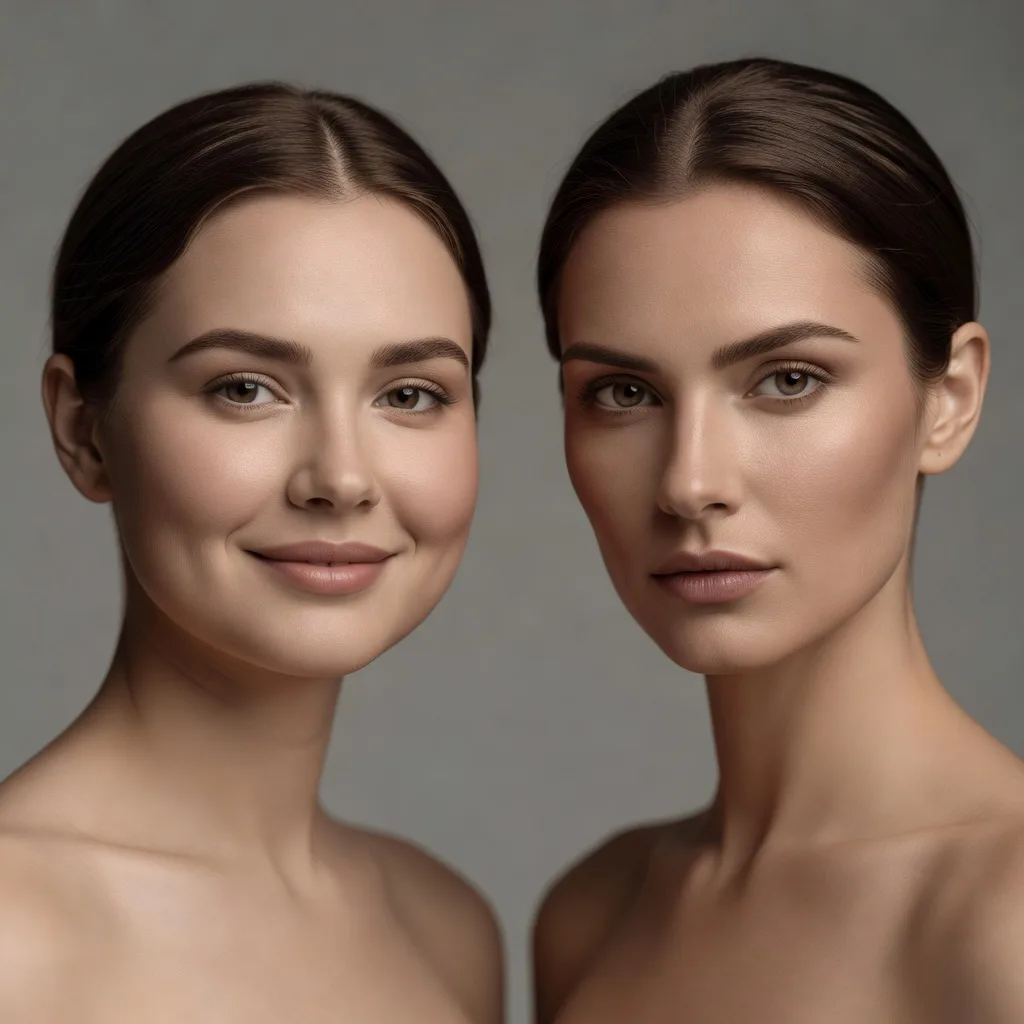
Soft facial features are rounded and curved: fuller cheeks, a rounded jaw and chin, softer brow arches and fuller lips, with gentle transitions between areas. Sharp facial features are angular and defined: prominent cheekbones, a more angular jaw and chin, straighter or higher-arched brows and clearer lines between areas. Most women have a mix. Neither is better. In makeup, soft features usually suit diffused contour, blended blush and rounded brow shapes, while sharp features suit more precise contour and highlight, or softening techniques if you want a gentler look.
The terms describe shapes and lines, not beauty, age or personality. Some styling systems link facial features to clothing styles or personality types, but those links are opinions rather than facts. Faces also change over time, as bone structure and fat in the face shift with age, which is why many people notice their features becoming softer or more defined across the decades.
Research on facial aging shows that the facial skeleton itself changes with age, not just the skin. Those changes are one reason makeup that suited your features at 25 may need adjusting at 45.
This guide explains how to tell whether your features lean soft or sharp, how the categories are used in makeup, and practical techniques for enhancing or balancing each.
Shopping these picks?
Amazon Prime members get fast, free shipping on eligible items, plus Prime Video, Amazon Music and member deals. New members can start with a free trial.
Start a free Prime trialAged 18 to 24? Prime for Young Adults comes with a longer free trial and a lower price after it.
Affiliate link: we may earn a commission at no extra cost to you.
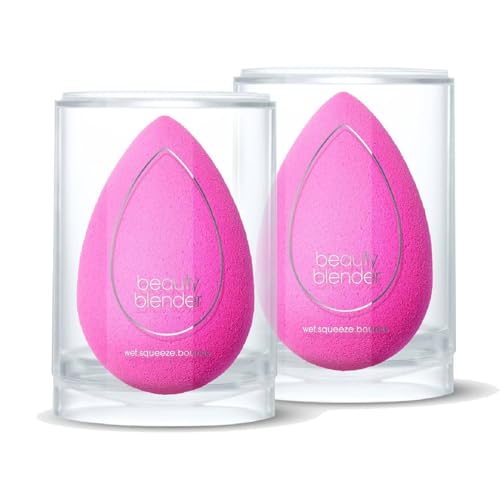
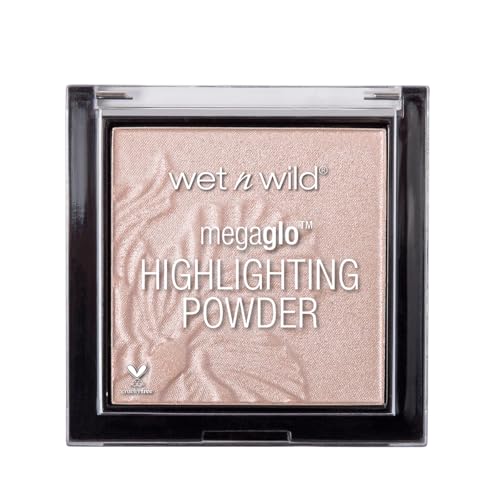
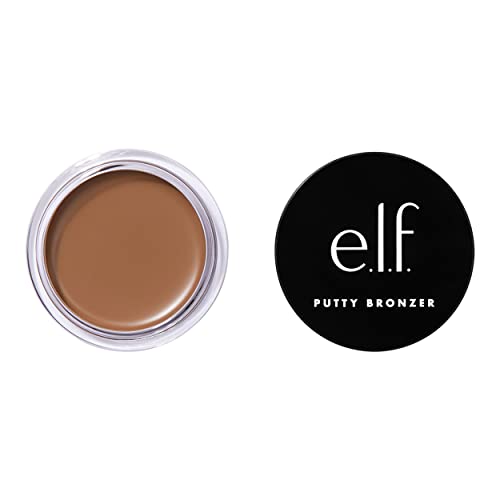
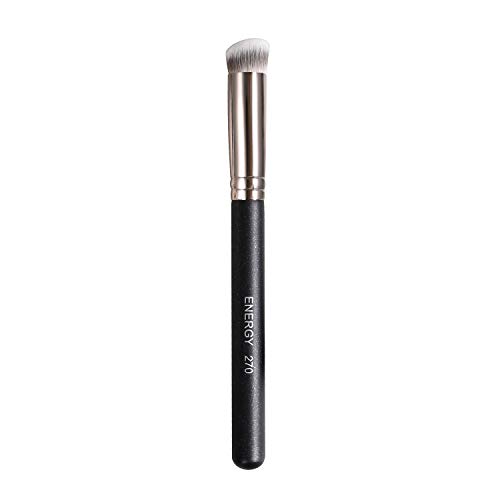
Recommended Makeup for Softening or Sharpening Your Features



What This Covers
- Soft vs Sharp Features at a Glance
- How to Work Out Whether Your Features Are Soft or Sharp
- How Features Change With Age
- Makeup for Soft Features
- Makeup for Sharp Features
- Contour, Blush and Highlight: Choosing Formulas
- Brows: The Biggest Influence
- Beyond Makeup: Hair, Glasses and Style
- Makeup for Mixed or Balanced Features
- Dos and Don’ts
- Honest Limits
- When to See a Doctor or Dermatologist
- FAQ
- The Takeaway
In Brief
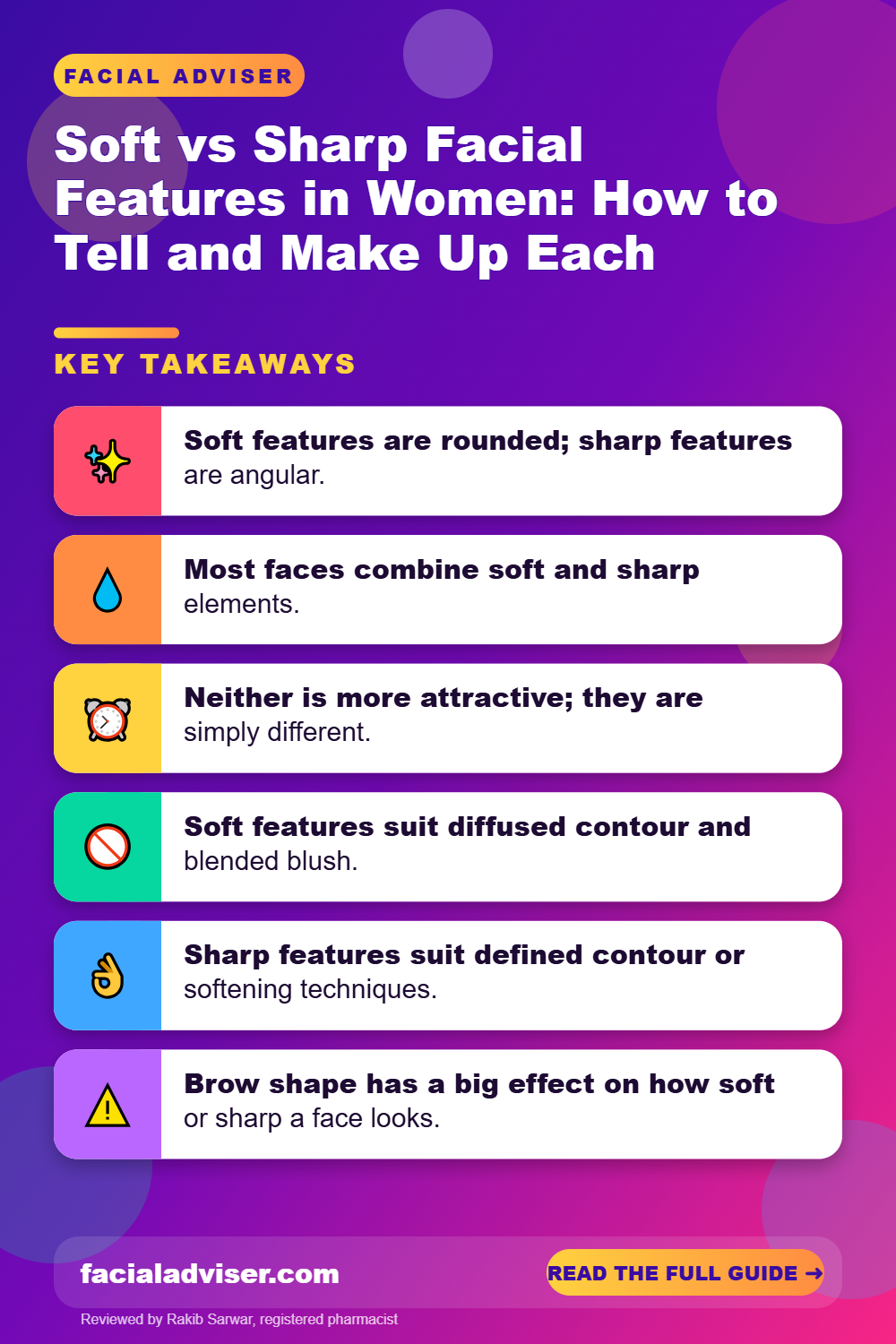
- Soft features are rounded; sharp features are angular.
- Most faces combine soft and sharp elements.
- Neither is more attractive; they are simply different.
- Soft features suit diffused contour and blended blush.
- Sharp features suit defined contour or softening techniques.
- Brow shape has a big effect on how soft or sharp a face looks.
- Faces change with age, so your approach may change too.
Soft vs Sharp Features at a Glance
These are general tendencies rather than strict rules. Look at your face as a whole rather than trying to fit every feature into one column.
| Feature | Softer | Sharper |
|---|---|---|
| Cheeks | Fuller, rounded | Prominent cheekbones, hollows below |
| Jaw | Rounded, gently curved | Angular, defined corners |
| Chin | Rounded or short | Pointed or square |
| Brows | Soft arch, rounded | Higher, angled arch or straight |
| Nose | Rounded tip, softer bridge | Defined bridge, narrower tip |
| Lips | Fuller, curved outline | Thinner or clearly defined cupid’s bow |
| Overall | Curves and gentle transitions | Lines and clear angles |
Many people have soft cheeks with a sharp jaw, or sharp cheekbones with full lips. Weight changes, hormones and even hydration can also make features look softer or sharper from month to month. That mix is normal and often what makes a face distinctive. Our guide on makeup for asymmetrical features explains why no face is perfectly symmetrical either.
How to Work Out Whether Your Features Are Soft or Sharp
Pull hair back
Tie hair away from your face and remove makeup.
Use even light
Stand facing a window so light falls evenly on your face.
Look at your jaw
Notice whether it curves smoothly or forms clear corners.
Check your cheeks
See whether cheekbones stand out or cheeks look full and rounded.
Study your brows
Notice whether they curve gently or form a sharper angle.
Take a photo
A straight-on photo at eye level is easier to judge than a mirror.
Look for the overall impression
Decide whether curves or lines dominate, knowing most faces are mixed.
Ask someone you trust which word they would use for your face: soft, sharp or balanced. Others often notice overall impressions more easily than we do in the mirror.
Do not worry if the answer is balanced or mixed, which is the most common result. That simply means you can borrow techniques from both approaches, depending on the look you want on a given day. It is also worth revisiting the question every few years, as both your face and your preferences change.
How Features Change With Age
Facial features are not fixed. Bone, fat and skin all change over time. A review of changes in the facial skeleton with aging describes how parts of the facial skeleton, including the eye sockets, midface and jaw, change shape with age, which affects how soft tissues sit on top.
In younger faces, fuller cheeks often give a softer look, and teenagers and people in their early twenties often have rounder features that become more defined later. With age, some people see cheekbones become more prominent as fat shifts, while others notice the jawline becoming less defined. Sun damage also affects skin firmness over time. The American Academy of Dermatology explains how daily sun protection helps reduce premature skin aging.
If your face has changed, your makeup may need to change too. Contour and blush placement that worked in your twenties may look heavier or lower later on.
Makeup for Soft Features
If your features are mostly soft, you can either enhance that softness or add a little definition. Both work; it depends on the look you prefer.
- Contour with a soft, diffused bronzer or cream rather than a sharp line.
- Place blush on the apples and blend upward towards the temples.
- Keep brows softly arched and avoid very harsh, angular shapes.
- Use a satin or dewy finish to enhance a fresh, youthful look.
- Add light definition under the cheekbones if you want more structure.
Highlighter works well on the centre of the cheeks and the cupid’s bow to add glow without adding angles. For a round face in particular, blush placed slightly higher and angled back can add gentle lift. Our guide on how to apply blush for a round face shows placement in detail.
Makeup for Sharp Features
If your features are mostly sharp, you can highlight the angles for a striking look or soften them for a gentler effect.
- Use contour sparingly; strong cheekbones often need little help.
- Highlight the tops of cheekbones and brow bones to emphasise structure.
- Soften a very angular jaw by blending bronzer lightly rather than carving a line.
- Try rounded blush placement on the apples for a softer look.
- Keep brows defined but slightly softened if your face feels too severe.
Too much contour on already sharp features can look harsh, especially in daylight. Very cool, grey-toned contour shades can also make hollows look deeper than intended, so a neutral or slightly warm shade is often more flattering. Our guide on how to fix patchy contour explains how to blend so structure looks natural.
Contour, Blush and Highlight: Choosing Formulas
The formula you choose affects how soft or sharp the result looks.
| Product | Softer effect | Sharper effect |
|---|---|---|
| Contour | Cream or liquid, blended with a sponge | Powder with a small angled brush |
| Blush | Liquid or cream, tapped and diffused | Powder placed precisely on the cheekbone |
| Highlighter | Satin or subtle glow | Stronger shimmer on high points |
| Brows | Pencil strokes and brushed-up gel | Defined edges and sharper tail |
| Lips | Blurred edge or tint | Lined, precise outline |
Choose the formula that matches the effect you want rather than your category. Applying products in thin layers and building gradually also keeps any look from becoming too heavy. A person with sharp features who wants a soft look can use cream products and blended edges, while someone with soft features can use powder and precise placement for more definition. Our guide on choosing the right highlighter covers finishes in more detail.
Brows: The Biggest Influence
Brows frame the face and have a surprisingly strong effect on whether it looks soft or sharp. A high, angled arch adds drama and structure; a gentle, rounded arch softens. Straight brows can look youthful and modern on many face shapes.
If you want to change the overall impression of your face without much makeup, adjusting your brow shape slightly is often the simplest step. Filling sparse areas with light, hair-like strokes and brushing brows upward with a clear or tinted gel softens the look, while defining the lower edge and tail adds structure. Avoid over-plucking, which can be hard to reverse, and consider seeing a brow specialist for shaping if you are unsure.
Beyond Makeup: Hair, Glasses and Style
Soft and sharp features are also used in styling advice. Some people find that softer hairstyles with waves or layers balance sharp features, while sleek, structured cuts can add definition to soft features. Glasses frames follow similar ideas, with rounded frames softening angles and angular frames adding structure.
These are suggestions, not rules, and trends change quickly. Personal taste, culture and the image you want to project matter more than any category. Many people deliberately choose styles that contrast with their features, and the result can look just as good. If a particular hairstyle, frame or makeup look makes you feel like yourself, that matters far more than whether it matches a chart of face types.
Makeup for Mixed or Balanced Features
If your face combines soft and sharp elements, you have the most flexibility. The trick is to decide which feature you want to be the focus and let the others support it.
- Soft cheeks with a sharp jaw: keep cheek contour diffused and let the jaw provide structure.
- Sharp cheekbones with full lips: highlight the cheekbones lightly and keep lips soft and glossy.
- Rounded jaw with angular brows: soften the brow tail slightly or add gentle definition under the jaw.
- Full face with a defined nose: skip nose contour and focus on blush and brows.
A useful approach is to change one element at a time. Try a different blush placement for a week, then a new brow shape, and notice which changes you like in photos and in person. Small adjustments are easier to judge than a complete new look.
Remember that lighting changes how features read. Soft, diffused daylight makes most faces look softer, while strong overhead light exaggerates angles and shadows.
Dos and Don’ts
Try This
- Look at your face as a whole
- Choose formulas for the effect you want
- Blend contour and blush well
- Adjust makeup as your face changes
- Experiment with brow shape carefully
Avoid This
- Force every feature into one category
- Carve harsh contour lines on sharp features
- Over-pluck brows
- Treat soft or sharp as better or worse
- Ignore daylight when checking makeup
Honest Limits
Soft and sharp are informal descriptions, not scientific categories. Different sources define them differently, and systems that divide faces into many types are more about styling ideas than evidence. Use them as a starting point for experimenting, not as rules you must follow, and trust your own eye about what makes you feel confident.
Makeup can emphasise or soften features but cannot change bone structure. For concerns about major changes in your face, such as sudden swelling, asymmetry or weakness, see a doctor rather than relying on makeup.
Sudden changes in facial shape, one-sided drooping or new swelling can be signs of a medical problem. Seek medical advice promptly rather than trying to disguise them.
When to See a Doctor or Dermatologist
- Your face changes shape suddenly or on one side.
- You notice new lumps, swelling or pain.
- You are considering fillers or surgery and want medical advice.
- Skin changes such as sagging or pigmentation concern you.
This article is for general information and does not replace professional medical advice. See a doctor for sudden facial changes, and consult a board-certified dermatologist or surgeon before cosmetic procedures.
FAQ
What are soft facial features?
Rounded, curved features such as full cheeks, a rounded jaw and soft brow arches.
What are sharp facial features?
Angular, defined features such as prominent cheekbones and a defined jaw.
Can you have both soft and sharp features?
Yes, most faces combine both.
Are sharp features more attractive?
No, neither is better; they are simply different.
How should I contour soft features?
Use diffused, blended contour rather than sharp lines.
How can I soften sharp features?
Use cream products, rounded blush and blended edges.
Do features change with age?
Yes, bone, fat and skin all change over time.
Do brows affect whether a face looks soft or sharp?
Yes, arch shape has a strong effect.
Can makeup change bone structure?
No, it can only emphasise or soften the look.
Should I choose hairstyles based on my features?
It can help, but personal taste matters more.
The Takeaway
Soft features are rounded and curved, while sharp features are angular and defined, and most women have a mix. Neither is better, and features change with age.
Use diffused contour and blended blush to enhance softness, or precise contour and highlight to emphasise structure, and choose formulas for the effect you want. Blend well, check in daylight and adjust as your face changes.

Written by
Registered pharmacist and founder of Facial Adviser. Rakib's pharmacy training covers how skincare actives work and interact; a later course in cosmetology turned that into a focus on facial treatments and skincare products. He plans, researches and edits every guide on the site and checks health claims against sources such as the American Academy of Dermatology, the FDA and the NIH. He is not a dermatologist; see the Editorial Policy and Medical Disclaimer.
About · Editorial policy · How we choose products · Medical disclaimer · Contact
Keep reading: Facials: what to expect
- How Often Should You Get a Professional Facial? A Guide by Skin Type and Goal
- What Is the Disadvantage of Facial?
- How Much Does a Facial Cost? Discover Affordable Facial Prices in Austin
- 10 Best Facial Products for Women (2026): A Simple Core Routine
- Dermatologist vs Skin Specialist: What's the Difference?
- What Is a Facialist? The Real Answer