Best Airbrush Makeup Compressor: Types, Features and How to Choose
Airbrush makeup can give a very thin, even base that looks natural on camera and lasts well. The compressor is the heart of the system: it pushes air through the airbrush gun, and how steady and adjustable that airflow is decides whether your foundation goes on as a fine mist or in spatters.
Part of our guide to makeup tools. Start with: 10 Best Makeup Brush Sets (2026): Soft, Well-Made Kits for Every Look
The best airbrush makeup compressor is one made specifically for makeup, with low, adjustable pressure, a steady airflow without pulsing, quiet operation and a gun with a fine nozzle that comes apart for cleaning. Desk or plug-in compressors give the most consistent pressure and suit regular or professional use, while cordless rechargeable units are portable and convenient for touch-ups or travel but may lose power as the battery runs down. Avoid hobby or nail airbrush compressors that run at higher pressure, kits with no pressure control and guns that cannot be taken apart, and use only makeup formulated for airbrushing.
In short: pick a makeup-specific compressor with adjustable low pressure and a gun you can clean fully.
The US Food and Drug Administration advises stopping any cosmetic that you suspect is causing a reaction and reading ingredient labels carefully, which matters with airbrush makeup because the fine mist covers a large area of skin at once.
This buyer’s guide compares compressor types, explains which features are worth paying attention to, what to avoid, and how to use and clean an airbrush system safely.
Shopping these picks?
Amazon Prime members get fast, free shipping on eligible items, plus Prime Video, Amazon Music and member deals. New members can start with a free trial.
Start a free Prime trialAged 18 to 24? Prime for Young Adults comes with a longer free trial and a lower price after it.
Affiliate link: we may earn a commission at no extra cost to you.
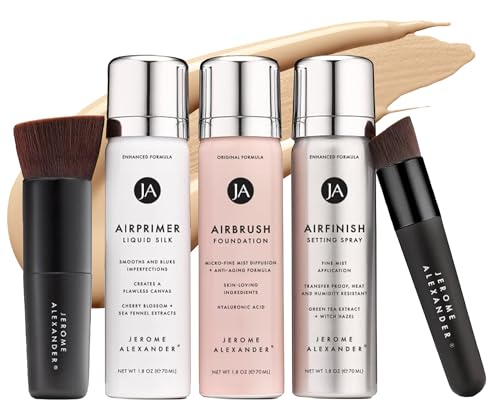
Recommended Airbrush Makeup Compressors on Amazon


In Brief
- The compressor controls airflow, which controls how fine the mist is.
- Makeup compressors run at much lower pressure than hobby or nail units.
- Adjustable pressure matters more than maximum power.
- Plug-in units give the steadiest airflow; cordless ones are more portable.
- Use only foundations and blushes made for airbrushing.
- Clean the gun after every use to prevent clogs and bacteria.
- Avoid spraying near the eyes and in a closed, unventilated space.
What This Covers
- How an Airbrush Makeup System Works
- Types of Airbrush Makeup Compressor Compared
- Features That Matter Most
- What to Avoid When Choosing
- Choosing Makeup for Your Airbrush
- How to Use an Airbrush Makeup Compressor
- How to Clean an Airbrush Gun and Compressor
- Practical Checks Before You Buy
- Airbrush vs Brush or Sponge Application
- Dos and Don’ts
- Honest Limits
- When to See a Dermatologist
- Questions People Ask
- The Bottom Line
How an Airbrush Makeup System Works
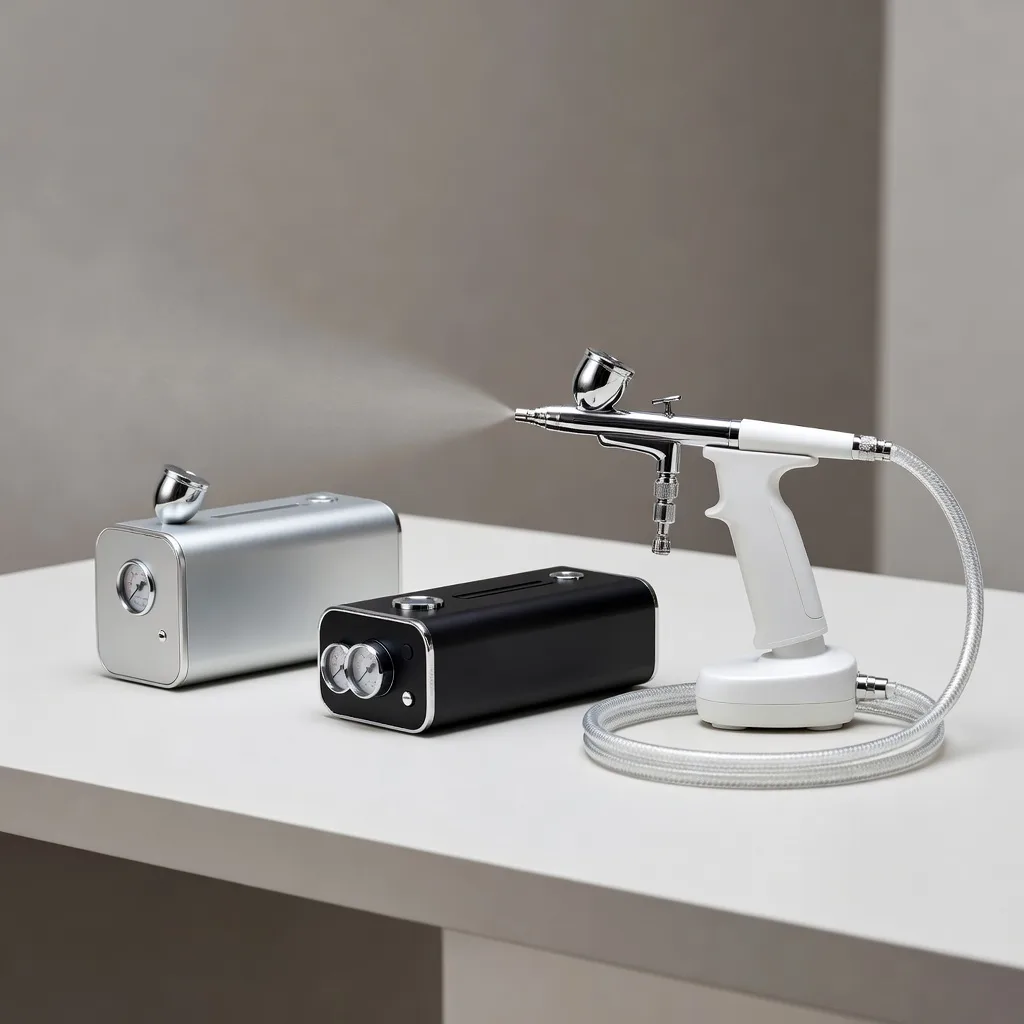
An airbrush makeup system has three parts: a small compressor that produces air, a hose, and an airbrush gun with a small cup on top. You place a few drops of thin, liquid makeup in the cup, press the trigger and the air atomises the makeup into a fine mist that lands evenly on the skin.
Because the layer is so thin, airbrush makeup can look very natural and is popular for weddings, photos and video. It can also be built up for more coverage. The compressor matters because makeup needs gentle, steady airflow; too much pressure feels cold and harsh on the face and wastes product, while pulsing airflow creates spots and uneven patches.
Types of Airbrush Makeup Compressor Compared
Airbrush makeup compressors come in three broad designs. The best one depends on how often you use it and where.
| Type | Best for | Strengths | Drawbacks |
|---|---|---|---|
| Plug-in desk compressor | Regular home use and professional work | Steady airflow; adjustable pressure; runs for long sessions | Needs a socket; less portable |
| Cordless rechargeable handheld | Travel, touch-ups, beginners | Light, compact, no hose | Pressure may drop as battery drains; smaller cup |
| Compressor with air tank | Makeup artists doing many clients | Very smooth, pulse-free airflow | Heavier, louder, more to maintain |
For personal use, a compact plug-in makeup compressor with a pressure dial is usually the most reliable choice. Cordless kits are handy, but check how long they run and whether they can be used while charging.
Features That Matter Most
Compressor listings often focus on power numbers, but for makeup the key is control and consistency rather than force.
- Adjustable pressure: a dial or several settings so you can go softer for the face and eyes.
- Steady airflow with little pulsing, which gives an even mist.
- Quiet motor, especially if you use it early in the morning or in a shared home.
- A gravity-feed gun with a small cup, suited to thin makeup formulas.
- A fine nozzle size appropriate for foundation, with a larger option for body makeup if needed.
- A gun that disassembles for cleaning, with spare needles or nozzles available.
- A holder or stand to rest the gun safely between uses.
- Automatic shut-off or overheat protection on plug-in units.
Many kits advertise very high maximum pressure. For makeup you rarely need anything near the top of the range, so a compressor with fine low-end control is more useful than one with a big maximum figure.
What to Avoid When Choosing
Airbrush equipment is used for nails, cakes, models and tattoos too, and not all of it is suitable for skin.
- Hobby, nail or cake compressors that run at pressures meant for paint or icing.
- Kits with no pressure adjustment at all.
- Guns that cannot be taken apart, which clog and hold old product.
- Very cheap cordless units that pulse or lose power halfway through a face.
- Using regular liquid foundation that has not been made for airbrushing, which can clog the nozzle.
- Sharing a gun between people without thorough cleaning.
Never spray airbrush makeup towards or near the eyes, and avoid breathing in the mist. Close your eyes when working near them, keep the room ventilated, and do not use products that are not intended for airbrushing on the face.
Choosing Makeup for Your Airbrush
The compressor is only half of the system. Airbrush makeup is thinner than normal foundation so it can pass through a small nozzle, and it comes in several bases.
| Base | Finish and wear | Best for |
|---|---|---|
| Water-based | Natural, light, easy to remove | Dry, normal and sensitive skin; everyday use |
| Silicone-based | Long-wearing, water resistant | Oily skin, weddings, hot weather |
| Alcohol-based | Very long-wearing and transfer resistant | Stage and special effects; can be drying |
Choose the base to suit your skin and occasion, and check the ingredient list if you have known allergies. Shade matching is just as important as with normal foundation, and our guide on how to find the right shade of makeup explains how to test in daylight and check undertone. If you are new to base makeup, our guide on the purpose of foundation covers what a base can and cannot do.
How to Use an Airbrush Makeup Compressor
Practise on the back of your hand or a piece of paper before your face. Most beginners start with too much product and too much pressure.
Prepare your skin
Cleanse, moisturise and apply sunscreen, then let everything settle for a few minutes.
Set the pressure low
Start at the lowest comfortable setting and adjust only if the mist is too wet or spotty.
Add a few drops
Place three or four drops of airbrush foundation in the cup; you can add more later.
Test the spray
Spray onto paper or your hand to check the mist is fine and even.
Hold the gun at a distance
Keep it roughly 10 to 15 centimetres from the face and keep it moving in small circles.
Build thin layers
Apply a light layer, let it set for a moment, then add more only where you need coverage.
Clean straight away
Flush the gun with the recommended cleaner before the makeup dries inside.
Pull back on the trigger gently and keep the gun moving at all times. Stopping in one spot while spraying is the most common cause of wet patches and drips.
How to Clean an Airbrush Gun and Compressor
Cleaning is the part many people skip, and it is the reason many airbrush systems end up clogged or unhygienic. Makeup left in the gun dries, blocks the nozzle and can harbour bacteria.
- After each use, empty the cup and spray the recommended cleaner through until it runs clear.
- Wipe the cup and nozzle cap with a soft, lint-free cloth.
- Every week or two, take the gun apart as the manual describes and soak metal parts in cleaner.
- Handle the needle carefully; a bent needle causes spitting and uneven spray.
- Wipe the compressor and hose with a damp cloth; never get water inside the motor.
- Store the gun in its holder with the cup covered to keep dust out.
The same hygiene rules apply as for brushes and sponges. Our guide on how to sanitise makeup tools explains why clean tools matter and how often to clean them.
Practical Checks Before You Buy
Beyond the specification list, a few practical questions help you avoid a compressor that ends up unused in a drawer.
- Where will you use it? A plug-in unit needs a socket near a mirror with good light.
- How long are your sessions? Cordless units suit a quick base; longer looks need steady mains power.
- Can you buy spare parts? Needles, nozzles and hoses wear out, and a system without spares is hard to keep working.
- Is the manual clear about cleaning? If the instructions are vague, cleaning is likely to be difficult.
- Does the hose connect securely? Loose fittings leak air and cause uneven spray.
- Is the kit easy to store? A case or stand keeps the gun safe and clean between uses.
It also helps to think about who will use it. A single person doing their own makeup needs far less capacity than a makeup artist working on several clients in a day, who will benefit from a sturdier compressor, several guns and a strict cleaning routine between each person.
Finally, check what the kit includes. Some bundles contain starter foundations in a narrow range of shades, which may not match your skin, so budget for buying the right shade separately.
Airbrush vs Brush or Sponge Application
Airbrushing is not better in every situation. It is worth comparing it with traditional tools before investing in a compressor.
- Airbrush gives a very thin, even layer that suits photos and long events.
- Brushes and sponges are cheaper, faster to clean and easier to use for spot concealing.
- Airbrush can make dry patches less obvious, but it does not hide deep texture.
- Traditional tools give more control around the eyes and nose.
- Airbrush systems need a learning curve and regular maintenance.
Many people use both: airbrush for an even base on important days and ordinary tools for everyday wear.
Dos and Don’ts
Worth Doing
- Choose a compressor made for makeup
- Start with low pressure and build up
- Use airbrush-formulated makeup
- Clean the gun after every use
- Work in a ventilated room
Skip It
- Use a hobby or nail compressor on your face
- Spray near your eyes
- Overload the cup with product
- Let makeup dry inside the gun
- Share the gun without cleaning it
Honest Limits
An airbrush compressor does not make makeup more skin-friendly. The finish is thinner, but the ingredients are the same kinds found in other foundations, so it can still clog pores or cause reactions in susceptible skin.
Airbrushing also takes practice. Results on the first few attempts are often patchy, and it can take several sessions to judge pressure and distance well. If you wear only light makeup on most days, a brush or sponge may give you everything you need without the cost and upkeep of a compressor.
When to See a Dermatologist
- Your skin itches, stings or develops a rash after airbrush makeup.
- You notice breakouts in areas where you apply airbrush foundation.
- Your eyes become red or irritated after airbrushing near them.
- You have eczema, rosacea or very sensitive skin and want advice on suitable products.
This article is general information about makeup tools and does not replace medical advice. Patch test new airbrush products on a small area first, stop using anything that causes irritation, and see a dermatologist if a reaction persists. The FDA page on allergens in cosmetics explains how reactions to cosmetic ingredients are identified.
Questions People Ask
What is the best airbrush makeup compressor for beginners?
A compact plug-in makeup compressor with a pressure dial.
Are cordless airbrush makeup kits any good?
Yes for travel and touch-ups, but pressure can drop as the battery runs down.
Can I use a nail or hobby compressor for makeup?
It is not recommended; pressure is often too high for skin.
What pressure should I use for airbrush makeup?
The lowest setting that gives a fine, even mist.
Can I use regular foundation in an airbrush?
Only thin formulas made for airbrushing; others can clog.
How often should I clean my airbrush gun?
After every use, with a deeper clean every week or two.
Is airbrush makeup better for acne-prone skin?
Not automatically; the ingredients matter most.
Does airbrush makeup last longer?
Silicone and alcohol-based formulas often do.
Is airbrush makeup safe near the eyes?
Do not spray towards the eyes; close them and keep your distance.
Is an airbrush compressor loud?
Some are; look for a quiet motor if noise matters.
The Bottom Line
The best airbrush makeup compressor is one made for makeup, with steady, adjustable low pressure and a gun that comes apart for thorough cleaning.
Use airbrush-formulated makeup, start with low pressure and thin layers, keep the spray away from your eyes and clean the gun after every use for smooth, hygienic results.

Written by
Registered pharmacist and founder of Facial Adviser. Rakib's pharmacy training covers how skincare actives work and interact; a later course in cosmetology turned that into a focus on facial treatments and skincare products. He plans, researches and edits every guide on the site and checks health claims against sources such as the American Academy of Dermatology, the FDA and the NIH. He is not a dermatologist; see the Editorial Policy and Medical Disclaimer.
About · Editorial policy · How we choose products · Medical disclaimer · Contact
Keep reading: Makeup brushes and tools
- 10 Best Makeup Brush Sets (2026): Soft, Well-Made Kits for Every Look
- 10 Best Bronzer Brushes (2026): Soft, Streak-Free Warmth
- 10 Best Eyeshadow Brushes (2026): Blend, Pack and Smoke Like a Pro
- 10 Best Body Exfoliating Brushes (2026): Smoother Skin, Gently
- 10 Best Makeup Sponges (2026): Smoother Base, Less Wasted Product
- 10 Best Powder Brushes (2026): Softer Setting, No Cakey Finish