Makeup for Glasses Wearers: Eyes, Brows and Nose-Pad Marks
Glasses frame your eyes, so makeup has to work with them instead of fighting them. The aim is to keep eyes and brows defined behind the lenses while avoiding glare, smudges and marks from nose pads. A few small changes in product choice and placement make a big difference.
Part of our guide to makeup how-to. Start with: How to Properly Put On Face Makeup: The Right Order, Step by Step
Many people with glasses also skip eye makeup because they worry it will not be visible. In fact, a little definition goes a long way, and the right products make a natural look easy.
This guide covers how lenses change the way makeup looks, which eye shapes and colors work best behind glasses, how to define brows, how to prevent foundation from sliding under nose pads and how to keep lenses clean. It also explains what to avoid.
Black Friday is coming: shop the deals with Prime
I am Rakib Sarwar, a registered pharmacist with a cosmetology course. This article is general makeup guidance and not medical advice. If frames irritate your skin or leave marks that do not fade, talk to an optician or doctor.
Lenses can magnify or shrink the eyes depending on your prescription. Nearsighted lenses tend to make eyes look smaller, while farsighted lenses make them look larger. Makeup can balance that effect, and the same techniques work for most frame styles.
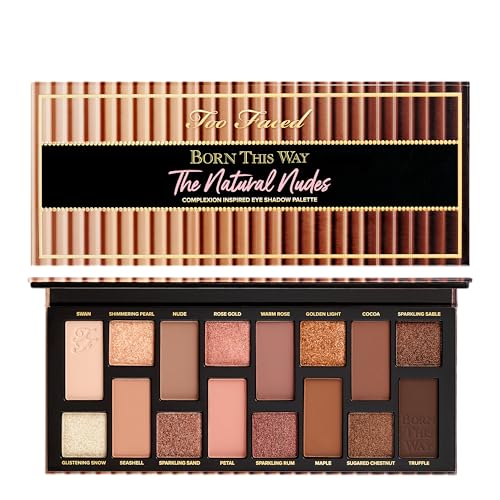
Below you will find a simple routine, tips for frames and lenses, honest limits and a short list of products. For eye shapes and shadows, our guides to eyeliners and the best neutral eyeshadow palettes may help.
Makeup Worth Considering if You Wear Glasses




Jump to a Section
- How Glasses Change the Way Makeup Looks
- Eye Makeup That Works Behind Lenses
- Defining Brows Under Frames
- Lashes and Mascara
- Foundation, Concealer and Nose-Pad Marks
- How to Do Makeup When You Wear Glasses
- Matching Makeup to Your Frames
- Keeping Lenses and Frames Clean
- Honest Limits
- When to See a Professional
- Common Questions
- The Takeaway
What to Know First
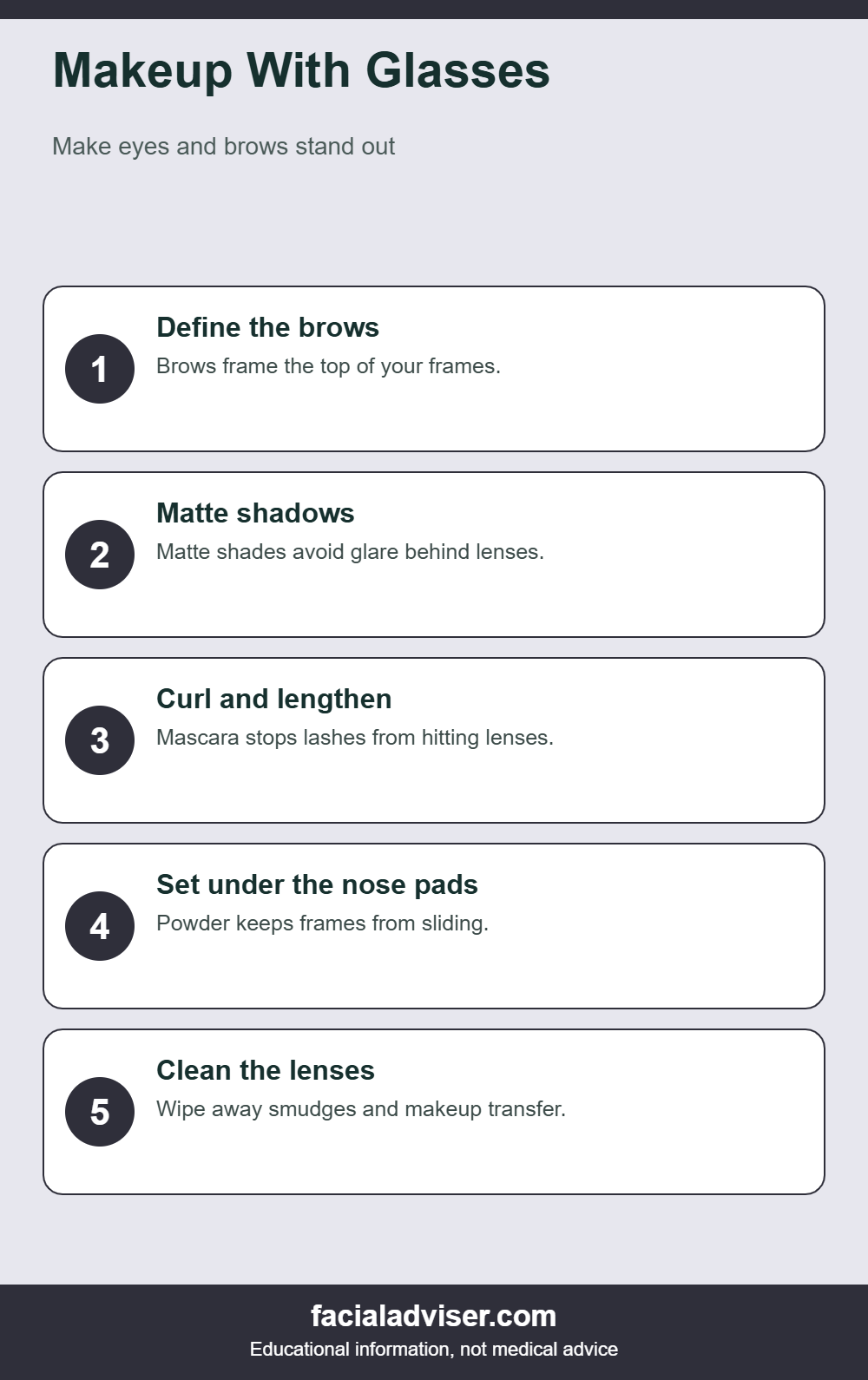
- Define brows, since frames often cover or sit on them.
- Use matte shadows to avoid glare behind lenses.
- Curl and coat lashes so they do not smudge the lenses.
- Set concealer and foundation under nose pads with powder.
- Clean lenses regularly to remove makeup transfer.
- Check how your makeup looks with and without glasses.
How Glasses Change the Way Makeup Looks
Lenses act like a screen between your eyes and the world. They can magnify or reduce the look of your eyes, add reflections and highlight smudges. Frames also cover part of the brows, lids and cheeks.
Reflections are another factor. Overhead lights, camera flashes and phone screens bounce off lenses and hide your eyes. A matte finish on lids and a bit of liner help your eyes stay visible even when lenses catch the light.
If you wear glasses all day, your frames become part of your look. Think of makeup and frames as one design and choose colors that flatter both.
Makeup that looks perfect without glasses can seem too faint or too heavy behind lenses. Testing in daylight with glasses on is the best way to see the real effect.
Anti-reflective coatings reduce glare and make makeup easier to see behind lenses.
Eye Makeup That Works Behind Lenses
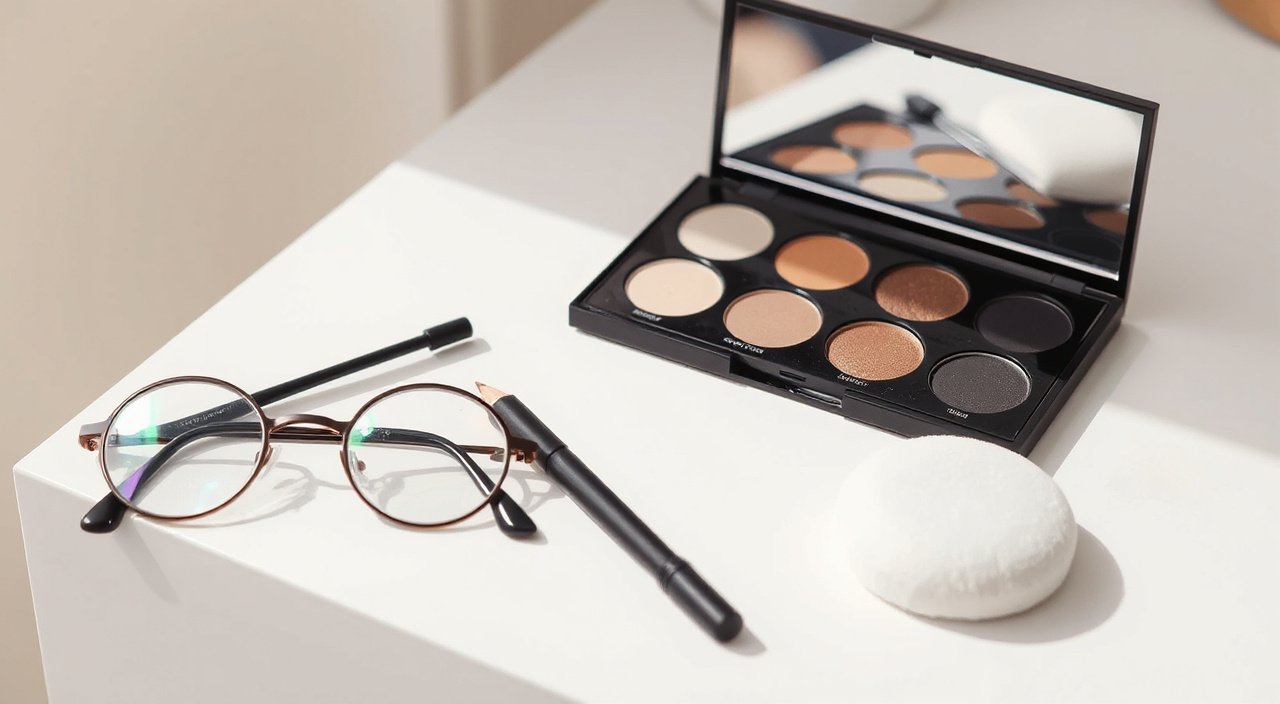
Matte shadows in neutral shades look polished and avoid glare. Shimmer can reflect light and create distracting sparkles behind lenses. Darker shades at the outer corner open the eyes if your lenses make them look smaller.
Practice on a quiet day. Try one look with your glasses on, then take a photo or video call to see it from another angle. Small tweaks, such as softening a line or adding a touch of mascara, can fix most issues.
Keep eyeshadow application light near the frame edge. Heavy shadow can rub against the frame and leave marks.
Bright inner-corner highlights can brighten tired eyes behind lenses, but keep them soft. A tiny dab of pearly shade is enough. Overdoing it leaves a visible shine that clashes with reflection.
If your lenses are thick, avoid heavy lower lash line liner, which can look smudgy behind the lens. A thin, light line or none at all looks cleaner.
Eyeliner should be neat and easy to see. A thin line close to the lashes defines the eye without looking heavy. If your frames are thick, a slightly bolder line can balance the look.
| Lens type | Effect | Makeup tip |
|---|---|---|
| Nearsighted | Eyes look smaller | Open eyes with light inner-corner shades and mascara |
| Farsighted | Eyes look larger | Use softer liner and neutral shadow |
| Anti-glare | Less reflection | Matte or soft satin shades work well |
| Tinted lenses | Color shift | Check makeup in daylight |
Defining Brows Under Frames
Brows sit near or above the top of the frames, so they are very visible. Fill sparse spots with a pencil or powder and brush through for a natural finish. Keep the shape slightly softer than the line of your frames.
Brows are also what people notice first with glasses. Use a spoolie to blend any pencil lines, and finish with a tiny amount of gel. Avoid heavy wax or glue-like products, which can look stiff.
If you tweeze or shape brows, check the shape with your glasses on, not off. A slightly stronger arch can lift the eye area behind round frames.
If your frames cover part of your brows, make sure the visible part looks even. A clear or tinted brow gel can hold the shape through the day. Our guide to the best eyebrow pencils for sparse brows can help.
Match the shape of your brows to the top line of your frames. Slightly lifted ends balance round or square frames.
Lashes and Mascara
Lashes can brush against the lenses and leave marks, especially with long lashes or close-fitting frames. Curl lashes and use a smudge-resistant or tubing mascara. Let it dry fully before putting your glasses on.
If you wear false lashes, choose a soft, short style. Long lashes may hit the lenses and loosen faster. Avoid strong glue near the lash line if your eyes are sensitive.
Lower lashes can also touch lenses. Use a light coat or skip mascara on lower lashes if they leave marks. A tiny amount of powder can set lower lash mascara if smudging is a problem.
Check the spacing between your lashes and the lenses. If lashes hit the glass every time you blink, ask your optician about adjusting the frame fit.
Waterproof formulas smudge less, but they need a gentle remover. Wipe the lenses regularly to remove any mascara transfer.
Foundation, Concealer and Nose-Pad Marks
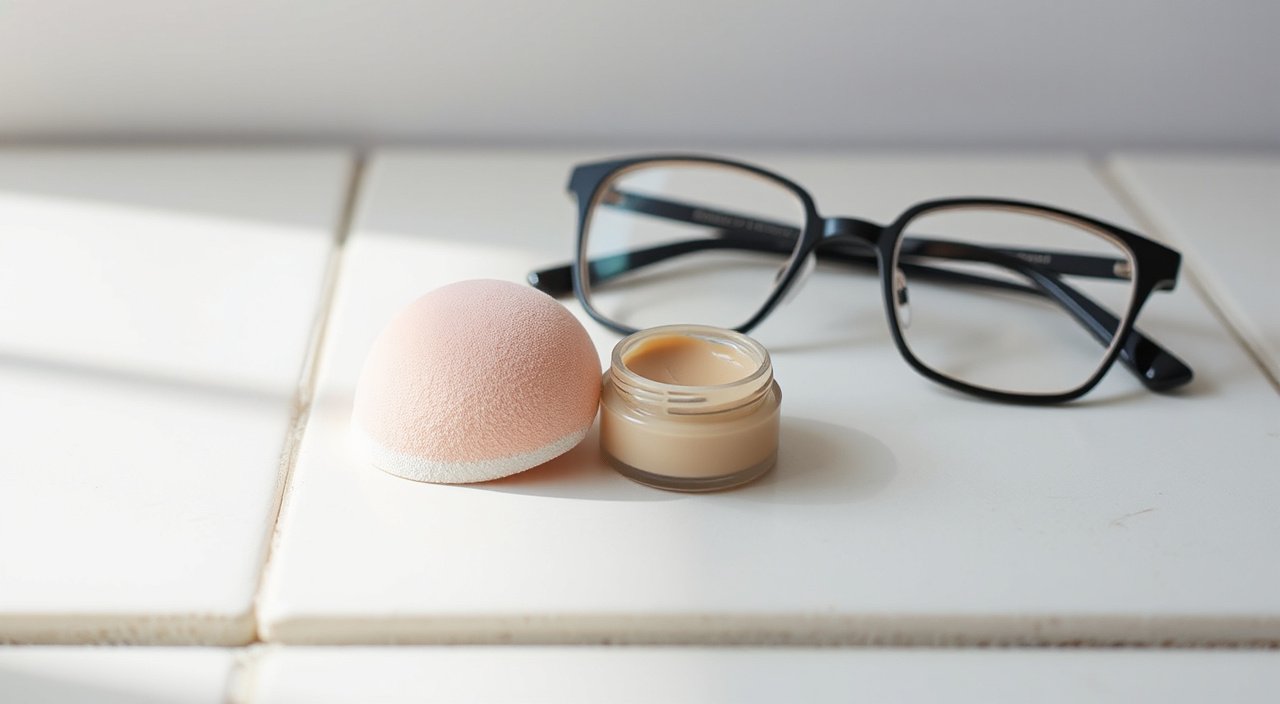
Nose pads rub against the skin and can pick up foundation, leaving marks on the nose and on the pads themselves. Use a thin layer of foundation on the nose and set it with a little translucent powder. Avoid greasy concealer there.
After a long day, clean the area where pads rest with a gentle cleanser. Leftover makeup and sweat can clog pores and cause breakouts on the sides of the nose.
If you have sensitive skin, silicone nose pads are usually gentler than hard plastic.
Powder is useful under the nose pads and on the temples, where the frame arms sit. A little translucent powder reduces slipping. Avoid heavy powder, which can look dry and cakey near the pads.
Also check the bridge of the nose. Bronzer or highlighter there can transfer onto pads. Keep these products lighter on the nose and heavier on the cheeks.
If your frames leave red marks, apply a thin layer of concealer after the glasses come off, not before. Clean the pads with a damp cloth to remove makeup and oil.
Worth Doing
- Matte shadows
- Thin base on the nose
- Powder under nose pads
Skip It
- Glittery shadow behind lenses
- Heavy highlighter on the nose
- Greasy concealer under pads
How to Do Makeup When You Wear Glasses
Do your makeup with your glasses off, then check your look with them on. Use a mirror and daylight if possible.
Take a photo with your glasses on to see how makeup looks on camera. Flash and bright light show glare and shine that mirrors miss, and the photo helps you adjust the look.
Keep a small pouch with a spoolie, tissue and microfiber cloth. That way you can fix smudges without touching your face with dirty fingers.
Prep the skin
Moisturize and apply sunscreen, then a thin layer of base.
Define the brows
Fill gaps and brush through for a natural shape.
Add matte shadow
Blend a neutral matte shade and a slightly deeper outer corner.
Line and curl
Draw a thin line and curl the lashes.
Finish with mascara
Apply one or two coats and let dry before wearing glasses.
Stop using any product that makes your eyes sore, red or swollen, and see an eye doctor if symptoms continue.
Matching Makeup to Your Frames
Bold frames can overwhelm light makeup, so strengthen the brows and add a bit of color to the cheeks. Thin or rimless frames leave more room for eye makeup. Colored frames can clash with shadows, so choose shades that complement them.
Color theory helps. Warm frames pair nicely with warm shadows, and cool frames work with taupe, plum and gray. If you choose bold frames, keep eyeshadow soft and let the frames be the statement.
Match your lipstick or blush to the frame color if you want a coordinated look, but keep intensity moderate.
Cat-eye or upswept frames pair well with a soft, lifted wing. Round frames look good with softer shapes.
Keeping Lenses and Frames Clean
Makeup can transfer to lenses and frames, leaving smudges that blur vision. Wipe lenses with a clean microfiber cloth and lens cleaner. Wipe the nose pads with a damp cloth, since oil and foundation can irritate the skin.
Skin oil and sunscreen on the nose can also smear lenses. Wash your face and glasses at the end of the day, and avoid touching the lenses with greasy fingers.
If you work at a screen all day, consider anti-glare coatings and take breaks. Comfortable eyes make makeup look better too.
| Problem | Fix |
|---|---|
| Mascara marks on lenses | Let mascara dry; wipe with microfiber |
| Foundation on nose pads | Set the base; clean the pads |
| Shimmer glare | Use matte shadows |
| Red pad marks | Choose pads that fit and apply makeup after removal |
Honest Limits
Every prescription and frame is different, so no makeup rule fits everyone. Strong prescriptions change the apparent size of the eyes in ways makeup can only partly balance. Frames that fit poorly can leave marks no product will hide.
Contact lens and glasses wearers sometimes switch between both. Your makeup may need small adjustments depending on which you wear, so keep a lighter base and softer eye look as your default.
Ask your optician about adjusting the fit if frames cause pressure marks or discomfort.
When to See a Professional
See an optician if your frames slide, pinch or leave deep marks. See a doctor if you develop rashes, sores or persistent redness where frames touch the skin, or an eye doctor if eye makeup causes irritation.
Take your glasses with you to an eye appointment if you notice makeup problems such as smudging or marks, since an optician can adjust fit and suggest coatings that cut reflections.
If frames cause skin irritation, a doctor can check for contact dermatitis from materials such as nickel in some frames.
This article is educational and not medical advice. The author is a registered pharmacist, not a dermatologist or eye doctor, and cannot diagnose conditions.
Common Questions
What eye makeup looks best with glasses?
Matte neutral shadows, defined brows and well-curled lashes work well behind lenses.
Should I avoid shimmer with glasses?
Shimmer can reflect and create glare, so use it sparingly.
How do I stop foundation from sliding under nose pads?
Use a thin base and set it with a little translucent powder.
Do I need bolder makeup with glasses?
Often slightly more definition helps, especially on brows.
How do I avoid mascara smudges on lenses?
Curl lashes, use smudge-resistant mascara and let it dry fully.
Can glasses leave marks on my nose?
Yes. Check the fit and clean the pads regularly.
What eyeliner suits glasses?
A thin, neat line close to the lashes usually looks best.
Should I do makeup with glasses on or off?
Off for application, then check the look with them on.
Do nearsighted lenses make eyes look smaller?
Yes, so brighter inner-corner shades and mascara can help open them.
When should I see a doctor?
See one for rashes, sores or ongoing irritation near the frames.
The Takeaway
Makeup for glasses wearers is about definition, matte finishes and clean lenses. Focus on brows, lashes and a neat base around the nose.
Check your look with glasses on, and talk to an optician if frames leave painful marks.

Written by
Registered pharmacist and founder of Facial Adviser. Rakib's pharmacy training covers how skincare actives work and interact; a later course in cosmetology turned that into a focus on facial treatments and skincare products. He plans, researches and edits every guide on the site and checks health claims against sources such as the American Academy of Dermatology, the FDA and the NIH. He is not a dermatologist; see the Editorial Policy and Medical Disclaimer.
About · Editorial policy · How we choose products · Medical disclaimer · Contact
Keep reading: Makeup basics and skin
- How to Properly Put On Face Makeup: The Right Order, Step by Step
- How to Remove Halloween Makeup Without Wrecking Your Skin
- How to Calm Your Skin After Halloween Makeup
- Makeup or Hair First? The Real Chemistry Behind It
- Makeup vs No Makeup: Does Wearing It Damage Skin?
- Why Can't I Wear Makeup After Botox?
- How to Get Started as a Freelance Makeup Artist: Training, Kit and Clients
- Best Way to Use Makeup Remover: Micellar Water, Balms, Oils and Eye Removers
Turn skincare time into me-time with a free audiobook