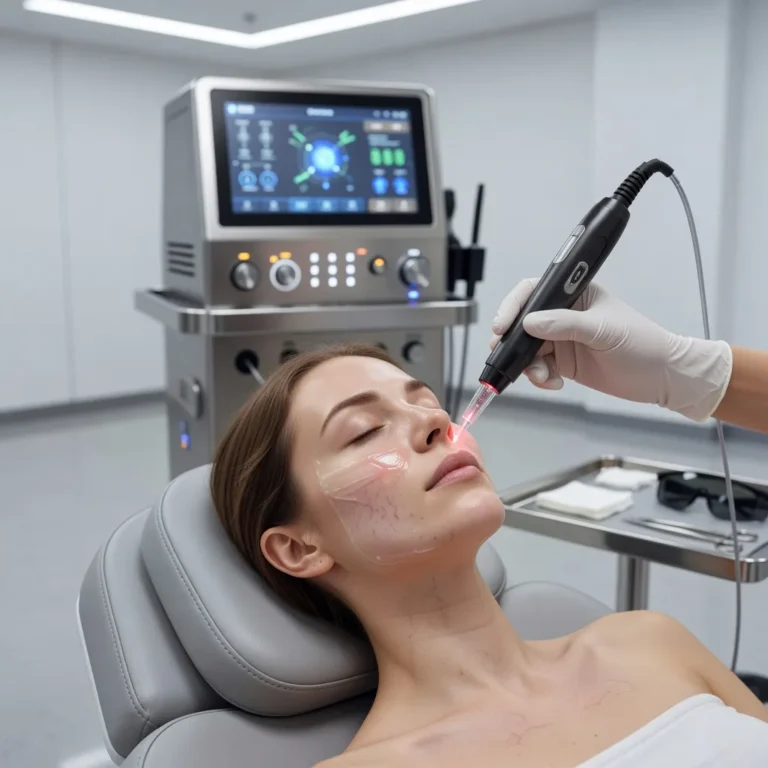
How to Use an LED Face Mask at Home: Steps, Timing and Safety
An LED face mask shines low-level light onto the skin from rows of small diodes. Red and near-infrared light are marketed mainly for fine lines and skin tone, and blue light for acne-prone skin. Home masks are far weaker than clinic devices, so the way you use them, and how regularly, matters.
Part of our guide to at-home facial devices. Start with: 10 Best LED Light Therapy Masks (2026): Clearer Skin, Softer Lines
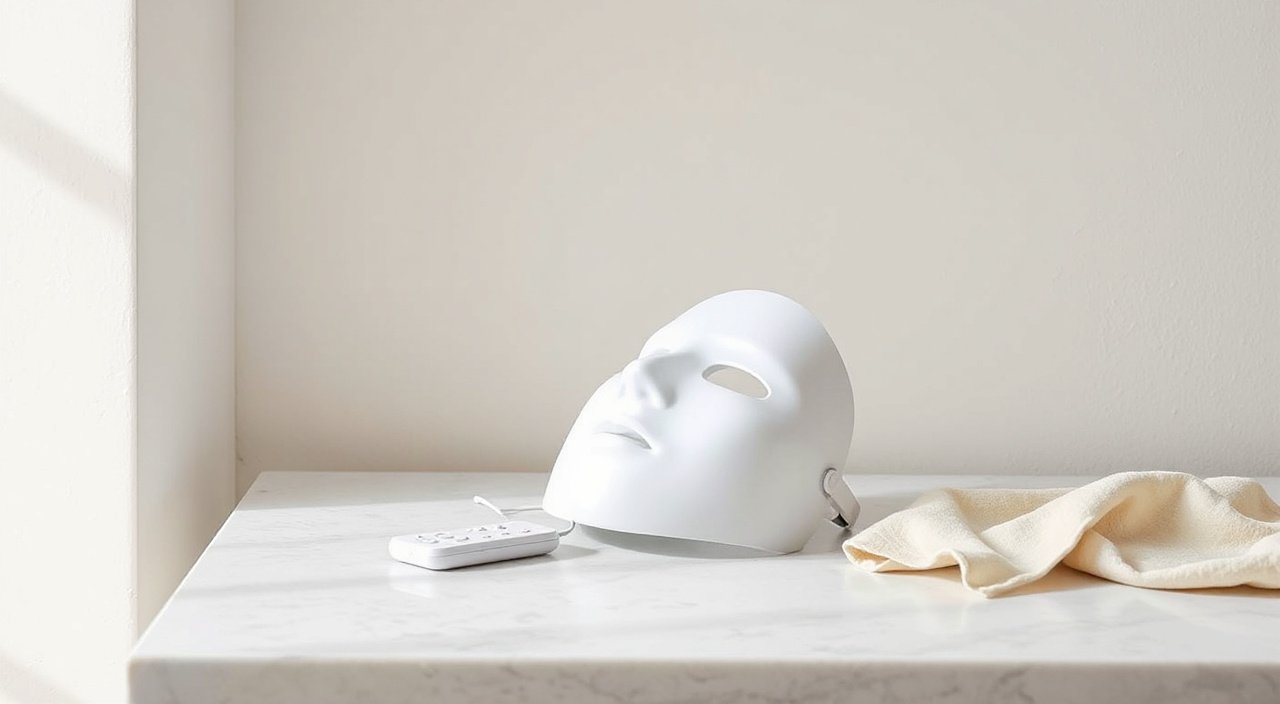
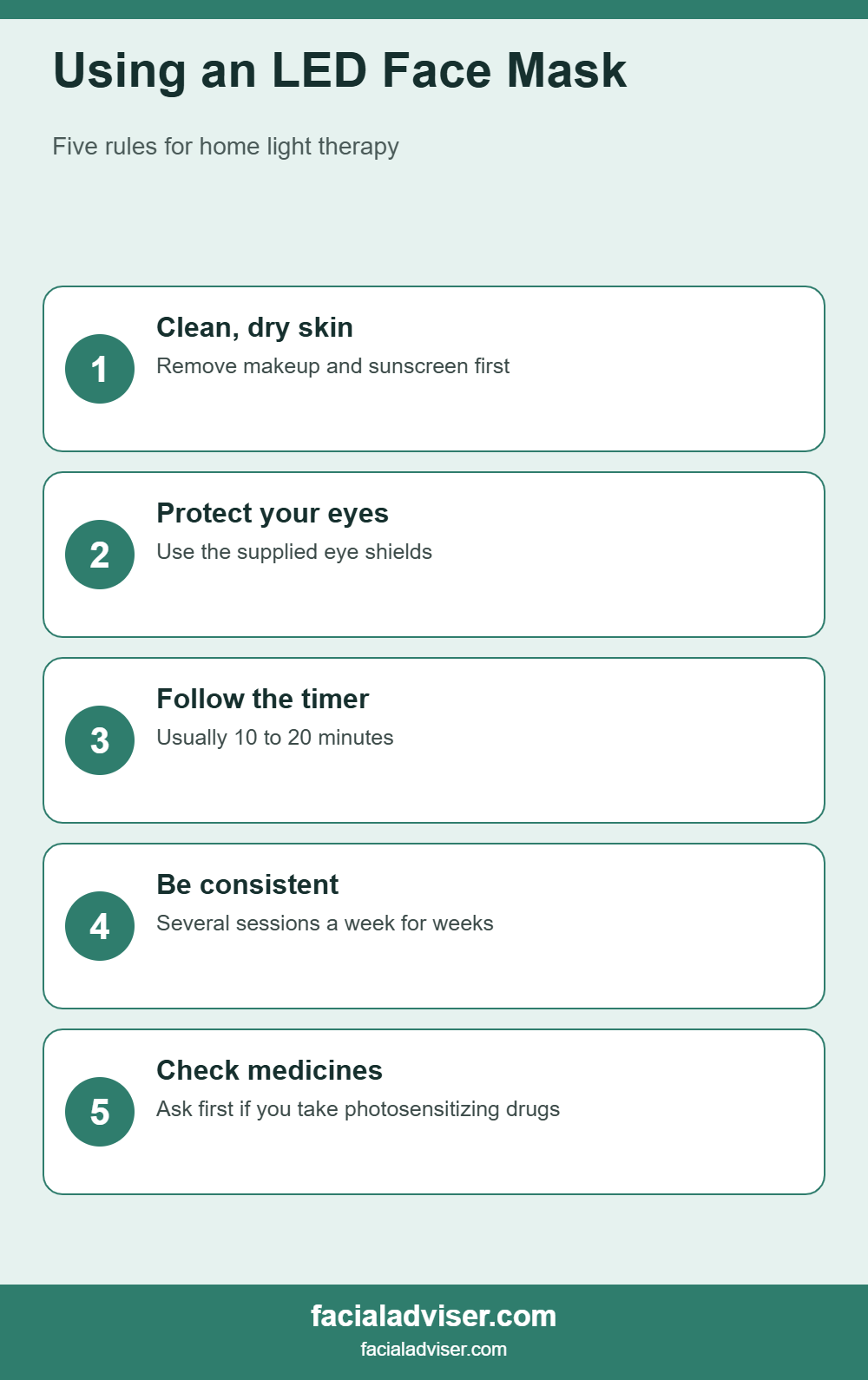
To use an LED face mask at home, start with clean, dry skin and remove makeup and sunscreen. Put on any eye protection supplied, fit the mask so it sits evenly, choose the light setting, and let the built-in timer run, usually for 10 to 20 minutes. Use it as often as the manual says, commonly three to five times a week, and expect gradual change over several weeks. Afterward, apply your usual moisturizer and sunscreen in the daytime. Check with a doctor first if you take medicines that increase light sensitivity or have an eye or skin condition.
Recommended LED Face Masks and Aftercare

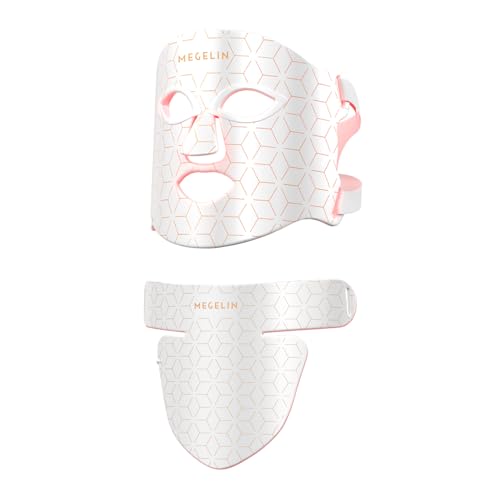
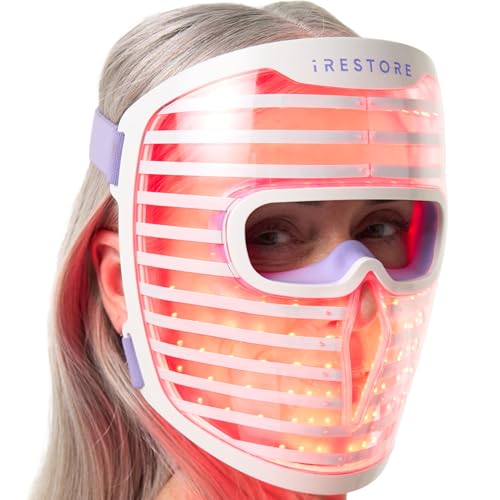

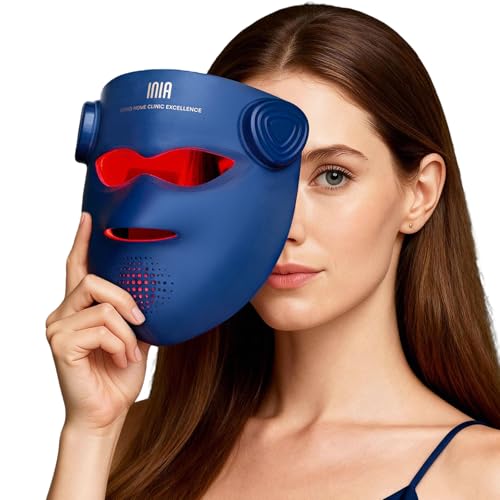


In short: clean skin, eye protection, the manufacturer’s timer, and patience over weeks.
Black Friday is coming: shop the deals with Prime
The American Academy of Dermatology notes that at-home LED devices are less powerful than those used in a dermatologist’s office, and that results tend to be modest and require consistent use.
I am Rakib Sarwar, a registered pharmacist with a cosmetology course. This is general information, not medical advice. Disclosure: this post contains affiliate links, and the first two masks listed are part of Amazon Creator Connections campaigns that pay us a commission. As an Amazon Associate I earn from qualifying purchases.
In Brief
- Use the mask on clean, dry skin with makeup and sunscreen removed.
- Wear the eye protection supplied and never stare into the lights.
- Follow the built-in timer, usually 10 to 20 minutes per session.
- Consistency matters: several sessions a week for at least four to eight weeks.
- Home masks are milder than clinic devices, so expect modest results.
- Ask a doctor first if you take photosensitizing medicines or have epilepsy, an eye condition or active skin disease.
In This Guide
- How LED Light Therapy Works
- What Each Light Colour Is For
- What to Look for in a Home Mask
- Before Your First Session
- How to Use an LED Face Mask: Step by Step
- How Often and How Long
- Do and Do Not for LED Masks
- Safety and Who Should Avoid LED Masks
- Honest Limits of This Guide
- When to See a Professional
- FAQ
- The Takeaway
How LED Light Therapy Works
LED stands for light-emitting diode. These masks give off specific wavelengths of visible and near-infrared light, without the ultraviolet rays that tan or burn skin.
The idea is that skin cells absorb this light and respond to it. Red and near-infrared light have been studied for their effect on collagen-producing cells, and blue light for its effect on acne-causing bacteria.
The treatment is not hot and should not hurt. Most people feel mild warmth at most.
Evidence is strongest for in-clinic devices. Studies of home masks are fewer and smaller, though some report modest improvements in fine lines and mild acne with regular use.
Light therapy began in clinics, where panels are far more powerful and sessions are supervised. Home masks trade that power for convenience, which is why regular use over weeks is needed.
The dose your skin receives depends on wavelength, power and time. Manufacturers set the timer to match the output of their device, so a longer session on a different mask is not automatically stronger.
What Each Light Colour Is For
Many masks offer several colours. The evidence is not equal for all of them, so this table separates the better-studied settings from the rest.
| Light | Approximate wavelength | Marketed for | Evidence |
|---|---|---|---|
| Red | About 630 to 660 nm | Fine lines, tone | Most studied for skin rejuvenation |
| Near-infrared | About 830 to 850 nm | Deeper support, recovery | Studied, often paired with red |
| Blue | About 415 nm | Acne-prone skin | Studied for mild to moderate acne |
| Green, yellow, others | Varies | Tone, redness | Limited evidence |
If a mask advertises seven colours, that does not make it seven times more useful. Red, near-infrared and blue are the settings with the most research behind them.
Some masks combine red and near-infrared in one mode. Others let you switch between colours or run them in sequence. If you have one main concern, a simple mask with the relevant setting is enough.
Blue light can be drying for some people. If you use it for breakouts, follow with a light, non-comedogenic moisturizer.
Check that the maker states the wavelengths. Vague claims with no numbers are a reason for caution.
What to Look for in a Home Mask
Design and safety features vary widely. These points help when comparing models.
| Feature | Why it matters |
|---|---|
| Stated wavelengths | Shows the light matches studied ranges |
| Regulatory clearance where claimed | Suggests the device has been reviewed for safety |
| Eye protection | Shields or goggles reduce glare and risk |
| Auto timer | Prevents overlong sessions |
| Fit and coverage | Even contact gives even exposure |
| Corded or wireless | Affects comfort and how you use it |
Flexible silicone masks tend to sit closer to the face than rigid shells. Either can work if the fit is comfortable.
Battery life and weight affect whether you will keep using the mask. A device that is heavy or uncomfortable tends to end up in a drawer. The FOLOKE red and near-infrared LED mask featured at the top of this guide is one option (paid link), and the ECOVYRA 7-mode wireless LED mask is another (paid link).
Look for clear cleaning instructions and a warranty. These are small signs that the maker supports the product.
Be wary of very cheap masks with no documentation. For current options, see our page on LED face mask deals.
Before Your First Session
A few checks before you start make the routine safer.
- Read the manual, including the warnings and the recommended schedule
- Charge the device or check the cable and controller
- Do the skin sensitivity test if the manual describes one
- Review your medicines for any that increase light sensitivity
- Remove contact lenses if the instructions advise it
Some antibiotics, acne medicines, diuretics and herbal products such as St John’s wort can make skin more sensitive to light. If you are unsure, ask your pharmacist or doctor before using a mask.
Take a clear photo of your face in the same lighting before you start, then again every two weeks. Changes are gradual and hard to judge from memory.
How to Use an LED Face Mask: Step by Step
Watch the full 3-minute walkthrough (AI-generated illustration with voiceover; contains affiliate links).
Your device manual comes first. These are the usual steps for home masks.
Cleanse and dry
Wash your face, remove all makeup and sunscreen, and pat the skin completely dry.
Protect your eyes
Put on the goggles or check the built-in eye shields are in place. Keep your eyes closed if the manual advises it.
Fit the mask
Place the mask so it sits evenly, and adjust the straps so it is secure but not tight.
Choose the setting
Select the colour and intensity recommended for your goal.
Run the timer
Let the session run for the set time, usually 10 to 20 minutes. Do not repeat it straight away.
Remove and clean
Take the mask off, switch it off, and wipe the inside as the manual directs.
Finish your routine
Apply serum and moisturizer, and sunscreen if it is daytime.
Most makers advise using serums after the session, not before, because some products can block or react to the light. Follow the advice for your model.
Stop the session if you feel pain, strong heat, dizziness or a headache.
How Often and How Long
Schedules differ between devices, so use the manual as your guide. Many suggest three to five sessions a week.
More sessions than recommended do not speed up results, and may irritate the skin or strain the eyes.
Give it time. Studies that report benefits usually run for four to twelve weeks of regular use. If you see no change after about three months, the mask may not be worth continuing.
Results are also maintained only with continued use. Skin tends to return to its baseline when sessions stop.
Pick a regular slot, such as after your evening cleanse. Linking the session to an existing habit makes it easier to stay consistent.
Light therapy does not replace sunscreen, a retinoid or acne treatment prescribed by a doctor. It is an optional addition to a routine, not the foundation of one.
Do and Do Not for LED Masks
These basics apply to almost every home device.
Good Habits
- Use on clean, dry skin
- Wear the eye protection provided
- Follow the timer and schedule
- Clean the mask after each use
- Track progress with photos
Common Mistakes
- Look directly at the lights
- Use over makeup or sunscreen
- Double the session time
- Use on irritated, sunburned or infected skin
- Share a mask without cleaning it
If several people in a household share a mask, wipe it with the cleaner the manual recommends between users to avoid passing on bacteria.
Keep the mask away from water unless it is rated for it, and store it flat or as the maker advises so the wiring is not strained.
Safety and Who Should Avoid LED Masks
LED therapy is generally considered low risk, but it is not suitable for everyone.
Do not use an LED mask without medical advice if you have epilepsy or a history of light-triggered seizures or migraines, an eye disease, lupus or another light-sensitive condition, or if you take medicines that increase sensitivity to light. Stop and see a doctor if you develop eye pain, vision changes, a rash or burns.
Eye safety deserves attention. Bright light close to the eyes can be uncomfortable, and safety concerns have led to at least one consumer LED mask being recalled in the past. Use the eye protection supplied.
If you are pregnant, there is little research on home LED masks, so check with your doctor first.
Children should not use these masks unless a doctor has advised it, and devices should be stored out of their reach.
If you have had a recent chemical peel, laser treatment or injectable procedure, ask your provider when it is safe to resume light sessions.
Possible side effects include temporary redness, dryness or a headache. If your skin becomes irritated, our guide on repairing the moisture barrier covers how to calm it.
Honest Limits of This Guide
Home LED masks vary in power, wavelength and quality, and most have not been tested in independent trials. Benefits reported in studies are usually modest.
I have not tested the listed masks myself. They are research-based picks from Amazon listings. The first two are part of paid Amazon campaigns, as disclosed above, and both are newer listings with few customer reviews so far, so weigh them against the longer-established options in the list.
Device instructions differ. Where your manual disagrees with this guide, follow the manual.
When to See a Professional
See a dermatologist if you want to treat moderate or severe acne, deeper wrinkles, scarring or pigmentation. In-office treatments and prescription products have stronger evidence.
Seek medical advice as well if you have any reaction to the mask, or if you are unsure whether your medicines or health conditions make light therapy unsuitable.
This article is general educational information from a pharmacist and is not medical advice. It does not replace an examination by a doctor or dermatologist. Seek professional care for any skin reaction that is severe, spreading or not improving.
FAQ
How often should I use an LED face mask?
Follow your device manual. Many home masks suggest three to five sessions a week. Using it more often does not speed up results.
How long should each session be?
Usually 10 to 20 minutes, set by the built-in timer. Do not run back-to-back sessions.
Should I use an LED mask before or after skincare?
Use it on clean, dry skin, then apply serums and moisturizer afterward, unless your manual says otherwise.
Do I need to protect my eyes?
Yes. Use the goggles or shields provided and avoid looking at the lights. Stop if you have eye discomfort.
How long until I see results?
Changes are gradual. Studies reporting benefits usually involve four to twelve weeks of regular use.
Can I use an LED mask with retinol?
Many people do, applying retinol after the session. If your skin is sensitive, use them on different nights and ask a professional if unsure.
Does red light therapy really work for wrinkles?
Some studies show modest improvement in fine lines with regular use. Home masks are weaker than clinic devices, so expectations should be modest.
Is blue light good for acne?
Blue light has been studied for mild to moderate acne and may help some people. It does not replace acne treatment from a doctor.
Who should not use an LED face mask?
People with epilepsy, light-triggered migraines, eye disease, light-sensitive conditions or on photosensitizing medicines should get medical advice first.
Can I use an LED face mask every day?
Only if your manual allows it. Many are designed for several sessions a week, with rest days in between.
The Takeaway
Using an LED face mask at home comes down to clean skin, eye protection, the right timer and steady use over several weeks. Results, where they appear, are gradual and modest.
Check your medicines and health conditions before you start, follow the manual for your device, and see a dermatologist for concerns that need more than a home device can offer.

Written by
Registered pharmacist and founder of Facial Adviser. Rakib's pharmacy training covers how skincare actives work and interact; a later course in cosmetology turned that into a focus on facial treatments and skincare products. He plans, researches and edits every guide on the site and checks health claims against sources such as the American Academy of Dermatology, the FDA and the NIH. He is not a dermatologist; see the Editorial Policy and Medical Disclaimer.
About · Editorial policy · How we choose products · Medical disclaimer · Contact
Keep reading: LED light therapy
- 10 Best Acne Light Therapy Devices (2026): Masks vs Spot Tools
- What Is an LED Anti-Aging Facial? Red Light, Results and Safety
- 10 Best LED Light Therapy Masks (2026): Clearer Skin, Softer Lines
- 7 Best Anti-Breakout Skin Therapy Wands for Hormonal Acne (2026): Blue Light Guide
- 7 Best Mask-Friendly LED Therapy Caps for Combined Treatments (2026): Buyer's Guide
- 10 Best Facial Tools (2026): LED, Cleansing, Gua Sha and More
- How to Incorporate Microcurrent Into Your Routine: Gel, Timing and Safety
Prime for Young Adults: a longer free trial and a lower price after it