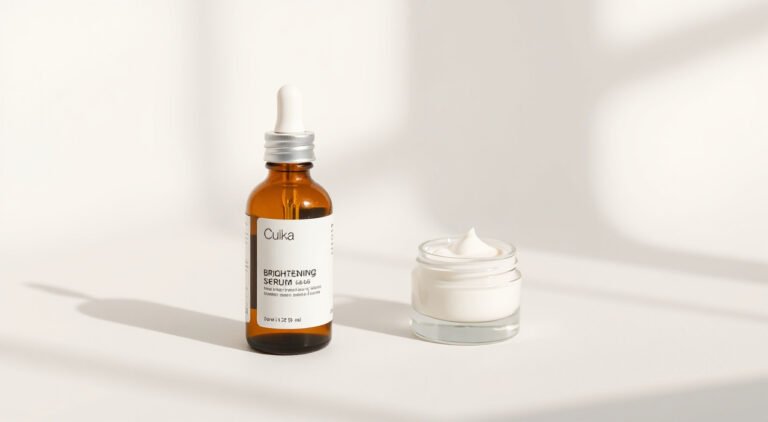

How to Get Glass Skin: a Realistic 8-Step Korean Routine
Glass skin is the Korean beauty goal of skin so smooth, even and hydrated that it looks like polished glass. Photos of it often involve lighting, filters and good genetics, so it is easy to feel that your own routine falls short.
Part of our guide to body and other. Start with: 10 Best Body Tools for Skincare and Massage (2026): Smooth and Relax
The truth is more reassuring: you can get noticeably smoother, glowier skin with a few steps done consistently.

Glass skin is a look of clear, evenly toned, well-hydrated skin with a soft natural sheen, and it is built by gentle cleansing, layered hydration, a barrier-supporting moisturizer and daily sunscreen rather than any single product. The routine below uses eight steps, but you do not need all of them every day. It improves texture and glow, though it cannot erase pores, scars or genetic skin traits.
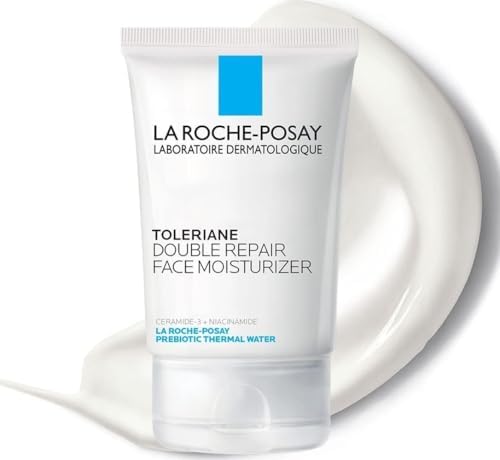
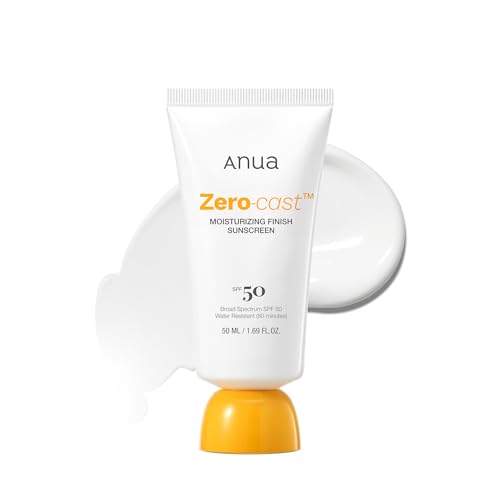
Recommended Products for a Glass Skin Routine



Black Friday is coming: shop the deals with Prime
The Korean approach focuses on prevention and patience. Rather than chasing quick fixes, it layers thin, water-based products so the skin stays hydrated, then seals everything with a moisturizer and protects it with sunscreen. That is why many glass skin routines look similar to the hydration layering we describe in our skin flooding guide.
In this article we explain what glass skin really means, give the eight steps in order with a realistic schedule, and show how to adapt the routine to oily, dry and sensitive skin. We also explain what the routine cannot do and when it is better to talk to a professional.
If you are brand new to routines, our skin care routine guide gives a simpler starting point, and you can add glass skin steps one at a time.
Key Takeaways
- Glass skin means smooth, even, hydrated skin with a soft natural glow, not flawless skin.
- The routine layers thin hydrating products and seals them with moisturizer.
- Daily sunscreen is the most important step for keeping skin even and smooth.
- Exfoliate lightly once or twice a week at most; overdoing it removes glow.
- You do not need all eight steps every day, so start with three or four.
- Oily, dry and sensitive skin can all follow it with small changes.
- The routine cannot remove scars or change pore size.
On This Page
- What Glass Skin Really Means
- The Realistic 8-Step Glass Skin Routine
- What to Do Morning and Night
- Adapting the Routine to Your Skin
- Choosing Ingredients for Each Step
- Why Sunscreen Matters Most
- Common Mistakes That Hide the Glow
- Do, Do Not and Who Should Be Careful
- A Simple Four-Week Plan
- What the Routine Cannot Change
- When to See a Professional
- FAQ
- Where This Leaves You
What Glass Skin Really Means
Glass skin comes from Korean beauty culture and describes skin that looks translucent, even and dewy, reflecting light the way glass does. It is less about a specific product and more about skin that is well hydrated, calm and protected.
The look depends on several things at once: a healthy barrier that holds water, an even tone, smooth texture and a soft sheen. Genetics and age affect how far you can go. Sun exposure, dehydration and irritation work against it.
It also depends on photography. The images that go viral often use lighting, makeup and editing that real life does not match. Aim for skin that feels comfortable and looks fresh, not skin that has no pores at all.
With that in mind, the routine is best seen as a way to improve your skin’s own baseline rather than reach a fixed target.
It also helps to separate hydration from oil. A well-hydrated face can look glassy even if it is oily, while a dehydrated face can look flat even if it is shiny. Many people with oily skin assume they should avoid moisture, then wonder why their skin looks dull. Water-based layers fix that without adding grease.
The Realistic 8-Step Glass Skin Routine
Here are the eight steps in order. Evening uses most of them, while morning is shorter.
Oil or balm cleanse (evening)
Massage a cleansing oil or balm over dry skin to dissolve sunscreen and makeup, then rinse with lukewarm water.
Gentle water-based cleanse
Follow with a mild, low-foam cleanser to remove the remaining residue without leaving skin tight.
Exfoliate lightly (once or twice a week)
Use a mild acid or enzyme product on some evenings instead of a scrub. Skip it when skin is irritated.
Hydrating toner
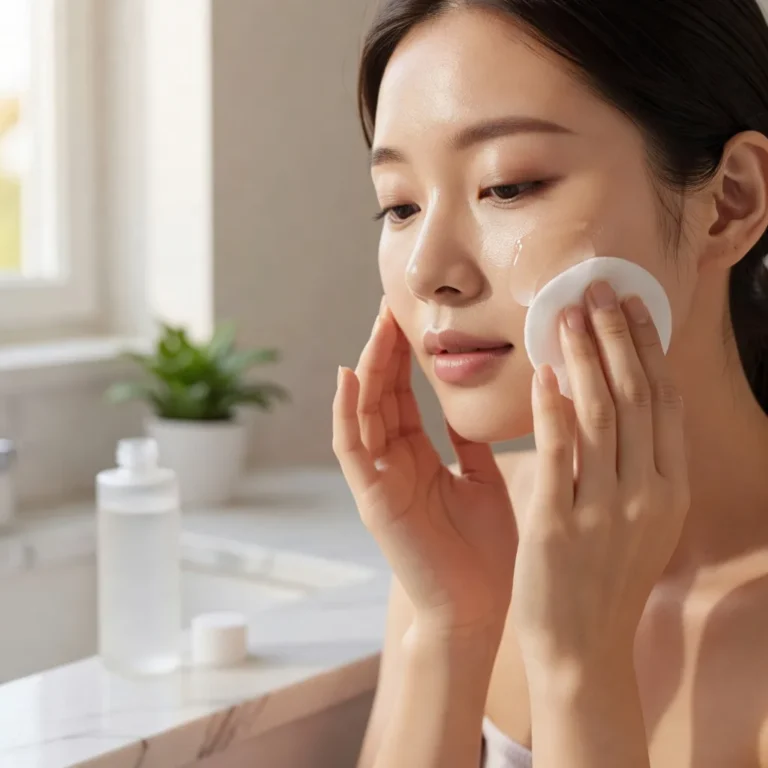
Press a hydrating toner into damp skin with clean hands. This prepares the skin for the next layers.
Essence or ampoule
Add a thin layer of essence with soothing or humectant ingredients such as snail mucin, centella or hyaluronic acid.
Serum for your goal
Choose one serum, such as hyaluronic acid for hydration or niacinamide for tone.
Moisturizer
Seal with a barrier-friendly cream with ceramides or squalane. This keeps water in.
Sunscreen (morning)
Finish every morning with broad-spectrum SPF 30 or higher. It protects tone and smoothness.
You do not need to buy all eight products. Start with a cleanser, a hydrating serum, a moisturizer and sunscreen, then add toner and essence if you enjoy them.

What to Do Morning and Night
Splitting the steps keeps the routine realistic.
| Time | Steps | Time needed |
|---|---|---|
| Morning | Rinse or gentle cleanse, toner, serum, moisturizer, sunscreen | About 5 minutes |
| Evening | Oil cleanse, gentle cleanse, toner, essence, serum, moisturizer | About 8 minutes |
| 1-2 nights a week | Mild exfoliation in place of the essence | About 2 extra minutes |
If your skin is dry, our guide to snail mucin serums for dry skin lists popular essences that fit the essence step. For pores and texture, see Korean toner pads for pores.
Add one new product at a time, wait about two weeks, then judge it. That way you know what helped and what irritated.
A good rule is to keep the evening routine as the main event and the morning as a lighter version. You can also skip the oil cleanse on days when you wear no sunscreen or makeup, using only a gentle cleanser instead.
Adapting the Routine to Your Skin
Skin type changes which steps matter most.
| Skin type | Focus on | Go easy on |
|---|---|---|
| Oily | Lightweight gels, sunscreen, mild BHA | Heavy creams, frequent scrubbing |
| Dry | Humectant layers, rich moisturizer | Exfoliating acids, hot water |
| Sensitive | Few simple steps, soothing ingredients | Fragrance, strong acids, many new products |
| Combination | Gels in the T-zone, cream on dry cheeks | Over-layering |
The pattern is to match the heaviness of each layer to your skin and use fewer products if your skin reacts.
If you are not sure which type you are, wait an hour after washing without applying anything. Tight skin suggests dryness, a shiny T-zone suggests combination, and shine everywhere suggests oily. Use that to pick your texture, and adjust with the seasons, since skin often gets drier in winter.
Choosing Ingredients for Each Step
You do not need a long shopping list. Each step has a few well-understood ingredients, and choosing simple formulas makes it easier to find the one that bothers your skin if a reaction happens.
For cleansers, look for gentle surfactants and avoid heavy fragrance. For toners and essences, humectants such as hyaluronic acid, glycerin and panthenol draw water into the skin, and centella or snail mucin add a soothing angle. For serums, niacinamide supports tone and the barrier, while vitamin C suits morning use if your skin tolerates it.
Moisturizers work best with ceramides, cholesterol, squalane and glycerin. These ingredients help hold water in. Sunscreen should be broad spectrum with SPF 30 or higher.
If labels confuse you, our guide to reading a cosmetic ingredient list shows how to spot the main active and the supporting ingredients.
Why Sunscreen Matters Most
Sun exposure causes uneven tone, dullness and rough texture, which are the opposite of glass skin. No serum can make up for skipping sunscreen.
The American Academy of Dermatology recommends broad-spectrum, water-resistant sunscreen with SPF 30 or higher, and notes that about a teaspoon covers the face. You can read their advice on how to apply sunscreen.
Sunscreen also protects against the slow changes that dull skin over time. Dark spots, rough texture and fine lines all worsen with repeated sun exposure, so skipping sunscreen quietly undoes a lot of careful layering. Make it the one step you never skip, even when the rest of the routine is short.
Choose a lightweight formula you enjoy, since you will use it more often. Reapply about every two hours when outdoors.
Do not use exfoliating acids, retinoids or strong peels without sunscreen the next day. They make skin more sensitive to sun.
Common Mistakes That Hide the Glow
Most people lose their glow to a handful of habits rather than a lack of products.
Over-exfoliating is the biggest one. Scrubs and strong acids scrape away the surface and leave skin red and dull. Using too many layers is another, because products start to pill and irritate. Skipping sunscreen undoes the work. Hot water strips oil, and sleeping in makeup clogs pores.
Switching products too quickly also hides what works. If you change three things at once and your skin reacts, you will not know which one caused it. Add one change every two weeks.
Finally, comparing your skin to edited photos makes any routine feel like a failure. Judge your skin by how it feels: comfortable, hydrated and calm.
Do, Do Not and Who Should Be Careful
Try This
- Layer thin products on damp skin
- Wait a short time between steps
- Patch test new products
- Use sunscreen daily
- Add steps slowly
Avoid This
- Use hot water or harsh scrubs
- Layer several acids at once
- Chase every new trend product
- Skip sunscreen on cloudy days
- Expect pore-free skin
Anyone with active eczema, rosacea, dermatitis or very reactive skin should simplify the routine and avoid fragrance and strong actives. People using prescription acne or retinoid treatments should ask a doctor before adding exfoliating acids.
If more steps make your skin red, itchy or breakout-prone, you have likely added too much. Return to cleanser, moisturizer and sunscreen, then add one step at a time.
A Simple Four-Week Plan
If eight steps feels like too many, build it slowly.
| Week | What to do | Goal |
|---|---|---|
| 1 | Gentle cleanser, moisturizer and sunscreen | Stabilize skin |
| 2 | Add a hydrating serum on damp skin | Boost hydration |
| 3 | Add a toner or essence in the evening | Layer water-based products |
| 4 | Add a mild exfoliant once a week if skin is calm | Smooth texture |
After four weeks, take a photo in the same light and compare. Keep what helps, drop what does not, and repeat for another month before adding anything else.
What the Routine Cannot Change
Pores are mostly genetic, and the American Academy of Dermatology notes they cannot be permanently shrunk, though keeping them clean and protecting the skin can make them less noticeable. You can read their tips on large pores.
Scars, deep wrinkles and long-standing pigmentation need professional treatment. A routine can soften the look of texture but will not reverse them.
Being clear about these limits keeps expectations healthy and prevents overbuying products that promise glass.
There is no clinical definition of glass skin, and no study tests the eight-step routine as a package. The individual steps, such as moisturizing and sunscreen use, have good support for keeping skin comfortable and protected. The glow itself is partly lighting and genetics.
Product suggestions here are examples, not requirements. Pick what suits your skin and budget, and use fewer products if your skin is sensitive.
When to See a Professional
See a doctor or dermatologist for painful or persistent acne, scarring, sudden pigmentation changes or a rash that does not settle. A professional can offer treatments a skincare routine cannot.
This article is for general information and is not medical advice. Rakib Sarwar is a registered pharmacist with a cosmetology course, not a dermatologist. Talk to a doctor or dermatologist about persistent skin problems.
FAQ
What is glass skin?
It is a Korean beauty ideal of smooth, even, hydrated skin with a soft natural glow.
Can anyone get glass skin?
Most people can get smoother, glowier skin, but genetics and skin condition affect how close you can get.
How long does it take to get glass skin?
Hydration improves within days, but texture and tone changes take four to eight weeks.
Do I need all 8 steps?
No. Start with cleanser, serum, moisturizer and sunscreen, then add other steps if you like.
Is glass skin good for oily skin?
Yes, with lightweight gels and mild exfoliation.
Does glass skin shrink pores?
No. Pores cannot be permanently shrunk, though a clean routine makes them look less noticeable.
Is double cleansing necessary?
It helps when you wear sunscreen or makeup, but it is optional on bare-skin days.
How often should I exfoliate?
Once or twice a week with a mild product is plenty for most people.
Can sensitive skin try glass skin?
Yes, with fewer steps and fragrance-free products.
What is the most important step?
Sunscreen. It protects the evenness and smoothness you are trying to build.
Where This Leaves You
Glass skin is best treated as a direction rather than a destination. Hydrate in thin layers, protect with sunscreen and be gentle, and your skin will look smoother and fresher.
Start with four steps this week and add the rest only if your skin asks for them.

Written by
Registered pharmacist and founder of Facial Adviser. Rakib's pharmacy training covers how skincare actives work and interact; a later course in cosmetology turned that into a focus on facial treatments and skincare products. He plans, researches and edits every guide on the site and checks health claims against sources such as the American Academy of Dermatology, the FDA and the NIH. He is not a dermatologist; see the Editorial Policy and Medical Disclaimer.
About · Editorial policy · How we choose products · Medical disclaimer · Contact
Keep reading: Body care and more
- 10 Best Body Tools for Skincare and Massage (2026): Smooth and Relax
- Perioral Dermatitis: Causes, Triggers and What to Stop Using
- Snail Mucin Benefits for Skin: What It Does and Who Should Skip It
- 10 Best Scalp Massagers for Hair Care and Relaxation (2026)
- Centella (Cica) for Sensitive Skin: Benefits and How to Use It
- 10 Best Neck and Shoulder Massagers (2026): Relief for Tight Muscles
Prime for Young Adults: a longer free trial and a lower price after it