‘Dermatologist-Tested’, ‘Hypoallergenic’, ‘Clinically Proven’: Label Claims Decoded
Walk down any skincare aisle and the front of the box is full of confident phrases: dermatologist-tested, hypoallergenic, clinically proven, allergy tested. They sound reassuring. But most of these phrases have no strict legal definition, and what they promise can be much narrower than they sound. Knowing what they mean helps you shop smarter.
Part of our guide to facials: what to expect. Start with: How Often Should You Get a Professional Facial? A Guide by Skin Type and Goal
Many people trust these phrases because they sound scientific, but a few minutes of label reading is usually worth more than a famous name.
This guide explains the common label claims, what each usually means in practice, what questions to ask and how to check the ingredient list yourself. It also lists simple habits, like patch testing, that protect you more than any front-of-box claim.
Black Friday is coming: shop the deals with Prime
I am Rakib Sarwar, a registered pharmacist with a cosmetology course. I am not a dermatologist, and this article is general education. If you have a skin condition or allergy, ask a doctor or pharmacist about specific products.
Claims are marketing, and brands are generally expected to be able to support them if asked. That does not mean every claim is equally meaningful. A dermatologist-tested label may mean a product was used on a small group under a dermatologist’s supervision, not that dermatologists recommend it.
Below you will find a plain-language table of common claims, a step-by-step way to evaluate a label, honest limits and a short list of products that are widely sold as gentle. For more on pore-related claims, see our guide to what non-comedogenic means.
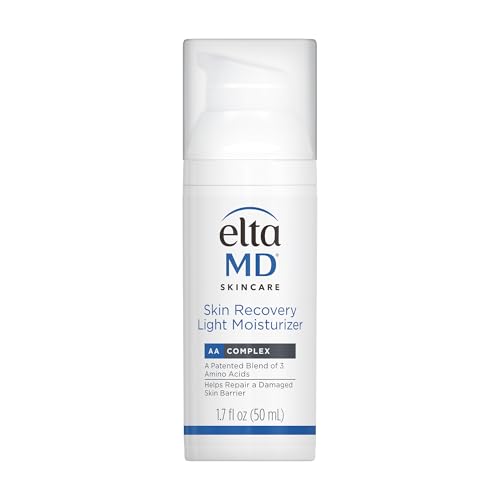
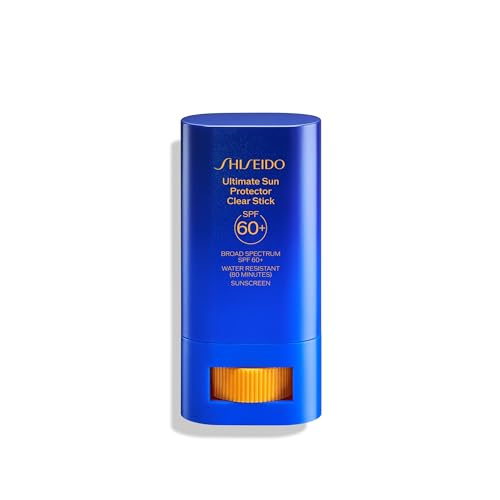
Gentle Products to Consider Once You Know How to Read Labels



What to Know First
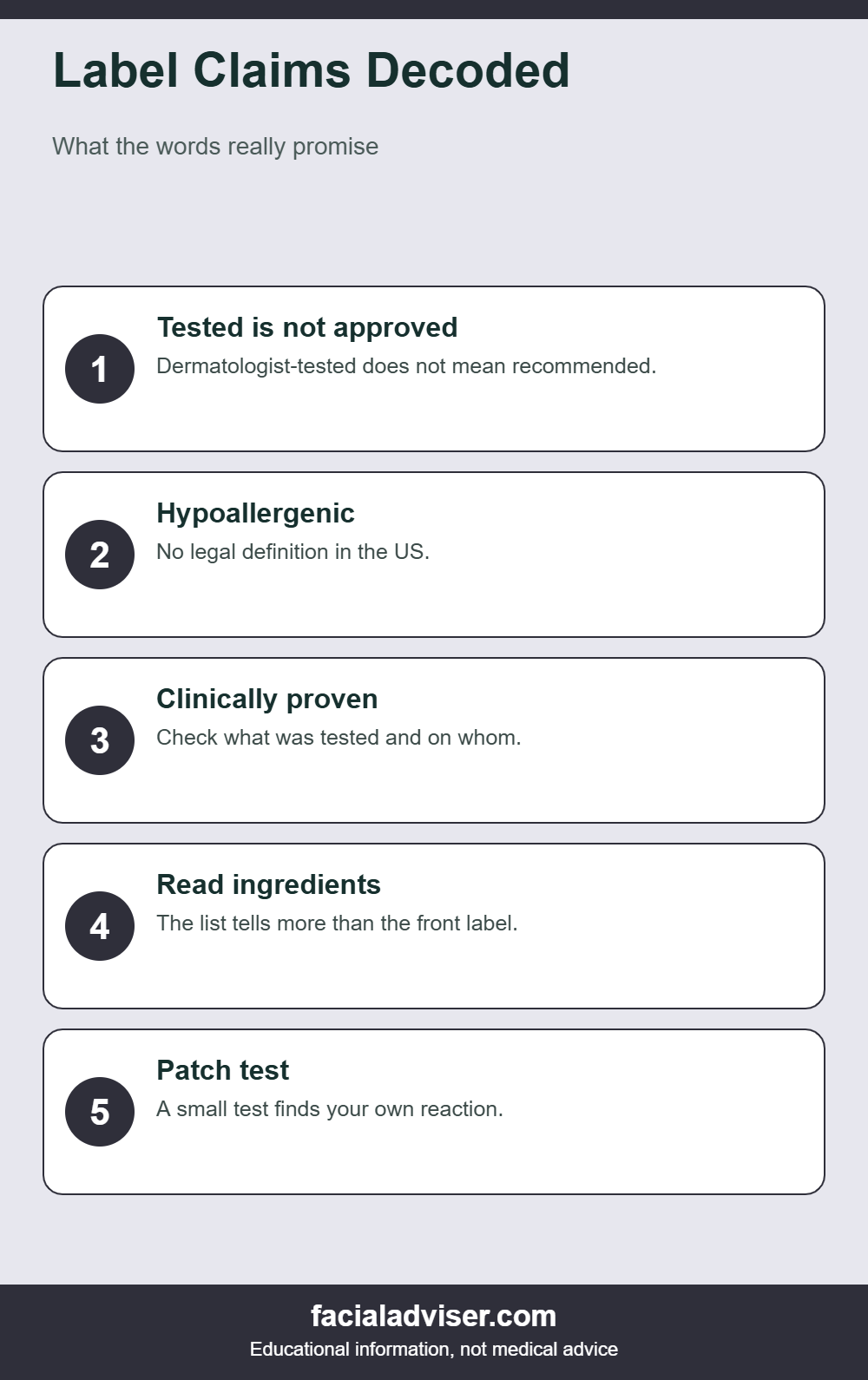
- Most label claims have no strict legal definition.
- Dermatologist-tested does not mean dermatologist-recommended.
- Hypoallergenic means the brand thinks it is less likely to cause allergy, not that it never will.
- Clinically proven needs context: who was tested, for how long and for what result.
- Read the ingredient list and patch test new products.
- See a doctor for allergic reactions or persistent skin problems.
What This Covers
- Why Label Claims Can Be Confusing
- Common Claims and What They Usually Mean
- Dermatologist-Tested vs Dermatologist-Recommended
- What Hypoallergenic Really Means
- Clinically Proven and Other Result Claims
- How to Read a Skincare Label
- Practical Habits That Protect You More Than Claims
- Honest Limits
- When to See a Professional
- Questions People Ask
- Final Word
Why Label Claims Can Be Confusing
Cosmetic brands compete for attention on a crowded shelf, and a short phrase on the front of a box is powerful. In many countries, cosmetics are regulated differently from medicines, and many marketing claims are not defined in law. Instead, brands are responsible for being able to support what they say.
Another issue is language. A phrase like clinically tested can sit next to a tiny asterisk that explains the result applies to one ingredient or one small test. Always check the fine print before drawing conclusions.
Packaging space is limited, so brands choose the claims that sell best. This does not make the claims dishonest, but it does mean the most exciting phrase may not tell you the most useful fact.
That leaves room for very different standards behind the same phrase. One brand may run a careful study with dozens of volunteers. Another may mean something much simpler. As a shopper, you rarely see the details.
Rules differ by country. This article describes general practice, especially in the United States.
Common Claims and What They Usually Mean
The table below summarizes frequent claims. It is a guide, not legal advice, and wording on a specific product may differ.
Some claims are partly defined. Fragrance-free generally means no fragrance ingredients were added, while unscented products can contain masking fragrance to hide odors. Cruelty-free and vegan claims also vary by logo and by organization, which is a topic for another guide.
Terms like pH-balanced, soap-free and oil-free are also marketing language. They describe how a product was formulated but do not tell you how your skin will react.
| Claim | Is it strictly defined? | What it usually means | What it does not mean |
|---|---|---|---|
| Dermatologist-tested | No | A dermatologist was involved in a test | Dermatologists recommend it |
| Hypoallergenic | No | Brand believes it is less likely to cause allergy | It cannot cause allergies |
| Allergy-tested | No | Tested for allergic reactions in some group | Safe for every allergy |
| Clinically proven | No | Some study supports a result | Works for everyone |
| Non-comedogenic | No | Brand says it avoids pore-clogging ingredients | Never causes breakouts |
| Fragrance-free | Partly | No added fragrance in the formula | No smell at all |
| Natural | No | Marketing choice | Safer or gentler |
Dermatologist-Tested vs Dermatologist-Recommended
Tested means a dermatologist took part in testing the product on volunteers. It can be a good sign, but it does not say how large the group was, how long the test lasted or what skin types were included. Recommended is stronger, but it also needs context. Who recommends it and why?
Think about who benefits from the claim. A dermatologist-tested label helps a brand sell, and it is not wrong to use it, but your own experience with the product matters more than the claim.
If you have sensitive skin, look for brands that publish full ingredient lists and testing details. Transparency is a good sign.
Some brands also use phrases like developed with dermatologists. This usually means dermatologists contributed to the formula. That can be meaningful, but it still does not guarantee your skin will tolerate the product.
If a product is recommended by dermatologists, look for a statement from a named organization or a study. Otherwise, treat it as marketing.
Look for brands that explain their testing in plain words. Specific details are usually more trustworthy than vague phrases.
Treat dermatologist-tested as a small plus, not as proof that a product suits sensitive skin.
What Hypoallergenic Really Means
Hypoallergenic suggests a product is less likely to trigger allergy, but it is not a legal guarantee. Brands often avoid common irritants such as fragrance and dyes, which can reduce reactions. However, any ingredient can trigger an allergy in someone.
Some people react to ingredients that are generally considered mild, such as lanolin, propylene glycol or certain preservatives. If you have repeated reactions, a patch test performed by a doctor can identify the exact trigger and save years of guesswork.
Common allergens in skincare include fragrance, certain preservatives and some plant extracts. If you know what triggers you, check ingredient lists for those names. Fragrance may appear as fragrance, parfum or aroma.
Allergy symptoms can show up right away or after days. Redness, itching, swelling and small bumps that appear where the product touched your skin are all reasons to stop using it.
If you have known allergies, read the ingredient list and talk to a doctor or pharmacist. Allergy testing by a professional is more reliable than a front-of-box phrase.
Do
- Check the ingredient list
- Patch test new products
- Talk to a professional about known allergies
Don’t
- Assume hypoallergenic means safe for you
- Use many new products at once
- Ignore itching or rash
Clinically Proven and Other Result Claims
Clinically proven and clinically tested usually refer to a study, but studies differ widely. A small, short, brand-run study can support a claim without being strong evidence. Look for percentages that include group size and time frame, such as results after 4 weeks in a group of volunteers.
Finally, remember that statistics can be framed in different ways. Eighty percent of people agreed can mean eight out of ten volunteers in a small study, and agreement is not the same as measured improvement.
Some brands include small notes like results from a consumer perception study. These measure what people felt, not measured changes in skin. They can still be useful, but they are weaker evidence than lab measurements.
If a claim sounds too good to be true, such as erasing wrinkles in a week, treat it with caution and look for details.
Be careful with claims that sound medical for cosmetics. Creams that claim to cure or treat diseases may fall under drug rules, and products that claim to change the structure of the skin may need extra regulatory review.
| Question to ask | Why it matters |
|---|---|
| How many people were tested? | Small groups give weaker evidence |
| How long was the test? | Short tests miss slow reactions |
| Who ran it? | Independent results are stronger |
| What was measured? | Feelings and measurements differ |
How to Read a Skincare Label
Start with the ingredient list rather than the front claim. Ingredients are listed in descending order of concentration, except those below one percent, which may appear in any order. Check for fragrance, essential oils or known irritants for you.
Pay attention to the order of ingredients. Water or a base usually comes first. Active ingredients, such as niacinamide or salicylic acid, usually appear higher on the list if they are present in meaningful amounts.
Check the expiry symbol, which looks like an open jar with a number and the letter M. It tells you how many months a product is meant to be used after opening.
Then look at the directions and warnings. Real safety information, such as patch testing advice, is usually printed in small text on the back.
Ignore the front claims at first
Turn the product over and read the ingredients.
Check for personal triggers
Look for fragrance, dyes or ingredients you react to.
Read the warnings
Look for patch test and use advice.
Patch test
Apply a small amount on the jawline for several days.
Add one product at a time
Wait two weeks before trying another new product.
Stop using any product that causes burning, swelling or rash, and see a doctor if symptoms persist.
Practical Habits That Protect You More Than Claims
Patch testing finds your own reaction, which is what matters. Introduce one new product at a time and keep notes. Choose simple formulas with fewer ingredients if your skin is reactive.
Take photos of any reaction and note the date and product name. These details help a doctor decide whether the cause is contact irritation, allergy or something else.
Keep your routine simple while testing. Cleanser, moisturizer and sunscreen are enough for many people. Adding actives and fancy serums can wait until your skin is calm.
If you buy online, check that you are purchasing from a trusted seller. Counterfeit or expired products can cause problems no label claim can prevent.
Be wary of marketing words like natural, clean or chemical-free. These are not defined, and natural ingredients can still irritate. Safety depends on the ingredient, the concentration and your skin, not on a label word.
Honest Limits
This article cannot tell you whether a specific product is safe for you. Regulation changes, and rules differ between countries. A product may have strong testing behind it even if the label wording is vague, and a label with many claims may have little behind it.
Finally, consider that your own skin may change over time. Pregnancy, medication, seasons and age can all change how you react to products you used safely for years.
If you have eczema, severe allergies or a chronic skin condition, a medical professional can guide you better than any label.
When to See a Professional
See a doctor or dermatologist if you have a rash, swelling, blistering, severe itching or burning after using a product, or if you have a known allergy and are unsure about an ingredient. Seek urgent care for swelling of the face, lips or trouble breathing.
Bring your product list and labels to an appointment. A professional can compare ingredients across your products and spot shared triggers that you might not notice.
This article is educational and not medical advice. The author is a registered pharmacist, not a dermatologist, and cannot diagnose allergies or skin conditions.
Questions People Ask
What does dermatologist-tested mean?
A dermatologist was involved in testing, but it does not mean dermatologists recommend the product.
Is hypoallergenic regulated?
There is no strict legal definition in the United States.
Does hypoallergenic mean no allergic reactions?
No. Anyone can react to any ingredient.
What does clinically proven mean?
A study supports a result, but study quality varies.
Is fragrance-free the same as unscented?
Not always. Unscented products can contain masking fragrance.
Are natural products safer?
Not necessarily. Natural ingredients can still irritate.
How do I patch test?
Apply a small amount on the jawline for several days.
Should I trust front-of-box claims?
Use them as hints and read the ingredients and warnings.
Who regulates cosmetic claims?
Regulators step in when claims are false or products are unsafe, but many terms are not defined.
When should I see a doctor?
See one for rashes, swelling, blistering or persistent skin problems.
Final Word
Label claims are marketing hints, not guarantees. Read ingredients, patch test and add products one at a time.
If you react to a product or have known allergies, talk to a doctor or pharmacist for personal guidance.

Written by
Registered pharmacist and founder of Facial Adviser. Rakib's pharmacy training covers how skincare actives work and interact; a later course in cosmetology turned that into a focus on facial treatments and skincare products. He plans, researches and edits every guide on the site and checks health claims against sources such as the American Academy of Dermatology, the FDA and the NIH. He is not a dermatologist; see the Editorial Policy and Medical Disclaimer.
About · Editorial policy · How we choose products · Medical disclaimer · Contact
Keep reading: Facials: what to expect
Prime for Young Adults: a longer free trial and a lower price after it