What ‘Non-Comedogenic’ Really Means (and Why It Isn’t Regulated)
You see it on moisturizers, foundations and sunscreens: non-comedogenic. It sounds like a promise that a product will not clog your pores or cause acne. In reality, non-comedogenic is a marketing term that brands define themselves, and it is not a guarantee for every person. Understanding that can save you money and frustration.
Part of our guide to body and other. Start with: 10 Best Body Tools for Skincare and Massage (2026): Smooth and Relax
This guide explains what comedogenic means, why there is no legal test for the label, how brands usually decide to use it and what you can do to check products yourself. It also covers ingredients people often worry about and what to do if you keep breaking out.
I am Rakib Sarwar, a registered pharmacist with a cosmetology course. I am not a dermatologist, and this article is general education. If you have persistent or painful acne, a doctor or dermatologist can diagnose the cause and recommend treatment.
Black Friday is coming: shop the deals with Prime
The word comedogenic comes from comedones, which are clogged pores such as blackheads and whiteheads. A non-comedogenic product is supposed to be less likely to cause them. The catch is that skin differs, and the same ingredient can behave differently in different formulas and on different faces.
Below you will find a clear explanation, a practical way to check labels, honest limits and a short list of products often marketed as gentle or non-comedogenic. For more on skin types, our guide on how to find your skin type may help.
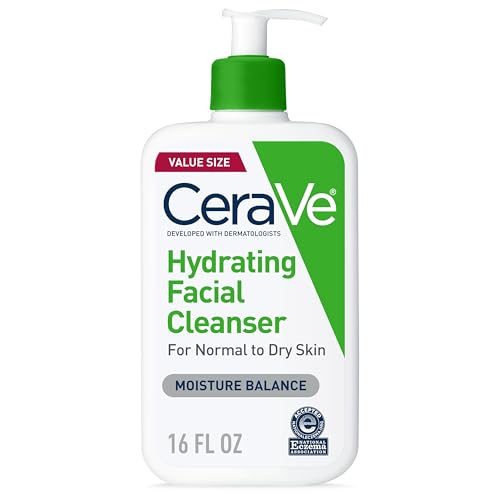
Products Often Labeled Non-Comedogenic Worth Considering


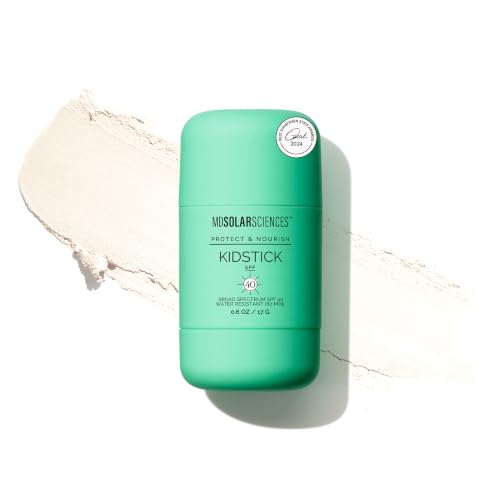


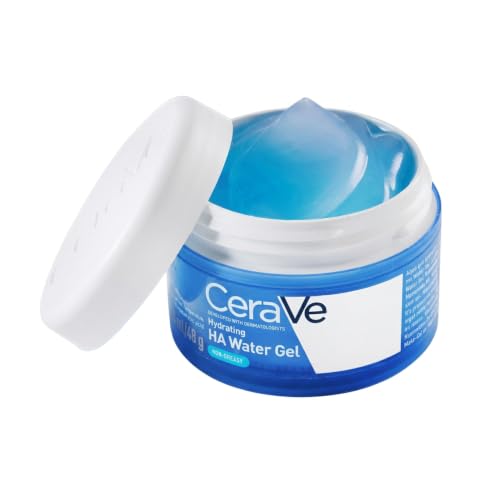
What This Covers
- What Comedogenic and Non-Comedogenic Mean
- Why the Label Is Not Regulated
- Ingredients People Often Worry About
- Why Skin Type and Habits Matter
- How to Check Whether a Product Might Clog Your Pores
- Choosing Products If You Are Breakout-Prone
- Common Mistakes With Non-Comedogenic Claims
- Honest Limits
- When to See a Professional
- Frequently Asked Questions
- The Bottom Line
In Brief
- Non-comedogenic is not a regulated term in most places.
- Brands choose their own tests and standards for using it.
- Ingredient lists and formula type matter more than the front label.
- Patch test new products and add one at a time.
- Fragrance, heavy oils and rich butters can bother some people.
- See a doctor for persistent or painful acne.
What Comedogenic and Non-Comedogenic Mean
Comedones are the small bumps that form when oil and dead skin cells block a pore. A comedogenic ingredient is one that is thought to increase the chance of that blockage. A non-comedogenic product is marketed as being formulated to avoid ingredients likely to do that.
Another term you may see is acnegenic, which refers to products that may trigger acne-like breakouts. It is similar but not identical. Some brands use both words in marketing without defining either clearly.
Comedogenicity also depends on how much of an ingredient is in the product, how it is combined with other ingredients and how long it stays on your skin. A rinse-off cleanser is less likely to cause trouble than a leave-on cream.
The idea comes from older rabbit-ear tests and human tests used to rate ingredients on a scale from 0 to 5. These ratings are still quoted online, but they have limits. An ingredient can look risky alone and behave differently in a finished formula.
Rankings of ingredients are a guide, not a rule. Real-life results depend on your skin and the full formula.
Why the Label Is Not Regulated
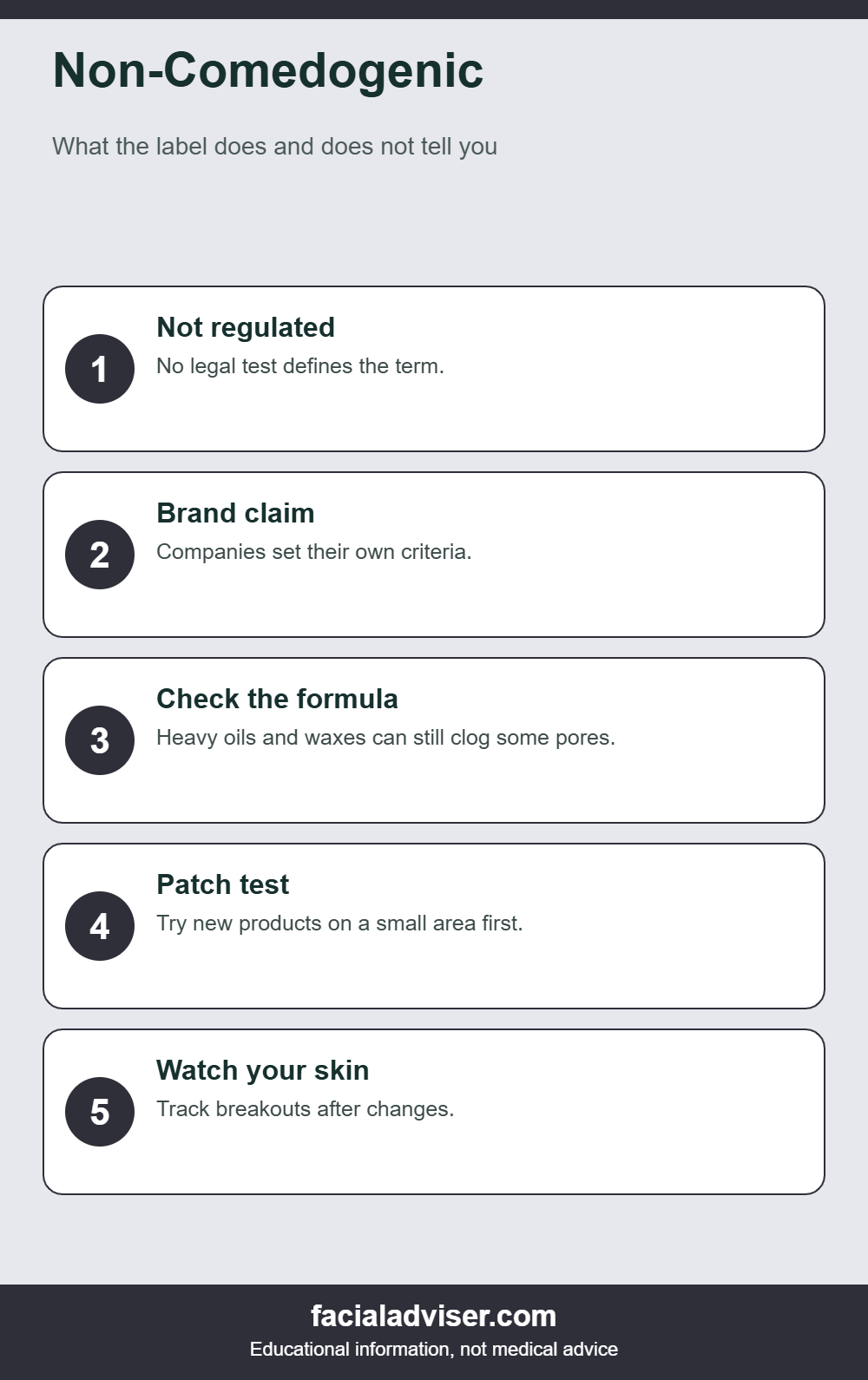
In the United States, there is no official definition for non-comedogenic on cosmetics. The FDA does not require brands to test or prove the claim. Each company decides what the label means and what testing, if any, supports it.
Different countries handle cosmetic claims differently, but most rely on the brand to prove its claims if challenged. Regulators step in mainly when a claim is misleading or a product is unsafe.
Brands often say a product has been tested on human volunteers and found not to cause comedones. Those tests may use small groups and short timeframes, so they cannot predict how every person will react.
If you want more certainty, look for brands that explain their testing in plain words and share what the test involved. Vague claims deserve more caution than detailed ones.
This does not mean the label is useless. Many brands do test their products, and a non-comedogenic label can be a helpful starting point. It simply means you should not treat it as a guarantee.
| Claim | Is it regulated? | What it usually means |
|---|---|---|
| Non-comedogenic | No legal definition | Brand says it avoids pore-clogging ingredients |
| Oil-free | No legal definition | Free of added oils, but may contain other emollients |
| Hypoallergenic | No legal definition | Brand says it is less likely to cause allergy |
| Dermatologist-tested | No legal standard | A dermatologist may have been involved in testing |
Ingredients People Often Worry About
Some oils, butters and waxes, such as coconut oil, cocoa butter and some heavy silicones, are often flagged as potentially pore-clogging for acne-prone skin. Others, such as isopropyl myristate or some thick esters, also appear in lists. But the same ingredient may not bother everyone.
Texture matters as much as ingredients. A thick, waxy balm on oily skin is more likely to trouble you than a light lotion with the same ingredient list. If a product feels heavy and greasy, it may not suit your skin even if it is marketed as gentle.
Look at where the ingredient sits on the list. Ingredients are listed from highest to lowest concentration, so something at the end of a long list is usually present in a small amount.
Fragrance, essential oils and strong botanical extracts do not necessarily clog pores, but they can irritate the skin, and irritation can make breakouts look worse. That is why many dermatology guides suggest fragrance-free options for sensitive or acne-prone skin.
Mineral oil and petrolatum have a bad reputation online, but studies and clinical experience suggest they are not strongly pore-clogging for many people. This is another example of how ingredient charts can mislead.
Concentration and the rest of the formula matter. A tiny amount of a risky ingredient might never cause trouble, while a lightweight oil in a large amount might. That is why it is hard to judge a product only by one ingredient name.
If you break out, think about what changed in your routine in the last two to four weeks and remove one new product at a time.
Why Skin Type and Habits Matter
Oily and acne-prone skin tends to be more sensitive to rich textures. Dry skin often tolerates richer creams without breakouts. Hormones, stress, diet and hair products can also influence acne, which means a product may take the blame for something else.
Age also matters. Teenagers, adults with hormonal acne and people going through menopause can have different skin needs. A product that suits one stage may not suit another.
Hair products can also contribute. Heavy oils and pomades that touch the forehead and hairline can cause small bumps along the hairline. If you notice breakouts there, check your hair products too.
Pillowcases, phones and masks add friction and bacteria. Change pillowcases weekly and clean your phone screen to reduce extra irritation.
Sweat, friction from masks and helmets, and leaving makeup on overnight also play a role. A routine with gentle cleansing and daily sunscreen helps, but you may still need professional treatment for stubborn acne.
How to Check Whether a Product Might Clog Your Pores
You cannot test a product in a lab at home, but you can use a practical process. Introduce one product at a time and watch your skin for two to four weeks. Keep notes so you can spot patterns.
Keep a simple diary of the products you use and any new bumps that appear. A note on your phone is enough. This helps you and any professional see patterns over weeks instead of guessing.
If you have a product you love but suspect it is causing small bumps, stop using it for two weeks. If your skin clears, try it again. If the bumps return, you have a likely culprit.
Read the label
Look for fragrance, heavy oils and butters if you are acne-prone.
Patch test
Apply a small amount on the jawline for several days.
Add one product at a time
Wait two weeks before adding another new product.
Watch for small bumps
Look for new blackheads, whiteheads or tiny bumps.
Stop if it worsens
Pause the product and ask a professional if breakouts continue.
Stop using any product that causes burning, swelling or a rash, and see a doctor if symptoms persist.
Choosing Products If You Are Breakout-Prone
Look for lightweight textures such as gels, lotions and fluids. Choose fragrance-free or lightly scented products, because fragrance can irritate sensitive skin. For sunscreen and makeup, check that the formula feels light on your skin and removes easily at night.
For makeup, look for lightweight formulas that blend easily and avoid thick layers. A thin layer of foundation or tinted sunscreen causes fewer problems than heavy coverage. Make sure to remove all makeup every night.
For sunscreen, mineral and gel textures are often lighter. Test them on your jawline for several days before using them on your whole face.
Cleanse every night, especially after sunscreen and makeup. Our guides to cleansing balms and micellar waters can help with removal.
Try This
- Light gels and lotions
- Fragrance-free formulas
- One new product at a time
Avoid This
- Heavy butters on oily skin
- Layering many new products
- Sleeping in makeup
Common Mistakes With Non-Comedogenic Claims
The biggest mistake is assuming the label guarantees clear skin. Another is skipping moisturizer, which can leave skin dry and prompt more oil. Many people also buy several new products at once and cannot tell which one caused a flare.
Another common mistake is using harsh acne treatments on top of every product. Over-treating skin can damage the barrier and make it more reactive. A gentle routine plus one targeted treatment is usually enough.
Finally, do not expect results overnight. Skin changes take weeks, so judge a product after at least four to six weeks unless it irritates your skin.
| Mistake | Better choice |
|---|---|
| Trusting the label alone | Read ingredients and patch test |
| Skipping moisturizer | Use a light, gentle one |
| Many new products at once | Add one every two weeks |
| Overscrubbing | Cleanse gently |
Honest Limits
No product is non-comedogenic for every person. Even products with strong marketing can trigger breakouts in some skin, and products with risky-looking ingredients can be fine for others. Online ingredient charts oversimplify real formulas.
Marketing language is also changing. Some brands now say acne-safe or skin-friendly instead of non-comedogenic. These terms are also undefined, so treat them the same way.
Persistent acne is a medical issue that can involve hormones, genetics and other factors that skincare alone may not fix.
When to See a Professional
See a doctor or dermatologist if you have painful cysts, scarring, rapidly spreading breakouts or acne that does not improve after several weeks of gentle care. They can recommend prescription options when needed.
Bring the products you use to your appointment, or take photos of the labels. A professional can look for patterns that you might miss, such as the same fragrance in several items.
Prescription options, such as topical retinoids or other medicines, may be more effective than switching products over and over.
This article is educational and not medical advice. The author is a registered pharmacist, not a dermatologist, and cannot diagnose acne.
Frequently Asked Questions
What does non-comedogenic mean?
It means a product is marketed as unlikely to clog pores, but the term is defined by each brand.
Is non-comedogenic regulated?
No. There is no official legal definition.
Does non-comedogenic mean oil-free?
Not always. Some products contain light oils and are still labeled non-comedogenic.
Can a non-comedogenic product cause acne?
Yes, because skin differs and other factors matter.
How do I know if a product clogs my pores?
Patch test, introduce one product at a time and watch your skin for several weeks.
Are coconut oil and shea butter comedogenic?
They are often flagged for acne-prone skin, but reactions vary.
Should I avoid all oils?
Not necessarily. Some light oils are fine for many people.
Does the label matter for sunscreen?
It can help you choose lighter formulas, but check how it feels on your skin.
What is better, gel or cream?
Gels are lighter and often suit oily skin, while creams suit dry skin.
When should I see a doctor?
See one for painful, scarring or persistent acne.
The Bottom Line
Non-comedogenic is a helpful hint, not a guarantee. Read ingredients, patch test and add products one at a time.
If breakouts continue despite gentle care, talk to a doctor or dermatologist for personalized help.

Written by
Registered pharmacist and founder of Facial Adviser. Rakib's pharmacy training covers how skincare actives work and interact; a later course in cosmetology turned that into a focus on facial treatments and skincare products. He plans, researches and edits every guide on the site and checks health claims against sources such as the American Academy of Dermatology, the FDA and the NIH. He is not a dermatologist; see the Editorial Policy and Medical Disclaimer.
About · Editorial policy · How we choose products · Medical disclaimer · Contact
Keep reading: Body care and more
- 10 Best Body Tools for Skincare and Massage (2026): Smooth and Relax
- 10 Best Lip Balms (2026): Healing, Tinted and Everyday Picks for Dry Lips
- Is a Muscle Massage Gun Worth It? What the Evidence Says and Who Benefits
- Jeroboam Gozo Perfume: Notes, Wear and Who It Suits
- 10 Best Massage Chairs Under $2,000 (2026): Full-Body Picks for Home
- 10 Best Massage Chairs Under $500 (2026): Budget Recliners With Heat
Turn skincare time into me-time with a free audiobook