10 Best Facial Sponges (2026): Gentle Cleansing and Easy Mask Removal
Facial sponges make it easier to lift away cleansing balms, thick cleansers and clay masks without rubbing, and they range from cracker-like compressed cellulose discs to soft konjac and reusable exfoliating pads. This list covers 10 options, with notes on who each one suits and who should skip it.
Part of our guide to at-home facial devices. Start with: 10 Best Facial Tools (2026): LED, Cleansing, Gua Sha and More
The best facial sponges for most people are compressed cellulose sponges that expand into a soft, fine-pored sponge, are sold in multi-packs and are designed specifically for the face. They are ideal for removing cleansing balms, clay masks and thick cleansers without rubbing, and for giving very mild exfoliation. Choose soft, fine-textured sponges for sensitive or dry skin, and avoid coarse household sponges. Rinse and dry them fully after every use and replace them every few weeks, because damp sponges can grow bacteria. They are a cleansing aid, not a treatment, so do not expect them to clear acne or pores.
In short: choose soft cellulose sponges made for the face, use them gently to lift products away and replace them regularly.
The American Academy of Dermatology’s acne skin care tips advise washing gently with your fingertips or a soft tool and avoiding harsh scrubbing, which is exactly the way facial sponges should be used.
Below you will find the ten picks, how we chose them, the main sponge types compared, how to use and clean a sponge safely and the honest limits of what they can do.
Shopping these picks?
Amazon Prime members get fast, free shipping on eligible items, plus Prime Video, Amazon Music and member deals. New members can start with a free trial.
Start a free Prime trialAged 18 to 24? Prime for Young Adults comes with a longer free trial and a lower price after it.
Affiliate link: we may earn a commission at no extra cost to you.
As an Amazon Associate we earn from qualifying purchases. This does not change which products we include.


What to Know First
- Sieral Heart-Shaped Sponges are our top pick for soft cellulose and a large pack that makes frequent replacement easy.
- GAINWELL 100 Compressed Sponges suit spa-style clay mask removal with a simple, flat shape.
- IMPRESA Exfoliating Pads add a textured side for occasional light exfoliation; use very gentle pressure.
- Konjac sponges such as Neutripure are the gentlest choice for sensitive skin.
- Damp sponges can harbour bacteria: dry them fully and replace them every few weeks.
- Press and wipe lightly; never scrub hard.
- Sponges help remove products but do not deep-clean pores beyond your cleanser.
What This Covers
- The 10 Best Facial Sponges Right Now
- How We Chose These Products
- What Compressed Facial Sponges Are
- Types of Facial Sponges Compared
- Features to Check Before Buying
- Which Facial Sponge Suits Your Skin?
- How to Use a Compressed Facial Sponge
- Cleaning, Drying and Replacing Sponges
- Using Sponges for Mask and Peel Removal
- Common Mistakes to Avoid
- Dos and Don’ts
- Honest Limits
- When to See a Dermatologist
- Frequently Asked Questions
- Summing Up
The 10 Best Facial Sponges Right Now
These ten sponges were shortlisted from widely reviewed Amazon listings and are ranked by material, softness, pack size and how clearly each seller explains use and care. Each pick lists who it suits, its trade-offs and who should skip it.
| # | Product | Best For | Standout Feature | |
|---|---|---|---|---|
| 1 | Sieral Heart-Shaped Compressed Facial Sponges | Everyday cleansing and mask removal | Large pack of soft wood-pulp hearts | View |
| 2 | GAINWELL 100 Compressed Facial Sponges | Clay masks and facial-style routines | Pitched for home and esthetician use | View |
| 3 | IMPRESA Exfoliating Facial Sponge Pads | Occasional light exfoliation | Single-sided exfoliating texture | View |
| 4 | Spunspon Heart Cellulose Facial Sponges | Planned weekly replacement | Enough for weekly swaps all year | View |
| 5 | Nexcare Buf-Puf Gentle Facial Sponge | Dry to normal skin | Dermatologist-developed gentle reusable sponge | View |
| 6 | Tegelrying PVA Compressed Round Face Sponges | Quick-drying mask removal | Absorbent synthetic PVA rounds | View |
| 7 | ROSENA Compressed Cellulose Face Sponges | Plant-based, lower-waste routines | Biodegradable natural cellulose | View |
| 8 | GAINWELL Compressed Sponges With Storage Jar | Keeping unused sponges tidy | Comes with a storage container | View |
| 9 | Neutripure Organic Konjac Sponge Set | Sensitive and reactive skin | Soft, compostable konjac plant fibre | View |
| 10 | CSM Organic Konjac Sponges 3-Pack | Trying different konjac types | Three infused konjac varieties | View |
Sieral Heart-Shaped Compressed Facial Sponges

Best for: Everyday cleansing and mask removal
The Sieral pack earns the top spot because it gets the basics right and makes good hygiene easy. Each flat disc expands in water into a soft wood-pulp sponge, which suits lifting away cleanser, balms and clay masks with light pressure rather than rubbing. The heart shape gives a pointed end for the sides of the nose and a rounded edge for the cheeks.
The bigger reason it leads is the pack size. Because damp sponges can harbour bacteria, the most useful habit is to replace them often, and a large supply removes the temptation to keep one going for months. It offers no special coating or texture, so it is less scrubby than the IMPRESA pads at #3, but that simplicity is exactly what most skin types need.
- Large pack of compressed heart-shaped sponges
- Made from soft wood-pulp material
- Expands in water to a usable sponge
- Intended for cleansing and removing masks
Pros
- Pack size makes frequent replacement easy
- Pointed end reaches around the nose
- Soft enough for gentle pressing
Cons
- No storage container included
- Heart shape may feel small for larger faces
Skip it if: Skip it if you want one long-lasting reusable pad rather than a disposable-style supply; the Nexcare pick suits that better.
Check Price on AmazonGAINWELL 100 Compressed Facial Sponges

Best for: Clay masks and facial-style routines
GAINWELL pitches this 100-pack at both home users and estheticians, and the plain natural cellulose sponges suit that purpose well. Once soaked they are designed to help lift grime and mask residue, which is where sponges earn their place. Pressing a warm, damp sponge onto a dried clay mask softens it so you can wipe it away without tugging.
Compared with the Sieral hearts at #1, this is a more traditional sponge shape with no novelty cut, which some people find easier to hold flat against the forehead and cheeks. The pack is large enough to use a fresh sponge regularly. Like every cellulose sponge here, it will not deep-clean pores beyond what your cleanser already does.
- Pack of 100 compressed facial sponges
- Described as suitable for home or esthetician use
- Designed to help lift grime and mask residue
- Made from natural cellulose
Pros
- Large supply for regular replacement
- Simple shape sits flat on the skin
- Well suited to removing clay masks
Cons
- No storage container included
- Plain design with no gentler or textured option
Skip it if: Skip it if you only cleanse lightly and rarely use masks; a smaller pack such as the ROSENA set will last you longer before it ages.
Check Price on AmazonIMPRESA Exfoliating Facial Sponge Pads

Best for: Occasional light exfoliation
The IMPRESA pads are the most textured option on this list. Each pad has one exfoliating side, sold as a daily cleansing scrubber, so you can choose between the rougher face and the smoother one. That makes it more flexible than the plain cellulose picks, as long as you treat the textured side with care and very light pressure.
We rank it third rather than higher because texture brings more risk of irritation, especially for dry or sensitive skin. Most people will be better off using the textured side a few times a week rather than daily, and skipping it entirely alongside acids or retinoids. The ten-pad set lets you rotate pads so each one dries fully between uses, which matters because damp pads can harbour bacteria.
- Set of 10 facial sponge pads
- One exfoliating side per pad
- Sold as a cleansing scrubber
- Bulk pack for rotating pads
Pros
- Choice of smoother or textured side
- Useful for occasional light exfoliation
- Ten pads make rotation easy
Cons
- Textured side can irritate sensitive skin
- Not suitable alongside strong exfoliating acids
Skip it if: Skip it if your skin is sensitive, dry or using retinoids; the konjac picks at #9 and #10 are far gentler.
Check Price on AmazonSpunspon Heart Cellulose Facial Sponges

Best for: Planned weekly replacement
Spunspon builds its pitch around a simple routine: use one sponge a week and the pack lasts a year. That framing is useful, because it nudges you towards replacing sponges on a schedule rather than waiting until one smells or turns slimy. The heart-shaped wood-pulp sponges are similar in feel and shape to the Sieral pick at #1.
It sits a little lower mainly because the Sieral pack is larger and offers the same basic design. If you like to swap sponges more often than once a week, a bigger pack stretches further. Otherwise, this is a sensible choice for anyone who wants a clear replacement plan and a soft cellulose sponge for balms, cleansers and cream masks.
- Pack of 100 heart-shaped sponges
- Cellulose made from wood pulp
- Suggested one-a-week replacement routine
- Heart shape for cheeks and nose area
Pros
- Encourages regular replacement
- Soft cellulose for gentle wiping
- Shape reaches around the nose
Cons
- Smaller pack than the #1 pick
- Weekly swaps may be too slow if it stays damp
Skip it if: Skip it if you use a sponge twice a day and want a fresh one more often than weekly; the Sieral pack stretches further.
Check Price on AmazonNexcare Buf-Puf Gentle Facial Sponge

Best for: Dry to normal skin
The Buf-Puf is a different kind of product from the compressed cellulose packs. It is a single reusable exfoliating sponge, and this is the gentle version aimed at dry to normal skin. The listing says it was developed with dermatologists, and it suits people who want mild, controlled exfoliation without the stronger texture of the IMPRESA pads at #3.
The trade-off is hygiene. A reusable sponge sees more uses than a compressed disc, so it needs thorough rinsing and full drying in an airy spot after every wash, and it still needs replacing regularly. Use light pressure, keep sessions short and avoid pairing it with acids or retinoids on the same night, even though it is the gentle version.
- Reusable exfoliating facial sponge
- Gentle version for dry to normal skin
- Described as dermatologist developed
- Designed for regular facial cleansing
Pros
- Gentle, controlled exfoliation
- Suited to dry and normal skin
- Simple single-sponge design
Cons
- Must be dried thoroughly to stay hygienic
- Not designed for oily skin or mask removal
Skip it if: Skip it if you mainly want to remove clay masks; a cellulose pack such as the GAINWELL 100 does that better.
Check Price on AmazonTegelrying PVA Compressed Round Face Sponges

Best for: Quick-drying mask removal
Tegelrying uses synthetic PVA rather than plant cellulose, which is the main reason it is on this list. PVA holds a lot of water and the listing highlights strong absorption, so it can lift away creamy cleansers and gel masks in fewer passes. The round shape is simple to press evenly across the cheeks and forehead.
PVA can feel firmer than cellulose, particularly before it is fully soaked, so always wet it thoroughly and use gentle pressure. The seller recommends rinsing and drying after use, which is the right advice for any sponge, since damp material can harbour bacteria. Choose the cellulose picks instead if you prefer a plant-based or biodegradable option such as the ROSENA set.
- Pack of compressed round sponges
- Made from synthetic PVA
- High water absorption
- Rinse-and-dry care advice from the seller
Pros
- Very absorbent for creamy products
- Round shape presses evenly
- Large pack for frequent replacement
Cons
- Can feel firmer than cellulose
- Not plant-based or biodegradable
Skip it if: Skip it if you want a natural or compostable material; the ROSENA or konjac picks suit that better.
Check Price on AmazonROSENA Compressed Cellulose Face Sponges

Best for: Plant-based, lower-waste routines
ROSENA keeps things simple: natural cellulose sponges that expand with water and are described as reusable and biodegradable. That makes this set a good fit if you want the soft, absorbent feel of the #1 and #2 picks but prefer a smaller pack and a material that breaks down more readily once you throw it away.
Reusable here means you can use each sponge for a short stretch, not indefinitely. Rinse it well, squeeze without twisting and let it dry fully between uses, then replace it every few weeks or sooner if it smells. A smaller pack also means you are less likely to keep sponges sitting around in a humid bathroom for months before opening them.
- Pack of 50 compressed sponges
- Made from natural cellulose
- Described as reusable and biodegradable
- Expands when soaked in water
Pros
- Plant-based and biodegradable
- Soft feel suits most skin types
- Smaller pack suits light users
Cons
- Runs out sooner than 100-plus packs
- No storage container included
Skip it if: Skip it if you cleanse with a sponge twice daily and replace often; a larger pack like the Sieral set lasts longer.
Check Price on AmazonGAINWELL Compressed Sponges With Storage Jar

Best for: Keeping unused sponges tidy
This smaller GAINWELL set stands out for one practical extra: a storage container. The sponges themselves are cellulose, described as biodegradable and suitable for daily use, much like the brand’s 100-pack at #2. The jar keeps the unused compressed discs clean and tidy on a shelf rather than loose in a bag.
One honest caution: the jar is for dry, unused sponges only. Never put a damp sponge back into a closed container, because trapped moisture is exactly what lets bacteria and mould grow. Leave the one you are using to air-dry in an open, airy spot, and swap it for a fresh disc from the jar every few weeks.
- Storage container included
- Pack of 50 compressed sponges
- Made from biodegradable cellulose
- Described as suitable for daily use
Pros
- Keeps unused sponges clean and organised
- Soft cellulose suits most skin
- Handy for shelves and gift sets
Cons
- Jar must not be used for damp sponges
- Smaller pack than the brand’s 100-count
Skip it if: Skip it if you already have somewhere dry to keep spares; the larger GAINWELL 100-pack gives you more sponges.
Check Price on AmazonNeutripure Organic Konjac Sponge Set
Best for: Sensitive and reactive skin
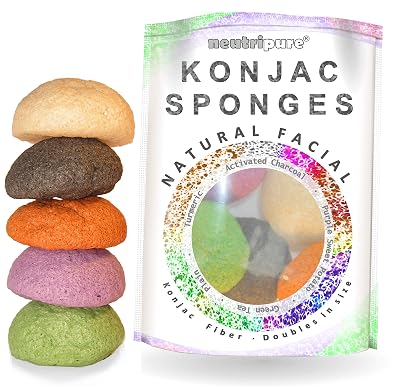
Konjac sponges are made from the root of the konjac plant and turn very soft and bouncy when wet, which is why the Neutripure set is our gentlest pick. It suits sensitive, dry or easily flushed skin that finds even cellulose a little too firm, and it gives only a very light exfoliating effect when used with a gentle cleanser or water.
Konjac is less absorbent than cellulose, so it is not the best tool for thick clay masks; the GAINWELL 100 at #2 does that job better. It also breaks down faster and must dry fully between uses, as a damp konjac sponge can harbour bacteria. The listing says it is compostable, so replacing it roughly monthly creates little waste.
- Set of konjac plant-fibre sponges
- Described as compostable
- Designed for gentle, natural exfoliation
- Soft and bouncy once soaked
Pros
- Softest feel on this list
- Suits sensitive and dry skin
- Compostable when worn out
Cons
- Less absorbent for thick masks
- Wears out faster than cellulose
Skip it if: Skip it if you mainly remove clay masks or thick balms; a cellulose pack such as the Sieral set works better.
Check Price on AmazonCSM Organic Konjac Sponges 3-Pack

Best for: Trying different konjac types
The CSM pack offers three natural konjac root sponges in different infused varieties, which makes it a good way to try konjac without committing to one type. Like the Neutripure set at #9, these give gentle exfoliation and a soft, cushioned feel, so they suit people who want something milder than the IMPRESA pads or the Buf-Puf.
The infusions are mostly a matter of preference; any extra benefit from them is likely to be small, so choose by feel rather than expecting a deeper clean. With only three sponges, you will need to replace the pack sooner than the 100-count cellulose options. Keep each one dry between uses and throw it away if it becomes slimy or smells.
- Pack of three konjac sponges
- Made from natural konjac root
- Designed for gentle exfoliation
- Comes in several infused varieties
Pros
- Lets you compare konjac types
- Very gentle on the skin
- Natural plant-based material
Cons
- Only three sponges in the pack
- Infusions add little proven benefit
Skip it if: Skip it if you want a long-lasting supply; the Neutripure set or a cellulose multi-pack is better value over time.
Check Price on AmazonHow We Chose These Products
We shortlisted facial sponges from Amazon listings that are highly rated by a large number of shoppers, favouring established brands and fuller-featured sets that clearly state their material, pack size and care advice. We then checked each product’s listed features against the gentle-cleansing guidance cited in this post, including the AAD’s advice to avoid harsh scrubbing.
These are research-based picks, not hands-on lab tests. Rankings reflect listing detail, material, softness and how easy each set makes regular replacement, rather than personal results. We did not repeat any claims that sponges detoxify skin or deep-clean pores.
- Strong ratings from a large number of shoppers
- Established brands and fuller-featured sets preferred
- Material and care advice clearly stated on the listing
- Listed features checked against the cited cleansing guidance
- Products with thin or unclear listings excluded
What Compressed Facial Sponges Are
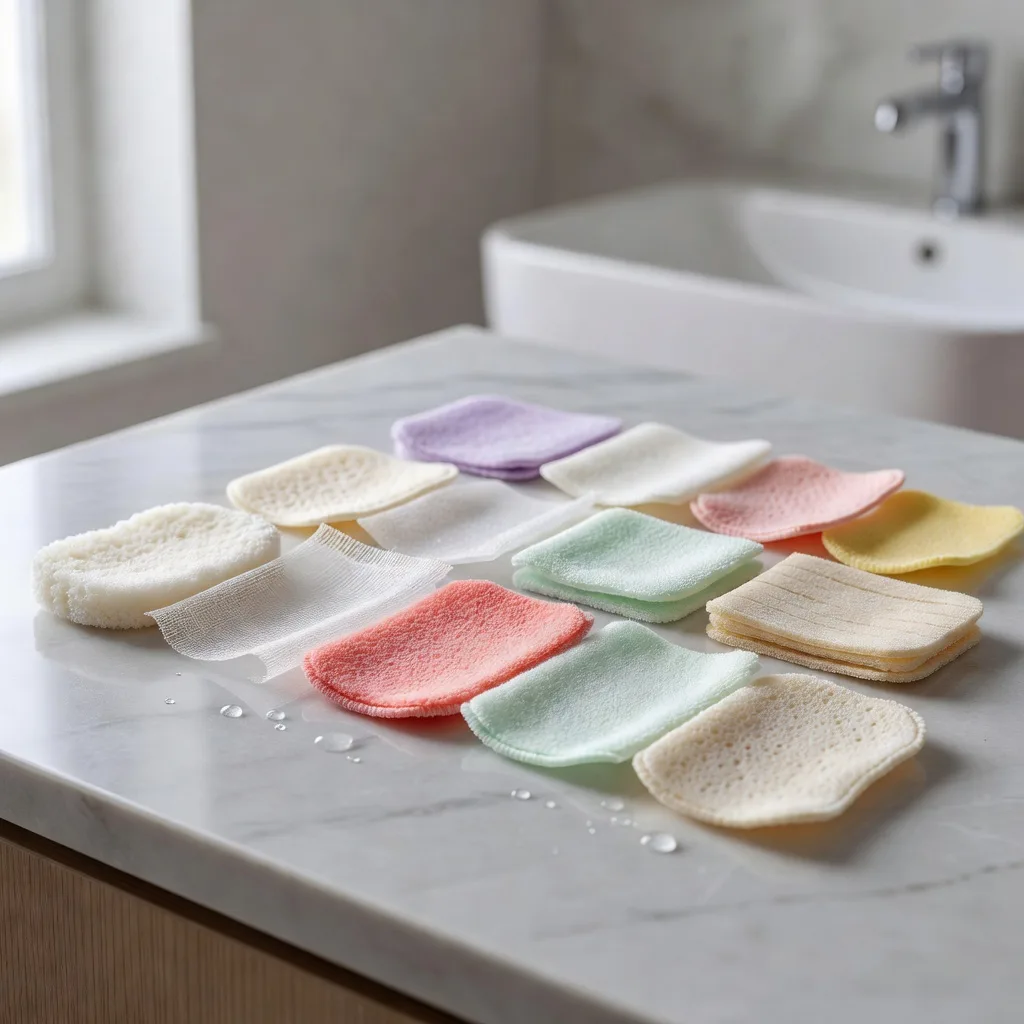
Most compressed facial sponges are made from cellulose, a plant-derived material, pressed flat and dried so they take up little space. When soaked, they expand to several times their thickness and become soft and absorbent. Some are coloured with plant extracts or charcoal, and some are cut into shapes that fit the hand.
Because they hold a lot of water, they are good at lifting away creamy, oily or clay products that are hard to rinse off with splashing alone. A soaked sponge pressed onto a mask softens it, and a gentle sweep removes it without the tugging that a dry cloth can cause. Their surface also gives very light exfoliation, less than a scrub or loofah. That makes them a sensible middle ground for people who find plain fingertip cleansing leaves residue behind, but who do not want the friction of a brush or a textured pad. They are also cheap enough to replace often, which is important for anything that stays damp between uses.
Types of Facial Sponges Compared
Several sponge types are sold for the face. They look similar in photos but behave differently on the skin.
| Sponge type | Feel when wet | Best use | Downside |
|---|---|---|---|
| Compressed cellulose | Soft, absorbent, fine pores | Removing masks, balms and cleanser | Needs replacing every few weeks |
| Konjac | Very soft and bouncy | Gentle daily cleansing, sensitive skin | Breaks down quickly |
| PVA or synthetic | Smooth, dense, firm when dry | Wiping off products; dries fast | Can feel stiff and less gentle |
| Sea sponge | Irregular, varied texture | Occasional cleansing | Hard to clean; quality varies |
| Makeup blending sponge | Springy, not very absorbent | Applying foundation | Not designed for cleansing |
| Household sponge | Coarse or scouring | Not suitable for skin | Too rough; may contain cleaning residues |
For mask removal and general facial cleansing, compressed cellulose is the most practical choice. Konjac is a good alternative for sensitive skin if you want something softer, although it wears out faster. Whichever you pick, avoid any sponge with a scouring layer, a rough abrasive side or a strong chemical smell, as these are made for cleaning surfaces rather than skin.
Features to Check Before Buying
A pack of facial sponges is an easy purchase, but a few checks help you avoid scratchy or short-lived ones.
| Feature | What to look for |
|---|---|
| Material | Cellulose or konjac clearly stated |
| Texture | Fine, even pores rather than large holes |
| Size | Palm-sized for easy control; small enough to reach around the nose |
| Pack size | Enough to replace every few weeks |
| Colour and additives | Plain or lightly coloured; avoid fragrance if your skin is sensitive |
| Face-specific labelling | Designed for skin, not cleaning |
Charcoal or clay-infused sponges are mostly a marketing touch. Any extra oil absorption is small, so choose them only if you like them, not because you expect a deeper clean.
When a new pack arrives, soak one sponge and feel it before using it on your face. It should be soft and springy with no sharp edges or loose bits. If it feels scratchy even when fully wet, keep it for body use or cleaning and try a finer-textured brand for your face.
Which Facial Sponge Suits Your Skin?
Most skin types can use a soft facial sponge, but how you use it should change with your skin.
- Oily skin: cellulose sponges help remove clay masks and oil-rich cleansing balms thoroughly.
- Dry skin: choose the softest sponge and use a pressing motion; moisturise straight after.
- Sensitive skin: konjac or very soft cellulose, with minimal wiping; skip if any friction stings.
- Acne-prone skin: press rather than rub over spots, and use a fresh or freshly dried sponge each time.
- Mature skin: gentle pressing helps avoid tugging on thinner skin.
If you use a double cleanse, a sponge can help remove the first oil-based step. Our guide on when double cleansing is necessary explains who benefits from it.
How to Use a Compressed Facial Sponge
These steps work for most compressed cellulose sponges. Check the packet for any specific guidance.
Expand the sponge
Soak it in warm water until it is fully expanded and soft.
Squeeze out the excess
Press out most of the water so it is damp, not dripping.
Apply your cleanser or mask
Use your hands to massage in cleanser, or apply and remove a mask as directed.
Press first
Hold the sponge against each area for a few seconds to soften the product.
Wipe gently
Sweep outwards with light pressure, rinsing the sponge between areas.
Rinse your face
Splash with lukewarm water to remove any residue, then pat dry.
Clean and dry the sponge
Rinse it well, squeeze it out and let it air-dry fully.
Keep two sponges on the go and alternate them. Each one then has a full day or more to dry out, which helps keep them fresher for longer.
Cleaning, Drying and Replacing Sponges
Cellulose and konjac sponges are porous and hold water, product and skin cells after use. Left damp in a warm bathroom, they can become a place for bacteria and mould to grow.
- Rinse the sponge until the water runs clear after each use.
- Wash it with a little mild soap once or twice a week.
- Squeeze gently without twisting, which can tear the fibres.
- Dry it in an airy spot, not in a closed container or shower tray.
- Replace cellulose sponges every two to four weeks and konjac sponges roughly monthly.
- Throw it away at once if it smells, turns slimy or develops dark spots.
Never share facial sponges, and do not use one over broken skin, cold sores or infected spots and then keep it. Contaminated sponges can spread bacteria and viruses and may worsen irritation or breakouts.
Our guide on how to sanitise makeup tools gives more ways to keep reusable beauty tools clean.
Using Sponges for Mask and Peel Removal
Mask removal is where facial sponges shine. Clay and mud masks dry into a firm layer, and scrubbing them off with a towel or fingers can pull on the skin.
Soften the mask first by pressing a warm, damp sponge onto each area for a few seconds, then wipe it away in gentle strokes. For cream and gel masks, one or two passes usually does the job. If you use an at-home acid peel, follow the product’s own removal instructions exactly; a sponge can help lift the product, but it does not replace neutralising or rinsing steps. The AAD’s chemical peels overview is a useful reminder that stronger peels belong in a clinic.
Common Mistakes to Avoid
Facial sponges are gentle by design, but a few habits can turn them into a source of irritation.
- Rubbing hard instead of pressing and wiping lightly.
- Using a sponge that has not dried since last time.
- Keeping the same sponge for months.
- Using household or kitchen sponges on the face.
- Adding a scrub or exfoliating acid in the same session.
If your skin looks red or feels tight after using a sponge, use less pressure, fewer strokes and a softer sponge, or go back to cleansing with your fingertips. It can also help to check water temperature, since hot water combined with rubbing leaves skin feeling tighter than lukewarm water and light pressure.
Dos and Don’ts
Do
- Soak the sponge until fully soft
- Press before you wipe
- Rinse between areas
- Dry it fully after use
- Replace it every few weeks
Don’t
- Scrub hard
- Use a damp, smelly sponge
- Share sponges
- Use kitchen sponges on your face
- Use it over broken or infected skin
Honest Limits
Facial sponges make cleansing and mask removal easier and more comfortable, but they do not add any treatment benefit of their own. Claims that they deep clean pores, detoxify skin or prevent breakouts are not backed by good evidence. Your cleanser, moisturiser, sunscreen and any active ingredients do the real work.
Some people find they do not need a sponge at all, especially if they use a light cleanser that rinses off easily. A clean, soft washcloth can do a similar job for balms and masks, provided you use a fresh one each time. Sponges are a convenience, so if they add effort or irritation to your routine, there is no skin-health reason to keep using them.
When to See a Dermatologist
- Ongoing redness, stinging or dryness despite gentle cleansing.
- Painful, swollen or crusted spots that may be infected.
- Acne that does not improve with a gentle routine.
- A rash after using a new sponge, cleanser or mask.
- Any spot that changes, bleeds or does not heal.
This article is for general information and does not replace professional medical advice. See a board-certified dermatologist if you have a skin condition, an infection or persistent irritation.
Frequently Asked Questions
What are compressed facial sponges made of?
Usually cellulose, a plant-derived material.
Do facial sponges exfoliate?
Only very mildly.
Which facial sponge is best for sensitive skin?
The Neutripure konjac set is the gentlest pick; the CSM konjac pack and Nexcare Buf-Puf Gentle are also mild options.
Which facial sponge is best for removing clay masks?
Absorbent cellulose packs such as the GAINWELL 100 or Sieral sponges; the Tegelrying PVA rounds also work well.
Is a bigger pack of sponges worth it?
Usually, yes. Packs like the Sieral or Spunspon sets make it easy to replace sponges often, which matters more than any extra feature.
How often should I replace a facial sponge?
Every two to four weeks, or sooner if it smells.
Can I use a facial sponge every day?
Yes, if your skin tolerates it and the sponge is dried properly.
Are konjac sponges better than cellulose?
Konjac is softer; cellulose is more absorbent for masks.
How do I clean a facial sponge?
Rinse well, wash with mild soap weekly and air-dry fully.
Are facial sponges good for acne?
Use gently and keep them clean; they do not treat acne.
Summing Up
The best facial sponges are soft, fine-textured compressed cellulose or konjac sponges made for the face. They make removing masks, balms and thick cleansers easier without harsh rubbing.
Use them with light pressure, keep them clean and dry between uses and replace them every few weeks. If your skin stays irritated or breakouts persist, see a dermatologist.
Our top pick: Sieral Heart-Shaped Compressed Facial Sponges
The Sieral heart-shaped sponges take the top spot because they combine soft wood-pulp cellulose, a shape that is easy to hold and a large pack that makes frequent replacement painless, which is the single most important habit with any sponge. Choose the GAINWELL 100-pack instead if you want a plain cellulose sponge suited to spa-style mask removal, or the IMPRESA pads if you want a little more texture for occasional exfoliation.
Check Price on Amazon
Written by
Registered pharmacist and founder of Facial Adviser. Rakib's pharmacy training covers how skincare actives work and interact; a later course in cosmetology turned that into a focus on facial treatments and skincare products. He plans, researches and edits every guide on the site and checks health claims against sources such as the American Academy of Dermatology, the FDA and the NIH. He is not a dermatologist; see the Editorial Policy and Medical Disclaimer.
About · Editorial policy · How we choose products · Medical disclaimer · Contact
Keep reading: Cleansing brushes and skin tools
- 10 Best Facial Tools (2026): LED, Cleansing, Gua Sha and More
- 10 Best Face Loofah Pads (2026): Gentle Exfoliating Facial Pads
- 10 Best Facial Brushes for Women (2026): Gentle Silicone to Sonic Picks
- Dermaflash DERMAPORE: Ultrasonic Pore Extractor Pros and Cons
- 10 Best Beauty Tool Storage Pouches (2026): Clean, Dry, Travel-Ready
- 10 Best Sonic Facial Cleansing Devices (2026): Gentle, Deeper Clean
- 10 Best Products for Women's Facial Hair Removal (2026): Gentle Picks
- 10 Best Gua Sha Facial Tools (2026): Stone and Steel Picks Compared