Why Does Fruit Make My Face Break Out?
Why does fruit make my face break out, and is it really the fruit itself, or something happening on the skin’s surface instead?
Part of our guide to facial treatments. Start with: Fruit Facial at Home: Does It Actually Work?
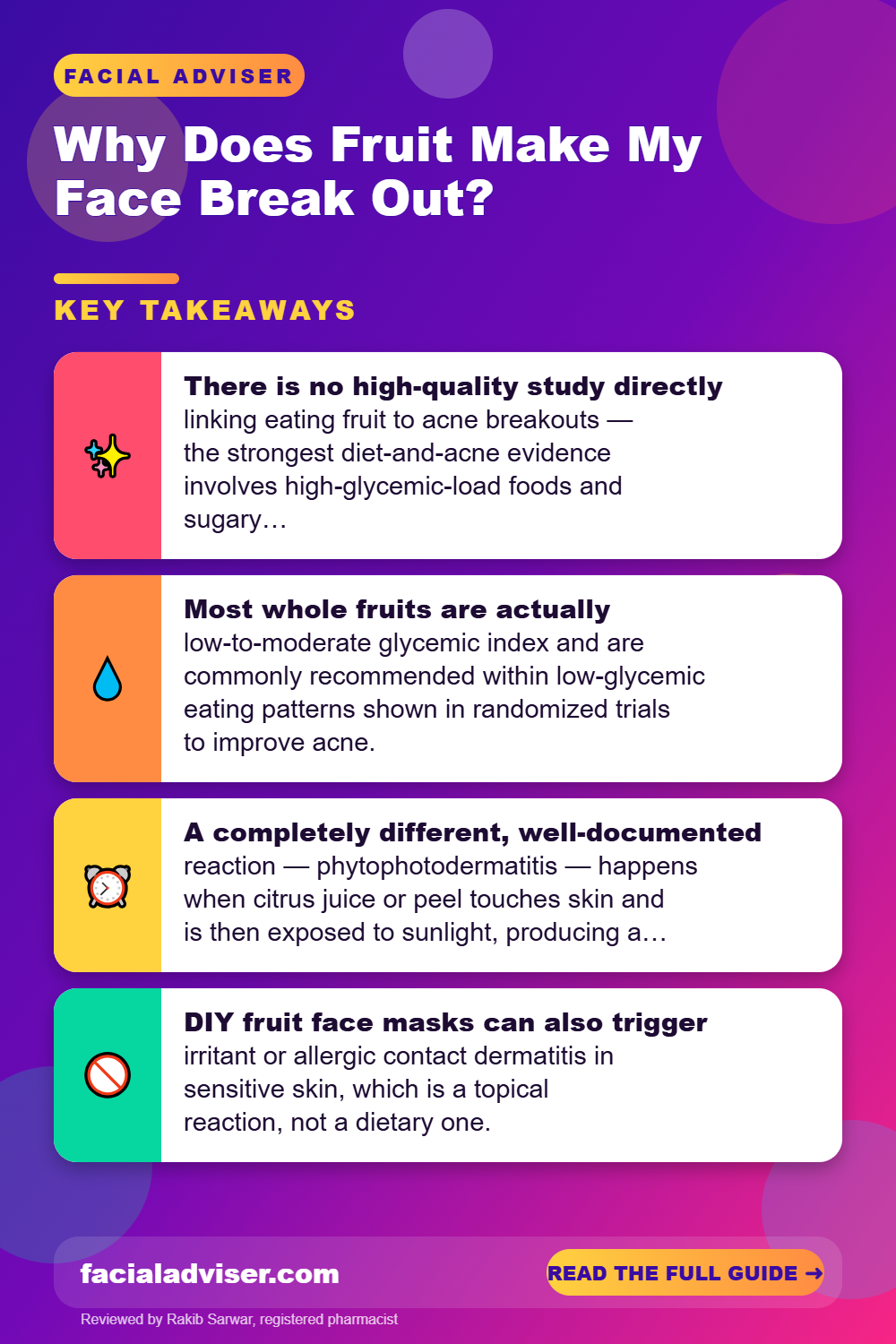
There is no high-quality study directly linking eating whole fruit to acne breakouts — the strongest diet-and-acne evidence involves high-glycemic-load foods, sugary drinks, and dairy, not fruit specifically. A completely separate and well-documented reaction, phytophotodermatitis, happens when citrus juice touches skin and is then exposed to sunlight, producing a burn-like rash often mistaken for a breakout.
Mango is a genuine exception worth knowing about: its skin and sap contain urushiol-related compounds that can cause real allergic contact reactions around the mouth.
This guide separates the dietary evidence from the topical reactions, so the actual mechanism behind your specific experience is easier to identify.
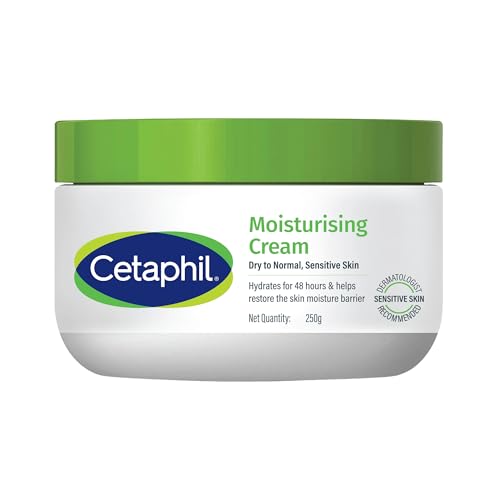
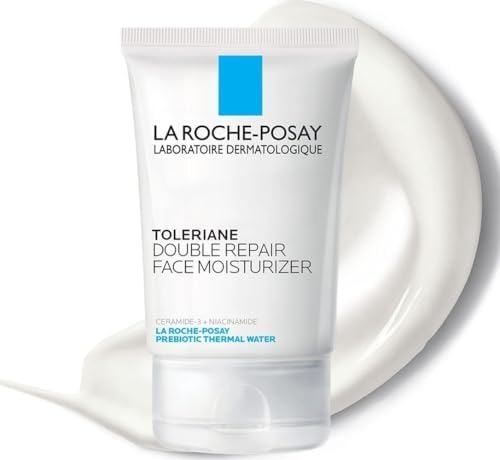
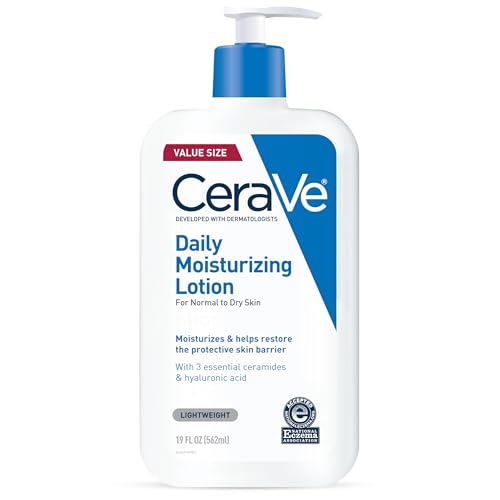
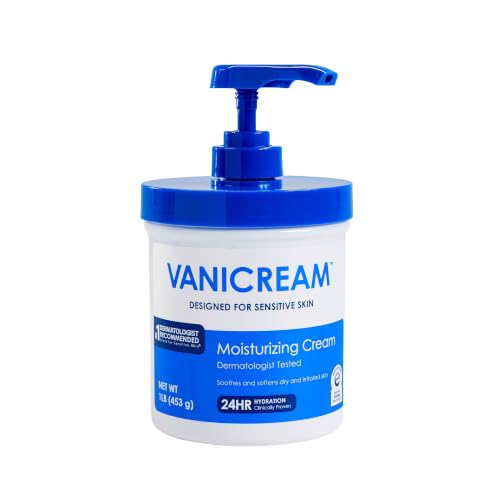
Recommended Gentle Skincare for Reactive Skin



Quick Facts
- There is no high-quality study directly linking eating fruit to acne breakouts — the strongest diet-and-acne evidence involves high-glycemic-load foods and sugary drinks broadly, and dairy, not fruit specifically.
- Most whole fruits are actually low-to-moderate glycemic index and are commonly recommended within low-glycemic eating patterns shown in randomized trials to improve acne.
- A completely different, well-documented reaction — phytophotodermatitis — happens when citrus juice or peel touches skin and is then exposed to sunlight, producing a burn-like rash often mistaken for a breakout.
- DIY fruit face masks can also trigger irritant or allergic contact dermatitis in sensitive skin, which is a topical reaction, not a dietary one.
Skip To
- The Real Question: Eating Fruit or Touching Fruit?
- What the Diet-and-Acne Research Actually Shows
- The Glycemic Load Mechanism, Explained
- Glycemic Index of Common Fruits
- Dairy Has Stronger Evidence Than Fruit
- When It’s Not Diet: Touching Fruit to Your Face
- Phytophotodermatitis: The Citrus-and-Sun Reaction
- Dietary vs. Topical Fruit Reactions
- Mango Is a Genuine, Separate Exception
- Individual Sensitivity Still Matters
- Do This, Not That
- Figuring Out Your Own Trigger, Step by Step
- What This Article Can’t Tell You
- Frequently Asked Questions
The Real Question: Eating Fruit or Touching Fruit?
“Fruit makes my face break out” usually collapses two very different things into one complaint: eating fruit, which is a dietary question about sugar and glycemic load, and touching fruit to your face, which is a topical question about irritation and sun sensitivity. The honest answer depends entirely on which one is actually happening, and the evidence for each is quite different.
Shopping these picks?
Amazon Prime members get fast, free shipping on eligible items, plus Prime Video, Amazon Music and member deals. New members can start with a free trial.
Start a free Prime trialAged 18 to 24? Prime for Young Adults comes with a longer free trial and a lower price after it.
Affiliate link: we may earn a commission at no extra cost to you.
What the Diet-and-Acne Research Actually Shows
A well-cited review of dietary nutrients and acne found real randomized controlled trial evidence that low-glycemic-index diets improve acne, and observational evidence linking high sugar intake — specifically from sugary drinks exceeding roughly 100 grams of sugar a day — to increased acne risk in a study of over 8,000 adolescents. Dairy consumption showed a consistent association with acne severity across multiple large cohort studies. Fruit itself was notably absent from the direct evidence: the same review lists fruits like grapefruit and apples as recommended choices within a low-glycemic eating pattern, not as flagged acne triggers.
The Glycemic Load Mechanism, Explained
The proposed mechanism connecting diet to acne runs through blood sugar and insulin, not through fruit specifically. High-glycemic foods cause a rapid rise in blood glucose and insulin, which increases insulin-like growth factor 1 (IGF-1). IGF-1 is believed to stimulate sebum production and skin cell turnover in ways that can contribute to clogged pores and breakouts. This mechanism applies to any high-glycemic food or drink — white bread, sugary soda, candy — and most whole fruit simply doesn’t hit the same glycemic thresholds that the research associates with worse acne.
Glycemic Index of Common Fruits
| Fruit | Approximate glycemic index | Category |
|---|---|---|
| Grapefruit | ~25 | Low |
| Apple | ~38 | Low |
| Orange | ~40–45 | Low |
| Banana (ripe) | ~60–65 | Moderate |
| Watermelon | ~72–80 | High |
| Fruit juice (any) | Higher than the whole fruit | Fiber removed, sugar concentrated |
Dairy Has Stronger Evidence Than Fruit
It’s worth being direct about this: the dietary culprit with the most consistent research behind it isn’t fruit, it’s dairy. Multiple prospective studies, including one covering more than 47,000 participants, found positive associations between both whole and skim milk consumption and acne severity, with hormones naturally present in milk — including testosterone precursors — proposed as a contributing mechanism. If a fruit-and-yogurt smoothie seems to trigger breakouts, the dairy may be doing more of the work than the fruit.
When It’s Not Diet: Touching Fruit to Your Face
A separate and genuinely under-discussed possibility is that “fruit” isn’t being eaten at all, but applied directly to skin — a DIY fruit face mask, rubbing a lemon or strawberry on a blemish, or juice from cutting citrus getting on the face and hands. This is a topical exposure, governed by entirely different skin biology than digestion and blood sugar, and it explains a lot of “fruit breaks me out” reports that don’t hold up under dietary scrutiny.
Phytophotodermatitis: The Citrus-and-Sun Reaction
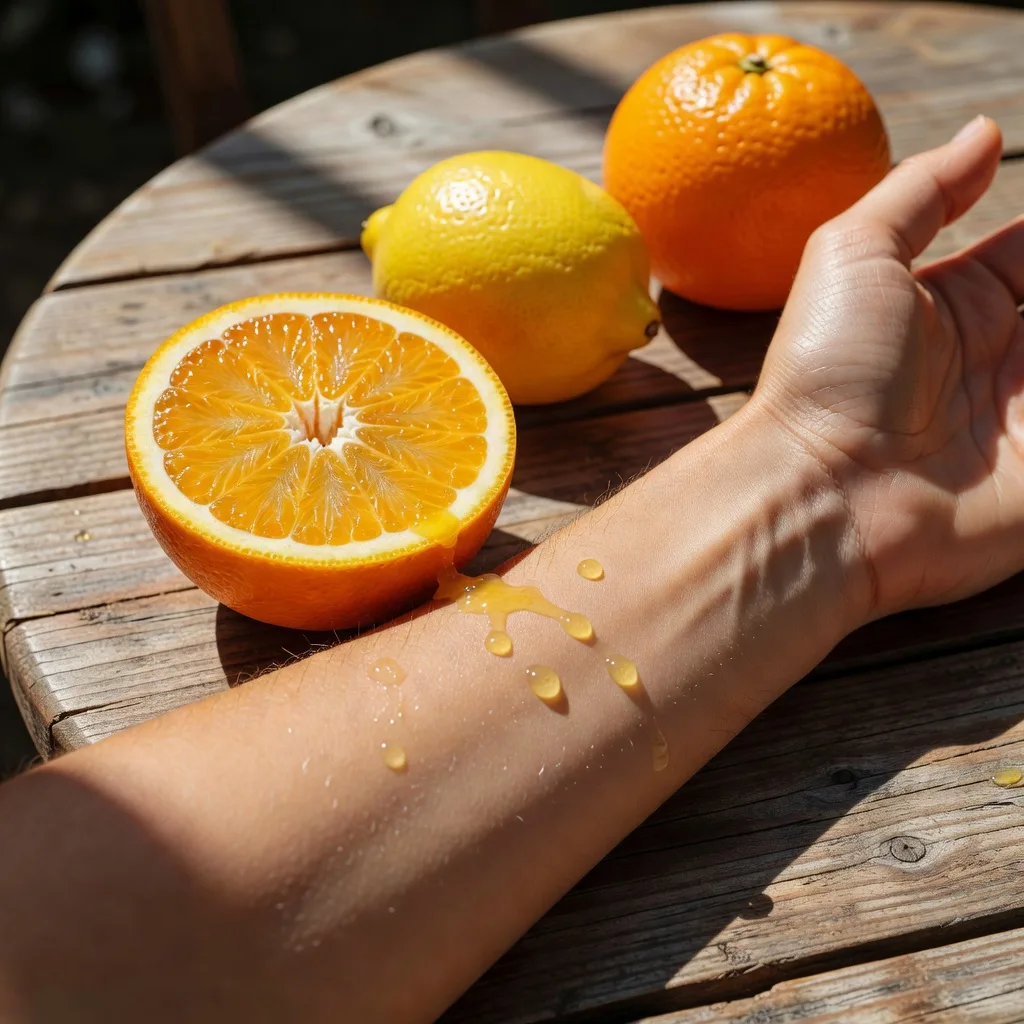
Citrus fruits, along with limes in particular, contain furocoumarin compounds that become reactive when exposed to ultraviolet light. When citrus juice or peel oil contacts skin and that skin is then exposed to sunlight, the result can be phytophotodermatitis — a burn-like, sometimes blistering rash that shows up hours to a day later, often in a streaky or splash pattern that traces exactly where the juice touched. This is well documented in case reports and is sometimes called “margarita burn” or “lime disease” because bartenders and people squeezing citrus outdoors are disproportionately affected. It’s frequently mistaken for a breakout or allergic reaction rather than what it actually is: a phototoxic chemical burn.
Dietary vs. Topical Fruit Reactions
| Scenario | Real mechanism | Evidence quality |
|---|---|---|
| Eating whole fruit | Generally low glycemic impact | No direct high-quality studies flagging fruit as a trigger |
| Drinking fruit juice or eating dried fruit in excess | Concentrated sugar raising glycemic load | Indirect, via broader sugar/glycemic research |
| Rubbing citrus juice on skin, then sun exposure | Furocoumarin phototoxicity (phytophotodermatitis) | Well documented in case reports and reviews |
| DIY fruit mask on sensitive skin | Irritant or allergic contact dermatitis | Individual and formulation dependent |
Mango Is a Genuine, Separate Exception
One tropical fruit deserves special mention because it breaks the “no direct evidence” pattern described above: mango. The skin and sap of mango contain urushiol-related compounds — the same chemical family responsible for poison ivy and poison oak reactions — concentrated in the peel and just beneath it. People who bite into a mango, get juice or peel residue on their lips, chin, or cheeks, and then experience redness, swelling, or blistering around the mouth are often reacting to this contact allergen, not developing acne at all. This is well documented among people who harvest or frequently handle mangoes, and it’s a legitimate, distinct reason someone might genuinely say “this fruit breaks me out” and be describing a real, if mislabeled, reaction.
Individual Sensitivity Still Matters
None of this rules out genuine individual sensitivity. Some people do notice a real correlation between a specific fruit and breakouts, and food sensitivities and mild allergic responses are real even without population-level study data proving it for that exact food. The honest position is that population research doesn’t support fruit as a general acne trigger, while acknowledging that an individual pattern, tracked consistently over weeks, can still be a legitimate personal finding worth acting on even without a study to back it. It’s also worth separating a true allergic or contact reaction, which tends to show up quickly and clearly around wherever the fruit actually touched skin, from a slower-developing hormonal or diet-driven breakout that shows up days later and isn’t localized to a contact point at all.
Do This, Not That
Do
- Do track whether it’s the fruit itself, added sugar, or a paired ingredient like dairy that correlates with breakouts.
- Do wash hands and face promptly after handling citrus, especially before going out in the sun.
- Do favor whole fruit over juice or dried fruit if glycemic load is a genuine concern.
Don’t
- Don’t assume a red mark after handling citrus outdoors is automatically acne — consider phytophotodermatitis first.
- Don’t cut out whole fruit from your diet based on population research that doesn’t actually implicate it.
- Don’t rub raw citrus or other DIY fruit mixtures directly onto broken or already-irritated skin.
Figuring Out Your Own Trigger, Step by Step
Separate diet from topical exposure
Note whether the fruit was eaten, or touched your skin directly, before drawing any conclusion.
Check the sun-exposure timing
If juice touched skin and sun exposure followed within a day, suspect phytophotodermatitis, not diet.
Track for two to three weeks
Log specific fruits, quantities, and any paired ingredients like dairy or added sugar alongside breakouts.
Isolate variables where possible
Try the fruit alone versus in a smoothie with dairy to see which correlates more closely.
See a dermatologist for a persistent, unclear pattern
If tracking doesn’t clarify things, a professional can rule out unrelated causes.
What This Article Can’t Tell You
This article can’t tell you whether your specific breakouts are actually caused by a specific fruit — population research and individual experience don’t always line up, and only careful personal tracking, or a dermatologist’s evaluation, can answer that for your skin specifically. What it can tell you honestly is that the population-level evidence doesn’t support fruit as a general acne trigger, while a related and different topical reaction genuinely does exist and gets misattributed as one.
Frequently Asked Questions
Does eating fruit actually cause acne?
There’s no high-quality study directly linking whole fruit consumption to acne. The stronger diet-and-acne evidence involves high-glycemic foods, sugary drinks, and dairy.
Why does my face break out after eating citrus?
If the citrus was eaten, it’s unlikely the direct cause given current evidence. If juice touched your face and you were later in the sun, it may be phytophotodermatitis, not a breakout.
What is phytophotodermatitis?
A burn-like skin reaction caused by furocoumarin compounds in citrus and certain other plants reacting with UV light after contacting skin.
Is fruit juice worse for skin than whole fruit?
Likely yes for glycemic load, since juicing removes fiber and concentrates sugar, pushing its blood-sugar impact closer to a sugary drink.
Which foods have the strongest evidence for causing acne?
Dairy and high-sugar or high-glycemic foods and drinks have the most consistent research behind them, not fruit specifically.
Can a DIY fruit face mask cause a breakout?
It can cause irritant or allergic contact dermatitis in sensitive skin, which can look like a breakout but is a different reaction with a different cause.
Is banana a high-glycemic fruit?
Ripe banana sits in the moderate range, higher than apples or grapefruit but generally lower than fruit juice or dried fruit.
How do I know if it’s really the fruit and not something else?
Track fruit intake, paired ingredients like dairy, and topical exposure separately for two to three weeks to isolate the actual variable.
Can individual food sensitivity still be real without a study proving it?
Yes. Population research not finding a general effect doesn’t rule out a genuine personal sensitivity, which is worth tracking and acting on individually.
What should I do if I get a rash after handling citrus outdoors?
Wash the area, avoid further sun exposure, and avoid scrubbing or picking at it, since that’s likely phytophotodermatitis rather than an infection or allergy.

Written by
Registered pharmacist and founder of Facial Adviser. Rakib's pharmacy training covers how skincare actives work and interact; a later course in cosmetology turned that into a focus on facial treatments and skincare products. He plans, researches and edits every guide on the site and checks health claims against sources such as the American Academy of Dermatology, the FDA and the NIH. He is not a dermatologist; see the Editorial Policy and Medical Disclaimer.
About · Editorial policy · How we choose products · Medical disclaimer · Contact
Keep reading: DIY and ingredient facials
- Fruit Facial at Home: Does It Actually Work?
- Fruit Facial Types: A Complete Guide
- Which Fruit Facial Is Best for Dry Skin?
- Fruit Facial Steps in a Parlour: What Happens at Each Stage
- Is a Fruit Facial Good for Your Skin? Benefits, Risks and Who Should Skip It
- Fruit Facial vs Gold Facial: Differences, Benefits and Which to Choose
- Facial vs Chemical Peel: Differences, Results and Which to Choose
- What Is the Best Anti-Aging Facial Treatment? Options Compared by Goal