Does Microdermabrasion Work on Closed Comedones?
Does microdermabrasion work on closed comedones is a question with a clear mechanistic answer once you understand where the blockage actually sits.
Part of our guide to facial treatments. Start with: Ultimate Guide Microdermabrasion: What to Know
A closed comedone’s keratin-and-sebum plug forms within the hair follicle, beneath the surface, while microdermabrasion only removes the stratum corneum — the outermost dead-cell layer above it. No dedicated clinical trial has tested microdermabrasion against closed-comedone clearance directly; this conclusion rests on known depth of action versus known lesion depth.
The 2024 American Academy of Dermatology acne guidelines give topical retinoids a strong, evidence-backed recommendation specifically because they act at the follicular level where the actual blockage lives.
This guide covers the real depth mismatch, what actually works instead, and when microdermabrasion still has a legitimate complementary role.
Recommended Microdermabrasion Tools and Comedone Treatments

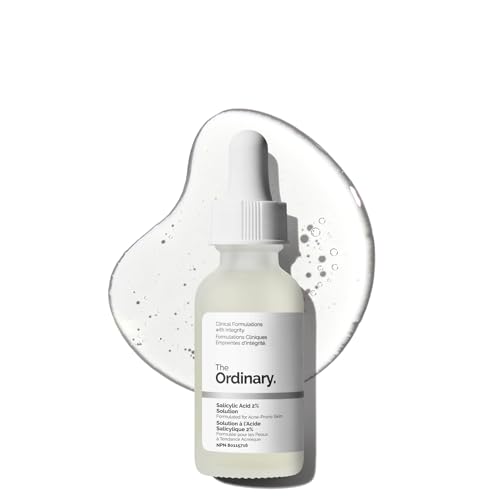

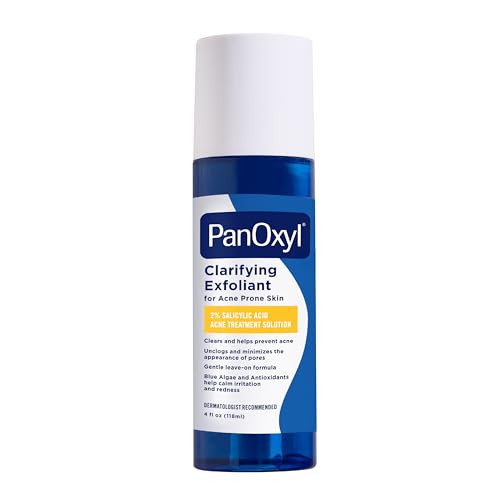

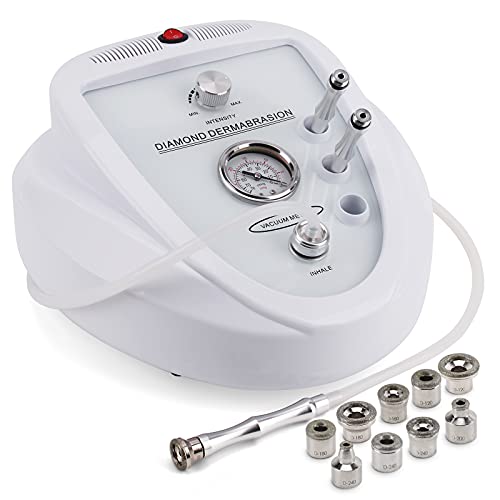
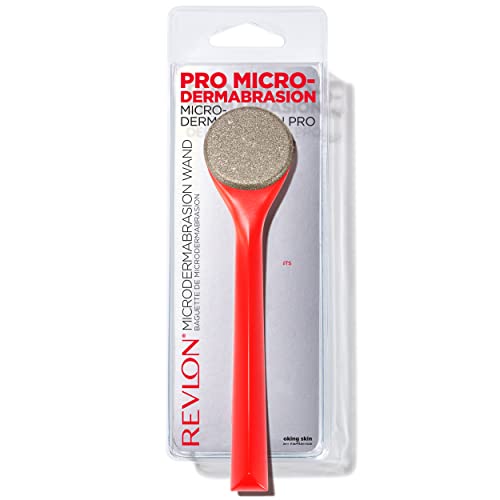
What Closed Comedones Actually Are
Closed comedones — commonly called whiteheads — form when a hair follicle becomes blocked by a plug of keratin (dead skin cells) and sebum, but the follicular opening at the skin’s surface stays closed over the top of it. That’s the key structural detail: the plug sits within the follicle, beneath the surface, not sitting exposed on top of the skin the way surface debris does. This is different from an open comedone (blackhead), where the follicular opening stays open and the trapped material oxidizes and darkens at the surface. Understanding that depth distinction is the whole key to whether microdermabrasion — a treatment that works on the very outermost skin layer — can actually reach the problem.
Shopping these picks?
Amazon Prime members get fast, free shipping on eligible items, plus Prime Video, Amazon Music and member deals. New members can start with a free trial.
Start a free Prime trialAged 18 to 24? Prime for Young Adults comes with a longer free trial and a lower price after it.
Affiliate link: we may earn a commission at no extra cost to you.
Bottom Line Up Front
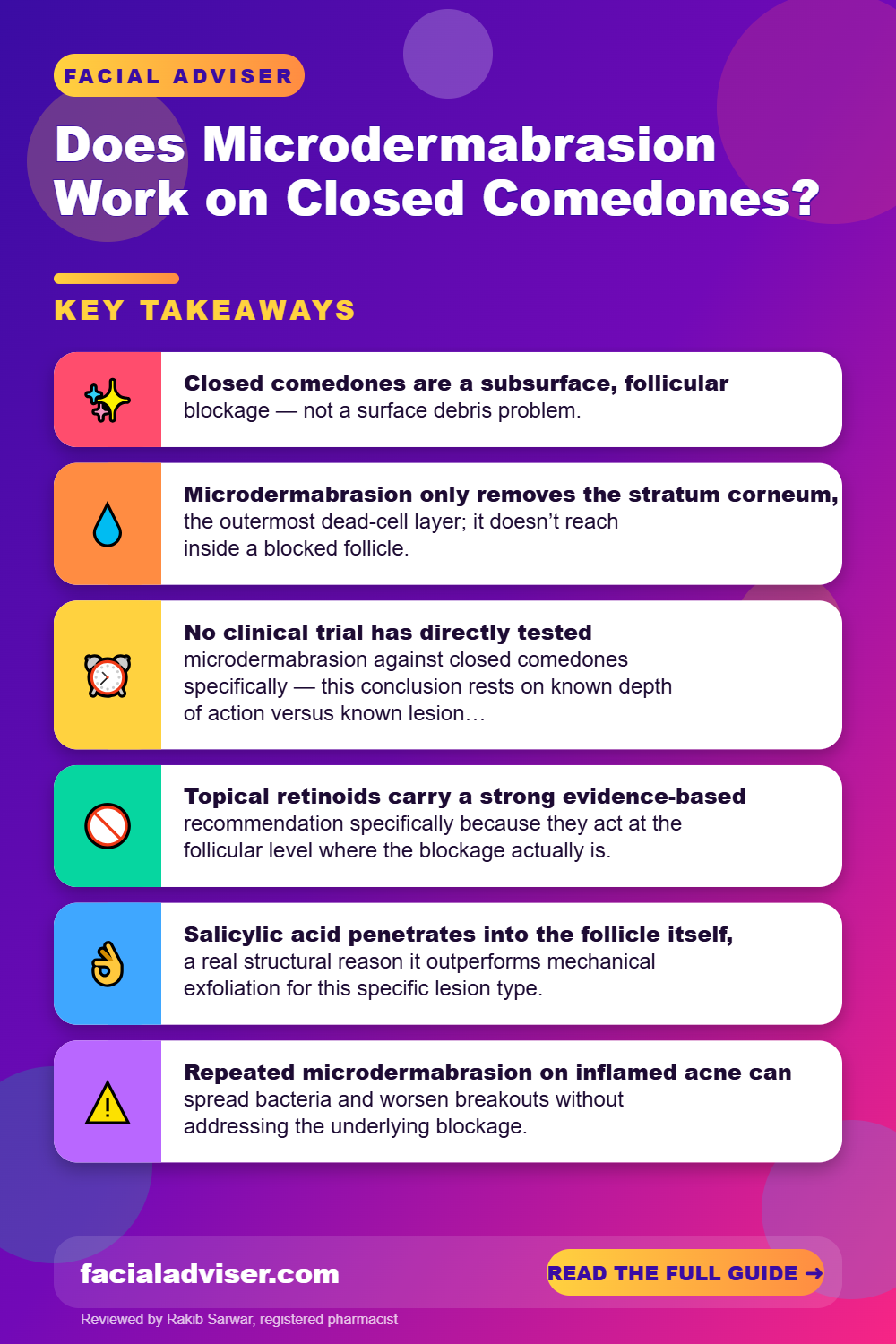
- Closed comedones are a subsurface, follicular blockage — not a surface debris problem.
- Microdermabrasion only removes the stratum corneum, the outermost dead-cell layer; it doesn’t reach inside a blocked follicle.
- No clinical trial has directly tested microdermabrasion against closed comedones specifically — this conclusion rests on known depth of action versus known lesion depth, not a negative trial result.
- Topical retinoids carry a strong evidence-based recommendation specifically because they act at the follicular level where the blockage actually is.
- Salicylic acid penetrates into the follicle itself, a real structural reason it outperforms mechanical exfoliation for this specific lesion type.
- Repeated microdermabrasion on inflamed acne can spread bacteria and worsen breakouts without addressing the underlying blockage.
Where to Find What
- What Closed Comedones Actually Are
- The Depth Mismatch, Explained
- What the Evidence Actually Shows
- What Actually Works, by Mechanism
- Why Retinoids Are the Evidence-Backed First Choice
- A Realistic Routine for Closed Comedones
- Professional Extraction: The Mechanical Option That Works
- When Microdermabrasion Still Has a Role
- At-Home Devices vs. Professional Treatment
- When to Avoid Microdermabrasion Entirely
- When to See a Dermatologist Instead
- A One-Minute Self-Check
- Where the Evidence Runs Out
- Frequently Asked Questions
The Depth Mismatch, Explained
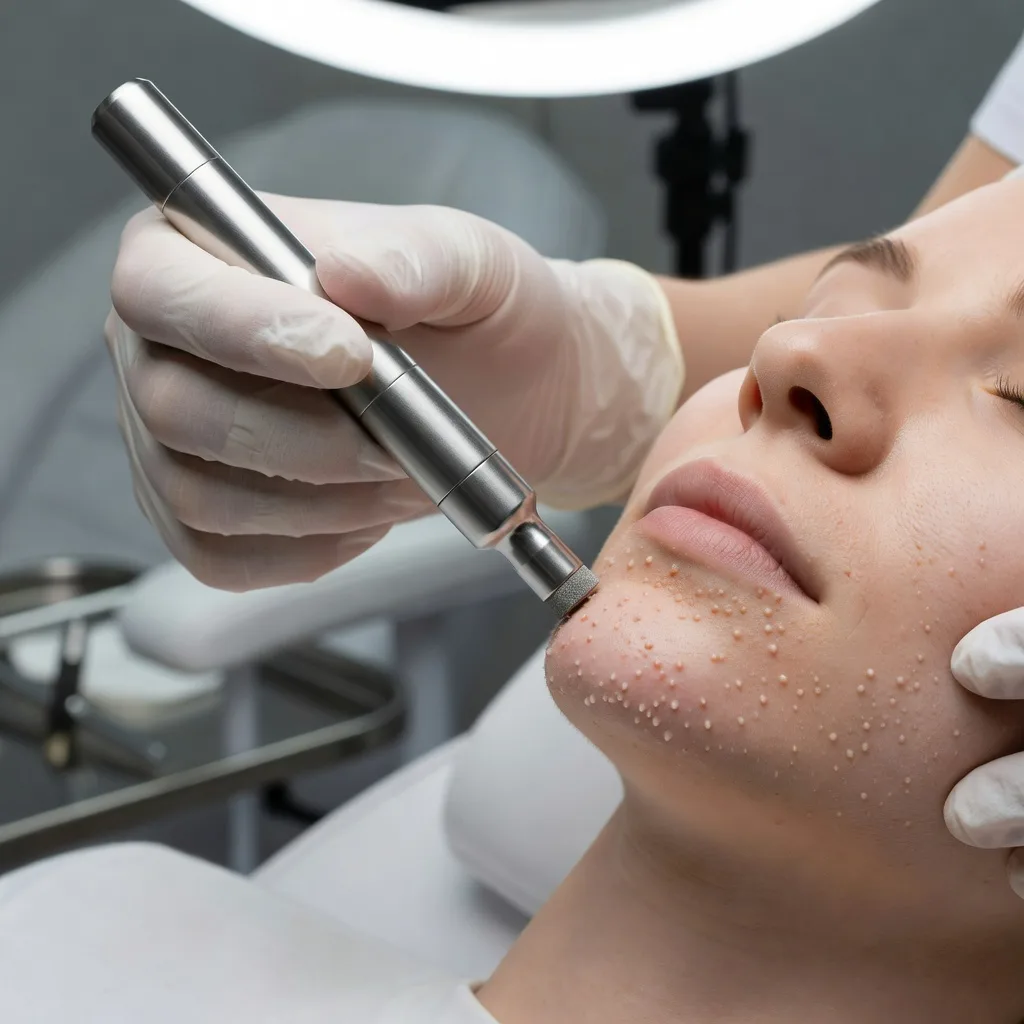
According to the clinical reference source StatPearls, microdermabrasion works by mechanically abrading the stratum corneum using crystal spray or a diamond-tip wand, with repeated use also producing some basal-layer melanosome rearrangement and increased dermal collagen density over time. But that same source is explicit that this is fundamentally a superficial, epidermal-layer procedure — it doesn’t débride follicular contents. A closed comedone’s keratin-and-sebum plug sits within the follicular canal, at a depth the abrasive tip simply isn’t designed to reach without also damaging the surrounding healthy skin. This is a straightforward mechanism mismatch: the tool exfoliates one layer, and the problem lives in a different, deeper structure.
What the Evidence Actually Shows
Here’s the honest gap in the literature: no dedicated clinical trial has tested microdermabrasion specifically against closed comedones and measured clearance rates. StatPearls does note that microdermabrasion reduces surface sebum immediately after a session — a real, measurable finding — but that’s a surface-level effect on visible oil, not evidence that the treatment clears an existing follicular plug. The conclusion that microdermabrasion “doesn’t work” for closed comedones is a mechanistic, inferential one — built from the known shallow depth of the treatment versus the known deeper location of the lesion — rather than a proven negative result from a head-to-head trial. That distinction matters: it’s strong physiological reasoning, and it’s the same reasoning dermatology guidelines rely on when recommending retinoids instead, but it isn’t the same as a randomized trial specifically disproving microdermabrasion for this use.
What Actually Works, by Mechanism
| Approach | Depth of action | Reaches the follicular plug? |
|---|---|---|
| Microdermabrasion | Stratum corneum (outermost dead-cell layer) | No — doesn’t débride follicular contents |
| Topical retinoids (adapalene, tretinoin) | Follicular/infundibular lining | Yes — normalizes keratinization at the source |
| Salicylic acid (BHA) | Lipophilic, penetrates into the sebum-filled follicle | Yes — dissolves into the follicle itself |
| Manual comedone extraction | Direct mechanical pressure on the plug itself | Yes — physically expresses the blockage |
Why Retinoids Are the Evidence-Backed First Choice
The 2024 American Academy of Dermatology acne guidelines are built on pooled randomized-trial data using the Investigator Global Assessment scale at 12 weeks, and they consistently show retinoid-treated patients significantly more likely to see improvement compared to a vehicle (inactive base) cream. Clinical dermatology guidance converges on adapalene 0.1-0.3% applied nightly as first-line monotherapy for comedonal acne, often paired with benzoyl peroxide. The mechanism is specific: retinoids normalize how skin cells inside the follicle shed and turn over, preventing the keratin buildup that forms the plug in the first place — a fundamentally different target than surface exfoliation.
| Ingredient | Typical use | Evidence strength |
|---|---|---|
| Adapalene 0.1-0.3% | Nightly, first-line monotherapy | Strong recommendation, moderate-certainty pooled RCT evidence |
| Salicylic acid | Leave-on or wash formulations, daily to twice daily | Established comedolytic mechanism, widely used adjunct |
| Benzoyl peroxide | Often paired with a retinoid | Addresses bacterial/inflammatory component, adjunct to retinoid therapy |
A Realistic Routine for Closed Comedones
Start a nightly retinoid
Begin with a lower-strength adapalene formula a few nights a week, building up to nightly as tolerated.Add a BHA cleanser or leave-on product
Salicylic acid can be layered in, typically on alternate nights at first to manage irritation.Be patient with the timeline
Follicular turnover takes weeks; meaningful improvement in comedone count is usually assessed at 8-12 weeks, not days.Consider professional extraction for stubborn spots
A trained esthetician or dermatologist can mechanically express a persistent closed comedone that topical treatment alone hasn’t resolved.
Professional Extraction: The Mechanical Option That Works
If a mechanical approach is what you’re looking for, professional comedone extraction — using a sterile extractor tool to apply direct, targeted pressure that expresses the plug from the follicle — is the mechanical intervention with a real, direct rationale behind it, unlike microdermabrasion. It physically removes the blockage rather than exfoliating skin above it. This is typically done as part of a professional facial or dermatology visit rather than as a DIY step, since improper technique or pressure can cause scarring or push the plug deeper.
When Microdermabrasion Still Has a Role
None of this means microdermabrasion is worthless for someone dealing with closed comedones — it’s just not the tool for the comedones themselves. It can genuinely improve overall skin texture, reduce the appearance of surface dullness, and modestly reduce visible surface oil in the same session, benefits covered in more depth in our microdermabrasion facial evidence guide. People often combine it with a retinoid routine for these complementary surface-texture benefits, while relying on the retinoid (or extraction) to actually address the comedones.
Do
- Use a nightly retinoid as your primary comedone treatment
- Add salicylic acid for its follicle-penetrating comedolytic effect
- Consider professional extraction for a stubborn, isolated comedone
Don’t
- Rely on microdermabrasion alone expecting it to clear existing comedones
- Use microdermabrasion on actively inflamed, pustular acne
- Pick at closed comedones yourself with unsterile tools
At-Home Devices vs. Professional Treatment
Powered at-home microdermabrasion devices are deliberately built with gentler suction and finer abrasive particles than professional units, specifically for safety in unsupervised hands. That safety design has a direct downside for the closed-comedone question: an already-limited depth of action becomes even shallower with an at-home device, meaning any hope of a mechanical effect on a follicular plug is smaller still. No peer-reviewed trial directly compares at-home device results to professional in-office treatment for any acne-related outcome, closed comedones included — another real evidence gap worth naming rather than assuming one is simply a weaker version of the other with proportionally scaled-down results.
When to Avoid Microdermabrasion Entirely
StatPearls lists active cutaneous infection as an absolute contraindication for microdermabrasion, with rosacea and visible telangiectasia (broken capillaries) as relative contraindications. Repeated treatment on inflamed, actively acneic skin can spread Cutibacterium acnes bacteria and create additional micro-trauma, potentially worsening inflammatory lesions even though it does nothing for the underlying comedones. Aggressive or overly frequent sessions can also impair the skin’s barrier function, which can delay someone from committing to the retinoid routine that would actually address the problem.
When to See a Dermatologist Instead
See a board-certified dermatologist rather than relying on over-the-counter routines or spa treatments if your closed comedones are extensive, painful, not improving after 12 weeks of consistent retinoid use, or accompanied by inflamed or cystic lesions. A dermatologist can also prescribe stronger retinoid formulations or combination therapies not available over the counter, and can advise on whether standard acne treatment covered in our acne facial evidence review is a better overall fit for your skin than comedone-focused treatment alone.
A One-Minute Self-Check
Look closely at the bump in good light: is the skin over it intact and closed (a closed comedone), or does it have a visible dark or open center (a blackhead, which behaves differently)? Is it flat and skin-colored, or is it red, swollen, or tender (suggesting an inflammatory lesion, not a simple comedone)? A flat, closed, skin-colored bump is the classic closed comedone this article addresses; anything red, painful, or draining warrants a different approach and possibly a dermatologist visit.
Where the Evidence Runs Out
Be precise about what’s actually established here: there’s no head-to-head randomized trial comparing microdermabrasion, retinoids, and extraction specifically for closed-comedone clearance rates. The conclusion that microdermabrasion falls short rests on solid physiological reasoning about depth of action, not a definitive negative trial. It’s the same kind of honest evidence-gap framing that applies to several other cosmetic treatments on this site — a strong mechanistic case, presented as exactly that, rather than dressed up as proven trial data it isn’t.
Frequently Asked Questions
Can microdermabrasion clear closed comedones?
It’s unlikely to clear them directly, since the treatment only reaches the outermost skin layer while the comedone plug sits deeper within the follicle.
What actually clears closed comedones?
Topical retinoids are the evidence-backed first-line option, often combined with salicylic acid or professional extraction for stubborn spots.
Is there a study proving microdermabrasion doesn’t work for comedones?
Not a direct one — the conclusion is based on known depth of action versus known lesion depth, a strong mechanistic inference rather than a specific negative trial result.
Can microdermabrasion make comedones worse?
It’s more of a risk on actively inflamed acne, where it can spread bacteria, rather than on purely comedonal skin, though it still won’t clear the plug either way.
How long does a retinoid take to clear comedones?
Meaningful improvement is generally assessed at 8-12 weeks of consistent nightly use, not days or a single week.
Is salicylic acid better than microdermabrasion for whiteheads?
Yes, mechanistically — salicylic acid is lipophilic and penetrates into the follicle itself, while microdermabrasion only exfoliates the surface above it.
Can a professional extract a closed comedone safely?
Yes, using a sterile extractor and direct pressure, which physically expresses the plug rather than exfoliating around it.
Does microdermabrasion have any benefit if I have closed comedones?
It can still improve overall texture and reduce surface oil, useful complementary benefits, even though it won’t clear the comedones themselves.
Is it safe to combine a retinoid with microdermabrasion?
Generally yes with proper spacing, but retinoids increase skin sensitivity, so sessions are often timed apart from active retinoid use to avoid excess irritation.
When should I see a dermatologist instead of trying products myself?
If comedones are extensive, painful, or not improving after about 12 weeks of consistent retinoid use, or if inflammatory lesions are present alongside them.

Written by
Registered pharmacist and founder of Facial Adviser. Rakib's pharmacy training covers how skincare actives work and interact; a later course in cosmetology turned that into a focus on facial treatments and skincare products. He plans, researches and edits every guide on the site and checks health claims against sources such as the American Academy of Dermatology, the FDA and the NIH. He is not a dermatologist; see the Editorial Policy and Medical Disclaimer.
About · Editorial policy · How we choose products · Medical disclaimer · Contact
Keep reading: Microdermabrasion and diamond peel
- Ultimate Guide Microdermabrasion: What to Know
- What Is a Diamond Peeling Facial, Really?
- How Often to Do Microdermabrasion
- Microdermabrasion for Acne and Blackheads: Real Answer
- 10 Best Professional Microdermabrasion Machines (2026): Diamond Picks
- Kendal Microdermabrasion Machine: Features, Pros, Cons and Safety
- Fruit Facial at Home: Does It Actually Work?
- Facial Types: A Guide to 11 Popular Facials and How to Choose One