Budget Skincare Routine UK: A Simple Routine With 7 Products
A good skincare routine does not need a shelf full of products or a big budget. Most of the benefit comes from four basic steps done consistently: cleanse, hydrate, moisturise and protect from the sun.
Part of our guide to skincare routines and ingredients. Start with: Best Skin Care Routine: Simple AM and PM Steps for Every Skin Type
A budget skincare routine in the UK needs only a gentle cleanser, one hydrating or treatment serum, a moisturiser and a daily sunscreen, with an optional retinol at night. Spend your money on sunscreen and a cleanser you will actually use, and add extras slowly. This guide builds a simple morning and night routine from seven well-rated products sold on Amazon UK, explains what each one does, shows which steps to prioritise if you can only buy two or three things and tells you how to introduce new products without irritating your skin or wasting money on duplicates.
7 Budget Skincare Products on Amazon UK


Links go to Amazon.co.uk. As an Amazon Associate I earn from qualifying purchases.
Turn skincare time into me-time with a free audiobook
In short: cleanser, moisturiser and sunscreen first; serums and retinol later, one at a time.
The NHS advises protecting your skin from the sun every day, and dermatology groups say sunscreen is the single most useful skincare step. That is why this routine puts sun protection ahead of any fancy serum. More products do not mean better skin, and too many actives at once is a common cause of irritation.
I am Rakib Sarwar, a registered pharmacist with a cosmetology course. I chose these products for trusted brands, simple formulas and strong customer ratings on Amazon UK. This is general information, not medical advice. As an Amazon Associate I earn from qualifying purchases.
Jump to a Section
- How We Chose These Products
- Quick Comparison
- CeraVe Hydrating Cleanser
- Garnier Micellar Gel Face Wash
- Garnier Hyaluronic Acid Serum
- Minimalist 10% Niacinamide Face Serum
- Neutrogena Hydro Boost Water Gel
- NIVEA Sun UV Face Anti-Age Sunscreen
- Minimalist 0.3% Retinol Face Serum
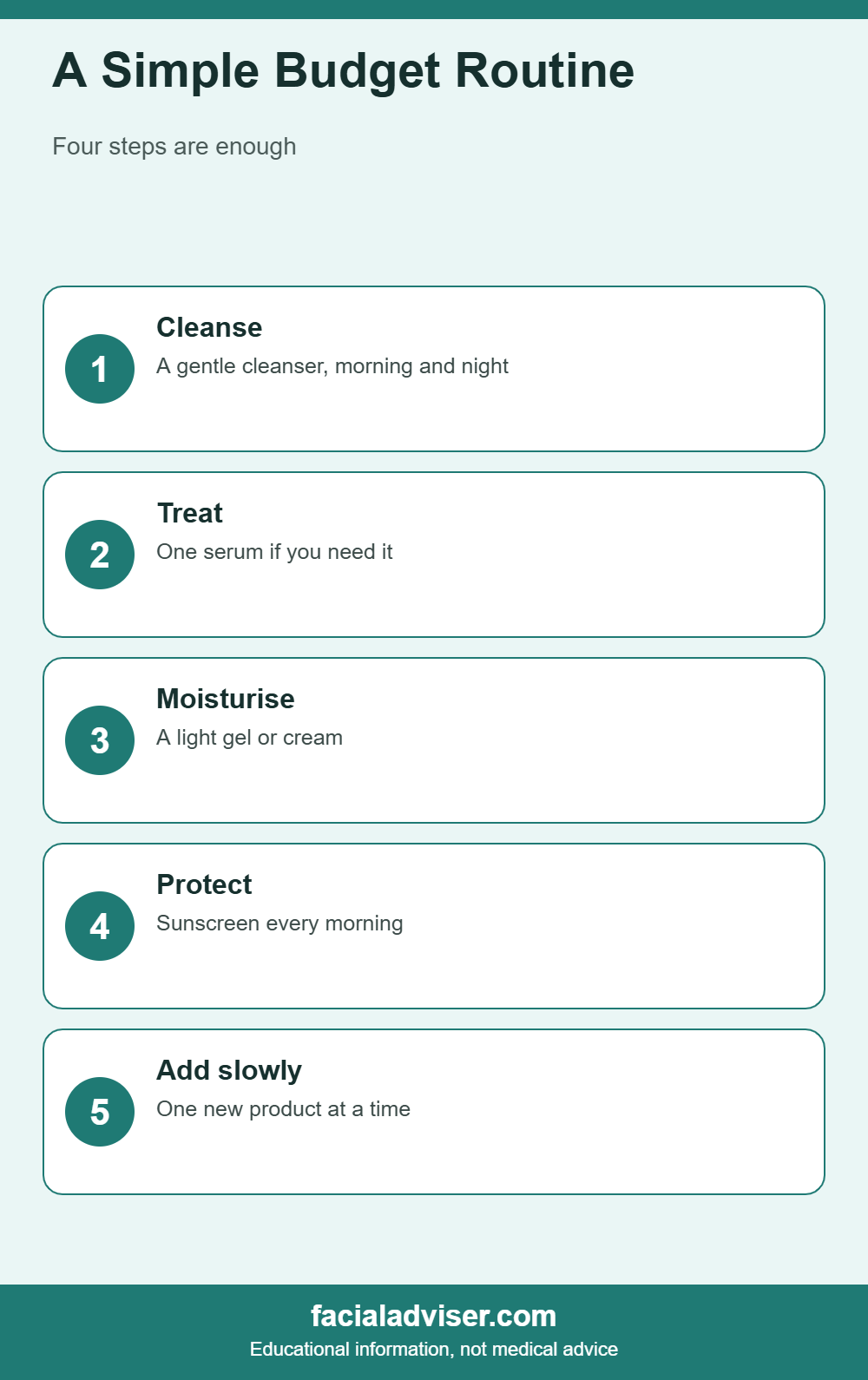
- A Simple Morning and Night Routine
- How to Build a Budget Skincare Routine
- Dos and Don’ts
- Frequently Asked Questions
- Where This Leaves You
How We Chose These Products
We looked for products sold on Amazon UK from brands that are easy to find in UK shops, with strong ratings and a large number of reviews.
We picked one product for each job in the routine so that you do not pay for overlap.
We left out fragranced products and anything that makes big claims, because simple formulas are cheaper and usually gentler.
Formulas and sizes change. Always check the listing for the current ingredients and the size.
Where a brand sells several versions, we chose the one most people buy for everyday use, and we suggest you check the listing for the version that matches your skin type.
We do not quote prices because they change often. Check the listing for the current price.
In Brief
- A simple routine is cleanser, moisturiser and sunscreen, morning and night where relevant.
- Serums and retinol are optional extras, so add one at a time.
- Spend on sunscreen first, because it protects against ageing and skin damage.
- Introduce new products slowly and patch test before using them on your face.
- Retinol is generally not recommended during pregnancy unless a doctor advises otherwise.
- See a pharmacist or GP if you have persistent acne, a rash or a mole that changes.
Quick Comparison
This table shows where each product fits in the routine.
| Product | Job | When |
|---|---|---|
| CeraVe Hydrating Cleanser | Gentle cleanser | Morning and night |
| Garnier Micellar Gel Face Wash | Light daily wash for oily or mixed skin | Morning or night |
| Garnier Hyaluronic Acid Serum | Hydration | Morning |
| Minimalist 10% Niacinamide Face Serum | Oil balance and uneven tone | Morning or night |
| Neutrogena Hydro Boost Water Gel | Light moisturiser | Morning and night |
| NIVEA Sun UV Face Anti-Age Sunscreen | Daily sun protection | Every morning |
| Minimalist 0.3% Retinol Face Serum | Fine lines and texture | Night, 2 to 3 times a week |
CeraVe Hydrating Cleanser

This is one of the best-reviewed cleansers on Amazon UK. It cleans without leaving the skin tight and contains ceramides and hyaluronic acid.
It suits normal to dry and sensitive skin, and it is fragrance-free. Use it morning and night, or only at night if your skin is dry.
Check the listing for the size. Larger bottles last for months and usually cost less per use.
If you wear makeup or sunscreen every day, wash twice at night or use an oil or balm first. For a simple routine, one wash is enough for most people.
The pump bottle keeps the formula clean and makes it easy to use the right amount, about a coin-sized dollop.
Garnier Micellar Gel Face Wash

A gel wash is a good alternative if your skin is oily or you prefer a fresher feel. It is a light, easy-to-find product from a brand most UK shops stock.
Use it on damp skin, massage for about 30 seconds and rinse well. You do not need both this and the CeraVe cleanser, so pick the one that suits your skin.
If your skin feels tight after washing, switch to a creamier cleanser.
It is a sensible low-cost choice if you want a quick wash at the sink. Keep the lid closed and store it out of direct heat.
Avoid getting the product in your eyes, and rinse thoroughly so no residue remains on the skin.
Garnier Hyaluronic Acid Serum

A hydrating serum is the simplest extra to add to a routine. Hyaluronic acid draws water into the top layer of the skin, so it looks plumper.
Apply two or three drops to damp skin, then seal with a moisturiser.
It suits most skin types, including oily skin, and layers well under sunscreen.
Serums are small, so one bottle lasts a long time when you use two or three drops. That makes it good value despite the extra step.
If your skin is very dry, use it every morning and night until the barrier feels comfortable.
Minimalist 10% Niacinamide Face Serum

Niacinamide is a form of vitamin B3 that can help with oil balance, enlarged-looking pores and uneven tone. It is one of the most budget-friendly active ingredients.
The 10% strength can irritate some skin, so patch test and start every other day. A lower-strength version is also sold.
Use it before moisturiser, in the morning or at night.
It pairs well with most moisturisers and sunscreens. If you notice redness or stinging, cut back to a few times a week.
Do not expect pores to disappear. Niacinamide can make them look less obvious as oil balance improves.
Neutrogena Hydro Boost Water Gel

A gel moisturiser keeps the routine light, which suits oily, mixed and normal skin. It contains hyaluronic acid and absorbs quickly.
If your skin is very dry, add a richer cream at night or choose a ceramide cream instead.
Use it morning and night after serum, and always before sunscreen.
Gel moisturisers are also a good base for makeup, because they sink in quickly and do not leave a greasy layer.
If you live in a cold or dry climate, a richer cream at night will keep your skin comfortable.
NIVEA Sun UV Face Anti-Age Sunscreen

Sunscreen is the most useful anti-ageing product you can buy. This one is easy to find in UK shops and is made for the face.
Check the listing for the SPF and the UVA rating. Apply enough to cover the face and neck, and reapply if you are outdoors for long periods.
For more choices, see our guide to best face sunscreens in the UK.
Use about two fingers’ length for the face and neck. Reapply after sweating, swimming or towelling your face.
In the UK you may use sunscreen less in winter, but UV is present all year, and daily use becomes a habit if you do it every morning.
Minimalist 0.3% Retinol Face Serum

Retinol is a vitamin A ingredient that can smooth fine lines and rough texture over time. It is optional, and it is not needed for a good basic routine.
Start with two nights a week, use a pea-sized amount and moisturise on top. Expect some dryness at first.
Retinol is generally not recommended during pregnancy unless a doctor advises otherwise. Read our best retinol serums in the UK for more.
Skip retinol if you are pregnant or trying to conceive unless a doctor advises, and avoid it on irritated or sunburned skin.
If it stings, step back to once a week, and always follow with moisturiser and sunscreen the next morning.
A Simple Morning and Night Routine
Use this plan as a starting point and change it to suit your skin.
| Step | Morning | Night |
|---|---|---|
| 1. Cleanse | Rinse or gentle cleanser | Cleanser |
| 2. Serum | Hyaluronic acid or niacinamide | Niacinamide or retinol on set nights |
| 3. Moisturise | Gel moisturiser | Gel or richer cream |
| 4. Protect | Sunscreen | Not needed |
Spending guide: put most of your budget into a sunscreen you enjoy wearing and a cleanser that does not dry you out. A basic moisturiser does not need to be expensive, and serums are the first thing to drop if money is tight.
Season matters too. In winter your skin may want a richer moisturiser and fewer actives. In summer a lighter gel and a generous amount of sunscreen usually work better.
If you can only afford three products, buy a cleanser, a moisturiser and a sunscreen, and add the others later. Our guide to best moisturisers for dry skin in the UK covers richer options.
Stop using any product that burns, swells or causes a rash, and ask a pharmacist or GP for advice.
How to Build a Budget Skincare Routine
Follow these steps over a few weeks rather than starting everything at once.
Start with three
Begin with a cleanser, moisturiser and sunscreen and use them for two weeks.
Add one serum
Choose hyaluronic acid or niacinamide and use it for two weeks before adding another.
Patch test
Test any new product on your inner arm or behind the ear for 24 hours first.
Add retinol last
Only add retinol once your skin is comfortable, and use it two nights a week at first.
Be consistent
Judge the routine after six to eight weeks, not after a few days.
Take a photo in the same light every few weeks. It is easier to judge a routine from photos than from the mirror.
Dos and Don’ts
Worth Doing
- Wear sunscreen every morning
- Add one product at a time
- Patch test new products
- Use a gentle cleanser
- Moisturise even if your skin is oily
Skip It
- Use several actives on the same night
- Skip sunscreen after using retinol
- Pick products for fragrance or hype
- Over-wash your face
- Use retinol in pregnancy unless a doctor advises
This article is general information, not medical advice. Ask a pharmacist or GP about skin conditions.
Frequently Asked Questions
What is the cheapest skincare routine that works?
A gentle cleanser, a simple moisturiser and a daily sunscreen. That covers the basics and costs far less than a long routine. Add a serum or retinol later only if you have a specific concern.
Which skincare product should I buy first?
Sunscreen. It protects against sun damage, which causes most visible skin ageing and also affects skin health.
Do I need a serum?
No. A serum is optional. Add one if you have a specific concern such as dryness or uneven tone, and introduce it on its own so you can tell whether it helps or irritates.
Can I use niacinamide and retinol together?
Many people do, but start with one at a time. Using several actives at once raises the risk of irritation. If you are unsure which to start with, begin with niacinamide in the morning and keep retinol for a few nights a week.
How long before I see results?
Hydration is immediate. Retinol and brightening ingredients usually take six to twelve weeks of regular use.
Is expensive skincare better?
Not necessarily. Price does not guarantee results, and many well-reviewed products are inexpensive. What matters more is a suitable formula, consistent use and daily sunscreen.
Do I need a toner or an exfoliant?
Not for a basic routine. You can add a gentle exfoliant later if you have rough texture or clogged pores.
Is a gel moisturiser enough for dry skin?
Often not. Dry skin usually needs a richer cream or ceramide product, especially at night. Look for ceramides, glycerin or shea butter on the label, and check the listing for the full ingredients.
Can I use this routine if I have acne?
The basics help, but persistent or painful acne needs advice from a pharmacist or GP, because treatments are available.
When should I see a pharmacist or GP?
If you have persistent acne, a rash, itching, or a mole that changes shape or colour, speak to a pharmacist or GP.
Where This Leaves You
A budget routine works when it is simple and consistent. Start with a cleanser, moisturiser and sunscreen, then add one product at a time.
If your skin is irritated or you have persistent spots, speak to a pharmacist or GP. See also our guide to best cleansers for sensitive skin in the UK. Take your time, because a routine you keep up is worth more than a perfect one you drop.

Written by
Registered pharmacist and founder of Facial Adviser. Rakib's pharmacy training covers how skincare actives work and interact; a later course in cosmetology turned that into a focus on facial treatments and skincare products. He plans, researches and edits every guide on the site and checks health claims against sources such as the American Academy of Dermatology, the FDA and the NIH. He is not a dermatologist; see the Editorial Policy and Medical Disclaimer.
About · Editorial policy · How we choose products · Medical disclaimer · Contact
Keep reading: Skincare routine basics
- Best Facial Skincare Tips: Evidence-Based Habits Dermatologists Recommend
- Best Skin Care Routine: Simple AM and PM Steps for Every Skin Type
- Why Professional Skin Care Is Important
- 7 Best Facial Routine Skincare Kits for Men (2026): What to Look For and How to Use It
- Is Mineral Water Good for Your Skin? What the Evidence Says
Black Friday is coming: shop the deals with Prime