Keratosis Pilaris on the Face: Rough Bumps and Gentle Care
Run your fingers across your cheeks and you may feel tiny, rough bumps, like goosebumps that never go away. They are often skin-colored or slightly red, and they can look like acne, but they do not come to a head.
Part of our guide to body and other. Start with: 10 Best Body Tools for Skincare and Massage (2026): Smooth and Relax
This is often keratosis pilaris, a common and harmless skin condition that is usually found on the arms and thighs but can also appear on the cheeks.
Keratosis pilaris happens when keratin, a protein in the skin, builds up and plugs the openings of hair follicles. The result is a patch of small, rough bumps. It tends to run in families, is common in people with dry skin or eczema, and often flares in winter.
Black Friday is coming: shop the deals with Prime
It is not contagious, not dangerous and not caused by poor hygiene.
On the face, keratosis pilaris is easy to confuse with acne, milia or rosacea, and the right care is different for each. Scrubbing hard or picking at the bumps usually makes redness worse. Gentle cleansing, steady moisturizing and sun protection do more than harsh treatments.
This guide explains how to recognize facial keratosis pilaris, what makes it flare and a simple care routine. It also covers the gentle ingredients that dermatologists often suggest and the signs that mean you should see a professional. We also list cleansers and moisturizers that fit this routine.
For related reading, see our guide to finding your skin type.
The author is a registered pharmacist, not a dermatologist, so treat this as educational background and see a doctor for a diagnosis.
Gentle Cleansers and Moisturizers for Rough, Bumpy Skin




On This Page
- What Keratosis Pilaris Is
- Causes and Triggers
- Conditions That Look Similar
- A Gentle Daily Routine
- Ingredients That May Help
- What to Avoid
- Lifestyle Habits That Help
- Makeup and Camouflage Tips
- Why the Skin Barrier Matters for KP
- KP Through the Seasons and Life Stages
- When to See a Professional
- Honest Limits and Myths
- Your Questions, Answered
- Final Word
Quick Answer
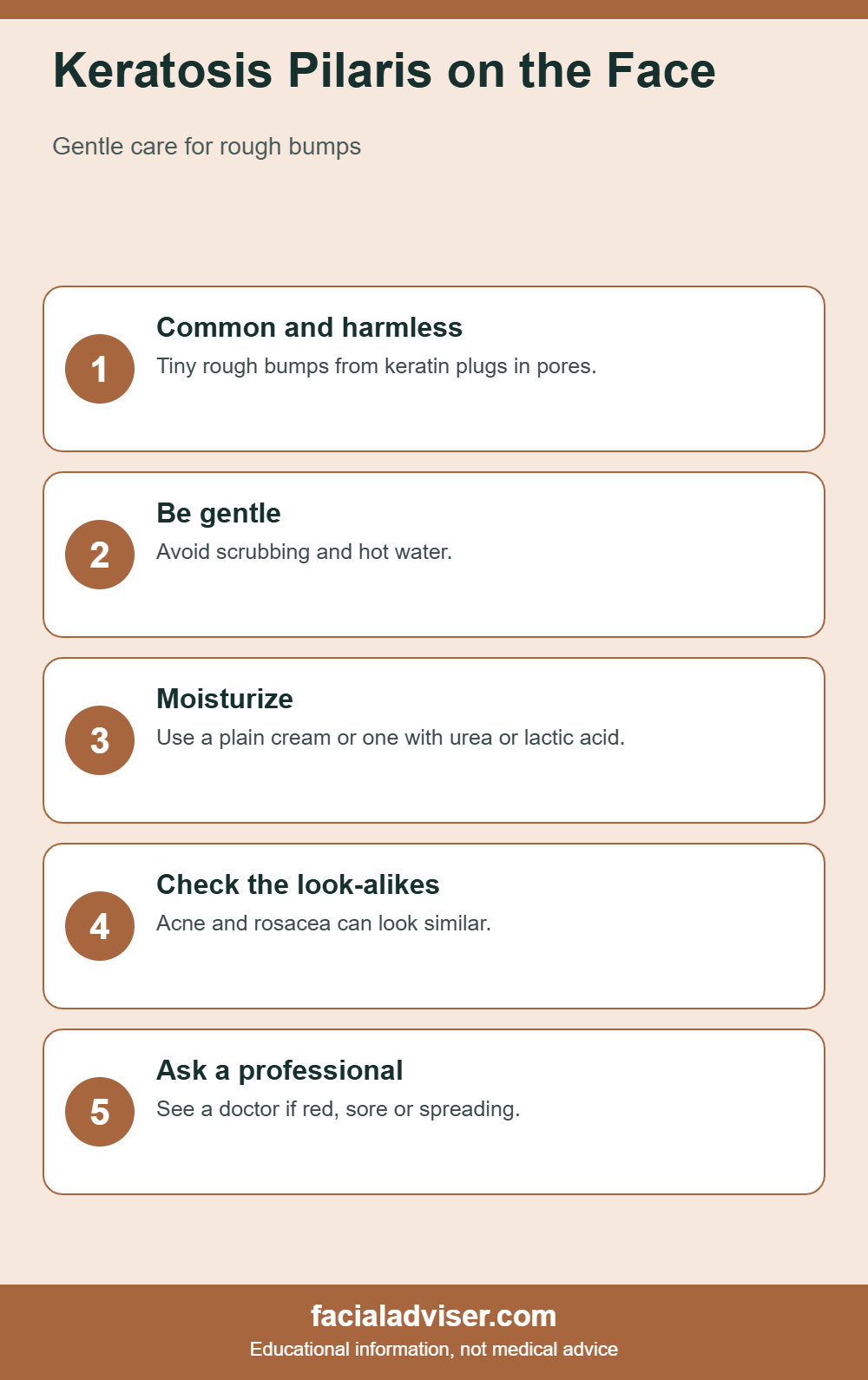
- Keratosis pilaris causes tiny rough bumps from keratin plugging hair follicles.
- It is common, harmless and often runs in families.
- It can look like acne, but the bumps do not form whiteheads.
- Gentle cleansing and daily moisturizing are the base of care.
- Avoid scrubbing, picking and hot water, which can inflame the skin.
- See a doctor if the bumps are painful, spreading, pus-filled or hard to explain.
What Keratosis Pilaris Is
Keratosis pilaris, often shortened to KP, is a very common skin condition. Keratin forms a tiny plug at the opening of a hair follicle, which creates a small, rough bump. Many bumps together feel like sandpaper or chicken skin.
It most often appears on the outer upper arms, thighs and buttocks. On the face, it usually appears on the cheeks, sometimes along the jaw and forehead. In children and teenagers, facial KP is fairly common and often improves with age.
KP is a cosmetic concern rather than a medical danger. Many people choose to treat it simply because the texture or color bothers them.
Keratosis pilaris is different from keratosis, which is a term for other skin growths. KP is a harmless follicle condition.
Under a magnifying mirror, KP bumps look uniform and skin-colored, sometimes with a tiny trapped hair visible at the center. If the bumps are larger, uneven or tender, the cause may be something else, and it is worth getting them checked.
Causes and Triggers
The exact cause is not fully understood, but it often runs in families and is linked to dry skin, eczema and some inherited skin traits. Cold, dry air makes it look worse, which is why it often flares in winter and improves in summer.
Hot showers, harsh soaps, scrubbing and tight clothes can irritate the skin and make the bumps look redder.
| Trigger | Why it matters |
|---|---|
| Cold, dry air | Dries skin and highlights bumps |
| Hot water | Strips natural oils |
| Harsh soaps and scrubs | Irritate the follicles |
| Eczema or dry skin | Raise the risk of keratin buildup |
| Family history | Increases likelihood |
Hormonal changes, such as puberty or pregnancy, may change how KP looks, but they do not cause it directly.
Some people notice that KP looks worse after shaving, plucking or waxing nearby areas because of irritation. If you have facial hair, use a clean blade and gentle technique, and avoid pulling at the skin.
Conditions That Look Similar
Several skin problems can resemble KP on the face. Acne has whiteheads, blackheads or tender red bumps. Milia are small white cysts under the skin. Rosacea involves flushing and visible blood vessels. Folliculitis has pus-filled bumps and can be itchy or sore.
| Condition | How it differs |
|---|---|
| Acne | Whiteheads, blackheads, tender bumps |
| Milia | Hard white dots, usually near eyes |
| Rosacea | Flushing, visible vessels |
| Folliculitis | Pus-filled bumps, soreness |
| Keratosis pilaris | Uniform rough, small bumps without pus |
If you are unsure, a doctor or pharmacist can help sort it out. Using acne treatments on KP can irritate it.
A Gentle Daily Routine
The core of KP care is gentle cleansing, regular moisturizing and sun protection. Use lukewarm water, a mild cleanser and a soft cloth or your fingertips. Pat the skin dry and apply moisturizer while it is still slightly damp.
Cleanse gently
Use lukewarm water and a mild, fragrance-free cleanser.
Pat dry
Dry the face with a clean towel without rubbing.
Moisturize
Apply a plain cream or lotion within a few minutes.
Add sunscreen
Use broad-spectrum SPF 30 or higher in the morning.
Be patient
Allow at least eight to twelve weeks before judging results.
If your skin is very dry, apply moisturizer twice a day and after washing your face.
Apply moisturizer within three minutes of washing, while the skin is still slightly damp, to lock in water.
Ingredients That May Help
Ingredients that soften keratin or help shed dead skin cells are often suggested for KP. Urea, lactic acid, salicylic acid and glycolic acid are common examples. On the face, start with lower strengths and use them less often, because facial skin is thinner and more sensitive.
Moisturizers with ceramides, glycerin or hyaluronic acid help the barrier. Retinoids may also help over time but can irritate, and they are not for pregnancy.
| Ingredient | What it does | Face note |
|---|---|---|
| Urea | Softens keratin and hydrates | Use low strengths on the face |
| Lactic acid | Gentle exfoliation | Start slowly |
| Salicylic acid | Unclogs follicles | Can dry skin |
| Ceramides | Support the barrier | Safe daily base |
| Retinoids | Speed up cell turnover | Ask a professional |
Stop any exfoliating acid or retinoid that causes burning, stinging or peeling, and ask a pharmacist or doctor before continuing.
When you try a new active, patch test on a small area near the jaw for several days before using it on the whole face. Start every other day, then build up as comfort allows. If the skin becomes red or sore, stop and go back to a basic routine.
What to Avoid
The most common mistakes are scrubbing, picking and using hot water. Scrubs and brushes seem to smooth the bumps but inflame the follicles, which can lead to redness and dark marks that last longer than the bumps themselves.
Good Habits
- Use lukewarm water
- Moisturize daily
- Wear sunscreen
- Introduce one active at a time
Common Mistakes
- Do not scrub or pick
- Do not use hot water
- Do not use strong acids daily
- Do not use acne treatments blindly
Waxing or shaving the face can also irritate KP, so be gentle if you remove facial hair.
Another frequent mistake is using multiple exfoliating products at once, such as a scrub, an acid toner and a retinoid in the same week. The skin may seem fine for a few days, then react with burning and flaking. Introduce one new product at a time and give each at least two weeks.
Lifestyle Habits That Help
Use a humidifier in dry seasons to reduce dryness. Take short, lukewarm showers. Choose soft fabrics and avoid rough scarves against the cheeks.
Sunscreen matters too. Redness from sun exposure makes KP more visible, and sun damage can darken marks. Choose a gentle, fragrance-free formula, and consider a mineral option if your skin is easily irritated.
Diet has not been proven to cause or cure KP. Eating a balanced diet and staying hydrated supports skin health in general.
Stress and lack of sleep do not cause KP, but they can make skin look duller and more reactive. Gentle routines and regular habits tend to keep the skin calmer over the long term.
Makeup and Camouflage Tips
Heavy foundation can emphasize texture. Use a light, hydrating base, apply it with a damp sponge and avoid powders on dry areas. A color-correcting primer can reduce redness. Always remove makeup gently at night.
If you use a blurring primer, choose a lightweight one. Our guide to blurring primers for pores explains how they work, but remember that they only smooth the look and do not treat KP.
At night, remove makeup with a gentle cleanser or balm, and avoid rubbing. Clean brushes and sponges weekly so oils and bacteria do not irritate follicles.
Why the Skin Barrier Matters for KP
The skin barrier is the outer layer that keeps water in and irritants out. In people with KP, dryness and a weak barrier often make bumps look more obvious, because dry skin flakes unevenly around hair follicles. Restoring the barrier will not remove KP, but it often softens the texture.
Ceramides, cholesterol and fatty acids are natural components of the barrier, and many moisturizers contain them. Look for fragrance-free formulas, especially if your skin is red or reactive. Avoid layering several actives at once, because that can overwhelm the barrier.
Signs that your barrier needs support include tightness after washing, stinging with products and flaking around the bumps. If you notice these, simplify the routine for a couple of weeks and focus on cleanser, moisturizer and sunscreen only.
KP Through the Seasons and Life Stages
KP often shows up in childhood or the teenage years, tends to peak in adolescence and may improve by the late twenties or thirties. Many adults see it fade, though some keep it throughout life.
It often looks worse in cold months and better after summer sun, which is why people sometimes notice it return each autumn.
If you are pregnant, avoid starting retinoids or high-strength acids. Stick with moisturizers and sunscreen, and ask a doctor before using any new treatment.
| Life stage | What to expect |
|---|---|
| Childhood | KP may appear on cheeks or arms |
| Teen years | Often peaks, may improve gradually |
| Adulthood | Can persist, often improves |
| Pregnancy | Avoid retinoids, use gentle care |
When to See a Professional
See a doctor if the bumps are painful, spreading, filled with pus or very itchy, or if you are not sure what they are. They can confirm the diagnosis and suggest prescription creams, such as stronger urea, lactic acid or retinoid products.
Professional options for stubborn cases include chemical peels and laser treatments, which carry cost and risks and are rarely needed.
This article is educational and not medical advice. The author is a registered pharmacist, not a dermatologist, and cannot diagnose skin conditions.
When you visit, bring a list of the products you use, including cleansers, makeup and medicines. Tell the clinician how long the bumps have been there, whether they itch or hurt and whether anyone in your family has similar skin. This helps them tell KP from other conditions and choose the safest treatment.
Honest Limits and Myths
KP cannot be cured, and bumps often return when you stop treatment. The goal is smoother texture and less redness, not perfect skin. Be wary of products that promise to remove KP permanently.
Do not believe that KP means you are unclean or have a poor diet. It is a common trait, and gentle care is the right response.
Photos can help you notice improvement. Take one every few weeks in the same light so you can see whether your routine works.
Your Questions, Answered
Is keratosis pilaris contagious?
No. It is not contagious and is not caused by poor hygiene.
Can KP appear on the face?
Yes, especially on the cheeks, though it is more common on the arms and thighs.
Is KP the same as acne?
No. Acne has whiteheads, blackheads and tender bumps, while KP has small rough bumps without pus.
What helps KP?
Gentle cleansing, daily moisturizer and sometimes mild exfoliating ingredients like urea or lactic acid.
Can I scrub it off?
No. Scrubbing often irritates the skin and makes redness worse.
Does KP go away?
It often improves with age but may return. It cannot be cured.
Should I use retinol?
Retinoids may help over time but can irritate. Ask a professional first and avoid in pregnancy.
Does sunscreen matter?
Yes. Sun makes redness more visible and darkens marks.
Can makeup hide it?
Light, hydrating bases and color correctors can reduce redness.
When should I see a doctor?
If the bumps are painful, spreading or you are unsure what they are.
Final Word
Facial keratosis pilaris is common, harmless and manageable. Gentle cleansing, steady moisturizing and sun protection are the foundation of care.
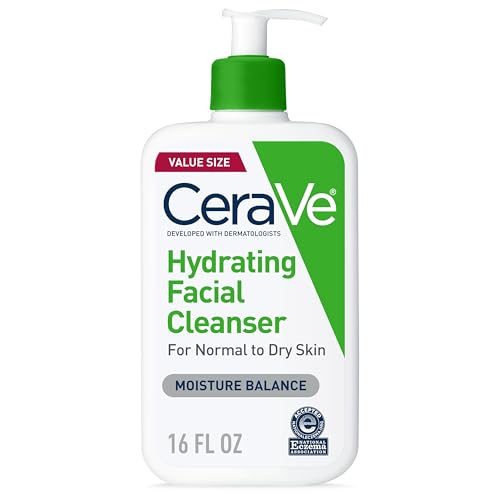
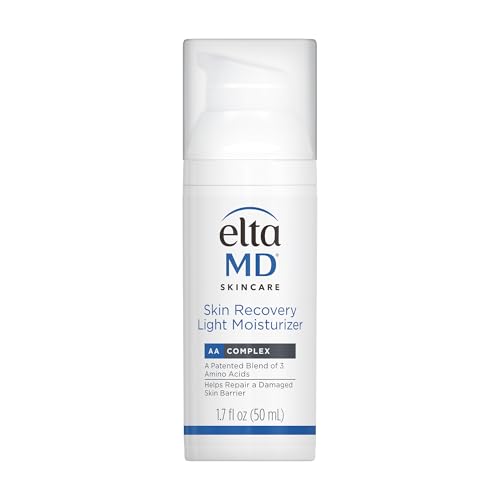
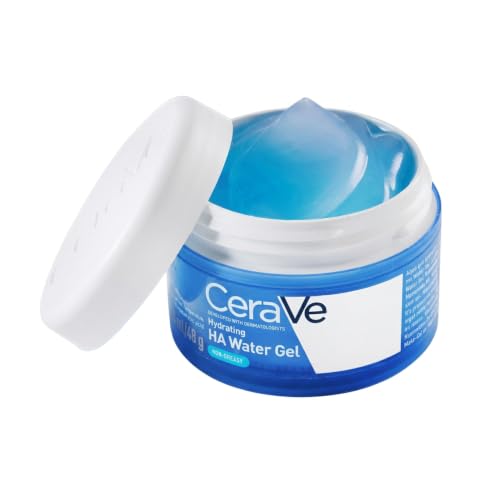
The products below fit that routine. They do not cure KP, but they support a calm, comfortable skin barrier.

Written by
Registered pharmacist and founder of Facial Adviser. Rakib's pharmacy training covers how skincare actives work and interact; a later course in cosmetology turned that into a focus on facial treatments and skincare products. He plans, researches and edits every guide on the site and checks health claims against sources such as the American Academy of Dermatology, the FDA and the NIH. He is not a dermatologist; see the Editorial Policy and Medical Disclaimer.
About · Editorial policy · How we choose products · Medical disclaimer · Contact
Keep reading: Body care and more
- 10 Best Body Tools for Skincare and Massage (2026): Smooth and Relax
- 10 Best Lip Glosses and Lip Oils (2026): Shiny, Comfortable Picks
- Is a Muscle Massage Gun Worth It? What the Evidence Says and Who Benefits
- Jeroboam Gozo Perfume: Notes, Wear and Who It Suits
- 10 Best Massage Chairs Under $2,000 (2026): Full-Body Picks for Home
- 10 Best Massage Chairs Under $500 (2026): Budget Recliners With Heat
Build a spa-like routine with ad-free music