Vegan vs Cruelty-Free Cosmetics: The Difference and the Logos
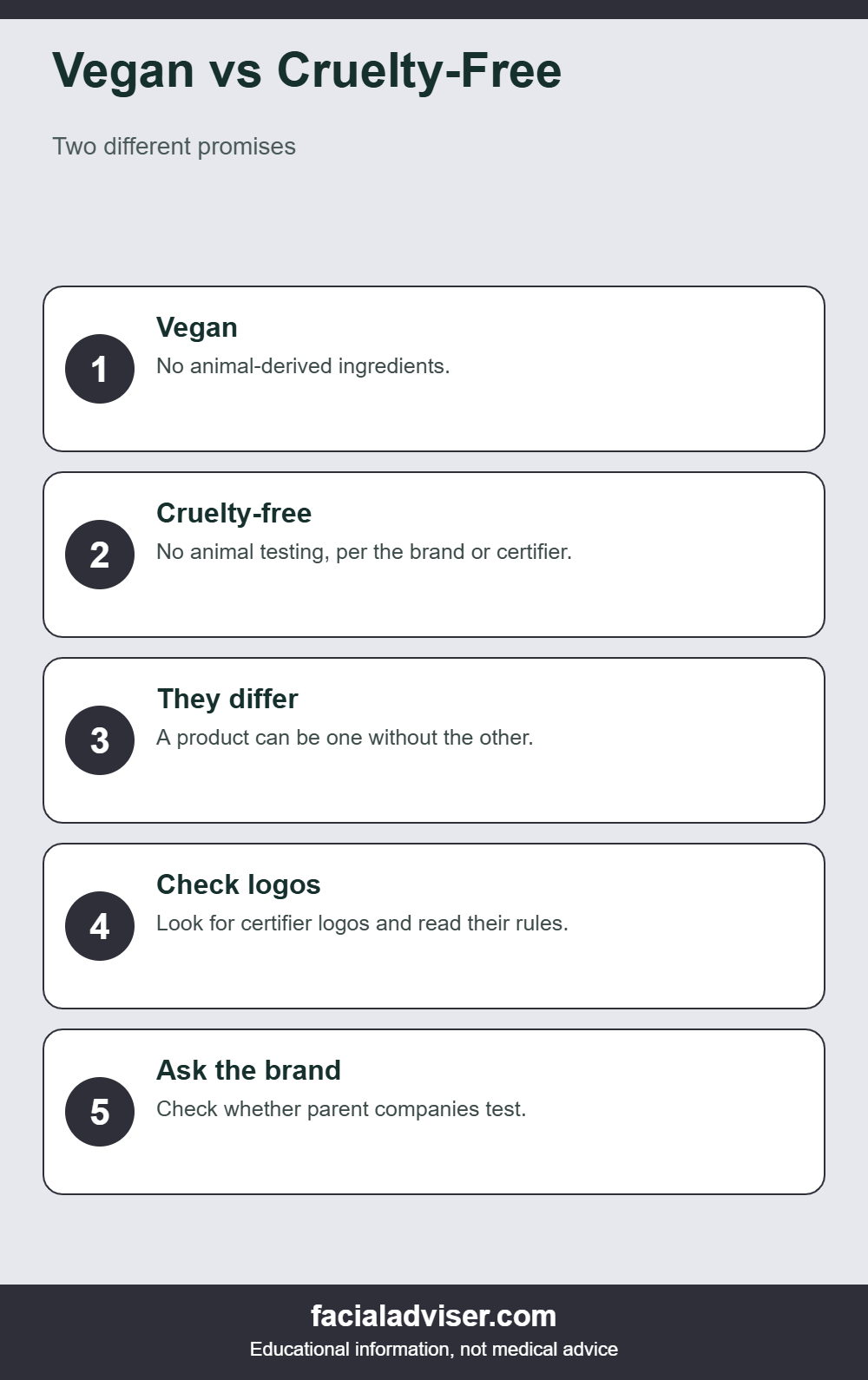
You see the words on the front of a jar: vegan, cruelty-free, plant-based, kind to animals. They sound like they mean the same thing, but they answer two different questions. Vegan describes what is in the product, while cruelty-free describes how it was tested.
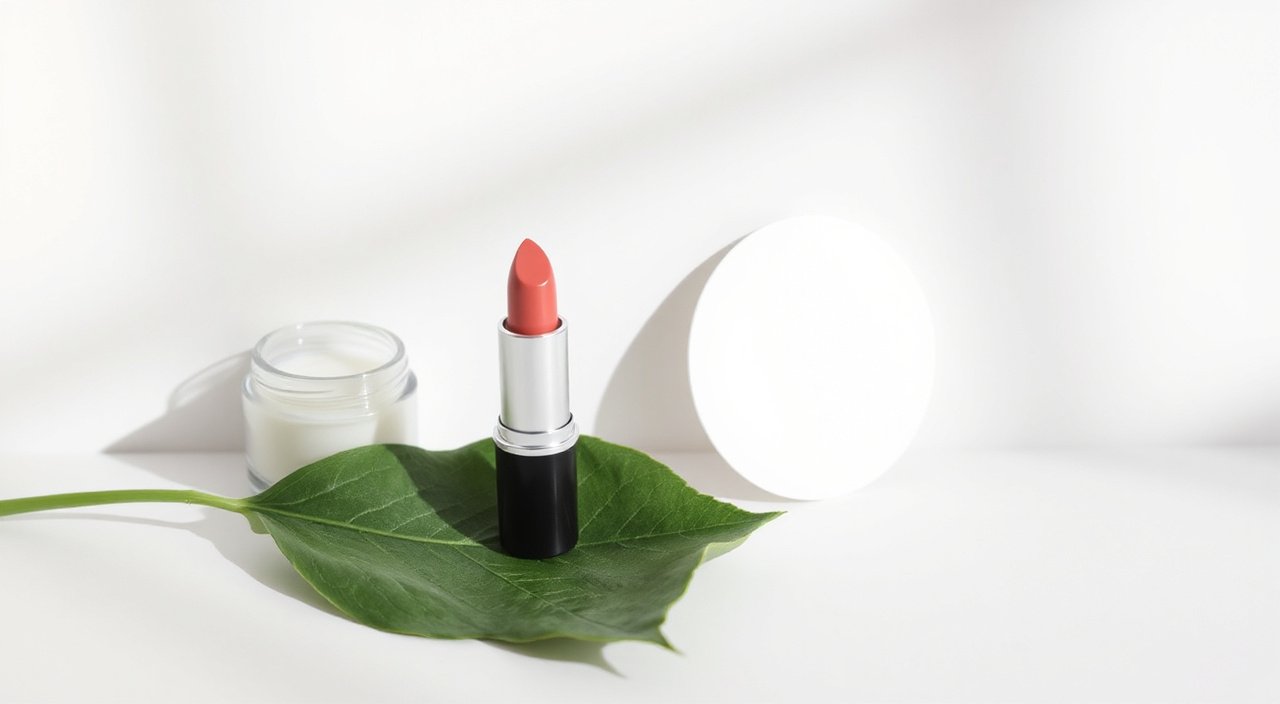
That difference matters when you shop. A lipstick can be free of animal ingredients yet still be tested on animals by the company or a parent brand. Another can come from a brand that does not test on animals but still uses beeswax, lanolin or carmine.
This is a labeling question, not a skin question, so the answer depends on what you personally want to avoid.
Black Friday is coming: shop the deals with Prime
Neither word is a safety claim, and neither means a product is better for your skin. They are values-based labels. Some are checked by outside groups, and some are simply a brand’s own statement on the packaging or website.
This guide explains each term in plain language, shows how the main logos differ, lists animal-derived ingredients worth knowing, and gives a short routine for checking a product before you buy. We are not claiming any product below carries a certification, so always confirm the claim on the brand’s own page.
I am Rakib Sarwar, a registered pharmacist with a cosmetology course. I read ingredient lists for a living, so I keep this practical and honest about what labels can and cannot tell you.
Vegan and Cruelty-Free Products to Explore




Contents
- What Vegan and Cruelty-Free Each Mean
- Why the Two Terms Get Mixed Up
- How to Read the Logos
- Common Animal-Derived Ingredients to Know
- Choosing What Matters to You
- A Simple Way to Check a Product
- Does Vegan or Cruelty-Free Mean Better for Skin?
- Honest Limits
- When to See a Professional
- Your Questions, Answered
- The Takeaway
Quick Answer
- Vegan is about ingredients, and cruelty-free is about animal testing.
- A product can be one without being the other.
- Logos from outside groups usually carry more weight than a bare claim.
- Beeswax, lanolin, carmine and honey are common animal-derived ingredients.
- Parent companies and markets can affect a brand’s testing policy.
- Neither label tells you whether a product suits your skin.
What Vegan and Cruelty-Free Each Mean
Vegan usually means a product contains no ingredients that come from animals. That covers obvious items such as honey, beeswax and milk proteins, and less obvious ones such as carmine, a red pigment made from insects, or lanolin, a wax from sheep wool.Another way to see it is by asking two questions. First, what is in the jar? Second, what happened before it reached the shelf? Vegan answers the first question, and cruelty-free answers the second.
Cruelty-free usually means the brand does not test the finished product or its ingredients on animals, and does not ask others to do it. Exact rules differ by certifier, and some brands simply state the policy themselves.There is no single legal definition of either word in many markets, so the claim is only as strong as the group or brand behind it. That is why the logo and the policy page matter more than the word itself.
| Label | What it usually describes | What it does not tell you |
|---|---|---|
| Vegan | No animal-derived ingredients | Whether animals were used in testing |
| Cruelty-free | No animal testing by the brand | Whether the formula contains animal ingredients |
| Vegan and cruelty-free | Both claims are made | Whether the claims are independently checked |
| Natural | A marketing word with no fixed meaning | Anything about ingredients or testing |
Why the Two Terms Get Mixed Up
Shoppers often treat them as one idea because both are about animals. Brands also place the two badges side by side, which makes them look like a single promise.
The mix-up has real consequences. Someone avoiding animal testing may buy a product with beeswax and be surprised. Someone avoiding animal ingredients may buy a vegan product from a company that still tests elsewhere.
Decide which concern matters to you most, and then check that one first. Many people care about both, and that is fine, but it means two checks rather than one.
A vegan claim is about the formula. A cruelty-free claim is about the company’s behavior. They are checked in different ways.
How to Read the Logos
Outside groups run programs that let brands show a logo. The Leaping Bunny program from Cruelty Free International is known for asking brands to commit to a fixed rule across their supply chain and to accept checks.
PETA’s Beauty Without Bunnies list is largely based on brand statements and has its own wording. The Vegan Society sunflower logo is aimed at vegan formulas.
When a brand lists several logos, read each one separately. A vegan logo does not confirm the testing policy, and a cruelty-free logo does not confirm the formula. Having both on one box simply means two separate programs reviewed the brand.
The details of each program change over time, so read the certifier’s own page for the current rules. Treat a logo as helpful evidence rather than proof, and remember that some honest brands skip certification because it costs money.
A bare bunny drawing with no named group is the weakest signal, because anyone can print a bunny on a box. Look for a named program, then search the brand name on that program’s website.
| Signal | How much weight to give it | What to do |
|---|---|---|
| Named certifier logo | Stronger, because a group reviews it | Search the brand on the certifier site |
| Brand’s own written policy | Moderate, depends on detail | Read the policy page and look for parent company notes |
| Unnamed bunny or leaf icon | Weak | Ignore it and check the ingredient list |
| Words only, such as kind or natural | Weakest | Look for a real claim elsewhere |
Common Animal-Derived Ingredients to Know
If you want a vegan product, the ingredient list is your best tool. Some names are easy to spot, and others are not.
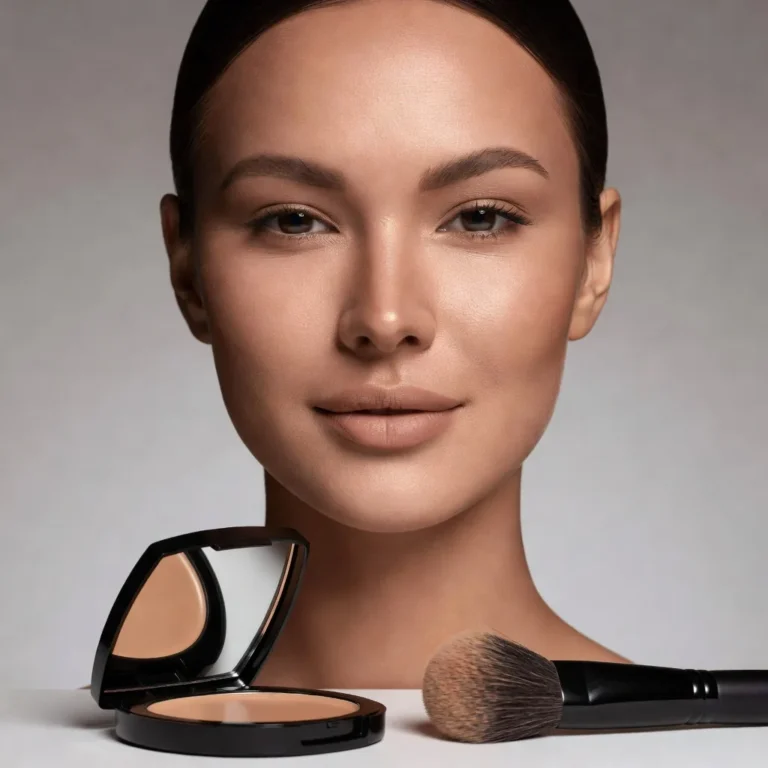
Makeup deserves extra attention because pigments and shimmer ingredients are common places for animal-derived items. Lipstick, blush, eyeshadow and nail products can contain carmine, guanine or beeswax, and mascara often uses beeswax for structure and hold.
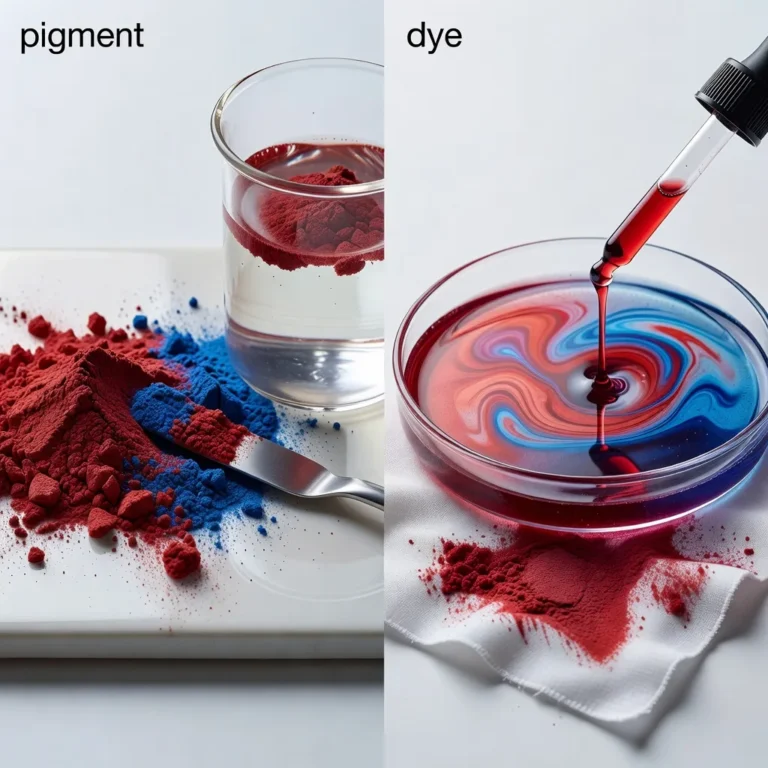
Beeswax and honey appear in lip balms and creams. Lanolin comes from sheep wool and is common in lip care. Carmine, also listed as CI 75470, is a red pigment from insects. Guanine can come from fish scales and gives a pearly shine.
Collagen and keratin are often animal-sourced, and tallow is rendered animal fat used in some soaps.
Some ingredients can go either way. Squalane may come from olives or sugarcane, and older versions came from shark liver. Glycerin and stearic acid can be plant or animal in origin. When the source matters to you, check the brand’s page or ask them.
Do not assume that a long chemical name is animal-based or that a plant-sounding name is vegan. The source is a separate fact from the name.
Search the ingredient list for beeswax, lanolin, carmine, CI 75470, honey, propolis, collagen, keratin and tallow before you buy.
Choosing What Matters to You
Your priorities decide which label to chase. Someone with a strict ethical stance on animal testing will care about the company and its parent. Someone avoiding animal ingredients for ethical, religious or personal reasons will care about the formula.
A practical middle path is to set a short list of must-haves. For example, you might require a named cruelty-free logo for makeup and accept a brand statement for basics such as moisturizer. Write down your rule so you do not have to rethink it at every purchase.
It also helps to know what you are willing to compromise on. A great sunscreen from a brand with unclear testing policy may matter more to you than a so-so vegan alternative, or it may not. That is your call.
Helps
- You want both claims and will check the logo
- You avoid animal ingredients and read lists
- You are comfortable with a brand’s written policy
Backfires
- You assume the word natural covers it
- You only look at the front of the box
- You rely on one unnamed icon
A Simple Way to Check a Product
You do not need a long process. A few minutes at the shelf or on the product page is enough for most purchases.
Doing this once for your favorite five brands covers most of what you buy. After that, you only need to check new brands or products from a company you have not looked at before.
Decide your priority
Choose whether the formula, the testing policy or both matter most to you.
Look for a named logo
Find a certifier logo and note which group it belongs to.
Search the certifier
Look up the brand on that group’s website to confirm it is listed.
Read the ingredient list
Scan for beeswax, lanolin, carmine, honey, collagen and tallow.
Check the parent company
See whether the brand belongs to a group that tests elsewhere.
Save your result
Keep a short list of brands you have checked so shopping gets faster.
Do not rely on a front-of-box icon alone. Formulas and testing policies change, so recheck when you reorder an old favorite.
Does Vegan or Cruelty-Free Mean Better for Skin?
No. These labels say nothing about whether a formula is gentle, effective or right for your skin type. A vegan cream can contain fragrance that irritates you, and a non-vegan balm can be an excellent fit.
Price does not tell you much either. Some vegan and cruelty-free products are inexpensive and others are premium, so judge the formula and the claims on their own merits.
What matters for skin is the ingredient list, how your skin reacts and whether the product suits your needs. If you are choosing for sensitive skin, patch test any new product on a small area first, whichever label it carries.
If you want to see how I compare products on skin-friendly features, the guides on lip balms and what non-comedogenic means cover related label questions.
Honest Limits
Brand policies, parent companies and market rules change, and I cannot verify any brand’s current status for you. The picks below are products with strong ratings that brands market as vegan or cruelty-free in their listings or on their websites. I have not confirmed any certification.
A product listing can also be incomplete or out of date. Treat the listing as a starting point and confirm the claim on the brand’s own site or the certifier’s page before you rely on it.
The same caution applies to words such as clean, natural and plant-based, which have no fixed meaning in cosmetics.
When to See a Professional
Labels about animals and ingredients are not medical advice. If a product causes burning, swelling, a rash or other strong reactions, stop using it and speak to a pharmacist or a doctor.
If you have a known allergy to an ingredient such as lanolin, honey or a fragrance, ask your clinician which ingredients to avoid and check lists carefully.
This article is educational and is not medical advice. Product claims come from public listings and may change.
Your Questions, Answered
What is the difference between vegan and cruelty-free?
Vegan describes the formula, meaning no animal-derived ingredients. Cruelty-free describes testing, meaning the brand does not test on animals. A product can be one without the other.
Is cruelty-free always vegan?
No. A cruelty-free product can contain beeswax, lanolin, carmine or honey. The two claims are separate.
Is vegan always cruelty-free?
No. A vegan formula can come from a company that tests on animals or whose parent company does.
Which logo is the most reliable?
Logos from named outside groups generally carry more weight than an unnamed icon. Check the certifier’s own page for its current rules.
Does cruelty-free mean safer for my skin?
No. It says nothing about irritation or allergy risk. Patch test new products either way.
Are natural and organic the same as vegan?
No. Natural and organic products can still contain beeswax, honey or other animal-derived ingredients.
Is lanolin vegan?
No. Lanolin is a wax from sheep wool, so it is not vegan.
Is carmine vegan?
No. Carmine, or CI 75470, is a red pigment made from insects.
What if a brand has a parent company that tests?
This is a personal call. Some shoppers avoid the whole group, and others focus on the brand itself. Read the brand’s policy for details.
Do I need to buy only certified products?
No. Certification costs money, and some honest brands skip it. A clear written policy can still be useful evidence.
The Takeaway
Vegan and cruelty-free are separate promises, so check the one you care about first and use named logos and ingredient lists to back it up.
Confirm every claim on the brand or certifier page, patch test new products and ask a pharmacist or doctor about reactions.

Written by
Registered pharmacist and founder of Facial Adviser. Rakib's pharmacy training covers how skincare actives work and interact; a later course in cosmetology turned that into a focus on facial treatments and skincare products. He plans, researches and edits every guide on the site and checks health claims against sources such as the American Academy of Dermatology, the FDA and the NIH. He is not a dermatologist; see the Editorial Policy and Medical Disclaimer.
About · Editorial policy · How we choose products · Medical disclaimer · Contact
Build a spa-like routine with ad-free music