Does Skincare Expire? PAO Symbols and Signs a Product Has Gone Off
Yes, skincare expires. Every product has a limited shelf life, and the shelf life changes once you open it, because air, light, fingers and bacteria start to affect the formula.
Part of our guide to skincare routines and ingredients. Start with: Best Skin Care Routine: Simple AM and PM Steps for Every Skin Type
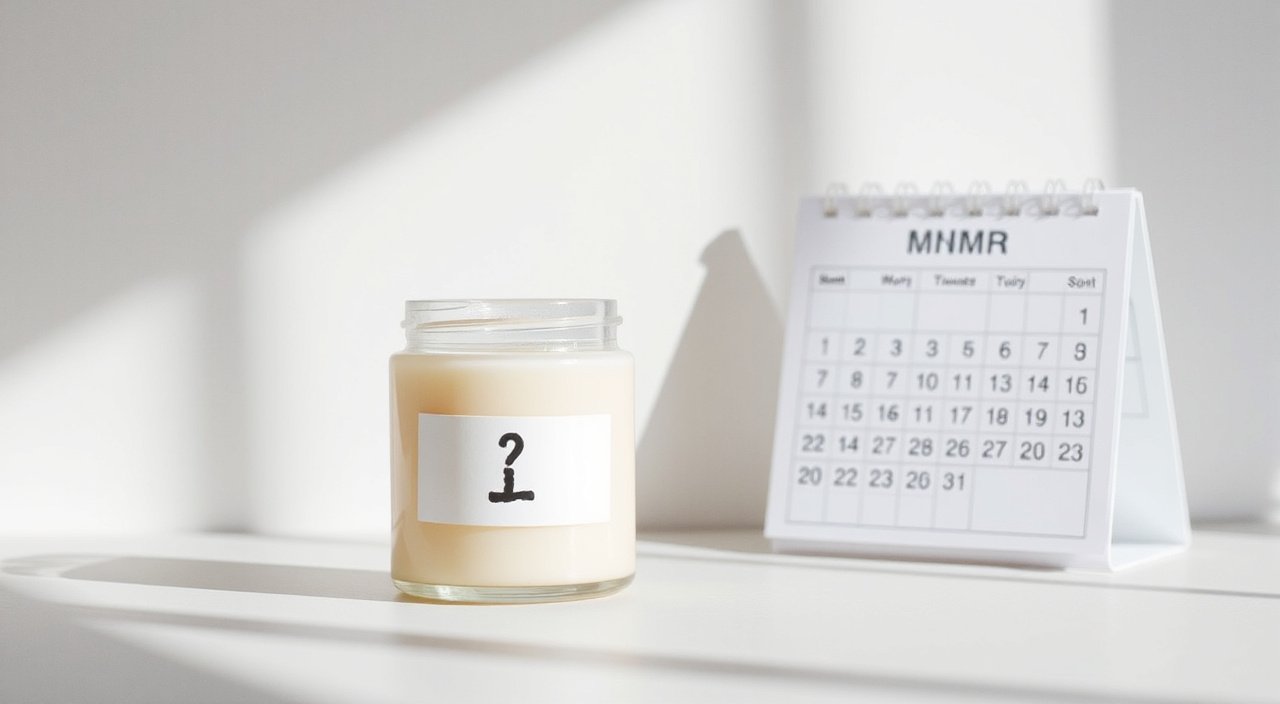
Most products carry a small open-jar symbol with a number and the letter M, such as 12M. This is the period after opening, or PAO, and it tells you roughly how many months the product stays good after you first open it.
Everyday Products to Check for Freshness

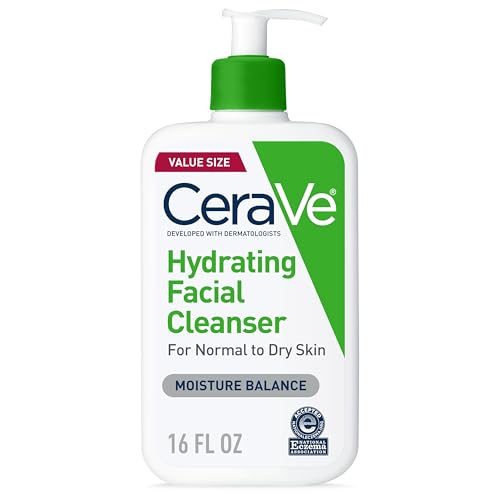


Black Friday is coming: shop the deals with Prime
Some products also carry an expiry date, printed as a date or a symbol with an hourglass. That date applies to an unopened product stored properly.
Using expired skincare is not always dangerous, but the product may work less well, smell odd or irritate the skin. Sunscreens, vitamin C serums and products near the eyes deserve the most attention.
Understanding shelf life also saves money, because you can buy sizes you will finish and stop keeping products that no longer work.
A quick check takes under a minute and can prevent weeks of irritation or breakouts.
Use this guide as a checklist the next time you tidy your shelf.
I am Rakib Sarwar, a registered pharmacist with a cosmetology course. In pharmacy, checking expiry dates is routine, and the same habit helps with skincare.
This guide explains how to read the symbols, how long common products last, how to spot spoilage and how to store products to keep them fresh longer.
At a Glance
- The open-jar symbol shows months of use after opening.
- Unopened products have a separate expiry date.
- Sunscreen, vitamin C and eye products need extra care.
- Changes in smell, color or texture are warning signs.
- Heat, light and air shorten shelf life.
- When in doubt, replace it.
In This Guide
What the PAO Symbol Means
PAO stands for period after opening. It appears as a small open jar with a number and an M, such as 6M, 12M or 24M. The number shows how many months the product is expected to remain stable and safe after opening.
You may also see a batch code, a short string of letters and numbers near the barcode or on the base of the tube. Brands can use this code to tell you when the product was made. Some websites let you enter the code, and customer service can often read it for you.
Some products show only an expiry date, because their shelf life is long enough that a PAO is not required. In many regions, products that last more than 30 months do not need a PAO symbol.
Keep the box if you can. The outer packaging often has the date and batch code, and you can photograph it when you open the product so that you can check it later.
Write the date you open each product on the label with a marker, or take a quick photo of the PAO symbol and add a note on your phone.
It starts the day you open the product, not the day you buy it. If you open a 12M serum in January, it should be replaced by the following January, even if it still looks fine.
The PAO is an estimate. It assumes the product is stored well and used with clean hands. Heat, sunlight and contamination can shorten it.
| Symbol | What it means | Example |
|---|---|---|
| Open jar with 12M | Use within 12 months of opening | Moisturizer |
| Hourglass or date | Expiry of the unopened product | Printed on the box |
| Batch code | Identifies production batch | Used to check age |
How Long Common Products Last
These are general ranges. Always follow the label if there is one.
The reason cleansers and toners last longer is that they are rinsed off or applied once, so they are less exposed to contamination. Jars are exposed more because your fingers touch the cream each time. Eye products are used near a sensitive area where bacteria can cause real problems, so a shorter life makes sense.
Natural or preservative-free products usually have a shorter life. If a product claims to be free of preservatives, check whether it is a waterless formula or whether it needs refrigeration. Many of these should be used within a few months.
Powder products, such as mineral powders and powder sunscreens, tend to last longer because they contain little or no water, which bacteria need to grow.
Skin devices and tools matter too. Brushes, sponges and applicators carry bacteria and should be cleaned regularly and replaced on schedule.
Water-based products with preservatives, such as cleansers and toners, usually last about 12 months after opening. Moisturizers in jars last about 6 to 12 months, and pump bottles often last longer because less air and fewer fingers get in.
Products with active ingredients that break down in light and air, such as vitamin C and retinol, may lose strength faster. Eye products and anything applied near the eyes are best replaced sooner.
| Product | Typical life after opening |
|---|---|
| Cleanser | 12 months |
| Moisturizer in a jar | 6 to 12 months |
| Moisturizer in a pump | 12 months |
| Vitamin C serum | 3 to 6 months |
| Retinol serum | 6 to 12 months |
| Sunscreen | Until the printed date, often 12 months |
| Eye products | 6 months |
| Face masks | 6 to 12 months |
Signs a Product Has Gone Off
Trust your senses. A change in smell, color or texture means the product has changed.
Some changes are harmless. A slight color change in a product with plant extracts may happen without making it unsafe. But if there is also a smell or a change in how it feels on the skin, it is wiser to replace it.
Oils can go rancid, giving a smell like old crayons or stale nuts. Rancid oils can irritate the skin and may produce free radicals, which is the opposite of what you want from an antioxidant product.
Creams that have separated can sometimes be shaken or stirred back together, but if they do not recombine properly, it is a sign the emulsion has failed. Discard them.
Look for separation, where oil and water divide and do not mix back when shaken. Look for clumps or grainy texture, a sour or rancid smell, darker color such as vitamin C turning brown, mold or small dark spots, and a watery or stringy feel.
If a product stings when it did not before, or if it causes redness or breakouts, it may have degraded or been contaminated. Stop using it.
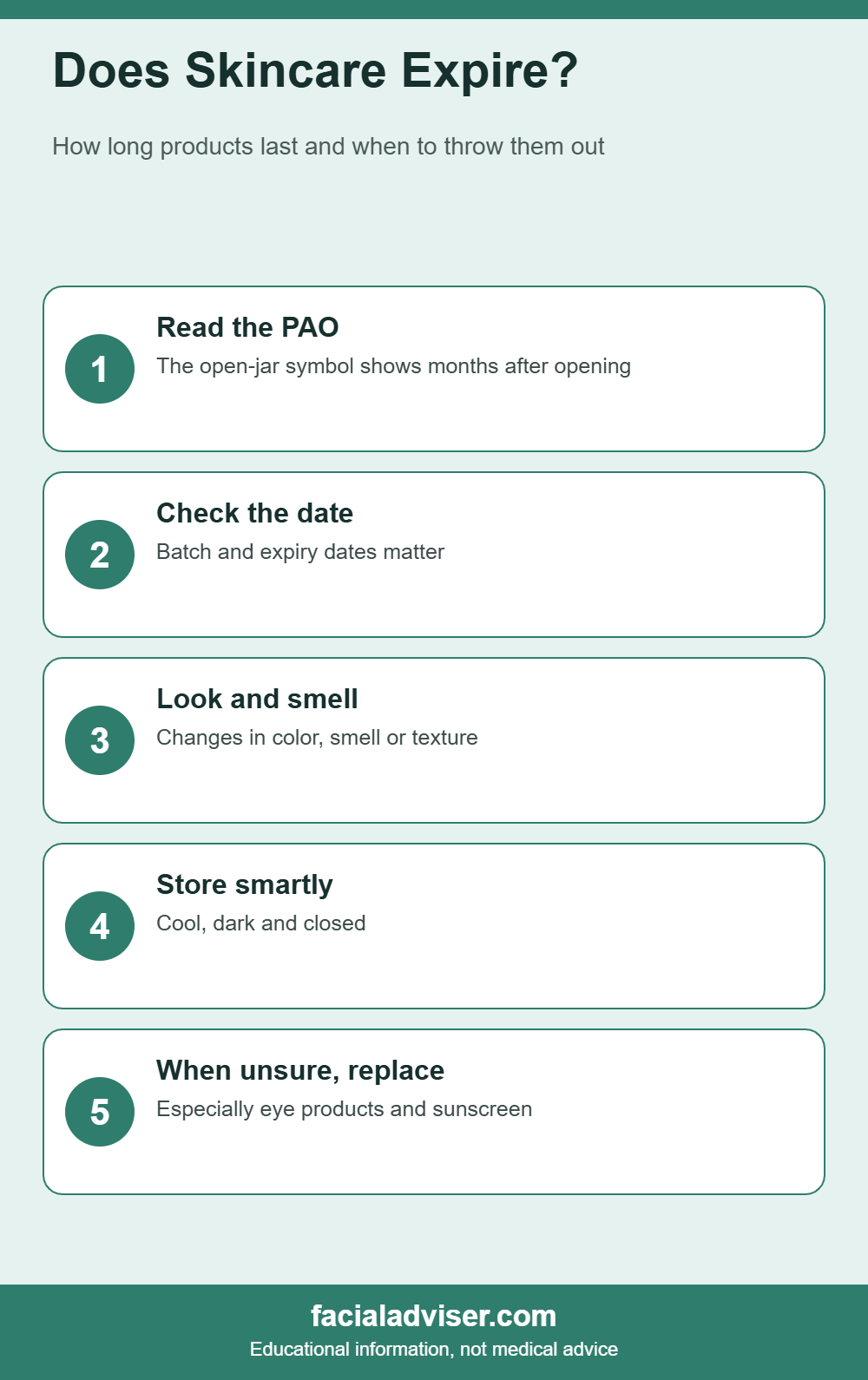
Check the date
Look for the PAO symbol and any printed expiry date.
Smell it
A sharp, sour or crayon-like smell suggests rancid oils.
Look at the color
Browning, darkening or separation is a warning sign.
Check the texture
Clumps, grit or a watery feel suggest it has changed.
Replace if unsure
Do not risk skin irritation or infection.
Do not use any product near the eyes that is past its date or has changed in smell or texture. Eye infections can be serious.
Sunscreen and Active Serums
Sunscreen needs special attention because it is protective. Expired sunscreen may not give the SPF on the label. In many places, sunscreen has to stay stable for at least three years, and bottles with no date should be treated as having about 12 months after opening.
If you use sunscreen only on holidays, you may find a half-empty bottle from last year. Check the date and the smell. If there is no date and the bottle has been open for more than a year, replace it, particularly if it was stored in a bag or car.
Sunscreen sticks and sprays follow the same rule. If a spray’s nozzle clogs or sputters, or if a stick crumbles, it may no longer apply evenly. Our guide to how much sunscreen to use explains how to apply it properly.
Vitamin C serums oxidize quickly. A serum that has turned orange or brown has lost much of its strength and may irritate. See our vitamin C serum guide for choosing stable formulas.
Retinol is sensitive to light and air. Choose opaque, airless pumps if you can, and store it away from sunlight. Our retinol serum guide covers products in suitable packaging.
How to Store Skincare
Store products in a cool, dark, dry place. A bathroom shelf that gets hot and steamy shortens the life of many products, so a bedroom drawer is often better.
Think about packaging when you buy. Opaque bottles, airless pumps and tubes keep light and air out better than clear glass droppers or open jars. For active serums, this can make a real difference to how long they last.
If you buy in bulk, keep spare unopened products in a drawer away from heat and light. Rotate older products to the front so that you use them first.
If a product has been through a heat wave in the post or in a delivery van, check for separation and smell when it arrives.
Close lids tightly after each use, and avoid dipping fingers into jars. Use a clean spatula or choose pump bottles when possible.
Do not leave sunscreen or serums in a hot car, because high temperatures can break down filters and actives.
| Habit | Why it helps |
|---|---|
| Cool, dark place | Slows breakdown |
| Close lids | Limits air and bacteria |
| Use a spatula for jars | Avoids contamination |
| Keep out of cars | Prevents heat damage |
Common Mistakes
The most common mistake is not noting when you opened a product. A permanent marker note on the bottom of a jar solves it.
Another mistake is mixing old and new products. Topping up a bottle or combining two half-used containers can introduce bacteria and mix different batches.
Some people also store products in the bathroom because it feels natural. Steam and temperature swings can shorten shelf life. A cool cupboard is usually better. If you want to try a skincare fridge, see our skincare fridge guide for what it can and cannot do.
Another is keeping products too long because they are expensive. A saved product that irritates your skin is not a saving.
Helps
- Mark the opening date
- Store products cool and dark
- Replace eye products on time
Backfires
- Use cracked or leaking products
- Share products
- Keep sunscreen in a hot car
Honest Limits
PAO times and shelf lives are estimates. Natural products with fewer preservatives may expire faster, and some products last longer than the label suggests if stored well.
Also keep in mind that the PAO assumes normal use. If a product has been left open, contaminated or exposed to heat, the real life can be much shorter than the label suggests.
Finally, a product past its date is not automatically harmful, but you take on risk for little benefit, particularly for products used near the eyes or on broken skin.
There is no single rule that fits every formula. When in doubt, ask the brand or a pharmacist.
When to See a Professional
See a pharmacist, doctor or dermatologist if you have a rash, swelling, eye irritation or an infection that may be linked to a skincare product.
This article is educational and is not medical advice. Product details come from public listings and may change.
Quick Tips
Write the opening date on every new product, and clear your shelf twice a year.
Do a shelf clear-out twice a year. Pick a date you will remember, such as when the clocks change, and check every product for the opening date, smell and texture. Replace anything doubtful, and donate unopened extras you will not use.
Pharmacists are happy to answer questions about shelf life. Bring the product with you if you can, because the packaging and batch code help us give a clearer answer.
If you rarely use a product, consider buying smaller sizes so it is finished before it expires.
FAQ
Does skincare expire?
Yes. Products have an unopened expiry date and a period after opening.
What does the open-jar symbol mean?
The number of months the product stays good after opening.
Is expired skincare dangerous?
It may be less effective or irritating, and some products can harbor bacteria.
How long does sunscreen last?
Until the printed date, or about a year after opening if there is none.
How can I tell vitamin C has gone off?
It turns orange or brown and may smell different.
Can I use a product after the PAO?
It is better not to, especially near the eyes.
Where should I store skincare?
In a cool, dark, dry place.
Do pumps last longer than jars?
Often yes, because less air and fewer fingers get in.
Does unopened skincare expire?
Yes, at the printed expiry date.
What if I have no date?
Mark the opening date and replace after 6 to 12 months.
Final Word
Check the PAO symbol, note the opening date and watch for changes in smell, color and texture.
Replace eye products and sunscreen on time, and ask a pharmacist, doctor or dermatologist if your skin reacts.

Written by
Registered pharmacist and founder of Facial Adviser. Rakib's pharmacy training covers how skincare actives work and interact; a later course in cosmetology turned that into a focus on facial treatments and skincare products. He plans, researches and edits every guide on the site and checks health claims against sources such as the American Academy of Dermatology, the FDA and the NIH. He is not a dermatologist; see the Editorial Policy and Medical Disclaimer.
About · Editorial policy · How we choose products · Medical disclaimer · Contact
Keep reading: Skincare routine basics
- Cyber Monday Skincare Deals 2026: Live Now, Dates and What to Buy
- Best Skincare Gift Sets in the UK: 7 Sets Worth Giving This Christmas
- Budget Skincare Routine UK: A Simple Routine With 7 Products
- Best Facial Skincare Tips: Evidence-Based Habits Dermatologists Recommend
- Best Skin Care Routine: Simple AM and PM Steps for Every Skin Type
Turn skincare time into me-time with a free audiobook