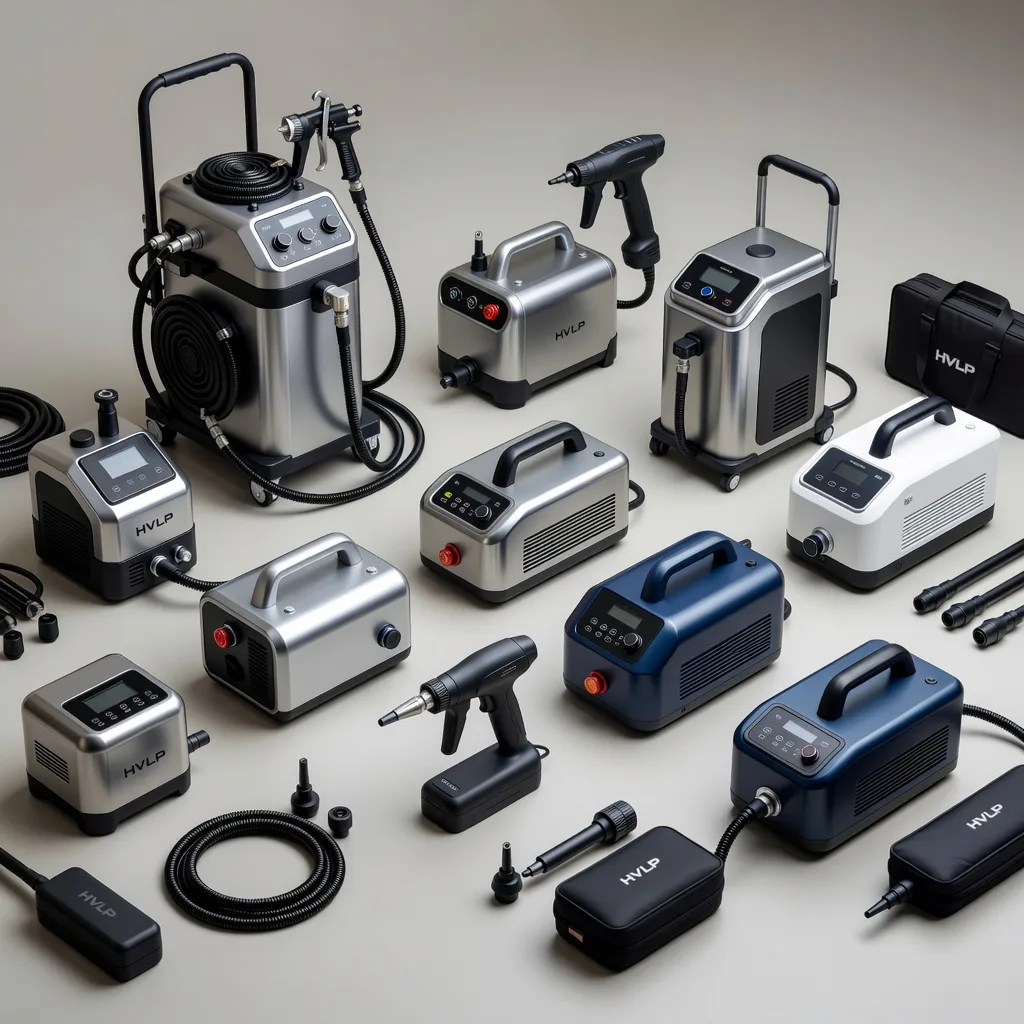
Best Professional Spray Tan Machine: HVLP Systems, Safety and Setup
A spray tan is only as good as the machine that delivers it. The same tanning solution can look smooth and natural from one system and streaky, wet or patchy from another, so the equipment choice matters as much as the solution for anyone doing tans professionally or at home.
Part of our guide to professional machines. Start with: Best Professional Oxygen Facial Machine: Features, Safety and Results
The best professional spray tan machine for most people is an HVLP (high volume, low pressure) turbine system with adjustable airflow, a gun that allows fine control over spray pattern and volume, a flexible hose long enough to move around the client, and parts that are easy to strip and clean. HVLP systems produce a soft, fine mist with little overspray, which gives an even finish and less waste than older compressor airbrush setups. Look for a quiet motor, a stable cup that will not leak, replacement parts that are easy to find and a machine sized for your work: lighter units for mobile tanning, sturdier ones for busy salons. Just as important, plan for ventilation and protection, because breathing in tanning mist is not recommended.
In short: choose an HVLP turbine with fine control and easy cleaning, and never treat ventilation and eye, lip and airway protection as optional.
The US Food and Drug Administration notes that dihydroxyacetone (DHA), the active tanning ingredient, is approved only for external use, and that its use as an all-over spray in tanning booths has not been approved, largely because it is hard to avoid the eyes, lips, mucous membranes and inhalation.
This guide explains how spray tan machines work, which features are worth paying attention to, how to set up and clean a system, and how to reduce exposure for both the client and the person spraying.
Buying for a salon, spa or clinic?
A free Amazon Business account gives you business-only pricing on eligible items, multi-user buying and tax-exemption tools.
Create a free Business accountAffiliate link: we may earn a commission at no extra cost to you.
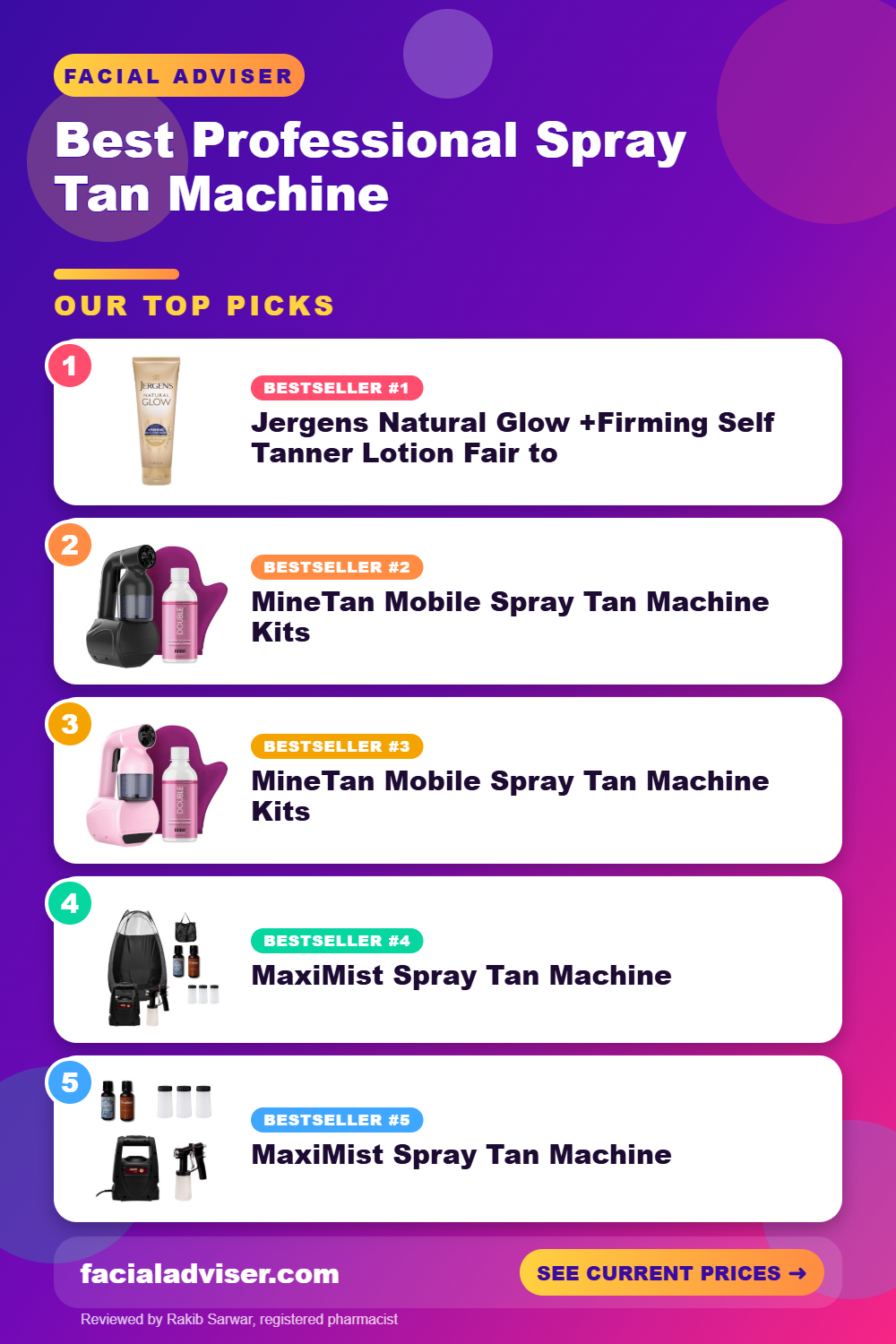
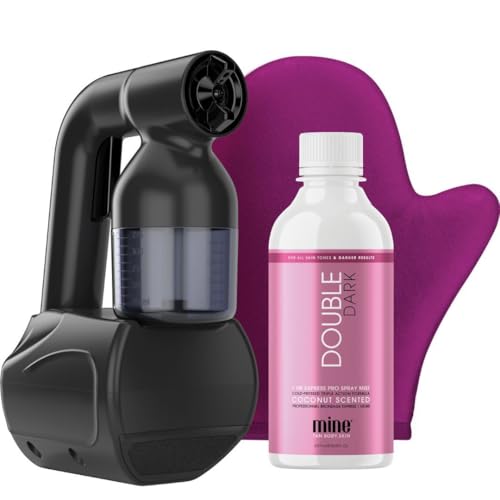
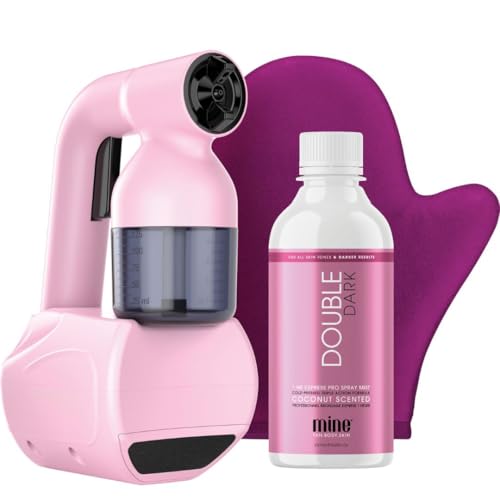
Recommended Professional Spray Tan Machines on Amazon



At a Glance
- HVLP turbine systems give a fine, even mist with less overspray than compressor airbrushes.
- Adjustable airflow and a controllable gun matter more than raw power.
- Easy cleaning and available spare parts keep a machine working well for years.
- DHA is approved for external use only; the FDA has not approved all-over spraying.
- Protect the eyes, lips and nose, and avoid breathing in the mist.
- Good ventilation or an extraction unit protects the person spraying as well as the client.
- A spray tan gives colour, not sun protection, so sunscreen is still needed.
What This Covers
- How Spray Tan Machines Work: HVLP vs Airbrush
- Features to Compare Before You Buy
- Is Spraying DHA Safe? What the FDA Says
- Ventilation and Protection in the Tanning Area
- How to Set Up and Use a Spray Tan Machine
- Cleaning and Maintenance
- Choosing a Machine for Salon, Mobile or Home Use
- Client Prep and Aftercare Advice
- Dos and Don’ts
- Honest Limits
- When to See a Dermatologist
- Frequently Asked Questions
- The Bottom Line
How Spray Tan Machines Work: HVLP vs Airbrush
All spray tan machines turn liquid tanning solution into a mist and push it onto the skin, but they do it in different ways. The two main designs are HVLP turbine systems and compressor-driven airbrush systems.
| Feature | HVLP turbine system | Compressor airbrush system |
|---|---|---|
| How it works | A turbine blows a large volume of warm, low-pressure air through the gun | A compressor forces air at higher pressure through a small nozzle |
| Mist quality | Soft, wide mist with less bounce-back | Very fine, precise spray |
| Overspray | Lower | Higher, more mist in the air |
| Speed | Faster for full-body tans | Slower, better for detail |
| Noise | Moderate, varies by model | Often quieter at low settings |
| Learning curve | Easier for beginners | Needs more practice to avoid streaks |
| Best for | Salons, mobile tanning, most home users | Contouring and small detailed areas |
For most professional and serious home use, an HVLP system is the practical choice because it covers large areas evenly and creates less airborne mist. Airbrush systems still have a place for fine detail work, but they tend to put more mist into the air, which makes ventilation even more important.
Features to Compare Before You Buy
Once you know you want an HVLP system, the differences between machines come down to control, comfort and upkeep rather than headline power.
| Feature | Why it matters | What to look for |
|---|---|---|
| Adjustable airflow | Lets you soften the spray for the face and increase it for the body | A dial or several speed settings |
| Gun control | Changes spray width and solution volume | A fluid control knob and a comfortable, light gun |
| Hose length | Lets you move around the client without dragging the unit | Long, flexible, kink-resistant hose |
| Cup size and seal | Prevents leaks and constant refilling | Secure lid, clear markings, spare cups |
| Noise level | Affects client comfort and your hearing over a working day | Quieter turbines, ideally tried in person |
| Weight and portability | Key for mobile tanning | Lighter unit with a carry case |
| Spare parts | Nozzles and seals wear out | Parts and service easy to source |
A machine with fewer settings that you can control precisely is usually more useful than one with lots of power you cannot tame. If possible, read the manual before buying to see how easy it is to strip down the gun, because a gun that is hard to clean will clog and spit.
Is Spraying DHA Safe? What the FDA Says
DHA is the ingredient in almost all sunless tanners. It reacts with proteins in the outer layer of the skin to produce a brown colour that fades as the skin naturally sheds. Applied to the skin surface, it is widely used.
The concern with spraying is exposure beyond the skin. The FDA page on sunless tanners and bronzers explains that DHA is approved only for external application and that all-over spraying in booths has not been approved, because it can be difficult to avoid the eyes, lips, mucous membranes and breathing in or swallowing the product. The agency also reports receiving consumer complaints linked to spray tanning, such as coughing and dizziness.
Do not spray the face with the eyes or mouth open. Offer eye protection, lip balm and nose filters, ask the client to hold their breath or turn away while the face is sprayed, and stop if anyone coughs, wheezes or feels dizzy. People with asthma or breathing problems should be especially careful and may prefer a lotion or mousse instead.
Ventilation and Protection in the Tanning Area
The person spraying breathes in more mist over a day than any single client, so protection is not only for the person being tanned.
- Work in a well-ventilated room, ideally with an extraction unit or pop-up booth fitted with a fan and filter.
- Keep the spray at the recommended distance and at a low airflow setting to limit bounce-back.
- Consider a suitable mask for the operator during long sessions.
- Offer the client eye protection, nose filters and lip balm.
- Keep doors closed to other rooms and clean surfaces afterwards so dried residue is not stirred up.
An extraction unit reduces airborne mist but does not remove it entirely. It is one layer of protection, alongside low airflow, good technique and protecting the eyes, lips and nose.
How to Set Up and Use a Spray Tan Machine
These steps suit most HVLP systems. Always follow the manufacturer’s manual for your model.
Set up the area
Place the machine on a stable surface outside the spray zone, run the extraction unit and lay down floor protection.
Check the gun and cup
Make sure the nozzle, seals and cup are clean and tightly fitted before adding solution.
Test the spray
Spray onto paper or a towel to check the pattern and adjust airflow and fluid control.
Prepare the client
Offer eye protection, nose filters and lip balm, and apply barrier cream to palms, nails and dry areas.
Spray in sections
Hold the gun upright at the recommended distance and use smooth, overlapping passes from top to bottom.
Go light on the face
Lower the airflow and ask the client to close their eyes and mouth and hold their breath briefly.
Dry and clean
Let the client dry with the turbine air or a fan, then flush the gun with water or the recommended cleaner.
Practise on a mannequin, a patient friend or even a large sheet of paper before tanning paying clients. Consistent distance and speed matter more than the machine itself for an even result.
Cleaning and Maintenance
Most problems with spray tan machines, such as spitting, dripping or an uneven pattern, come from dried solution in the gun.
- Flush the gun with warm water after every session until it sprays clear.
- Strip down and clean the nozzle and needle regularly, following the manual.
- Replace worn seals and nozzles before they cause leaks.
- Clean or replace the turbine air filter so the motor does not overheat.
- Store the hose loosely coiled and the unit somewhere dry.
Regular cleaning also matters for hygiene, because solution left in the cup or gun can spoil and contaminate the next tan. Keep a simple log of when you last replaced seals, nozzles and filters, especially if you tan several clients a day. Small parts are cheap to swap compared with a turbine that burns out from a blocked filter, and a well-maintained gun gives a more consistent mist from the first client to the last.
Choosing a Machine for Salon, Mobile or Home Use
Where and how often you tan decides which trade-offs make sense.
- Busy salon: prioritise a durable turbine, a quiet motor, spare guns and a proper extraction booth.
- Mobile tanning: look for a light unit with a carry case, long hose and quick set-up and pack-down.
- Home use: a simpler HVLP unit is enough, but ventilation and protection still apply.
- Detail or contour work: a separate airbrush can complement the main system.
If you are just starting out, a mid-range HVLP unit with good support is often a better investment than the most powerful machine, because control and reliability matter more than speed.
Client Prep and Aftercare Advice
A great machine cannot fix poor preparation. The AAD’s advice on how to apply self-tanner recommends exfoliating first and applying to dry skin, and the same principles help spray tans develop evenly.
- Exfoliate gently the day before and avoid shaving or waxing just before the appointment.
- Arrive with clean, dry skin and no moisturiser, deodorant or makeup.
- Wear loose, dark clothing afterwards.
- Avoid sweating, swimming and showering for the time recommended by the solution maker.
- Moisturise daily afterwards to help the colour fade evenly.
Clients who wear foundation may need to adjust their shade while their tan lasts; our guide on how to recolour makeup to match a tan explains simple ways to do this.
Dos and Don’ts
Try This
- Choose an HVLP system with fine control
- Ventilate the room and use extraction
- Protect eyes, lips and nose
- Clean the gun after every session
- Patch test new solutions on clients
Avoid This
- Spray the face with eyes or mouth open
- Tan in a small room with no airflow
- Use high airflow on the face
- Leave solution sitting in the gun
- Tell clients a tan protects from the sun
Honest Limits
No machine can guarantee a perfect tan. Skin preparation, solution choice, skin type and technique all affect the result, and even an expensive system will streak in inexperienced hands. Colour also fades as skin sheds, usually within about a week, whatever machine you use.
Spray tanning is a cosmetic choice with some exposure risks that equipment can reduce but not remove. A spray tan also provides no meaningful sun protection, so clients still need sunscreen; our guide to the best sunscreen for sensitive facial skin can help. If spraying is not suitable, a lotion or mousse self-tanner avoids most inhalation concerns.
When to See a Dermatologist
- A rash, itching or swelling after a spray tan.
- Breathing problems, coughing or wheezing after tanning sessions.
- Eye irritation that does not settle after rinsing.
- Skin conditions such as eczema or psoriasis that flare with tanning products.
- A mole or spot that changes shape, colour or size, which a tan can make harder to notice.
This article is for general information and does not replace professional medical advice. See a board-certified dermatologist or your doctor for skin reactions, breathing problems or any changing spot.
Frequently Asked Questions
What type of spray tan machine do professionals use?
Most use HVLP turbine systems for an even, fine mist.
Is HVLP better than airbrush for spray tanning?
For full-body tans, usually yes; it gives less overspray and faster coverage.
Is it safe to breathe in spray tan mist?
It should be avoided; the FDA notes inhaling DHA is not an approved use.
Do I need an extraction unit?
It is strongly recommended for regular spraying, alongside good ventilation.
How often should I clean the gun?
Flush it after every session and strip it down regularly.
Why does my spray tan gun spit?
Usually dried solution in the nozzle or a worn seal.
Can I use a spray tan machine at home?
Yes, with ventilation, protection and practice.
Does a spray tan protect from sunburn?
No, you still need sunscreen.
How long does a spray tan last?
Usually around five to ten days, depending on skin and aftercare.
Should people with asthma get spray tans?
They should ask their doctor; a lotion self-tanner may be a safer option.
The Bottom Line
The best professional spray tan machine is an HVLP turbine system with adjustable airflow, a controllable gun, a practical hose and parts that are easy to clean and replace. Choose based on where you work and how often you tan, not on power alone.
Pair any machine with good ventilation, eye, lip and nose protection and careful technique, because the FDA has not approved DHA for all-over spraying. For skin reactions or breathing problems, stop and speak to a dermatologist or doctor.

Written by
Registered pharmacist and founder of Facial Adviser. Rakib's pharmacy training covers how skincare actives work and interact; a later course in cosmetology turned that into a focus on facial treatments and skincare products. He plans, researches and edits every guide on the site and checks health claims against sources such as the American Academy of Dermatology, the FDA and the NIH. He is not a dermatologist; see the Editorial Policy and Medical Disclaimer.
About · Editorial policy · How we choose products · Medical disclaimer · Contact