
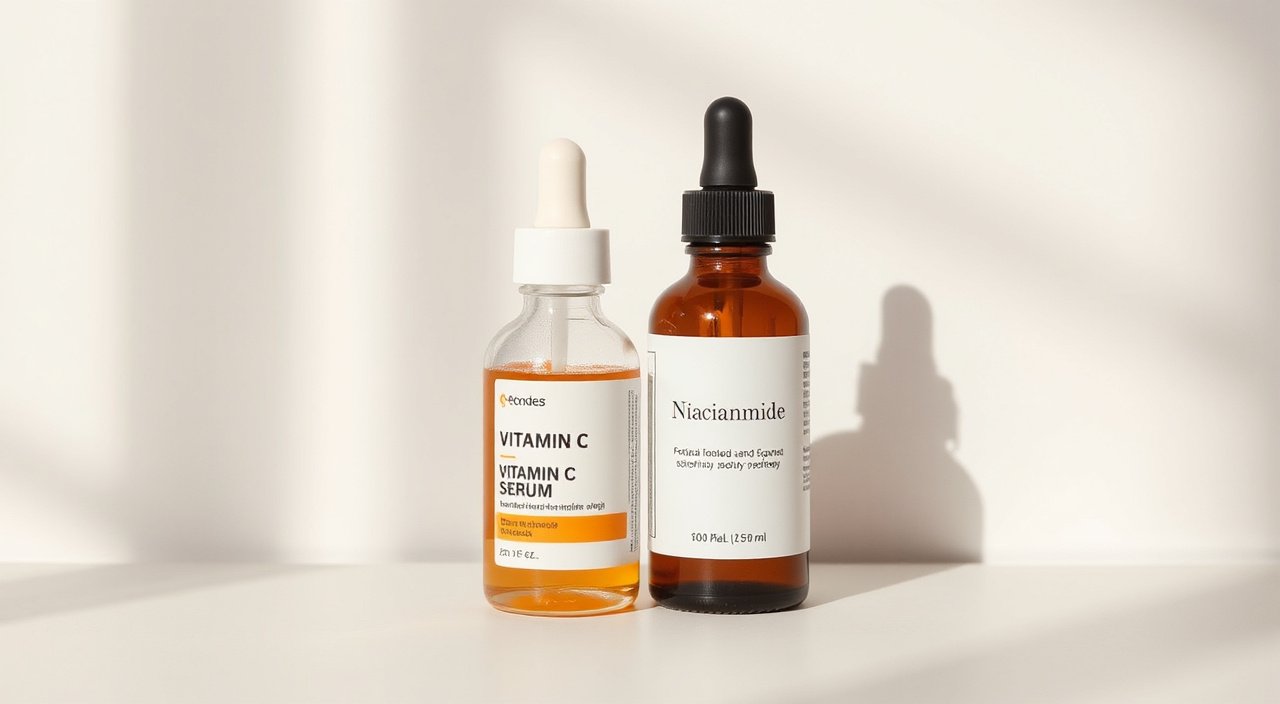
Can You Use Niacinamide and Vitamin C Together?
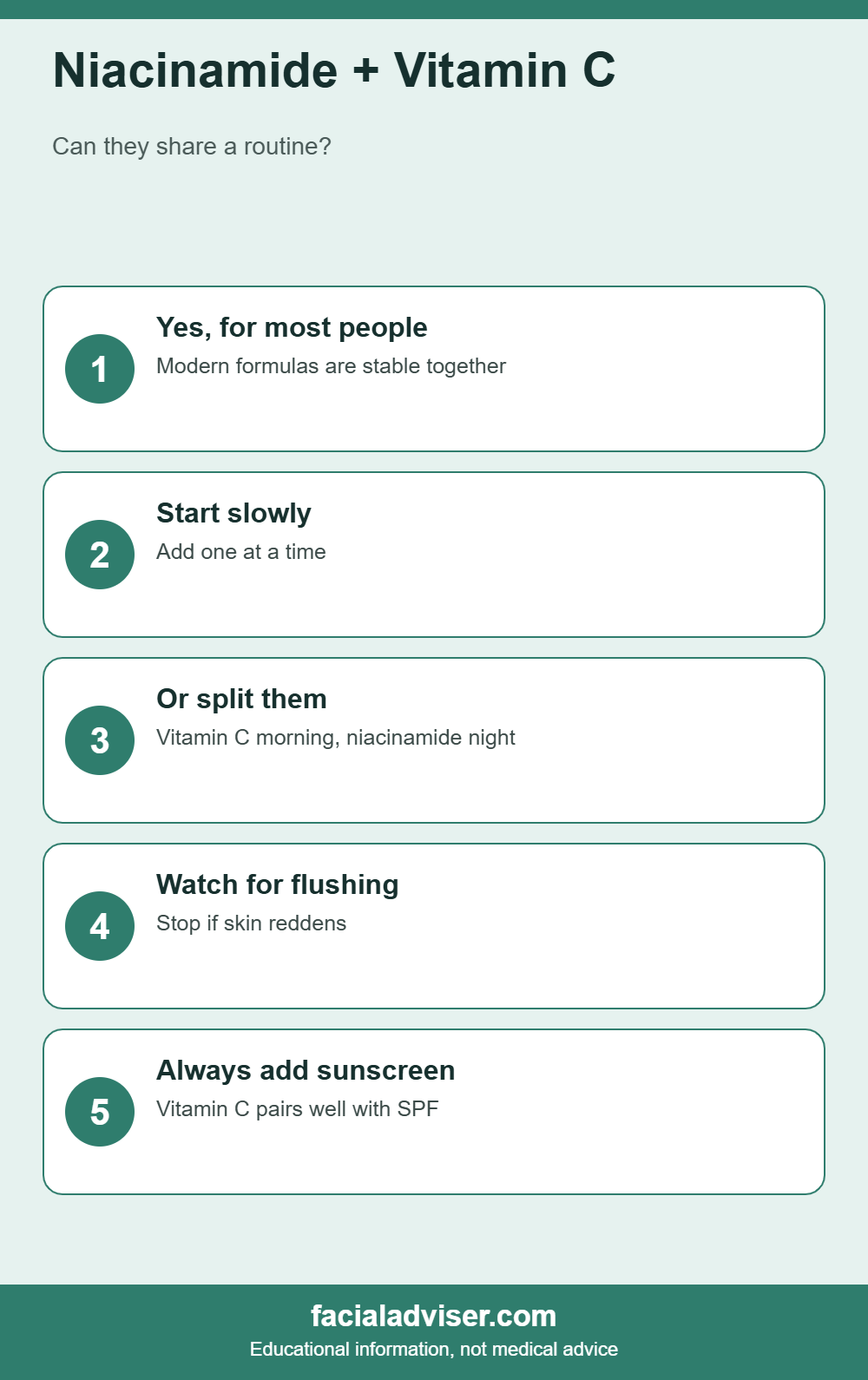
For most people, yes: niacinamide and vitamin C can be used together. The old warning that they cancel each other out or cause flushing comes from early studies using very high temperatures and unstable forms, and it does not reflect how modern skincare is made.
Both ingredients are popular. Vitamin C is an antioxidant that can help with dullness, uneven tone and sun damage. Niacinamide, a form of vitamin B3, supports the skin barrier and can help with oil balance and the look of pores.
Serums to Consider for This Pairing




Black Friday is coming: shop the deals with Prime
Used together, they can complement each other, but that does not mean you should add both tomorrow. Skin can react to either, and starting slowly is wise.
This guide explains where the myth came from, how to layer the two, when it makes sense to separate them and who should be more careful.
The answer depends partly on your skin and partly on the products you choose, so we cover tolerance, strength and format as well as the science.
You will find a plain explanation of the myth, a step-by-step layering guide and a short list of example serums at the end.
I am Rakib Sarwar, a registered pharmacist with a cosmetology course, and I prefer introducing one active at a time.
If you have sensitive skin, rosacea, eczema or are on prescription skin treatments, check with a doctor or pharmacist before adding new actives.
What to Know First
- Most people can use niacinamide and vitamin C together.
- The cancel-out myth is based on old, unrealistic conditions.
- Add one product at a time and patch test.
- You can layer them or use them at different times of day.
- Always use sunscreen in the morning.
- Stop if you get redness, stinging or flushing.
In This Guide
Where the Myth Came From
The idea that niacinamide and vitamin C cannot be used together goes back to a study from the 1960s. In that research, the two were mixed and heated to high temperatures for a long time, and they formed a compound called niacin, which can cause temporary flushing.
The flushing described in that early research was linked to niacin, a different compound from niacinamide. Niacin can cause a warm, red flush when taken in high doses by mouth. Niacinamide does not normally do this, and the amount formed in a modern skincare product is very small.
Another point is that formulation has improved. Stable vitamin C derivatives, buffered pH and airless packaging all help keep products consistent. Brands also test their products for compatibility, and many sell serums combining both ingredients.
That said, the lack of a chemical problem does not guarantee your skin will like the combination. Irritation can come from the strength, from fragrance or from other ingredients in the product, not from the pairing itself.
Modern skincare is not made or used that way. Products are formulated at a stable pH, are stored at normal temperatures and are applied for a short time.
Many products now contain both ingredients in one bottle, and there is little evidence that normal use causes problems for most people.
What Each Ingredient Does
Vitamin C, usually listed as ascorbic acid or a derivative, is an antioxidant. It may help brighten skin, soften the look of uneven tone and protect against environmental stress. It does not replace sunscreen.
Strength and pH matter more than the headline percentage. A lower-strength product used regularly is often better tolerated and just as useful as a stronger one used rarely.
Look at the packaging as well. Opaque, airless pumps protect vitamin C from light and air, and they keep it stable for longer than clear dropper bottles.
Not all vitamin C products are the same. L-ascorbic acid is the most studied form but can be unstable and tingly. Derivatives, such as ascorbyl glucoside and magnesium ascorbyl phosphate, are gentler and more stable, but may be less potent.
Niacinamide is also different from nicotinic acid, which can cause flushing. If a product is clearly labeled niacinamide, it is the usual well-tolerated form.
Both ingredients work best when used consistently over weeks. Skipping days or switching products frequently makes it hard to judge results.
Niacinamide is a form of vitamin B3. It supports the skin barrier, may reduce redness and the look of pores, and can help with oil balance. It is generally well tolerated, though some people flush at high strengths.
| Ingredient | Main role | Common strength |
|---|---|---|
| Vitamin C (L-ascorbic acid) | Antioxidant, brightening | 5 to 15 percent |
| Niacinamide | Barrier support, oil balance | 2 to 10 percent |
Can You Layer Them?
Yes, for most people. Apply the thinner product first. Many people put vitamin C on first, wait a minute, then apply niacinamide, followed by moisturizer and sunscreen.
If you are using a combined product, treat it as one active. Start with two or three uses a week, then increase if your skin feels comfortable. You do not need to add another vitamin C or niacinamide product on top.
Texture matters when layering. A watery vitamin C followed by a light niacinamide serum usually works fine. If one is thick or oily, apply it after the thinner one and before moisturizer.
Give the first product a minute, but do not wait too long. Waiting several minutes is not required, and rushing can cause pilling, which usually means too much product.
If your skin tingles with vitamin C at first, that can be normal for L-ascorbic acid, but it should fade within a minute. Persistent stinging means the strength or the formula does not suit you.
If your vitamin C is an acidic L-ascorbic acid serum, it works best at a low pH. Waiting a minute before the next layer lets it settle.
There is no strict rule. If a layered routine feels fine on your skin, it is fine.
Cleanse
Use a gentle cleanser and pat dry.
Apply vitamin C
Use a few drops on clean skin.
Wait a minute
Let it settle.
Apply niacinamide
A few drops over the top.
Moisturize and apply sunscreen
Finish your routine.
If layering feels sticky or pills, use one in the morning and the other at night.
When to Separate Them
Some people prefer to use vitamin C in the morning and niacinamide at night, or the other way around. This can reduce the number of products on the skin at once and make it easier to tell what is working.
There is also a practical argument for separating them: simplicity. Using one active per time of day makes it easier to spot problems, and it keeps your routine short. If you find you are spending ten minutes layering, a split routine may suit you better.
Cost can matter too. High-strength serums are expensive, and you may prefer to use a vitamin C serum only in the morning, where sun protection benefits are highest, and a cheaper niacinamide at night.
Whatever you choose, keep the rest of the routine steady. Changing cleanser, moisturizer and actives all at once makes results impossible to interpret.
Separating is a good idea if your skin is sensitive, if you have just started either ingredient or if you notice flushing or stinging when you layer them.
| Situation | Suggestion |
|---|---|
| Sensitive skin | Use at different times |
| New to both | Introduce one at a time |
| Flushing when layered | Separate or reduce strength |
| Normal tolerance | Layering is fine |
Our vitamin C serum guide and niacinamide guide go deeper on each ingredient.
A Simple Routine
Morning: cleanse, vitamin C, niacinamide if you like, moisturizer and sunscreen. Night: cleanse, niacinamide or a treatment, and moisturizer.
Remember that rest days are fine. Skipping actives one or two days a week gives the barrier time to recover and often improves tolerance.
For oily or acne-prone skin, a lightweight moisturizer in the morning is usually enough. For dry skin, use a richer cream at night. Sunscreen should always be the last step in the morning.
If you wear makeup, wait a few minutes after sunscreen before applying it.
On days your skin feels irritated, drop back to a gentle cleanser, moisturizer and sunscreen. Actives can wait until your skin feels normal again.
If you want a simple plan, try vitamin C in the morning for two weeks, then add niacinamide at night for two more, and only then consider using both at the same time.
If you use retinol or exfoliating acids at night, keep them on separate nights from other strong actives. See our skincare order guide for a clear layering order.
| Time | Step |
|---|---|
| Morning | Cleanse, vitamin C, moisturizer, sunscreen |
| Night | Cleanse, niacinamide, moisturizer |
| Treatment nights | Retinol or acid, moisturizer |
Who Should Be Careful
People with sensitive or reactive skin, rosacea, eczema or a damaged barrier should introduce each ingredient slowly. Start with a lower strength and use it a few times a week.
People who are prone to dark marks after irritation should be especially careful. Stinging and redness can sometimes lead to pigment changes, so go slowly.
Pregnant and breastfeeding people can usually use both ingredients, but should check with a doctor or pharmacist, especially if combining several actives.
If you have a history of allergic contact dermatitis, patch test any new product on the inner arm or behind the ear for several days before applying it to the face.
Very high strengths are not necessarily better. Ten percent niacinamide and fifteen percent vitamin C can be too much for some people.
Stop using a product if it causes burning, swelling, a spreading rash or hives. Speak to a pharmacist or doctor if symptoms persist.
Common Mistakes
The biggest mistake is starting both at once at high strength. If a reaction occurs, you cannot tell which product caused it.
Finally, do not judge the pairing after a couple of days. Give it two to four weeks, take photos in consistent light and decide based on how your skin looks and feels over time, not on one tingle.
Another mistake is mixing the products in your palm in large amounts and applying the mixture, which can dilute them and make the texture unpredictable. Layer small amounts instead.
People also keep vitamin C open for too long. Once it turns dark orange or brown it has oxidized and may irritate. Our guide to skincare expiry explains how to check.
Another is skipping sunscreen. Vitamin C does not replace it, and brightening effects are limited if you do not protect your skin from the sun.
Helps
- Introduce one at a time
- Patch test
- Use sunscreen daily
Backfires
- Start both at maximum strength
- Layer with strong acids at once
- Skip sunscreen
Honest Limits
Studies on topical vitamin C and niacinamide are generally small, and results depend on strength, stability and how long you use them. Expect gradual changes over weeks to months, not days.
Brightening claims are often modest. Vitamin C and niacinamide may soften the look of dark spots and uneven tone over weeks, but they do not remove deep pigmentation or melasma. A doctor or dermatologist can suggest stronger options.
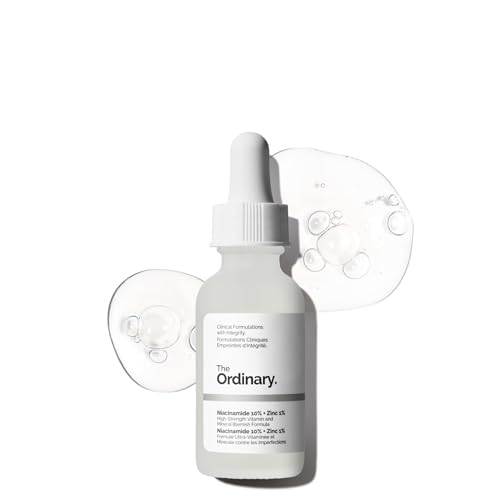
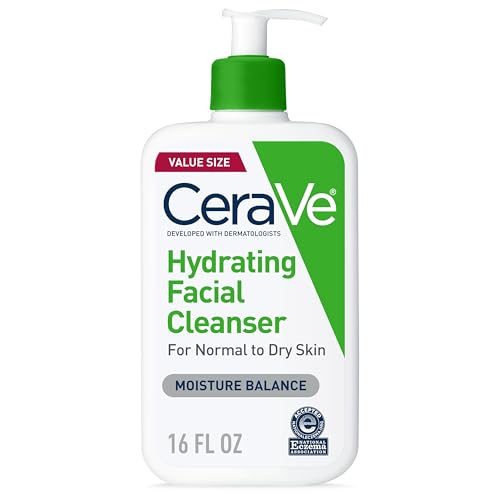
The products below are examples with strong ratings, not personal recommendations.
When to See a Professional
See a pharmacist, doctor or dermatologist for persistent redness, flushing, a rash or pigmentation concerns such as melasma.
This article is educational and is not medical advice. Product details come from public listings and may change.
Quick Tips
Store vitamin C away from light and heat, and discard it if it turns dark orange or brown.
Ask a pharmacist to review your list of actives if you use more than three. A short consultation can prevent overloading the skin and save you money on products you do not need.
If your skin feels tight or looks red, reduce your actives to the basics for a week.
Frequently Asked Questions
Can niacinamide and vitamin C be used together?
For most people, yes.
Do they cancel each other out?
No. That myth comes from old studies.
Should I layer them or use them separately?
Both work. Separate them if your skin is sensitive.
Which goes first?
Many people apply vitamin C first, then niacinamide.
Can they cause flushing?
Sometimes, at high strengths.
Do I need sunscreen?
Yes, every morning.
Can I use them with retinol?
Use retinol on a separate night at first.
Should I patch test?
Yes.
How long until I see results?
Usually weeks to months.
When should I see a doctor?
If you have a rash or persistent redness.
The Takeaway
Niacinamide and vitamin C can be used together by most people, either layered or at different times.
Introduce one at a time, use sunscreen, and ask a pharmacist, doctor or dermatologist if your skin reacts.

Written by
Registered pharmacist and founder of Facial Adviser. Rakib's pharmacy training covers how skincare actives work and interact; a later course in cosmetology turned that into a focus on facial treatments and skincare products. He plans, researches and edits every guide on the site and checks health claims against sources such as the American Academy of Dermatology, the FDA and the NIH. He is not a dermatologist; see the Editorial Policy and Medical Disclaimer.
About · Editorial policy · How we choose products · Medical disclaimer · Contact
Turn skincare time into me-time with a free audiobook