How to Read a Skincare Ingredient List
A skincare ingredient list is the most honest part of any product. The front of the bottle tells you what the brand wants you to think, while the back tells you what is actually inside.
Part of our guide to skincare routines and ingredients. Start with: Best Skin Care Routine: Simple AM and PM Steps for Every Skin Type
The list can look intimidating, full of long Latin-style names. But you do not need a chemistry degree to read it. A few simple rules will tell you what the formula is mostly made of, whether it contains common irritants and whether the star ingredient is present in a meaningful amount.
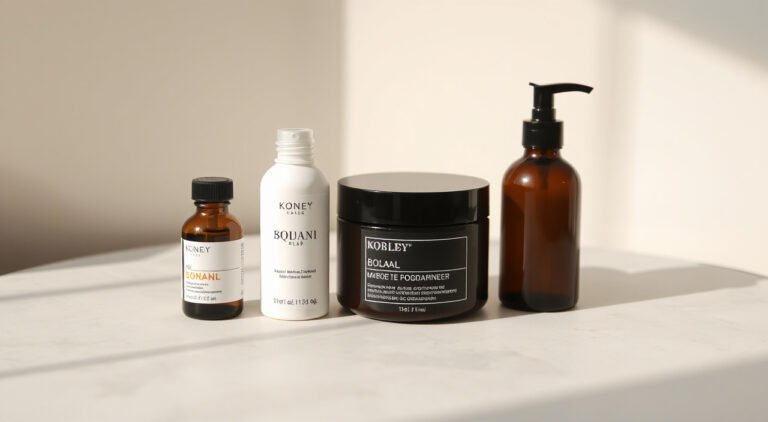
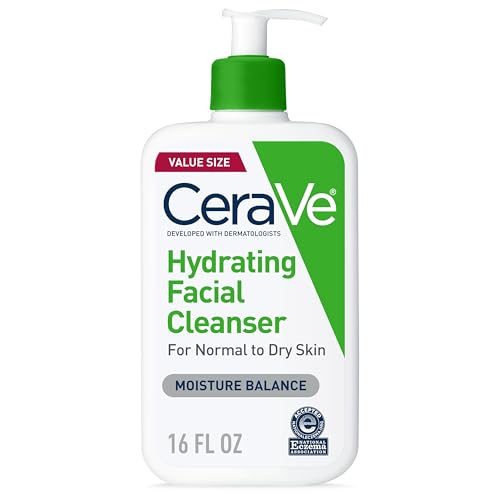
Labels Worth Practicing On




Black Friday is coming: shop the deals with Prime
Most skincare labels follow a standard naming system called INCI, and ingredients are listed from the highest concentration to the lowest, with some important exceptions.
This guide explains how to read the order, how to decode common names, how to spot fragrance and other potential irritants, and how to tell a real active formula from a marketing-heavy one.
Once you know what to look for, shopping becomes faster and cheaper, because you can rule out products in seconds.
Use this guide as a quick reference the next time you stand in a store aisle or scroll an online listing.
I am Rakib Sarwar, a registered pharmacist with a cosmetology course, and reading labels is something I do every day for my own routine.
An ingredient list cannot tell you everything. It does not show exact percentages or how well the formula is made. Still, it is the best free tool you have for avoiding products that do not suit you.
What to Know First
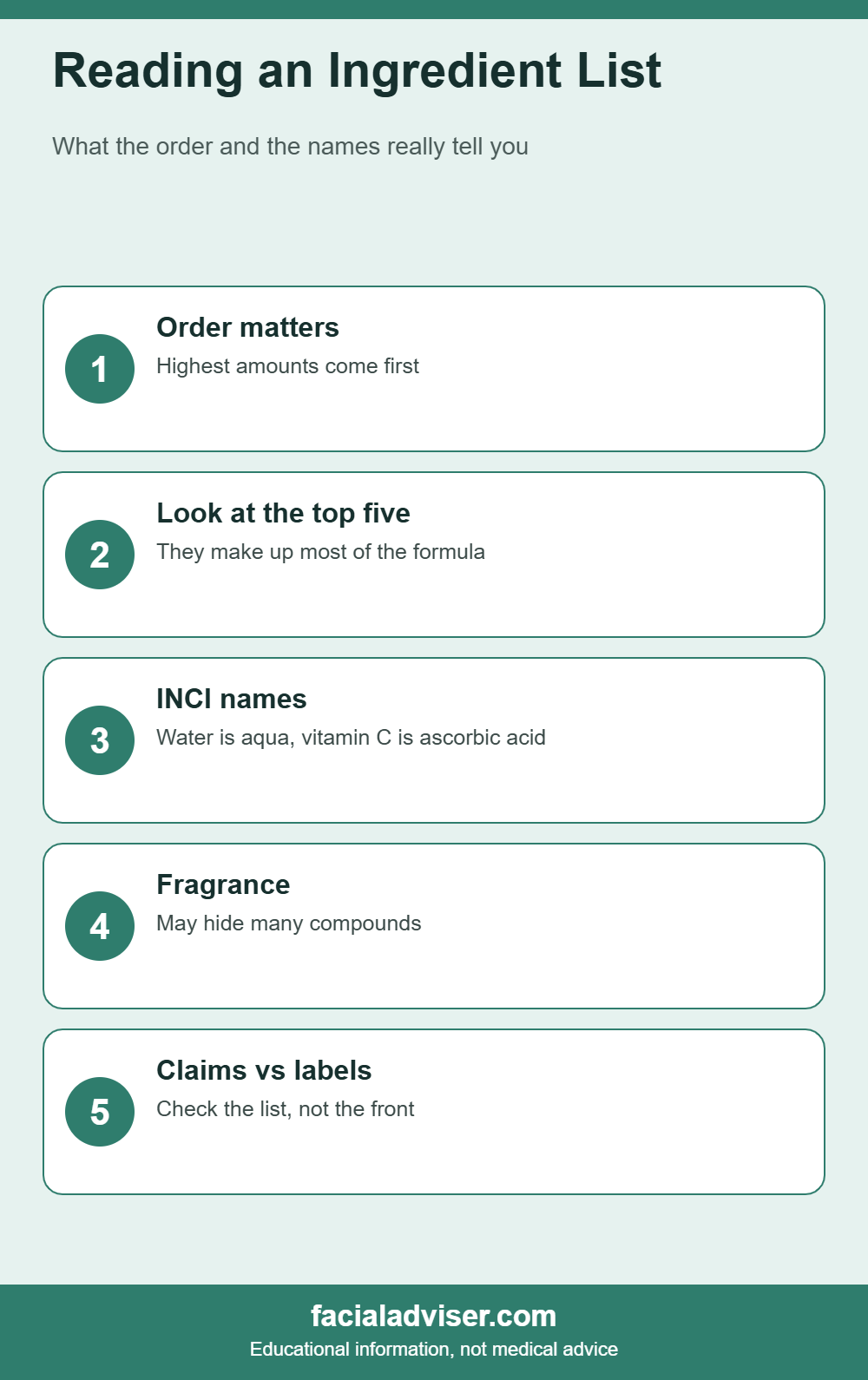
- Ingredients are listed from highest to lowest concentration.
- The first five usually make up most of the formula.
- Below 1 percent, order can be mixed.
- Fragrance can include many hidden compounds.
- INCI names can differ from everyday names.
- Front-of-pack claims are not regulated the same way.
On This Page
- How the Order Works
- Decoding Common Ingredient Names
- How to Read a Label Step by Step
- Fragrance and Other Possible Irritants
- Finding the Real Active
- Marketing Terms to Treat Carefully
- What an Ingredient List Cannot Tell You
- Common Mistakes
- When to See a Professional
- Quick Tips
- Your Questions, Answered
- Final Word
How the Order Works
In most countries, ingredients must be listed from the highest amount to the lowest. Water, called aqua or water on labels, is often first because many products are mostly water.
Here is a worked example. Imagine a moisturizer whose list begins with water, glycerin, cetearyl alcohol and petrolatum. That tells you the formula is mostly a water-based cream with a humectant to attract moisture, a fatty alcohol for texture and an occlusive to seal it in.
It sounds simple because it is, and it is a very typical, skin-friendly base.
Now imagine a serum sold for brightening whose list begins with water, then a long string of extracts, and puts vitamin C near the very end. The front of the box may say vitamin C, but the position suggests the amount is small.
Remember that concentration is not the only thing that matters. Some ingredients work at low levels, such as retinol, which is often used at well under 1 percent. So a low position does not always mean it is useless. It is a clue, not a verdict.
Also notice repeated families of ingredients. Several different alcohols, oils or silicones can each sit low in the list but together make up a large part of the formula.
The first five ingredients usually make up the bulk of the formula. If a product is marketed for an active ingredient such as niacinamide or vitamin C, you would expect to see it near the top of the list or at least in the first third.
There is an important exception. Ingredients present at 1 percent or less can be listed in any order. That is why preservatives, fragrance and small amounts of botanical extracts often appear mixed together at the end.
| Position | What it usually is | Why it matters |
|---|---|---|
| First 5 | Water, humectants, emollients | Main texture and feel |
| Middle | Actives, thickeners | Where key ingredients should be |
| Last third | Preservatives, fragrance, extracts | Low amounts, order can vary |
Decoding Common Ingredient Names
Labels use INCI names, which can differ from the everyday name. Learning a handful of them helps a lot.
Some names are worth memorizing because they come up on almost every label. Glycerin is a humectant that draws water into the skin. Ceramides, listed as ceramide NP, AP or EOP, help support the skin barrier. Panthenol is vitamin B5 and soothes.
Tocopherol is vitamin E, an antioxidant that also helps keep oils from going rancid.
Preservatives such as phenoxyethanol and ethylhexylglycerin often confuse beginners. They are not a sign of a bad product. Any water-containing product needs a preservative to stay safe from bacteria and mold, and products without one can be riskier.
Alcohols come in two types. Simple alcohols such as alcohol denat. or ethanol can dry the skin when they are high on the list. Fatty alcohols such as cetyl, stearyl and cetearyl alcohol are waxy ingredients that soften the skin and are generally well tolerated.
Silicones such as dimethicone create a smooth, slippery feel. They are generally considered safe and do not necessarily clog pores, though some people prefer to avoid them for personal reasons.
Water is aqua. Vitamin C is often ascorbic acid or a derivative such as ascorbyl glucoside. Vitamin B3 is niacinamide. Vitamin A includes retinol and retinyl palmitate. Hyaluronic acid appears as sodium hyaluronate.
Plant ingredients are listed with their Latin names, such as Aloe barbadensis leaf juice for aloe vera or Butyrospermum parkii butter for shea butter.
| Everyday name | Label name | What it does |
|---|---|---|
| Vitamin C | Ascorbic acid | Antioxidant |
| Vitamin B3 | Niacinamide | Supports barrier and oil balance |
| Hyaluronic acid | Sodium hyaluronate | Holds water |
| Shea butter | Butyrospermum parkii butter | Emollient |
| Salicylic acid | Salicylic acid | Exfoliates inside pores |
How to Read a Label Step by Step
Use this simple routine every time you pick up a new product.
Ignore the front claims
Words such as clean, natural or dermatologist tested do not tell you what is in the formula.
Find the ingredient list
It is usually on the back or on the outer box.
Read the first five
Check what the formula is mostly made of.
Look for the key ingredient
If the product claims to contain an active, see where it appears.
Scan for your problem ingredients
Check for fragrance, essential oils or anything you have reacted to before.
Take a photo of the ingredient list of products that suit you. Compare it with new products to find shared ingredients.
Fragrance and Other Possible Irritants
Fragrance or parfum on a label can stand for many ingredients, and companies are not always required to list them. It is a common cause of contact allergy.
If you have sensitive skin, scan the end of the list for words such as linalool, limonene, citronellol and geraniol. These are fragrance components that European rules require brands to list individually when above certain levels, and they are a clue that the product is scented even if the front says gentle.
Dyes are another source of problems for some people. They are usually listed as CI followed by a number. They are often harmless, but they add nothing to how the product works, so people with reactive skin may choose to avoid them.
Do not panic if you spot a flagged ingredient. Dose, formula and your own skin all matter, and many people use scented products without trouble. The goal is to match products to you, not to follow a universal blacklist.
Essential oils such as lavender, citrus and peppermint are natural but can irritate, especially on sensitive or reactive skin. Alcohol denat. can be drying in high amounts, though fatty alcohols such as cetyl alcohol are gentle and moisturizing.
Fragrance-free is not the same as unscented. Unscented products may use masking fragrance, so choose the phrase fragrance-free when you can. You can read more about reactions in our patch test guide.
Stop using any product that causes burning, swelling or a spreading rash and ask a pharmacist or doctor for advice.
Finding the Real Active
Many products highlight a trendy ingredient on the front but include only a tiny amount. The ingredient list can help you judge.
Here is a quick way to judge a serum. Look for the active in the first five to eight ingredients, check whether the front gives a percentage and see how many unrelated extracts sit below it. A short, focused list often signals a product built around one purpose.
Be careful with the term with. A cream described as with retinol or with hyaluronic acid may only contain a trace. Products that state the strength, such as 10 percent niacinamide or 2 percent salicylic acid, are easier to judge.
Remember too that strength and tolerability go together. A higher percentage is not automatically better, and for actives like retinol or acids, a gentle starting strength is often the wiser choice.
If the active appears right after the water and humectants, it is likely present in a useful amount. If it appears after preservatives and fragrance, it is probably there in a very small amount.
Percentages on the front, such as niacinamide 10 percent, are more reliable than vague phrases such as with vitamin C. See how actives fit into a routine in our skincare order guide.
| Clue | What it suggests |
|---|---|
| Active in first third | Likely meaningful amount |
| Active after fragrance | Likely a tiny amount |
| Percentage on label | More reliable than vague claims |
| Many botanical extracts at the end | Mostly marketing |
Marketing Terms to Treat Carefully
Terms such as clean, natural, chemical-free, hypoallergenic and non-toxic have no single legal definition in many markets. They can still be useful signals, but they do not replace the ingredient list.
Dermatologist tested means a dermatologist was involved in testing in some way, but it does not say the product is safe for everyone or recommended by dermatologists. Allergy tested has the same limitation.
Look instead for specific, checkable details such as a full ingredient list, clear percentages, batch dates and contact information for the brand.
Non-comedogenic means the brand believes the product is unlikely to clog pores, but it is not a guarantee. Our guide to what non-comedogenic means explains the limits.
Natural does not mean safer. Poison ivy is natural. What matters is whether the specific ingredient suits your skin.
What an Ingredient List Cannot Tell You
The list does not show exact percentages, pH, ingredient quality or how well the formula was made. Two products with the same list can feel and perform differently.
Finally, keep perspective. Reading labels is a useful skill, but it cannot replace professional advice for medical skin conditions such as eczema, rosacea or persistent acne.
It also cannot tell you whether the product is right for your skin. Use the label together with a patch test and your own experience.
Common Mistakes
The biggest mistake is avoiding every long chemical-sounding name. Many are simple, safe ingredients such as glycerin or tocopherol, which is vitamin E.
A further mistake is judging a product only by its ingredient count. Short lists can be gentle, but they can also hide problems, while long lists can be perfectly fine. What matters is the specific ingredients and your own response.
Last, do not compare labels across very different product types. A cleanser is rinsed off, so a strong ingredient in it is on the skin for seconds, while the same ingredient in a leave-on cream stays for hours.
Another is buying a product only for one buzzword. A long list of exotic extracts can look impressive without making the product work better.
Worth Doing
- Read the first five ingredients
- Check for your known irritants
- Use a patch test
Skip It
- Fear every long name
- Trust front-of-pack claims alone
- Ignore your own reactions
When to See a Professional
If you keep reacting to products and cannot find the cause, see a pharmacist, doctor or dermatologist. They can suggest allergy testing and help you identify the ingredient responsible.
This article is educational and is not medical advice. Product details come from public listings and may change.
Quick Tips
Keep a list of ingredients that have caused you problems.
Ingredient lists change when formulas are updated, so check the label on a new bottle of a product you already use.
Your Questions, Answered
How do I read a skincare ingredient list?
Read from the first ingredient to the last, since they are listed from highest to lowest amount.
Why is water first?
Many products are mostly water.
What does INCI mean?
International Nomenclature of Cosmetic Ingredients, the standard naming system.
Does the order always show the amount?
Not below 1 percent, where the order can vary.
Is fragrance bad?
It is a common allergen for some people.
What does fragrance-free mean?
No added fragrance, unlike unscented, which may use masking scents.
Are long chemical names bad?
No. Many are simple, safe ingredients.
How do I know if an active is in a useful amount?
See where it appears and whether a percentage is given.
Is natural safer?
Not necessarily.
Where do I find the ingredient list?
On the back of the pack or the outer box.
Final Word
Reading an ingredient list takes a minute and helps you avoid products that do not suit you.
Focus on the first five, check for irritants and ask a pharmacist, doctor or dermatologist if you are unsure.

Written by
Registered pharmacist and founder of Facial Adviser. Rakib's pharmacy training covers how skincare actives work and interact; a later course in cosmetology turned that into a focus on facial treatments and skincare products. He plans, researches and edits every guide on the site and checks health claims against sources such as the American Academy of Dermatology, the FDA and the NIH. He is not a dermatologist; see the Editorial Policy and Medical Disclaimer.
About · Editorial policy · How we choose products · Medical disclaimer · Contact
Keep reading: Skincare routine basics
- Cyber Monday Skincare Deals 2026: Live Now, Dates and What to Buy
- Best Skincare Gift Sets in the UK: 7 Sets Worth Giving This Christmas
- Budget Skincare Routine UK: A Simple Routine With 7 Products
- Best Facial Skincare Tips: Evidence-Based Habits Dermatologists Recommend
- Best Skin Care Routine: Simple AM and PM Steps for Every Skin Type
Turn skincare time into me-time with a free audiobook