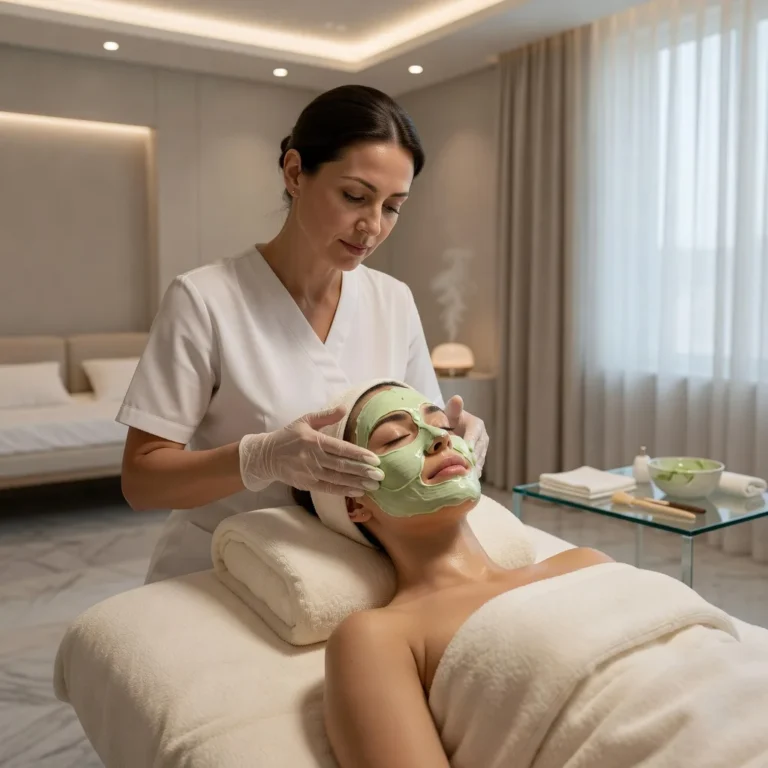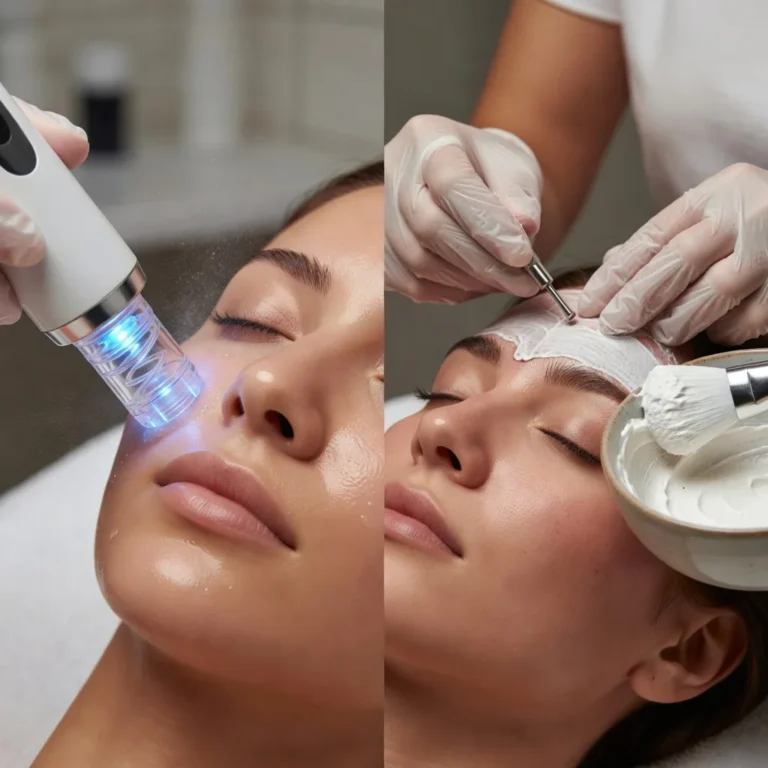
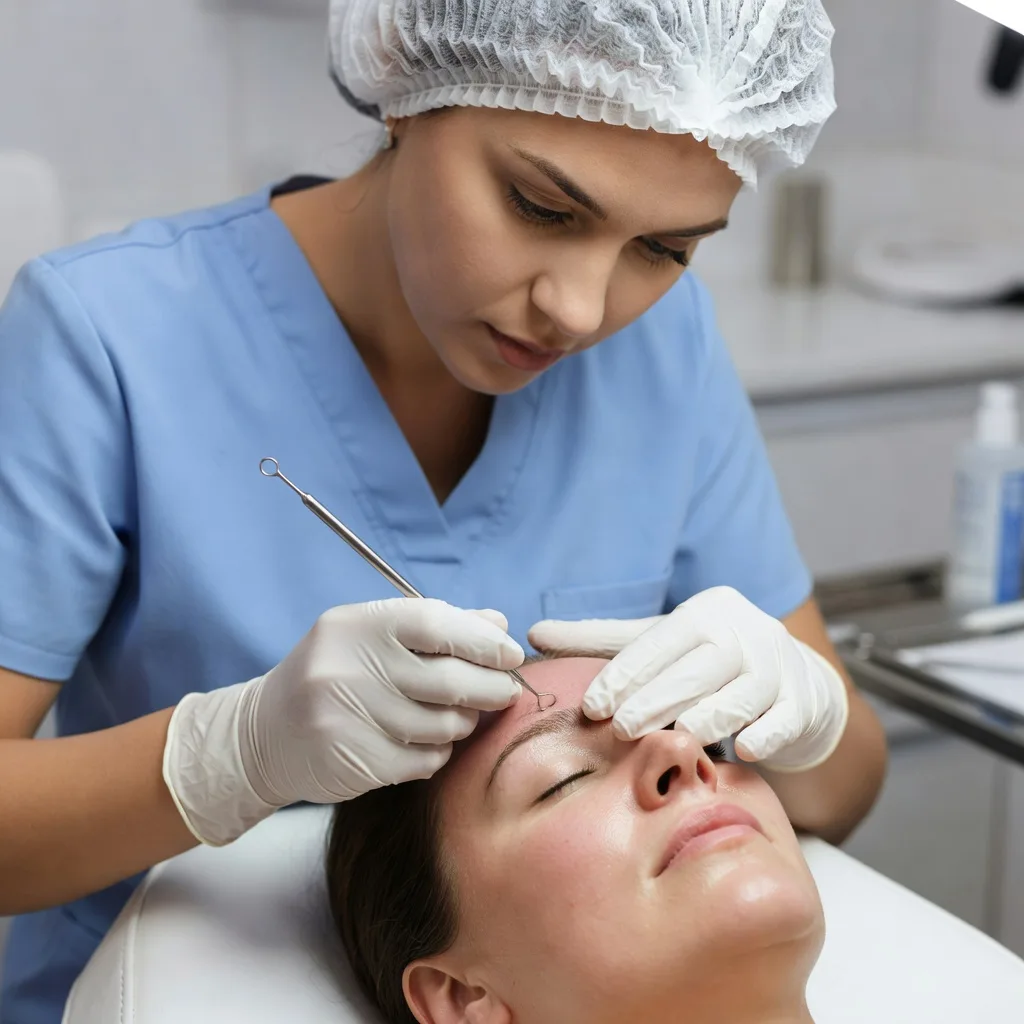
How Does an Esthetician Do Extractions?
How does an esthetician do extractions, and which pimples are actually safe to extract in the first place?
A randomized controlled trial found professional mechanical extraction reduced inflamed acne lesion counts more than oral doxycycline over six weeks, with lower follicular hypoxia markers on biopsy — a striking, underused finding, though both study arms used the same background topical treatment. National acne-surgery guidance frames extraction as adjunctive to medical therapy, never a standalone replacement for it.
Lesion type, not gentleness, is the real safety gate: non-inflamed comedones are appropriate for extraction, while papules, pustules, nodules, and cysts carry meaningfully higher scarring risk regardless of technique.
This guide walks through the real technique for open and closed comedones, what that clinical trial actually found and didn’t prove, and the sanitation standards that keep the procedure safe.
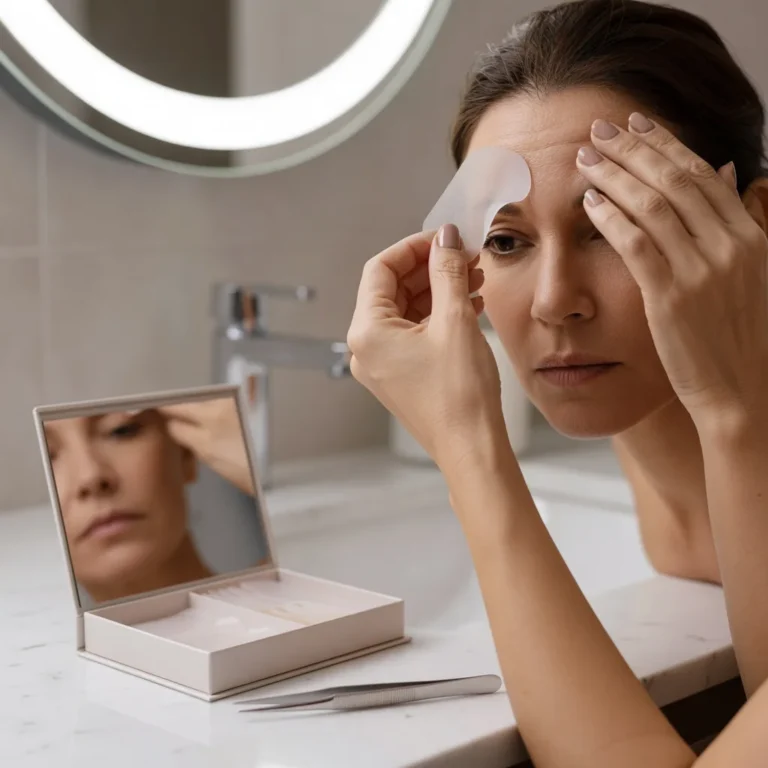
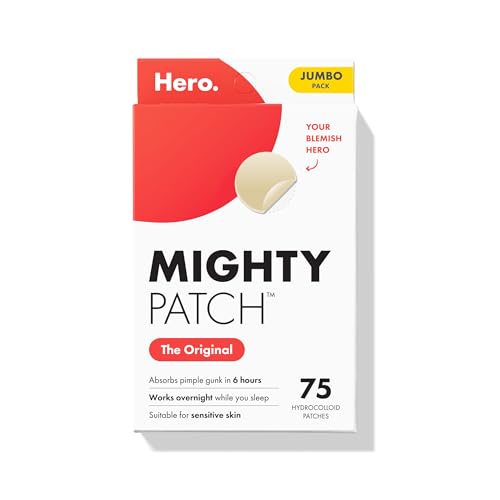
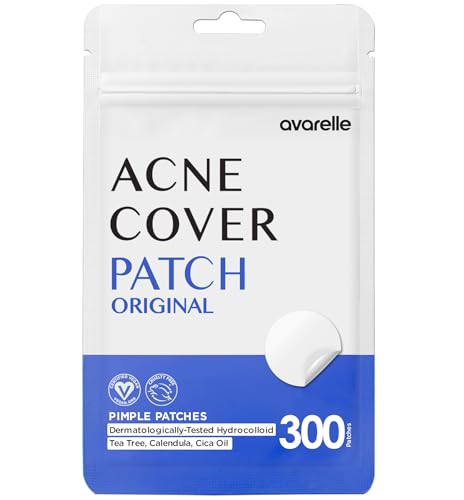
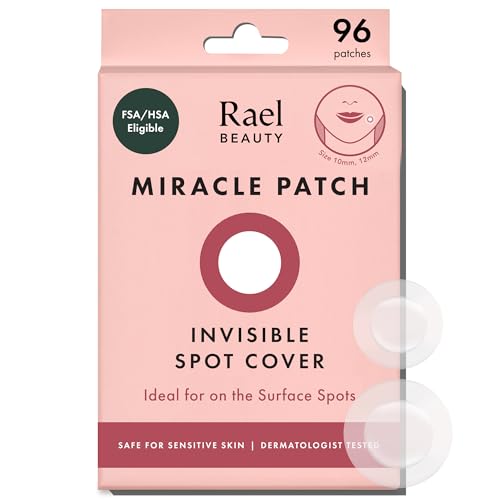
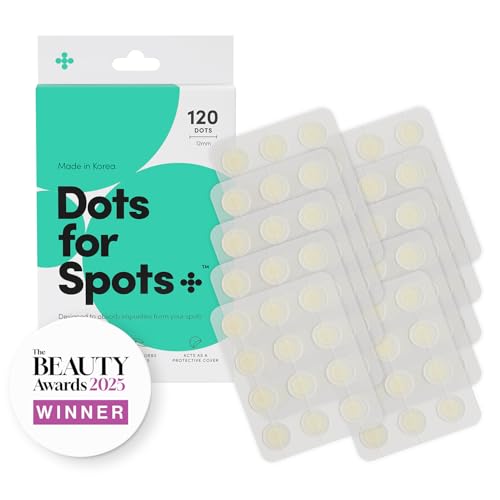
Recommended Extraction Tools and Pimple Patches



Key Facts
- A randomized controlled trial found professional mechanical extraction reduced inflamed acne lesion counts more than oral doxycycline over six weeks, with a proposed mechanism involving reduced follicular hypoxia — a striking, underused finding with real caveats attached.
- National acne-surgery guidelines describe extraction as adjunctive to medical therapy, not a standalone treatment, and explicitly warn that undue force can increase inflammation and lead to scarring.
- Lesion type is the primary safety gate, not technique alone: non-inflamed comedones are appropriate for extraction, while inflammatory papules, pustules, nodules, and cysts carry meaningfully higher infection and scarring risk regardless of how gently they’re handled.
- Lancet or needle use on closed comedones is a regulated, state-by-state scope-of-practice issue in the US, not a uniform technique every esthetician is legally permitted to use.
In This Guide
- What “Extraction” Actually Means
- Preparing the Skin Before Extraction Starts
- Open Comedones: The Standard Technique
- Closed Comedones: Why a Needle Sometimes Comes Out
- Lancet Use: A State-by-State Reality
- Lesion Type Is the Real Safety Gate
- Appropriate for Extraction vs. Not
- The Trial That Beat an Oral Antibiotic
- Reading the Trial Honestly: What It Doesn’t Prove
- Sanitation and Session Limits That Actually Matter
- Do This, Not That
- How a Careful Extraction Actually Proceeds
- What This Article Can’t Tell You
- Frequently Asked Questions
What “Extraction” Actually Means
Extraction is the manual removal of a comedone’s contents — the sebum-and-keratin plug sitting inside a follicle — using pressure, a tool, or both. It sounds simple, and for a properly identified open comedone it largely is. What makes the real answer to “how does an esthetician do extractions” more interesting is the layer most explanations skip: which lesions are actually appropriate to extract, what a real acne-surgery guideline says about force and technique, and a genuinely striking clinical trial finding that most content never mentions.
Preparing the Skin Before Extraction Starts
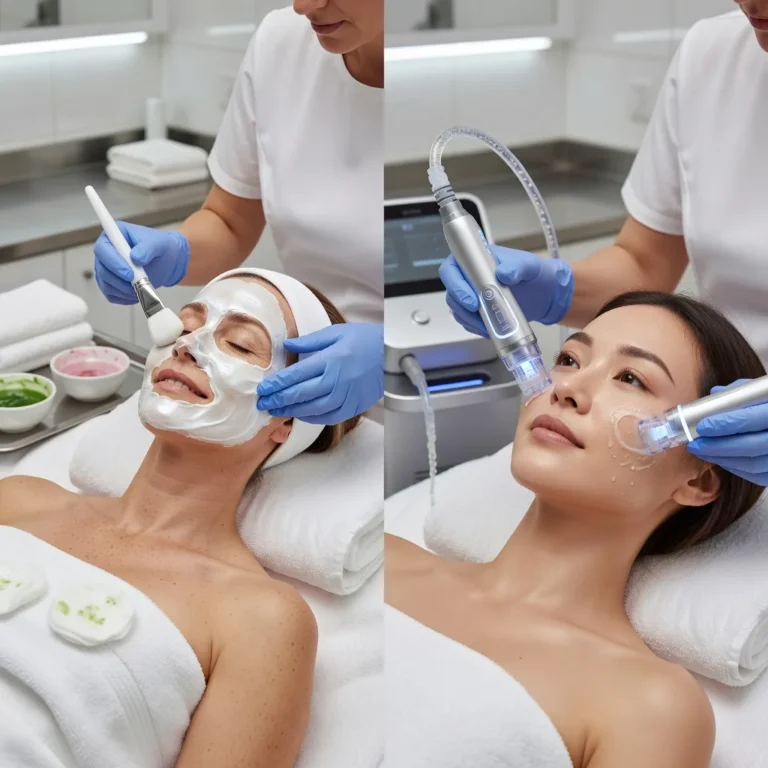
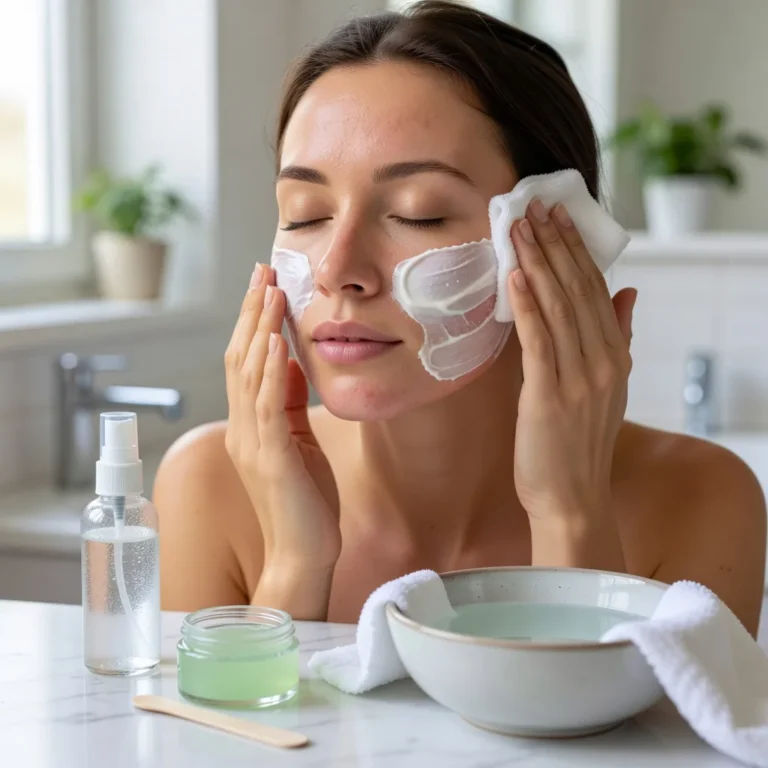
Before any extraction happens, the skin is typically cleansed with alcohol and softened with steam, which helps loosen the sebum-and-keratin plug inside the follicle and makes it come out with meaningfully less force. Skipping this softening step and going straight to extraction is a common shortcut that increases the pressure needed, which in turn raises the risk of the “undue force” that acne-surgery guidelines specifically warn against.
Open Comedones: The Standard Technique
For open comedones — blackheads, where the follicle opening is visible — industry training standards describe extraction using gauze-wrapped fingers or cotton swabs, applying side-to-side pressure rather than direct downward force, and explicitly never using bare fingernails. The national guideline from the Indian Association of Dermatologists, Venereologists and Leprologists describes centering an extractor loop directly over the lesion and applying firm pressure along the follicle’s axis, not perpendicular to it.
Closed Comedones: Why a Needle Sometimes Comes Out
Closed comedones — whiteheads, with no visible opening — are a different technical problem, since there’s no exit point for the plug yet. The same national guideline describes piercing the top of the lesion first with a 21-gauge needle specifically “to make extrusion less traumatic,” rather than forcing an unopened comedone with straight pressure. Some esthetics training material also mentions a lancet for closed comedones or milia, but frames that tool use very differently from routine technique.
Lancet Use: A State-by-State Reality
Here’s a detail most facial-technique articles skip entirely: lancet or needle use on closed comedones isn’t a uniform, universally legal esthetician technique in the United States. Industry training material itself instructs practitioners to “check with the local state board to see if it is permissible” — meaning the legality of this specific tool use varies by jurisdiction and depends on each state’s scope-of-practice rules for estheticians, not on a single national standard.
| Tool or technique | Used for | Regulatory status |
|---|---|---|
| Gauze-wrapped fingers, cotton swabs | Open comedones | Standard, widely accepted technique |
| Extractor loop | Open comedones | Standard, widely accepted technique |
| 21-gauge needle (piercing before extrusion) | Closed comedones | Described in national acne-surgery guidance |
| Lancet | Closed comedones, milia | State-by-state scope-of-practice issue, not uniform |
Lesion Type Is the Real Safety Gate
The most important safety principle in extraction isn’t how gentle the esthetician is — it’s whether the lesion in front of them is the right kind to extract at all. Non-inflamed open and closed comedones are appropriate for manual extraction. Inflammatory papules, pustules, nodules, and cysts are not appropriate regardless of technique or gentleness, because they carry meaningfully higher infection and scarring risk on their own, independent of practitioner skill. This is exactly why national acne-surgery guidance frames extraction as adjunctive to medical therapy, not a replacement for it.
Appropriate for Extraction vs. Not
| Lesion type | Appropriate for manual extraction | Why |
|---|---|---|
| Open comedone (blackhead) | Yes | Visible opening, low inflammation, plug accessible |
| Closed comedone (whitehead) | Yes, with appropriate technique | No visible opening but non-inflamed |
| Inflammatory papule or pustule | No | Higher infection and scarring risk regardless of technique |
| Nodule or cyst | No | Deep, inflamed lesion — needs medical, not manual, treatment |
The Trial That Beat an Oral Antibiotic
A randomized controlled trial published in the Journal of Clinical and Aesthetic Dermatology enrolled 140 subjects with moderate acne, all using background topical tretinoin and benzoyl peroxide, then split them between mechanical lesion extraction every two weeks or oral doxycycline. At six weeks, the extraction group showed a significantly greater reduction in inflamed lesion count than the doxycycline group. A biopsy substudy found lower levels of a hypoxia marker in the extraction group, supporting a proposed mechanism: physically decompressing the follicle reduces local hypoxia inside it.
Reading the Trial Honestly: What It Doesn’t Prove
The finding is genuinely striking, but it’s a single trial with a small biopsy subgroup, and it doesn’t establish that extraction alone, without any background topical regimen, would produce the same result. The documented side effects also differed meaningfully by arm: the doxycycline group experienced nausea, vomiting, and abdominal discomfort, while the extraction group experienced transient erythema, edema, and localized bleeding — a real tradeoff between systemic and local side-effect profiles, not a simple case of one treatment being risk-free. A separate split-face randomized trial has also examined pairing extraction with a pulsed dye laser specifically to address post-extraction redness and comedone reduction, which suggests researchers are actively looking for ways to soften even the mild, expected side effects that come with the procedure.
Sanitation and Session Limits That Actually Matter
Esthetics training standards call for reusable extraction tools to go through an autoclave or sterilizer between clients, with disposable implements used only when reusable sterilized tools aren’t available. Recommended practice also caps total extraction time at around 15 minutes per session specifically to limit cumulative trauma to the skin, and calls for a minimum 5x magnification lamp so the practitioner can actually see what they’re extracting rather than guessing at lesion type. A salicylic-acid astringent applied immediately after extraction is a common finishing step in that training material, intended to help calm the freshly worked area and discourage recontamination of the follicle while it closes back up.
None of these sanitation and timing details are cosmetic niceties. A dull, unsterilized tool or a session pushed well past the recommended time window compounds exactly the kind of mechanical trauma that turns a routine extraction into an avoidable scar, which is why professional training material treats them as core technique rather than optional housekeeping.
Do This, Not That
Do
- Extract non-inflamed open and closed comedones with adequate softening and appropriate pressure along the follicle axis.
- Expect sterilized tools between clients and a capped session length to limit cumulative trauma.
- Treat extraction as adjunctive to medical acne treatment, not a replacement for it.
Don’t
- Don’t attempt to extract inflammatory papules, pustules, nodules, or cysts — lesion type is the safety gate, not gentleness.
- Don’t assume lancet use for closed comedones is universally legal — it’s a state-by-state scope-of-practice issue.
- Don’t apply undue force; acne-surgery guidance explicitly warns it can increase inflammation and lead to scarring.
How a Careful Extraction Actually Proceeds
Cleanse and soften first
Alcohol cleansing plus steam loosens the plug, reducing the force needed to extract it.
Identify the lesion type under magnification
Confirm it’s a non-inflamed open or closed comedone before touching it at all.
Use the technique matched to the lesion
Gauze-wrapped fingers or a loop for open comedones; a fine needle first for closed ones, per national guidance.
Apply pressure along the follicle axis, never forced
Undue force raises inflammation and scarring risk regardless of the tool used.
Stop at the session time cap and sanitize tools
Roughly 15 minutes total, with reusable tools sterilized before the next client.
What This Article Can’t Tell You
This guide can’t tell you whether a specific bump on a specific person’s face is safe to extract — that needs a direct look, ideally under magnification, by someone trained to tell a comedone from an inflammatory lesion. What it can tell you honestly is which lesion types the guidelines consider appropriate, what a real clinical trial found about mechanical extraction’s effect on inflamed lesions, and where the genuine limits of that evidence sit.
Frequently Asked Questions
How does an esthetician do extractions?
By cleansing and softening the skin with steam, then removing a comedone’s contents using gauze-wrapped fingers, a loop, or for closed comedones, a fine needle to pierce the top first, all with pressure along the follicle axis rather than force.
Can any pimple be extracted this way?
No. Only non-inflamed open and closed comedones are appropriate. Inflammatory papules, pustules, nodules, and cysts carry meaningfully higher infection and scarring risk regardless of technique.
Is a lancet always legal for an esthetician to use?
No. Lancet use on closed comedones is a state-by-state scope-of-practice issue in the US, not a uniform national standard.
Does extraction actually help with acne, according to research?
A randomized trial found extraction reduced inflamed lesion counts more than oral doxycycline over six weeks, though both arms used the same background topical treatment.
Why does extraction sometimes work better than an antibiotic in that trial?
A proposed mechanism is that physically decompressing the follicle reduces local hypoxia inside it, based on biopsy findings in the trial’s substudy.
Does that trial mean I should skip antibiotics and just get extractions?
No. Extraction was tested as an add-on to standard topical treatment, not as a standalone substitute for dermatologist-directed care.
What side effects are normal after extraction?
Transient erythema, edema, and localized bleeding at the extraction site, typically self-limited.
How long should an extraction session last?
Recommended practice caps total extraction time at around 15 minutes per session to limit cumulative trauma to the skin.
Should extraction tools be sterilized between clients?
Yes. Reusable tools should go through an autoclave or sterilizer between clients, with disposable implements used only when sterilized tools aren’t available.
What happens if too much force is used during extraction?
National acne-surgery guidance explicitly warns that undue force can increase inflammation and lead to scarring.