How Do Koreans Reduce Pore Size?
How do Koreans reduce pore size, according to the routines K-beauty has made famous worldwide?
The most evidence-backed tools in Korean pore-care routines — BHA toners, double cleansing, sunscreen-first habits — are globally used, dermatologically supported actives rather than techniques unique to Korea, while folk practices like rice water and ice rollers have little to no controlled evidence behind them. A 2,585-woman multiethnic study also found pore size and density vary up to eightfold by ethnicity, with genetics outweighing oiliness as the driver.
That distinction matters, because it separates a routine worth adopting from a cultural label worth questioning.
This guide covers each commonly cited Korean pore-care practice individually, what real research says about it, and where the evidence actually comes from.
Recommended K-Beauty Cleansers and Pore-Care Toners
What You Should Know First
- A large multiethnic study measured real, substantial differences in average pore size and density between populations — this isn’t just a cultural framing.
- That same research found sebum production wasn’t the main driver of those differences; genetics and skin structure mattered more.
- Most of the ingredients behind “K-beauty” pore care (BHA, niacinamide) are globally-used dermatologic actives, not exclusive discoveries.
- Some popular practices, like pore vacuums and rice water, range from limited-evidence to essentially unproven for pore size specifically.
- Double cleansing is a legitimate, mechanistically sound cleansing technique, though direct pore-size trial evidence for it specifically is thin.
Article Roadmap
- Is There Really an “Asian Pore” Difference?
- What a 2,585-Woman Study Actually Found
- The K-Beauty Pore Toolkit, Evaluated
- Evidence Tier by Practice
- Double Cleansing: Real Technique, Thin Pore-Specific Data
- Pore Vacuums vs. Manual Extraction
- Do This, Skip That
- A Reasonable K-Beauty-Inspired Routine
- Can You Actually Measure Your Own Pore Size?
- When a Dermatologist Beats a 10-Step Routine
- What Skincare Alone Can’t Change
- Frequently Asked Questions
Is There Really an “Asian Pore” Difference?
The premise behind this question — that Korean skincare has cracked some special code for pore size — deserves a more careful answer than either “yes, it’s magic” or “no, it’s all marketing.” The honest answer sits in between: there is real measured variation in pore characteristics across ethnic populations, but the reasons behind it aren’t what most K-beauty marketing implies, and the most effective tools in the routine aren’t uniquely Korean at all.
What a 2,585-Woman Study Actually Found
The best available data here comes from a 2015 study in Clinical, Cosmetic and Investigational Dermatology, which used standardized dermatoscopic imaging to measure facial pores in 2,585 women across France, China, Japan, Brazil, and India. The researchers found up to an eightfold difference in pore density (roughly 10 to 80 pores per square centimeter) and a meaningful range in average pore size (0.03 to 0.22 square millimeters, rising to 0.06 to 0.37 among women who self-reported enlarged pores) across these groups. Chinese women in this dataset showed notably lower pore density and smaller average pore size than several of the other groups studied.
Here’s the part that complicates the simple “Asian skin has smaller pores” narrative, though: the study’s authors were explicit that this variation is not simply explained by sebum output. In fact, Indian participants with enlarged pores in this dataset had the lowest measured sebum production of any group studied — the opposite of what a simple “more oil equals bigger pores” story would predict. Genetics and structural skin properties, not oiliness, appear to be the dominant driver of baseline pore differences between populations.
There’s also a specific study directly comparing Korean and Chinese women’s skin biophysical properties and cosmetic habits, indexed in the medical literature under that exact comparison. It exists and is a legitimate, citable data point for anyone wanting to dig further into population-level skin differences, though it’s worth pulling the full study directly if you want specific figures rather than relying on secondhand summaries.
The K-Beauty Pore Toolkit, Evaluated
With that context in place, here’s an honest look at the actual practices associated with Korean pore care, evaluated on their own merits rather than on their cultural branding.
BHA/salicylic acid toners carry real dermatological backing — this is a globally-used exfoliating acid that penetrates oil-filled follicles and helps clear the debris that can make pores look more conspicuous, regardless of what country puts it in a toner. (For a closer look at how this and other actives perform specifically on oily skin, see is pore minimizing good for oily skin.)
Rice water is a genuine cultural and folk practice with essentially no controlled clinical evidence behind it for pore size specifically. It may have mild humectant properties from fermentation byproducts, but that’s a plausible mechanism, not a demonstrated one for this particular use.
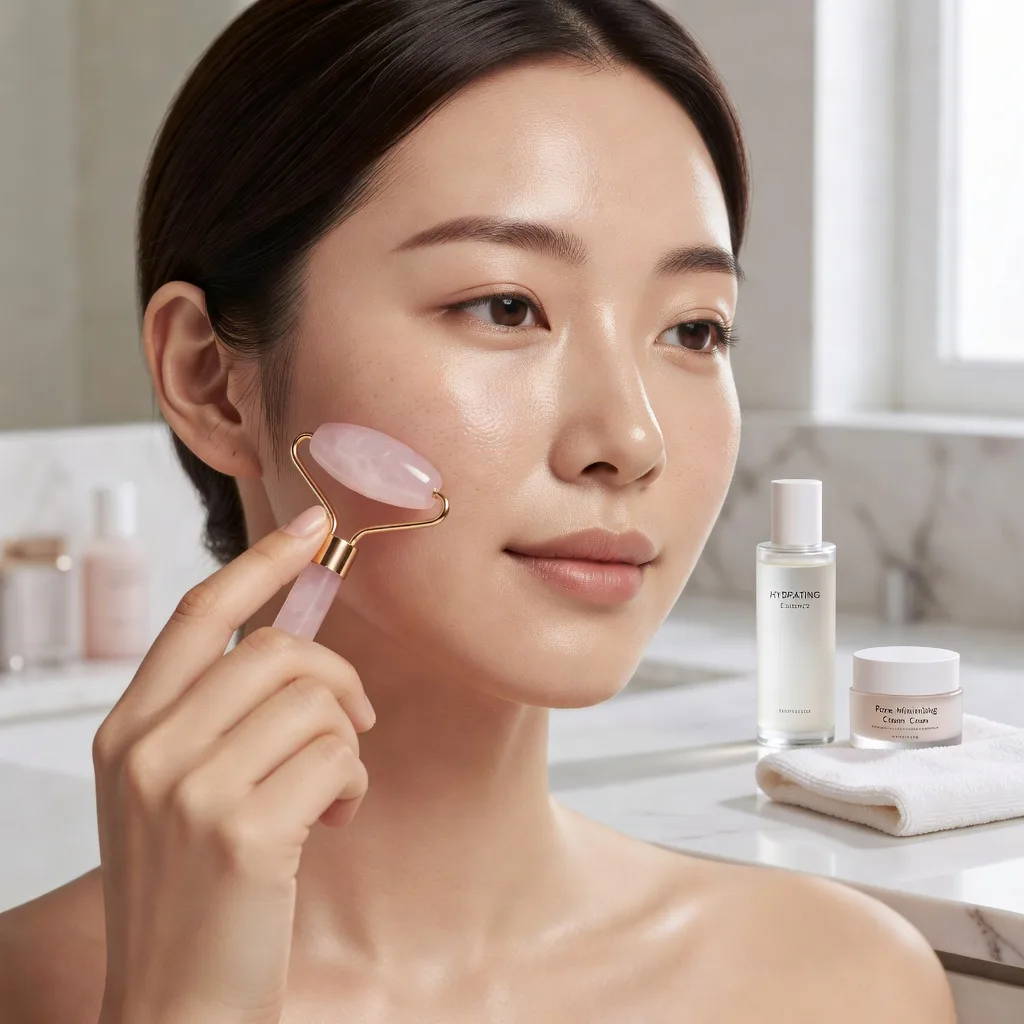
Ice and cooling produce a real but entirely temporary tightening sensation through vasoconstriction and fluid shifts — a cosmetic, short-lived effect rather than a lasting structural change, confirmed by dermatologist commentary on the mechanism.
Sheet masks are a legitimate and effective way to deliver hydrating ingredients to the skin surface, but there’s no evidence they reduce pore size; at most, well-hydrated, plumper skin may temporarily reduce how much a pore’s shadow stands out.
One more piece of the K-beauty routine deserves mention here, even though it isn’t marketed as a “pore” step directly: the region’s strong daily-sunscreen culture. Because photoaging-driven collagen and elastin loss is one of the genuine structural drivers of enlarged pores over time (see the research on aging further down in this guide’s companion articles), a skincare culture that treats daily SPF as non-negotiable is, indirectly, also a pore-care culture. That’s arguably a more meaningful long-term contributor to the population-level differences researchers have measured than any single toner or mask, though it’s rarely marketed that way because sunscreen doesn’t photograph as dramatically as a 10-step routine laid out on a bathroom counter.
Evidence Tier by Practice
| Practice | Evidence tier | What it actually does |
|---|---|---|
| BHA/salicylic acid toner | Strong | Clears oil/debris from inside the follicle |
| Double cleansing | Moderate (cleansing efficacy, not pore-size-specific) | Removes oil-based and water-based residue in two steps |
| Pore vacuum devices | Weak-to-moderate, risk-dependent | Removes already-loosened surface debris |
| Rice water | Unproven | Possible mild humectant effect; no pore-size trial data |
| Ice/cooling | Real but trivial | Temporary vasoconstriction, cosmetic tightening only |
| Sheet masks | Real for hydration; unproven for pore size | Surface hydration delivery |
Double Cleansing: Real Technique, Thin Pore-Specific Data
Double cleansing — an oil-based cleanser followed by a water-based one — is mechanistically sound: oil dissolves oil-based residue (including sunscreen and sebum), and the second, water-based cleanser then lifts away water-soluble debris and any remaining cleanser residue. A cleansing-efficacy modeling study supports the general principle that oil-based cleansers outperform water-based cleansers alone at removing sebum and particulate residue from skin.
What’s thinner in the literature is any trial measuring double cleansing’s effect on pore size specifically, as opposed to cleansing thoroughness generally. It’s a legitimate, evidence-supported cleansing technique — not a proven pore-shrinking one, and it’s worth being precise about that distinction rather than letting one claim borrow credibility from the other.
Pore Vacuums vs. Manual Extraction
| Pore vacuum | Manual extractor tool | |
|---|---|---|
| Best for | Already-loosened surface blackheads | Ready, non-inflamed blackheads/whiteheads |
| Main risk | Bruising, broken capillaries from excessive suction | Scarring/PIH if used on inflamed lesions or with too much force |
| Professional guidance | Caution against excessive at-home suction | Preferred over harsh picking if technique is correct |
Do This, Skip That
Do
- Use BHA toners consistently, starting a few nights a week
- Double cleanse if you wear sunscreen or makeup daily
- Apply sunscreen every day to protect the structural support around pores
- Hydrate skin well with humectant-rich products
Don’t
- Rely on rice water or DIY rinses as your primary pore strategy
- Use pore vacuum devices at high suction settings or for extended sessions
- Expect ice rolling to produce a lasting structural change
- Assume any single “10-step” routine is required; the evidence supports a handful of key steps
A Reasonable K-Beauty-Inspired Routine
Oil cleanse first
Especially on days wearing sunscreen or makeup, to dissolve oil-based residue.
Follow with a gentle water-based cleanser
Removes remaining water-soluble debris without over-stripping the skin.
Apply a BHA toner or treatment a few nights a week
Build up frequency gradually based on tolerance.
Layer hydrating, humectant-rich products
Well-hydrated skin looks smoother and can reduce how much pores stand out visually.
Finish mornings with broad-spectrum sunscreen
Protects the collagen and elastin that structurally support pore openings over time.
Can You Actually Measure Your Own Pore Size?
Not with any precision. The imaging systems used in the research cited above rely on standardized, high-resolution dermatoscopic photography under controlled lighting — not something a phone camera or bathroom mirror can replicate reliably. It would be dishonest to suggest a simple home test gives you the same information.
When a Dermatologist Beats a 10-Step Routine
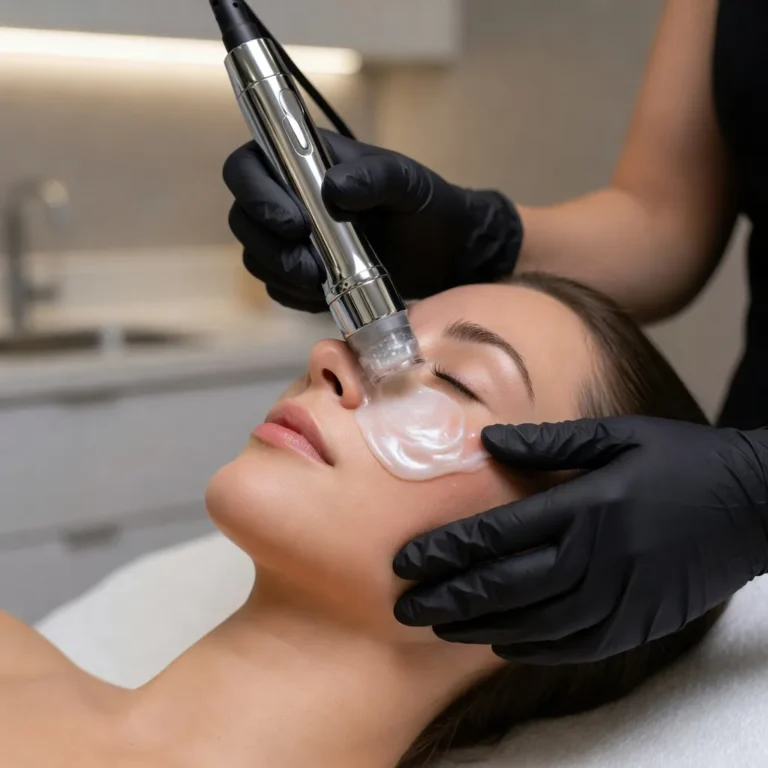
If pores remain a significant cosmetic concern after several months of consistent use of evidence-backed actives, a dermatologist can offer in-office options — chemical peels, laser resurfacing, or RF microneedling — with more direct supporting evidence for pore appearance than most retail products, and can also rule out other skin conditions that a routine alone won’t address.
What Skincare Alone Can’t Change
Baseline pore size and density are substantially influenced by genetics, as the population-level data above makes clear. No skincare routine, Korean-inspired or otherwise, changes that underlying genetic baseline. What a good routine can realistically do is reduce oil-driven visibility and support the collagen structure that keeps pores from enlarging further over time.
Frequently Asked Questions
Do Korean women genuinely have smaller pores on average?
Large studies have measured real population-level differences in pore size and density, though the reasons are tied more to genetics and skin structure than to any specific skincare routine.
Is double cleansing necessary if I don’t wear makeup?
It’s most useful on days involving sunscreen or heavy product use; on bare-skin days, a single gentle cleanse is generally sufficient.
Are pore vacuums safe to use at home?
They carry a real risk of bruising and broken capillaries at high suction settings; using them briefly and at low suction on already-loosened debris is safer than aggressive use.
Does rice water actually shrink pores?
There’s no controlled clinical evidence for rice water reducing pore size specifically; it remains a folk practice rather than a proven treatment.
What’s the single most evidence-backed step in a K-beauty pore routine?
Consistent use of a BHA like salicylic acid has the strongest research behind it for reducing follicular congestion and improving pore visibility.
Do sheet masks reduce pore size?
They’re effective for hydration but haven’t been shown to change pore size; any visual improvement is likely from temporary plumping.
Why do some ethnic groups show different average pore sizes in research?
Studies point to genetics and structural skin differences, not simply sebum output, as the primary driver.
Is ice rolling worth adding to a pore routine?
It produces a real but very temporary tightening effect through vasoconstriction; it’s not a lasting or structural fix.
How long should I try a K-beauty pore routine before judging results?
Based on the underlying ingredient research, give a consistent routine at least 8 to 12 weeks before evaluating whether it’s working.
Should I see a dermatologist instead of following online K-beauty routines?
If pores remain a significant concern after months of consistent care, a dermatologist can offer procedures with stronger direct evidence than most retail routines.