Flying with Skincare Devices: Batteries, Liquids and TSA Rules
Packing skincare for a flight is mostly about two things: liquids and batteries. Creams, serums and gels count as liquids at airport security, and many facial devices contain lithium batteries that follow their own rules. Knowing both sets of rules before you pack saves you from having items taken at the checkpoint.
Part of our guide to skincare routines and ingredients. Start with: Best Skin Care Routine: Simple AM and PM Steps for Every Skin Type
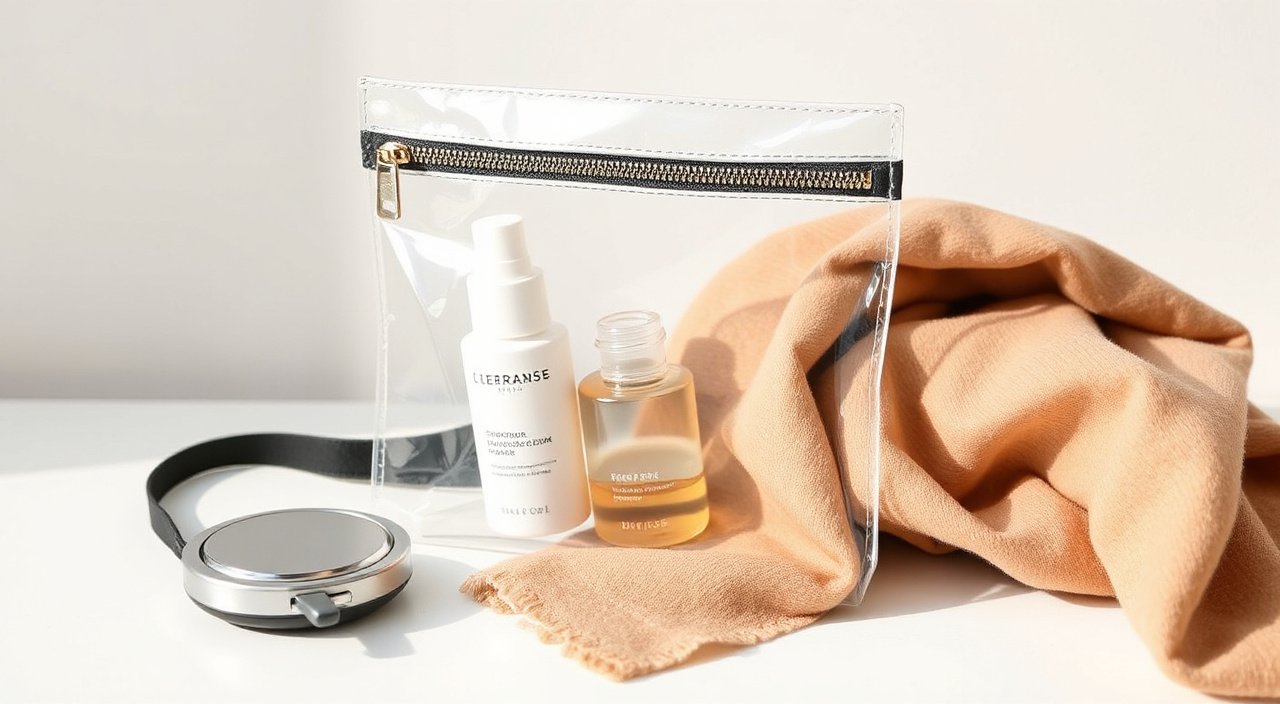
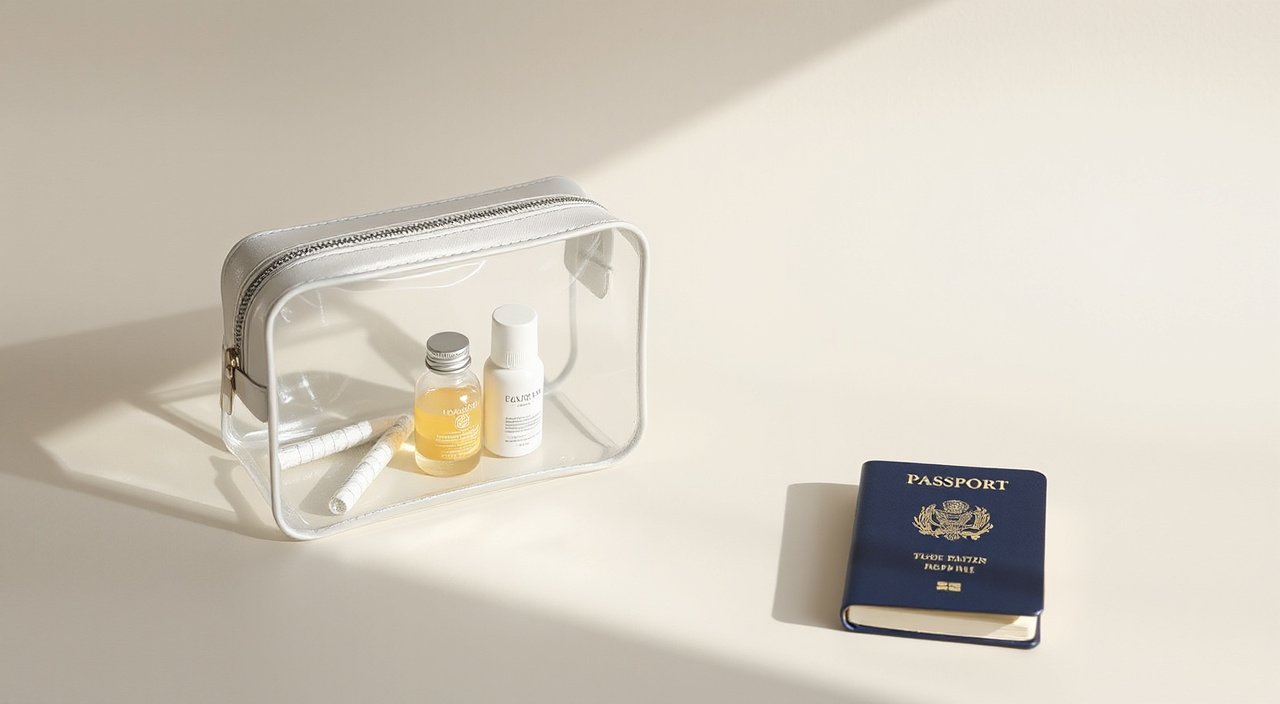
In the United States, the Transportation Security Administration, or TSA, applies the 3-1-1 rule to carry-on liquids, gels and creams. Containers must hold 3.4 ounces (100 milliliters) or less, fit in one quart-size clear bag and be one bag per traveler.
Travel Bottles and Clear Bags for Skincare



Black Friday is coming: shop the deals with Prime
A little preparation takes ten minutes at home and spares you stress at the checkpoint.
The list below also helps if you are traveling with a partner or family and sharing a single clear bag.
Lithium batteries have separate limits. Spare batteries and power banks generally must travel in your carry-on bag, not in checked luggage, and larger batteries need airline approval.
This guide covers how the liquid rule applies to skincare, how to pack devices such as LED masks, microcurrent tools and cleansing brushes, which items cause trouble, and how to keep skin comfortable on the plane.
Rules change and differ between countries and airlines, so always confirm on the TSA website and your airline’s page before you fly. I am Rakib Sarwar, a registered pharmacist with a cosmetology course, and this is general information only.
What This Covers
- How the Liquid Rule Applies to Skincare
- Carry-On Versus Checked Bags
- Lithium Batteries and Facial Devices
- Which Skincare Devices Are Usually Fine
- How to Pack Skincare for a Flight
- What to Bring and What to Skip
- International Flights and Other Countries
- Keeping Skin Comfortable on the Plane
- Honest Limits
- When to See a Professional
- Common Questions
- The Takeaway
Key Takeaways
- Creams, serums and gels count as liquids in carry-on bags.
- Carry-on liquids must be 3.4 ounces or less in one clear quart bag.
- Spare lithium batteries and power banks belong in carry-on bags.
- Most small skincare devices are fine, but check airline rules.
- Pack devices where they are easy to remove for screening.
- Rules vary by country and airline, so check before you travel.
How the Liquid Rule Applies to Skincare
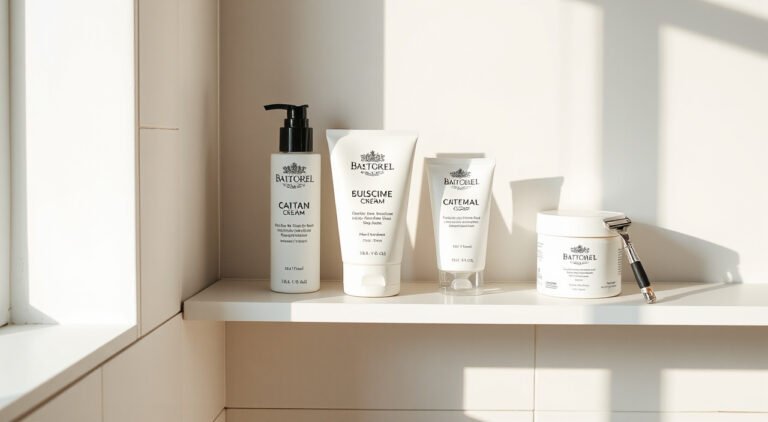
At TSA checkpoints, anything that pours, spreads, sprays or spills is treated as a liquid. That includes moisturizer, serum, sunscreen lotion, gel cleansers, toner, face mist and most masks in tubes or jars.
A common mistake is carrying a full-size tube that is nearly empty. The rule is about the size of the container, not how much is left inside, so a large squeezed tube can still be refused.
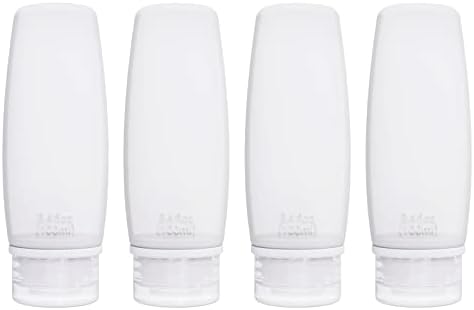
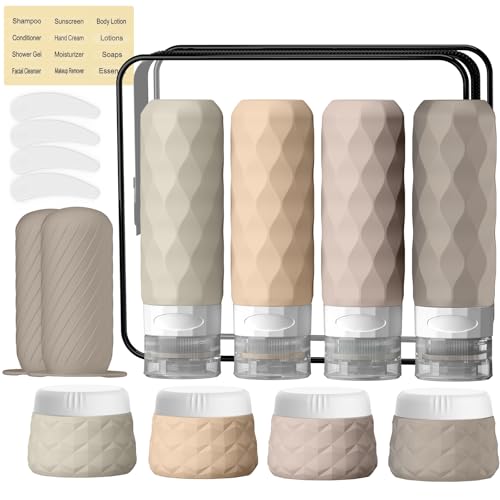
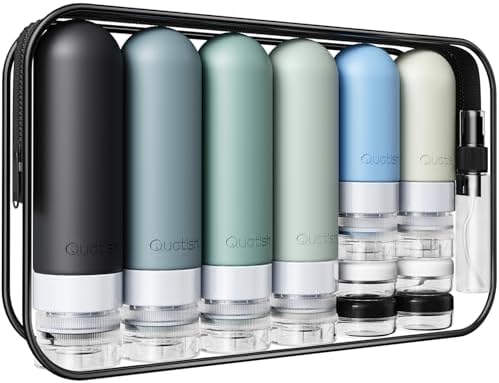
Travel bottles come in silicone and hard plastic. Silicone squeezes easily and suits creams, while rigid bottles work better for thin toners and mists. Fill them about three-quarters full to leave room for air expansion in the cabin.
Each container must be 3.4 ounces (100 milliliters) or smaller, and all of them must fit together in one clear quart-size bag. A large bottle that is only partly full still counts as a large bottle.
Solid products such as stick sunscreen, bar cleansers, solid balms and powder compacts are not treated as liquids, although screeners can still ask to inspect them.
| Item | Usually treated as | Carry-on tip |
|---|---|---|
| Moisturizer, serum, gel | Liquid | 3.4 oz or less in your quart bag |
| Face mist or spray | Liquid or aerosol | 3.4 oz or less in your quart bag |
| Stick sunscreen or balm | Solid | Pack where you can reach it |
| Powder or compact | Powder | Large amounts may get extra screening |
Carry-On Versus Checked Bags
Larger bottles of liquid can go in a checked bag, but they can leak under pressure and temperature changes. Seal the cap, wrap the bottle in a plastic bag and cushion it with clothing.
Weigh your bag before heading to the airport so you do not need to move products around at the check-in desk.
Pack liquids in a sealed bag even in checked luggage. A leaking sunscreen can stain clothes and damage electronics in the same bag.
If you are staying somewhere for a long time, you can ship skincare ahead or buy basics at your destination and carry only what is hard to replace.
Anything you cannot replace easily, such as prescription skincare, belongs in your carry-on. Keep prescription items in their original packaging with the pharmacy label.
If you carry more than the allowed liquid amount, you may be asked to throw items away or put them in a checked bag at the gate, which can be inconvenient.
Lithium Batteries and Facial Devices
Many facial devices run on lithium-ion batteries. Devices with installed batteries can usually go in carry-on or checked bags, but spare lithium batteries and power banks must go in carry-on only, and loose batteries should be protected from short circuits.
Never pack damaged, swollen or overheating batteries or devices. Remove them from use and ask the airline for guidance before you fly.
Look for the watt-hour rating printed on the battery or in the manual. If only milliamp-hours and volts are listed, you can estimate watt-hours by multiplying volts by amp-hours, which is milliamp-hours divided by 1000.
Keep charging cables and adapters in the same pouch as the device so you can set up quickly on arrival. If you travel abroad, check that the charger works with the local voltage and carry a plug adapter.
Airline and aviation rules commonly set limits by watt-hour rating. Most small skincare devices fall well below the common 100 watt-hour limit, but larger packs can need airline approval.
To prevent accidental switch-on, remove the batteries if the device allows, turn it fully off, or use the travel lock. Pack it in a case so the button cannot be pressed.
Which Skincare Devices Are Usually Fine
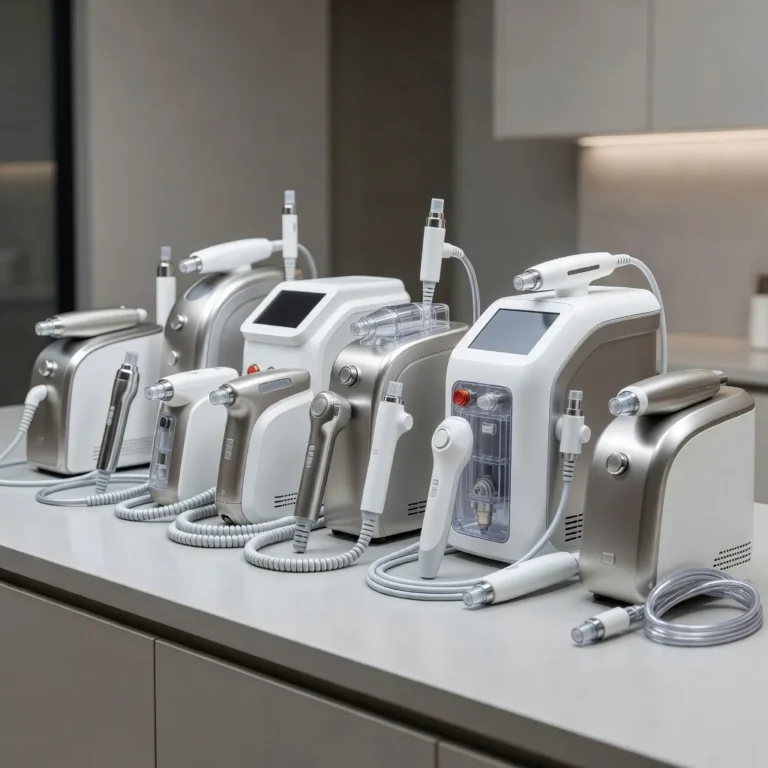
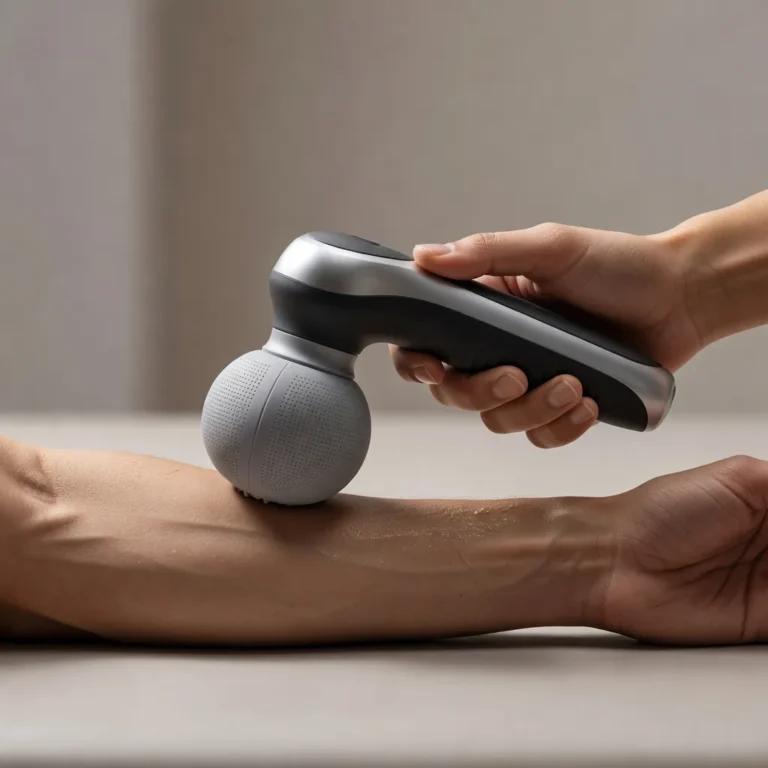
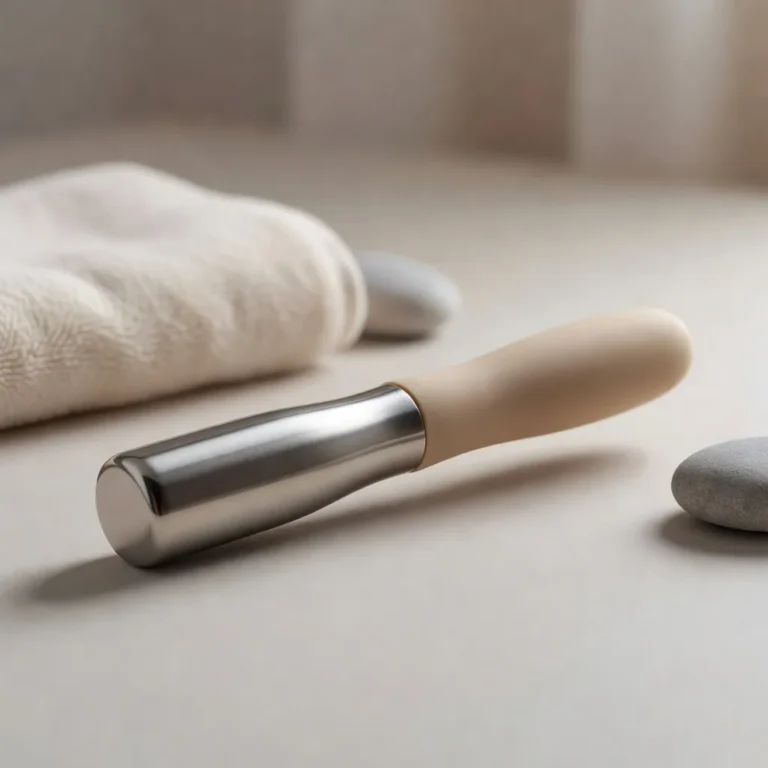
Handheld tools such as gua sha stones, rollers, cleansing brushes, microcurrent tools and LED masks are common in carry-on bags. Because they contain electronics, screeners may ask to look at them, so pack them where you can remove them quickly.
Keep original boxes or manuals for expensive devices. A manual can answer a screener’s questions about batteries or power ratings quickly.
Pack devices in the original case or a padded pouch so they stay protected from knocks. If the device has a lens or LED surface, keep it from touching hard objects.
If you use a skincare device for a medical reason, carry a copy of the instructions or a note from your clinician, which can help if a screener has questions.
Facial steamers should be emptied of water and dried before packing. Devices that heat, such as heated gua sha tools and heated eyelash curlers, should cool fully and be switched off.
Laser hair removal and light-based devices vary by airline and country. Check the airline’s policy and the maker’s guidance, since some devices have extra restrictions or require case protection.
Rules can change and can differ by airline, airport and country. Check the TSA website and your airline before you fly.
| Device | Usual approach | Check first |
|---|---|---|
| LED mask | Carry-on in its case | Battery size and airline policy |
| Microcurrent tool | Carry-on | Spare battery rules |
| Cleansing brush | Carry-on or checked | Remove the head and lock the button |
| Steamer | Empty and dry before packing | Water must be removed |
How to Pack Skincare for a Flight
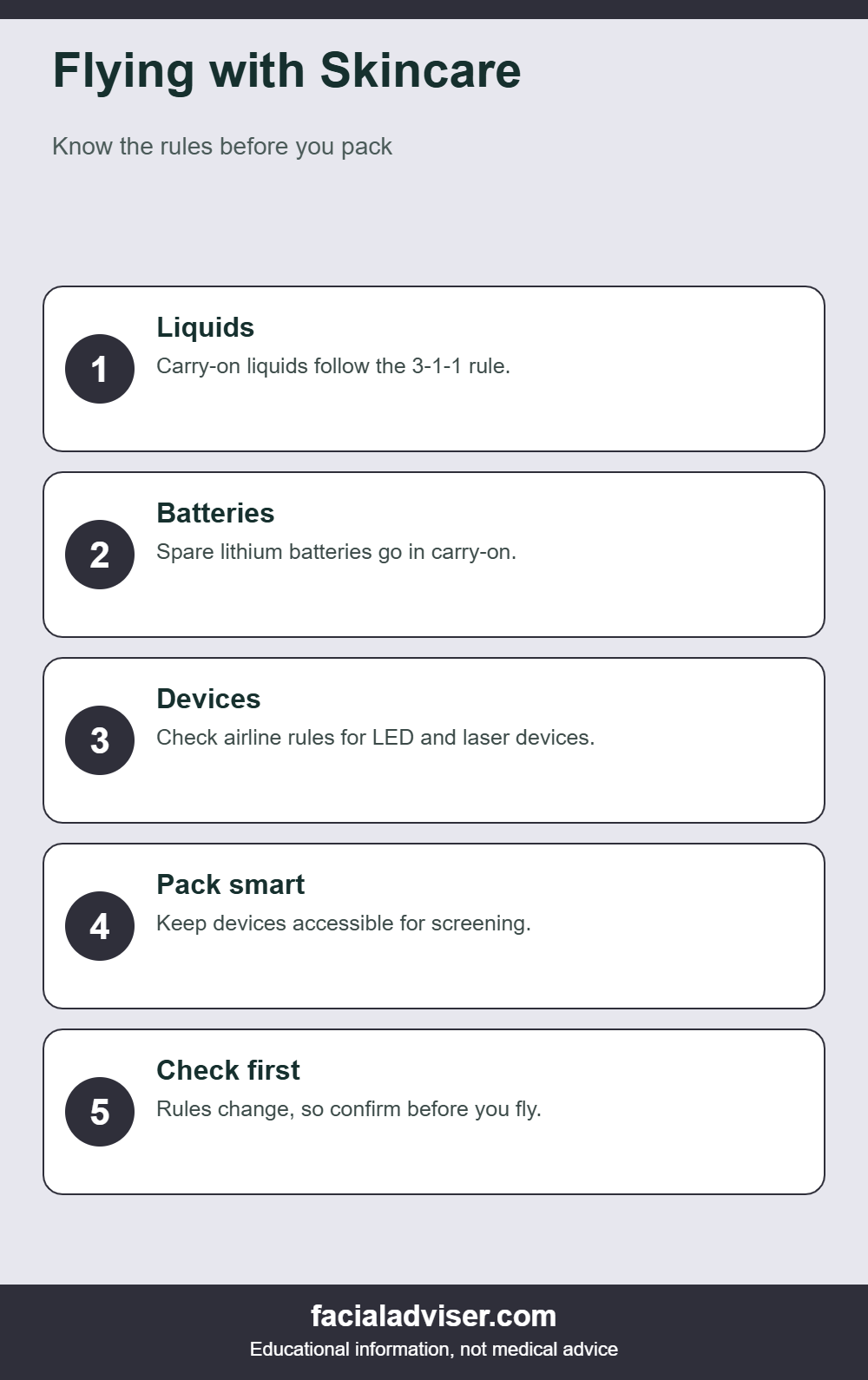
A little planning keeps your skincare within the limits and your bag organized.
Roll clothing around fragile tools rather than packing them loose, and keep a small kit with cotton pads, a mini cleanser and lip balm for the flight.
Label travel bottles with a marker or tape. At the end of a long trip it is easy to forget which unlabeled bottle holds the serum and which one holds the toner.
Decide your minimum routine
Choose a cleanser, moisturizer, sunscreen and any must-have treatment.
Decant into small bottles
Use 3.4 oz or smaller bottles and label each one clearly.
Use a clear quart bag
Keep all liquids together where you can reach them.
Protect devices
Turn them off, lock the buttons and use a padded case.
Carry spare batteries
Keep spare lithium batteries and power banks in your carry-on.
Check the rules
Confirm TSA and airline guidance before you go.
Test your travel bottles at home by squeezing and tipping them. A bottle that leaks at home will leak in flight.
What to Bring and What to Skip
Bring the basics that keep skin comfortable at altitude, where cabin air is very dry: a gentle cleanser, a rich moisturizer, lip balm and sunscreen. Skip bulky extras you will not use.
Hard-shell cases protect devices and bottles, while soft clear bags are lighter. Choose a bag with a zipper that closes fully so nothing slips out when the bag is squeezed in a tray.
Our skincare for flights guide covers a full in-flight routine, and the best lip balm guide covers a small item worth carrying.
Try This
- Travel-size bottles in one clear bag
- Devices in a padded case
- Spare batteries in your carry-on
Avoid This
- Full-size bottles in your carry-on
- Loose spare batteries in checked bags
- Damp steamer parts packed away wet
International Flights and Other Countries
Many countries have similar 100 milliliter limits, but screening procedures and device rules vary. Some airports have newer scanners that allow larger liquids, but you should not rely on that unless the airport confirms it.
Airlines can also set their own limits on battery size and the number of spare batteries, so a device that is fine on one carrier may need approval on another. Read the airline’s dangerous goods page for batteries before packing a large device.
Check the destination country’s rules on devices, especially for light-based and laser devices, and keep receipts or manuals handy in case a screener has questions.
Keeping Skin Comfortable on the Plane
Cabin air is low in humidity, so skin often feels dry and tight. Use a gentle cleanser before the flight, apply moisturizer and drink water during the flight.
After landing, cleanse gently and moisturize to restore comfort. A short routine usually beats a long one when your skin is tired from travel.
Hydrating mists can feel good but dry quickly in cabin air. If you use one, follow with a thin layer of moisturizer so water does not evaporate from the skin.
Avoid heavy makeup if you can, and apply a thin layer of moisturizer or balm to the lips. Wash your hands before touching your face, since cabin surfaces collect germs.
Honest Limits
Travel rules change often, and I cannot confirm the current rule for every airline or country. This guide covers general principles only.
Security procedures can differ by airport and by officer on the day. If you are unsure, pack so items are easy to remove and inspect, and arrive early.
The products listed below are simple travel items with strong ratings. They are examples, not guarantees that an item meets a specific airline’s rules.
When to See a Professional
Ask a pharmacist or doctor if you need to travel with prescription skincare, injectables or medical devices, since these can need documentation.
See a doctor if travel triggers a rash, swelling or other worrying skin reaction.
This article is educational and is not travel or legal advice. Check official TSA and airline guidance before you fly.
Common Questions
Can I bring moisturizer in my carry-on?
Yes, if the container is 3.4 ounces (100 milliliters) or less and fits in your quart-size clear bag.
Does sunscreen count as a liquid?
Lotion and spray sunscreens count as liquids. Stick sunscreen is usually treated as a solid.
Can I fly with an LED face mask?
Generally yes, but check your airline’s battery rules and pack it in a case where you can remove it for screening.
Do spare lithium batteries go in checked bags?
No. Spare lithium batteries and power banks generally belong in your carry-on.
Can I bring a facial steamer?
Usually yes if it is empty and dry. Check your airline and the maker’s guidance.
Can I bring a gua sha or jade roller?
Yes. These are not liquids and are commonly carried on board.
Do full-size products go in checked bags?
Yes, but seal them well to prevent leaks from pressure changes.
Are powder products restricted?
Large amounts of powder in carry-on bags can get extra screening, so keep them small.
What if my bottle is over 3.4 ounces?
It may be removed at security. Decant into a small bottle or pack it in checked baggage.
Where can I check the rules?
Check the TSA website for US flights and your airline’s page for device and battery rules.
The Takeaway
Pack liquids in 3.4 ounce containers in a clear bag, keep spare batteries in your carry-on and protect devices from switching on.
Check TSA and airline guidance before you fly, since rules change and vary by country.

Written by
Registered pharmacist and founder of Facial Adviser. Rakib's pharmacy training covers how skincare actives work and interact; a later course in cosmetology turned that into a focus on facial treatments and skincare products. He plans, researches and edits every guide on the site and checks health claims against sources such as the American Academy of Dermatology, the FDA and the NIH. He is not a dermatologist; see the Editorial Policy and Medical Disclaimer.
About · Editorial policy · How we choose products · Medical disclaimer · Contact
Keep reading: Skincare routine basics
- Best Skin Care Routine: Simple AM and PM Steps for Every Skin Type
- How Long Does Skincare Take to Work? Timelines by Ingredient
- Skinimalism: A 3-Product Routine for Beginners and Busy People
- Skin Cycling: A 4-Night Routine, Explained for Beginners
- What Order Should You Apply Skincare? A Simple Layering Guide
- How to Patch Test a New Skincare Product
Build a spa-like routine with ad-free music