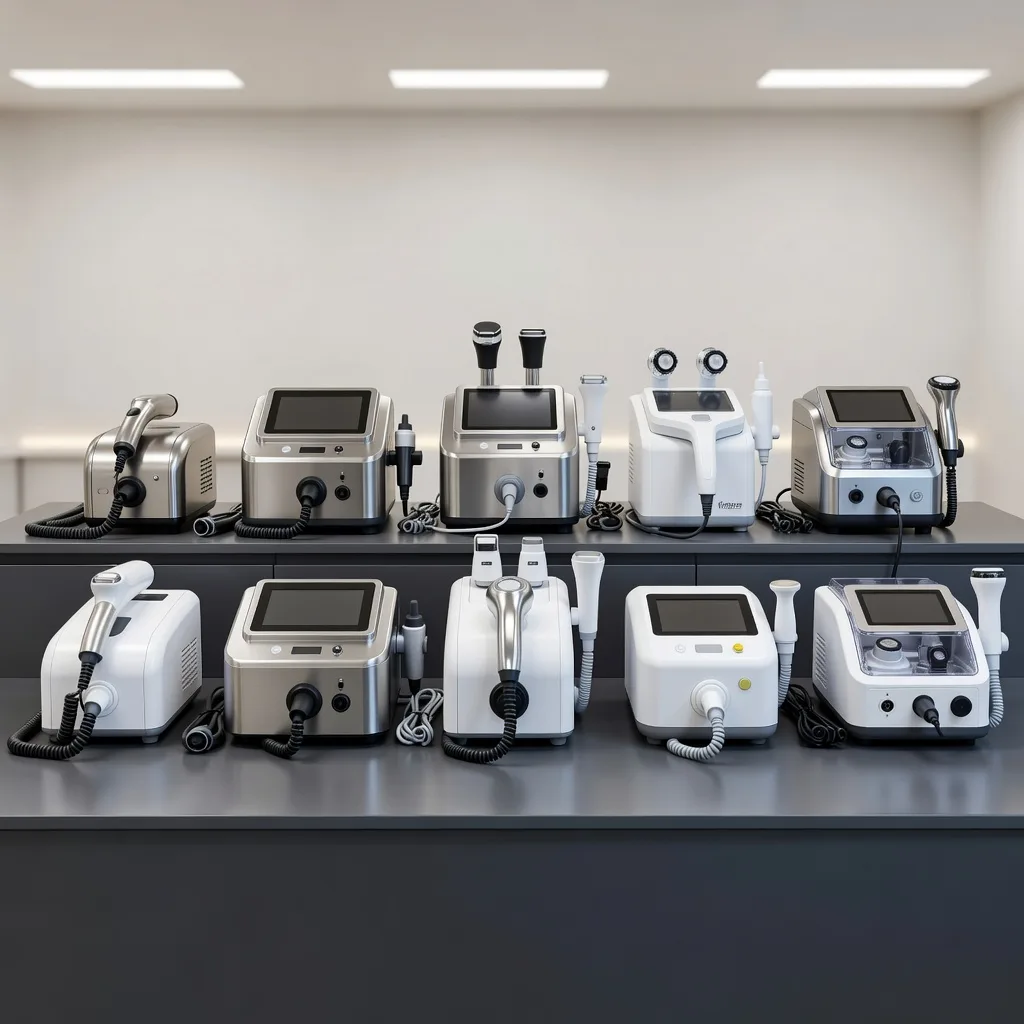
Best Ultrasonic Cavitation Machine: Honest Reviews of What to Look For
Ultrasonic cavitation machines promise a slimmer waist and smoother thighs without surgery, and they are sold everywhere from clinic suppliers to general online marketplaces. Reviews range from glowing to angry, which makes it hard to know what to buy or whether to buy one at all.
The best ultrasonic cavitation machine is one with clear safety documentation, ideally cleared by the FDA or an equivalent regulator for body contouring, stable and adjustable ultrasound output, sensible treatment timers, heads sized for the body area, and clear contraindication guidance. Many low-cost machines sold as cavitation devices have no regulatory clearance, and their real output is unknown. Even with a good machine, results are modest: at best a small, gradual reduction in circumference in targeted areas over several sessions. Cavitation is not a weight-loss treatment, does not treat obesity and cannot replace diet and exercise.
In short: choose a machine with clear safety and regulatory information, and expect small, gradual changes rather than fat loss.
The US Food and Drug Administration states that non-invasive body contouring does not remove tissue, does not treat obesity and will not result in weight loss, and it lists burns and blisters among the possible risks of ultrasound devices.
This guide explains how cavitation works, what separates cleared from uncleared machines, the features worth checking, the safety rules and what the evidence really shows, so you can read reviews with a critical eye.
Recommended Ultrasonic Cavitation Machines on Amazon



What This Covers
- How Ultrasonic Cavitation Works
- FDA-Cleared vs Uncleared Machines
- What Results Are Realistic
- Features to Compare When Reading Reviews
- Safety and Contraindications
- How to Choose an Ultrasonic Cavitation Machine
- Home Machines vs Clinic Treatment
- Cavitation, Weight Loss and Skin Laxity
- Session Spacing and Aftercare
- Dos and Don’ts
- Honest Limits
- When to See a Doctor or Dermatologist
- FAQ
- The Takeaway
Key Takeaways
- Cavitation uses low-frequency ultrasound aimed at fat under the skin.
- It is a contouring treatment, not a weight-loss treatment.
- Results are modest, gradual and vary between people.
- Many online machines have no FDA or equivalent clearance.
- Burns, blisters and bruising are possible with poor technique.
- Pregnancy, implants and several health conditions rule it out.
- Reviews showing dramatic results deserve scepticism.
How Ultrasonic Cavitation Works
Ultrasonic cavitation machines send low-frequency sound waves through the skin using a handpiece and a layer of conductive gel. The idea is that the ultrasound energy creates pressure changes in the fat layer that damage some fat cells, which the body then clears over the following weeks.
The FDA’s page on non-invasive body contouring technologies describes ultrasound devices as applying sound energy to the skin surface to damage fat cells and potentially reduce circumference, and explains that gel is used to protect the skin and keep good contact.
Many consumer and salon machines combine cavitation with other functions, such as radiofrequency, vacuum suction or lipo laser pads. These are separate technologies with separate risks, so it helps to know what each handpiece does rather than judging the machine as one package. A review praising the radiofrequency heat, for example, tells you little about how well the cavitation head works.
FDA-Cleared vs Uncleared Machines
This is the most important difference between machines, and many listings blur it with phrases such as professional grade or clinically inspired, which have no regulatory meaning. A cleared device has been reviewed for a specific intended use. An uncleared device may still work to some degree, but its output, safety testing and claims have not been checked.
| Point | Cleared clinic devices | Many low-cost online machines |
|---|---|---|
| Regulatory status | Listed in FDA or equivalent databases for a stated use | Often no clearance, or clearance claimed without proof |
| Output information | Documented and consistent | Often vague or exaggerated |
| Safety features | Temperature and contact monitoring common | Varies, sometimes minimal |
| Training | Usually required or supplied | Often a short leaflet or video |
| Claims | Limited to the cleared use | Often promise weight or fat loss |
| Support | Service, parts and updates | Often limited |
You can check whether a device is cleared by searching the FDA 510(k) and De Novo databases. If a seller claims clearance, ask for the device name and clearance number and check it yourself, because the listing name and the cleared device name should match.
What Results Are Realistic
Honest reviews of cavitation machines tend to agree on one point: changes are small and gradual. The table below sets out what people can reasonably expect.
| Goal | Is cavitation suitable? | Realistic outcome |
|---|---|---|
| Weight loss | No | No meaningful change on the scale |
| Treating obesity | No | Not a health treatment |
| Small stubborn areas | Possibly | Modest circumference change over several sessions |
| Cellulite | Limited | Temporary smoothing at best |
| Loose skin | No | May look looser if volume drops |
| Face and neck | Not recommended | Body heads are not designed for the face |
Results also depend on the person. Someone close to a stable, healthy weight with a small, pinchable area of fat is more likely to notice a difference than someone hoping to lose a large amount. If a course brings no measurable change after the recommended number of sessions, continuing is unlikely to help. Measurements taken under the same conditions before and after a course are more reliable than photos, which can change with lighting, posture and time of day.
Features to Compare When Reading Reviews
Star ratings rarely tell you whether a machine is safe or well built. Look for these details in the specification and in detailed reviews.
- Regulatory status and a device name you can verify.
- Clear frequency and power information, with adjustable intensity rather than one fixed setting.
- Built-in treatment timers and automatic shut-off.
- Head sizes suited to the area, with a smaller head for arms and a larger one for the abdomen.
- Some form of temperature or contact monitoring.
- A detailed manual with contraindications, treatment times and cleaning guidance.
- Electrical safety marking, warranty and access to service.
- Reviews that mention build quality and support, not just before-and-after photos.
Be cautious with reviews that report dramatic results after one session, especially if they come with discount codes or free products. Water shifts and measuring differences can easily explain a change of that kind. The most useful reviews are usually the balanced ones that describe the machine after several weeks, including any problems with overheating, faulty heads or slow customer service.
Safety and Contraindications
Cavitation is described as non-invasive, but it still delivers energy into the body. The FDA notes that complications with body contouring can range from temporary redness and swelling to burns, nerve damage and scarring, and it lists blisters and burns for ultrasound in particular.
- Pregnancy or breastfeeding.
- Pacemakers, implanted electronic devices or metal implants near the treatment area.
- Active cancer, or treatment for cancer.
- Liver or kidney disease, or blood clotting disorders, unless a doctor approves.
- Open wounds, infections or skin conditions in the area.
- Treatment over bone, the heart, the thyroid, the head or the face.
Stop immediately if the skin feels hot, painful or starts to blister, or if the client feels unwell. Never use cavitation without enough gel, never hold the head still in one spot, and never exceed the treatment time in the manual. Ask clients to talk to their doctor first if they have any medical condition or take regular medication.
How to Choose an Ultrasonic Cavitation Machine
Use these steps to judge any machine, whether you are reading reviews for home use or comparing clinic devices.
Check regulatory status first
Look up the device name in the FDA databases or your local regulator.
Read the manual before buying
Make sure it lists contraindications, treatment times and cleaning steps.
Compare the settings
Choose adjustable intensity, timers and automatic shut-off.
Match heads to the body area
Smaller heads for arms and knees, larger heads for abdomen and thighs.
Read detailed reviews
Focus on build quality, support and side effects rather than photos.
Plan training
Learn technique, contraindications and aftercare before using it on anyone.
Set honest expectations
Measure carefully and expect small changes over a full course.
Take waist, hip or thigh measurements at the same time of day, in the same position and with the same tape before starting, then repeat at the end of the course. It gives a far more honest picture than photos.
Home Machines vs Clinic Treatment
Home cavitation machines are usually small handheld units, often combined with radiofrequency or light pads. They are cheaper than clinic devices, but their output is often lower or undocumented, and the user has to judge safety alone. There is no practitioner to spot a contraindication or notice early signs of a burn.
Clinic treatment with a cleared device and a trained practitioner is more predictable and safer, but it is still a cosmetic treatment with modest results. If you decide to try a home machine, follow the manual exactly, keep sessions short, use plenty of gel and stop at the first sign of heat or pain. Never share a machine for use on someone who has not read the contraindications, and keep it away from children.
Cavitation, Weight Loss and Skin Laxity
Because cavitation is often marketed alongside weight-loss language, it helps to be clear. It does not lower body weight and does not replace a healthy diet, movement and sleep. Where it helps at all, it is for small areas of fat that remain after weight is stable.
Reducing volume can also make loose skin more noticeable. Our guide on skin tightening after weight loss covers what helps with laxity, and our comparison of microcurrent and radiofrequency explains how those energy-based treatments differ from cavitation.
Session Spacing and Aftercare
How a machine is used matters as much as which machine you buy. Manuals and clinics usually recommend short sessions on each area, with rest days in between, rather than long or daily treatments.
- Follow the manual’s maximum time per area and per session.
- Leave the gap between sessions that the manufacturer recommends, often several days.
- Drink water as normal and keep up regular movement, which supports general health.
- Avoid treating the same area if it is still red, tender or bruised.
- Stop the course and seek advice if you notice lumps, numbness or skin changes.
More sessions or longer sessions do not mean better results. Overtreating raises the risk of burns and bruising without any clear extra benefit. Keeping a simple log of dates, areas, settings and measurements helps you see whether the treatment is doing anything worthwhile, and gives you something useful to show a doctor if a problem appears.
Dos and Don’ts
Helps
- Check FDA or equivalent clearance
- Use plenty of conductive gel
- Keep the head moving
- Follow the manual’s time limits
- Measure results honestly
Backfires
- Use it as a weight-loss plan
- Treat over the face, heart, thyroid or bone
- Use it while pregnant or with a pacemaker
- Continue if the skin burns or blisters
- Trust dramatic one-session reviews
Honest Limits
The evidence for ultrasonic cavitation comes mainly from small, short studies, often funded by device makers, and many use machines that are not the same as those sold online. Results that do appear are usually small, and it is unclear how long they last if weight changes. Few studies compare cavitation with a placebo treatment, and few follow people for long periods, so firm conclusions are not possible.
No cavitation machine can promise fat loss, and reviews cannot tell you whether an individual machine is safe. If a listing promises that fat will melt away, that you can skip exercise or that results are permanent, treat it as a warning sign rather than a selling point.
When to See a Doctor or Dermatologist
- You have burns, blisters, lasting pain or numbness after a session.
- You have a medical condition, implant or take regular medication.
- You are pregnant, breastfeeding or planning a pregnancy.
- You want to lose weight for health reasons and need a proper plan.
- You notice lumps, hard areas or skin changes after treatment.
This article is for general information and does not replace professional medical advice. Talk to your doctor before any body contouring treatment, and see a board-certified dermatologist or doctor if you have side effects.
FAQ
Does ultrasonic cavitation really work?
It may cause small, gradual changes in targeted areas, but results are modest.
Can cavitation help me lose weight?
No, it is not a weight-loss treatment.
Is the best machine FDA cleared?
Clearance is a strong sign of reviewed safety and intended use.
How many sessions are needed?
Most plans use a course of sessions spaced over weeks.
Is cavitation safe at home?
It carries risks; follow the manual exactly and stop if it feels hot.
Can I use a cavitation machine on my face?
Body machines are not designed for the face.
Does cavitation hurt?
It should not; heat or pain means stop.
Who should not use cavitation?
Pregnant people and those with implants or certain health conditions.
Are results permanent?
It is unclear, and weight changes affect them.
Why do reviews vary so much?
Machines, technique, measurement and expectations all differ.
The Takeaway
The best ultrasonic cavitation machine has verifiable safety information, adjustable settings, timers and clear contraindications, and its seller makes honest claims.
Even then, treat cavitation as a modest contouring option for small areas, never as a way to lose weight, and stop immediately if anything feels hot, painful or wrong.