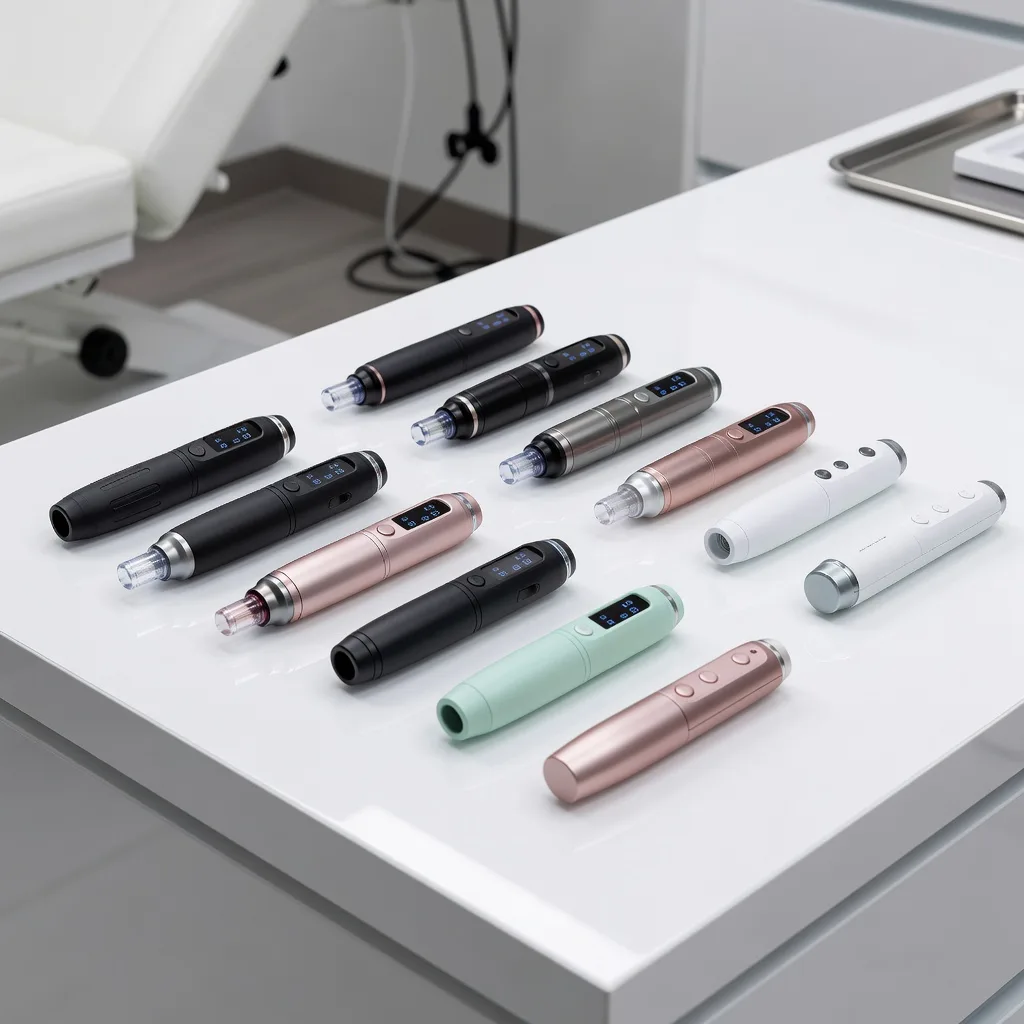
Best Microneedling Pen: Derma Pen Reviews, Needle Depth and Safety Guide
Microneedling pens, often called derma pens, are motorised devices that push a cartridge of tiny needles in and out of the skin at high speed. They are used in dermatology clinics for acne scars and texture, and they are also sold widely for home use, which is where most of the confusion and many of the problems begin.
The best microneedling pen for professional use has precise, reliable depth control, a steady motor with adjustable speed, single-use sterile cartridges with a seal that stops fluid flowing back into the pen, and clear safety documentation. For home use, the safest choice is a pen used only at very shallow settings that do not puncture the skin, because deeper needling at home raises the risk of infection, scarring and pigment changes. Professional microneedling with a trained provider gives more noticeable and longer-lasting results for acne scars and texture than home devices. No pen replaces training, sterile technique and realistic expectations.
In short: deep microneedling belongs in trained hands; at home, keep it shallow, sterile and infrequent, or skip it.
The American Academy of Dermatology says dermatologist microneedling gives more significant and longer-lasting improvement than home or spa treatments, and warns that home devices that pierce the skin can cause infection or scarring.
This guide explains how microneedling pens work, compares professional and home models, covers needle depth and cartridges, and sets out the safety rules and honest limits.
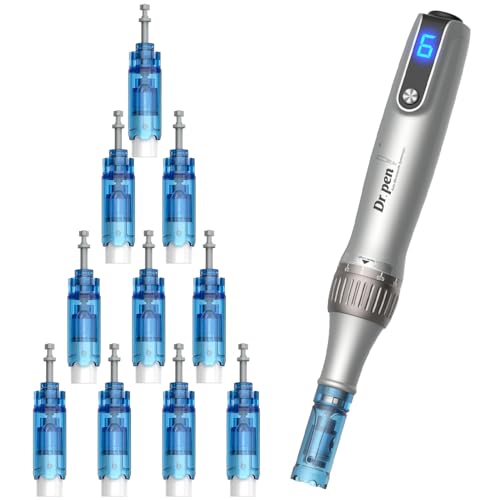
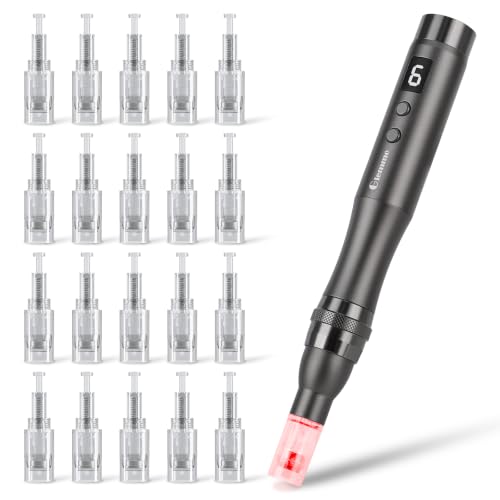
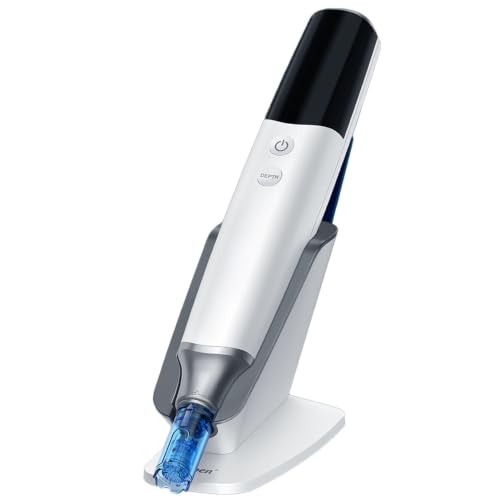
Recommended Microneedling Pens on Amazon


What This Covers
- How a Microneedling Pen Works
- Professional vs Home Microneedling Pens
- Needle Depth: What the Settings Mean
- Features That Make a Better Microneedling Pen
- Infection and Other Risks
- What Microneedling Can Improve
- Preparing the Skin and the Pen
- How to Choose a Microneedling Pen
- Aftercare After Microneedling
- Dos and Don’ts
- Honest Limits
- When to See a Dermatologist
- Frequently Asked Questions
- Final Word
Key Takeaways
- Microneedling pens use disposable needle cartridges driven by a motor.
- Depth control and sterile, sealed cartridges matter most.
- Deeper settings belong in trained, clinical hands.
- Home pens should stay at shallow depths that do not break the skin.
- Infection, scarring and pigment changes are real risks.
- Acne scars usually need several sessions weeks apart.
- Never share cartridges or reuse them.
How a Microneedling Pen Works
A microneedling pen holds a small cartridge containing a cluster of fine needles. A motor moves the needles up and down rapidly while the practitioner glides the pen across the skin, creating many tiny channels at a set depth.
When the needles go deep enough to cause controlled injury, the skin responds with a healing process that can gradually improve scars and texture over months. The FDA’s page on microneedling devices describes them as instruments with many small needles or pins that repeatedly pierce the skin, and notes that some are motorised with adjustable depth.
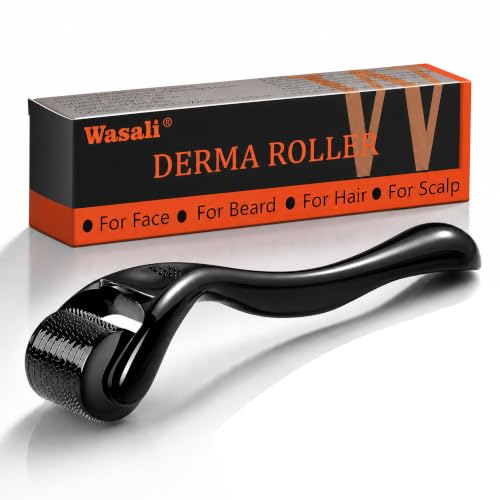
Pens have largely replaced rollers in clinics because they give more even, controllable treatment and use disposable cartridges. That same control, though, means a pen set too deep can do more harm than a basic roller. Rollers also drag needles in and out at an angle, while pens enter the skin more vertically, which is one reason clinics prefer them.
Professional vs Home Microneedling Pens
Many pens sold online look almost identical to clinic devices, and some offer the same depth range. The difference lies in how they are used, the quality of the cartridges and the training of the person holding them. A clinic also has sterile supplies, numbing options and a plan for managing side effects if something goes wrong.
| Feature | Professional use | Home use |
|---|---|---|
| Depth used | Deeper settings for scars and texture, chosen by the provider | Very shallow settings that do not puncture the skin |
| Sterility | Sterile field, single-use cartridges, skin preparation | Hard to keep fully sterile |
| Numbing | Topical anaesthetic when needed | Usually none |
| Results | More noticeable, longer lasting | Mild at best |
| Main risks | Managed by training and follow-up | Infection, scarring, pigment changes, overuse |
| Aftercare | Guided and monitored | Self-directed |
The AAD’s page on microneedling to fade scars explains that at-home products are not meant to puncture the skin, and that overusing them can irritate the skin and make the concern more noticeable.
Needle Depth: What the Settings Mean
Depth is the setting that most affects both results and risk. Pens usually show depth in millimetres, but the true depth reached in the skin varies with pressure, speed, skin thickness and needle quality. Cheap pens may also be less accurate than their markings suggest, so a setting that looks shallow can reach further than expected.
- Very shallow settings mainly roughen the surface and are the only range suited to home use.
- Moderate depths are used by professionals for texture, fine lines and mild scarring.
- Deeper settings are reserved for scars in thicker skin and should only be used by trained providers.
- Thin areas such as the forehead, around the eyes and over bone need much shallower settings.
- Going deeper does not mean better results; it means more injury and more risk.
Many consumer pens offer depths that are far beyond what is safe at home. A dial that goes deep is not a feature for a home user; keep home use at the shallowest settings or leave deeper treatment to a professional.
Features That Make a Better Microneedling Pen
When comparing pens and reading reviews, focus on the features that affect safety and consistency.
- Accurate, clearly marked depth adjustment that locks in place.
- Stable motor speed with a few adjustable levels.
- Cartridges that are sterile, individually sealed and single use.
- A cartridge design that stops fluid or blood flowing back into the pen body.
- A pen body that can be wiped and disinfected, plus disposable pen sleeves.
- Reliable battery or cable, and a comfortable grip for steady strokes.
- A clear manual with cleaning and safety instructions and access to genuine cartridges.
Cheaper is not always worse, but documentation and cartridge quality should never be compromised. Reviews that praise a pen for being powerful or reaching deep settings are not a good guide. Look instead for comments on cartridge quality, consistent depth, build quality and support. Be cautious with pens that use unbranded cartridges from unknown suppliers, because you cannot be sure they are sterile.
Infection and Other Risks
Microneedling creates many tiny openings in the skin, so hygiene is critical. The FDA lists redness, bruising, bleeding and peeling as common short-term effects, with pigment changes, cold sore reactivation and infection as less common risks, some of which may be permanent.
- Reusing or sharing cartridges can spread bacteria and viruses.
- Needling over active acne, warts or cold sores can spread them across the face.
- Applying products not meant for broken skin can cause irritation or reactions.
- Needling too deep or too often can cause scarring and dark marks.
- Darker skin tones are more prone to pigment changes after injury.
Do not microneedle over active acne, cold sores, warts, rashes, sunburn or broken skin. People with a history of keloids, slow healing, a weakened immune system or recent isotretinoin use should not microneedle without a dermatologist’s advice. Seek medical help for pain, swelling, pus or fever after treatment.
What Microneedling Can Improve
Professional microneedling has reasonable evidence for some concerns, particularly acne scars. Results build slowly as the skin remodels, so patience matters. Most people need to wait several months after a course to judge the final result, and some need maintenance sessions later.
| Concern | Professional microneedling | Home pen at shallow depth |
|---|---|---|
| Acne scars | Can improve over several sessions | Little change |
| Enlarged pores and texture | Often improves | Mild surface smoothing |
| Fine lines | Can soften | Minimal |
| Stretch marks | Some improvement possible | Minimal |
| Deep wrinkles and sagging | Limited | Not effective |
| Active acne | Not suitable | Not suitable |
The AAD notes that acne scar treatment usually involves several sessions spaced weeks apart, with results appearing gradually. For a wider view of scar options, see our guide on the best facial treatments for acne scars, and our comparison of laser facials and microneedling.
Preparing the Skin and the Pen
Much of the infection risk with microneedling comes from what happens before the needles touch the skin. Professionals follow a set routine, and anyone using a pen at home should copy the basics.
- Wash hands thoroughly and work on a clean, clear surface.
- Cleanse the face and remove all makeup, sunscreen and oils.
- Disinfect the skin with a product suitable for the face, then let it dry.
- Wipe the pen body and fit a new disposable sleeve if the design allows.
- Open a new sterile cartridge only when you are ready to start.
- Use only a simple, sterile glide product that is intended for broken skin, or none at all.
After treatment, remove the cartridge and throw it away safely in a rigid container, then clean the pen body again. Never store a used cartridge for next time. If the skin looks inflamed, spotty or broken on the day you planned to treat, postpone the session rather than working around the problem.
How to Choose a Microneedling Pen
Whether you are a trained practitioner or considering a pen for gentle home use, these steps help you choose carefully.
Be clear about who will use it
Deeper treatment needs a trained provider; home use should stay shallow.
Check depth control
Look for accurate, locking depth settings with clear markings.
Inspect the cartridges
Choose sterile, sealed, single-use cartridges that block backflow.
Look at hygiene design
The pen body should be easy to disinfect and use with disposable sleeves.
Read the manual
Check safety guidance, contraindications and cleaning steps.
Check cartridge supply
Make sure genuine cartridges are easy to buy, so you are never tempted to reuse one.
Plan aftercare
Have a gentle cleanser, bland moisturiser and sunscreen ready.
Buy more cartridges than you think you need. Running out is one of the most common reasons people reuse a cartridge, which is exactly what raises the risk of infection.
Aftercare After Microneedling
Skin is more vulnerable for a few days after needling, so aftercare should be simple and gentle. Redness and a sunburn-like feeling for a day or two are common after professional treatment.
- Keep the skin clean and avoid touching it with unwashed hands.
- Use a gentle cleanser and a bland, fragrance-free moisturiser.
- Avoid retinoids, acids and scrubs until the skin has settled.
- Use broad-spectrum sunscreen every morning and limit sun exposure while the skin heals.
- Avoid makeup for the period your provider recommends.
Our guide on why you should not wear makeup after microneedling explains the reasons and how long to wait.
Dos and Don’ts
Do
- Use a new sterile cartridge every time
- Keep home use at shallow depths
- Cleanse and disinfect before treatment
- Use sunscreen after treatment
- See a professional for scars
Don’t
- Share or reuse cartridges
- Needle over acne, cold sores or warts
- Chase deeper settings for faster results
- Apply irritating products straight after
- Treat if you have a keloid history without advice
Honest Limits
Evidence for microneedling is strongest for acne scars treated by professionals, and even there results vary and improvement is partial rather than complete. Evidence for home pens is much weaker, and most of the benefit people describe at shallow depths comes from smoother-feeling skin rather than structural change.
A pen is only one part of the treatment. Sterility, correct depth, skin preparation, aftercare and choosing the right client matter at least as much. Before-and-after photos in reviews are often taken in different lighting and rarely show the long-term outcome. Be wary of reviews and listings that promise clinic results at home, or that encourage using deep settings without training.
When to See a Dermatologist
- You want treatment for acne scars, stretch marks or deep texture.
- You notice signs of infection, such as pain, swelling, pus or fever.
- Dark marks, lasting redness or new scarring appear after needling.
- You have a history of keloids, cold sores or a weakened immune system.
- You have recently taken isotretinoin.
This article is for general information and does not replace professional medical advice. Microneedling that punctures the skin should be carried out by a trained provider, and anyone with side effects should see a board-certified dermatologist.
Frequently Asked Questions
What is the best microneedling pen?
One with accurate depth control, sterile sealed cartridges and clear safety guidance.
Is a derma pen better than a roller?
Pens give more even, controllable treatment and use disposable cartridges.
What needle depth is safe at home?
Only very shallow settings that do not puncture the skin.
Can I use a professional pen at home?
It is not advised without training and sterile technique.
How often can I microneedle?
Professional sessions are usually weeks apart; home use should be infrequent.
Can microneedling cause infection?
Yes, especially with reused cartridges or poor hygiene.
Does microneedling help acne scars?
Professional treatment can improve them over several sessions.
Can I microneedle active acne?
No, it can spread bacteria and worsen breakouts.
Can I reuse cartridges?
No, always use a new sterile cartridge.
Is microneedling safe for dark skin?
Often, with a trained provider, but pigment changes are a risk.
Final Word
The best microneedling pen offers accurate depth control, sterile single-use cartridges that block backflow and clear safety guidance, but the person using it matters more than the pen.
For scars and deeper texture, see a trained provider. At home, stay at shallow depths, never reuse cartridges and stop at any sign of infection or irritation.