What Happens When Makeup Is Tested on Animals?
What happens when makeup is tested on animals, and why do the actual rules vary so much depending on where a product is sold?
US federal law neither requires nor bans animal testing for cosmetics, leaving the decision to individual manufacturers, while the EU has banned testing on finished products since 2004 and ingredients since 2009, plus a 2013 marketing ban on selling anything tested on animals anywhere in the world. A real loophole persists even in the EU, though: its separate REACH chemical-safety law can still require animal testing on ingredients shared with other industries.
Validated non-animal alternatives exist and are actively promoted by the FDA, but “cruelty-free” labeling in the US isn’t independently verified by any government body.
This guide covers what actually happens region by region, what the real alternatives look like, and how to read a cruelty-free claim critically.
Recommended Independently Certified Cruelty-Free Brands
Key Points First
- US federal law does not require animal testing for cosmetics — the FD&C Act neither mandates it nor subjects cosmetics to FDA premarket approval — but it also doesn’t ban it, leaving the decision to individual companies.
- The EU banned animal testing on finished cosmetic products in 2004 and on ingredients in 2009, then banned selling any cosmetic tested on animals anywhere in the world starting March 2013.
- A real loophole persists even in the EU: its broader REACH chemical-safety law can still require animal testing on an ingredient shared with non-cosmetic industrial uses.
- Validated non-animal alternatives exist and are actively promoted by regulators including the FDA, but “cruelty-free” labeling in the US is not independently regulated or verified by any government body.
Jump To
- What Actually Happens, Mechanically
- US Law: Not Required, Not Banned
- The EU’s Ban: Two Different Dates That Matter
- The REACH Loophole Even the EU Hasn’t Closed
- Animal Testing Rules by Region
- What Non-Animal Alternatives Actually Look Like
- “Cruelty-Free” Labels Aren’t Independently Verified
- Reading a “Cruelty-Free” Claim Critically
- Why China Still Complicates This
- Do This, Not That
- Checking a Brand’s Actual Policy, Step by Step
- What This Article Can’t Tell You
- Frequently Asked Questions
What Actually Happens, Mechanically
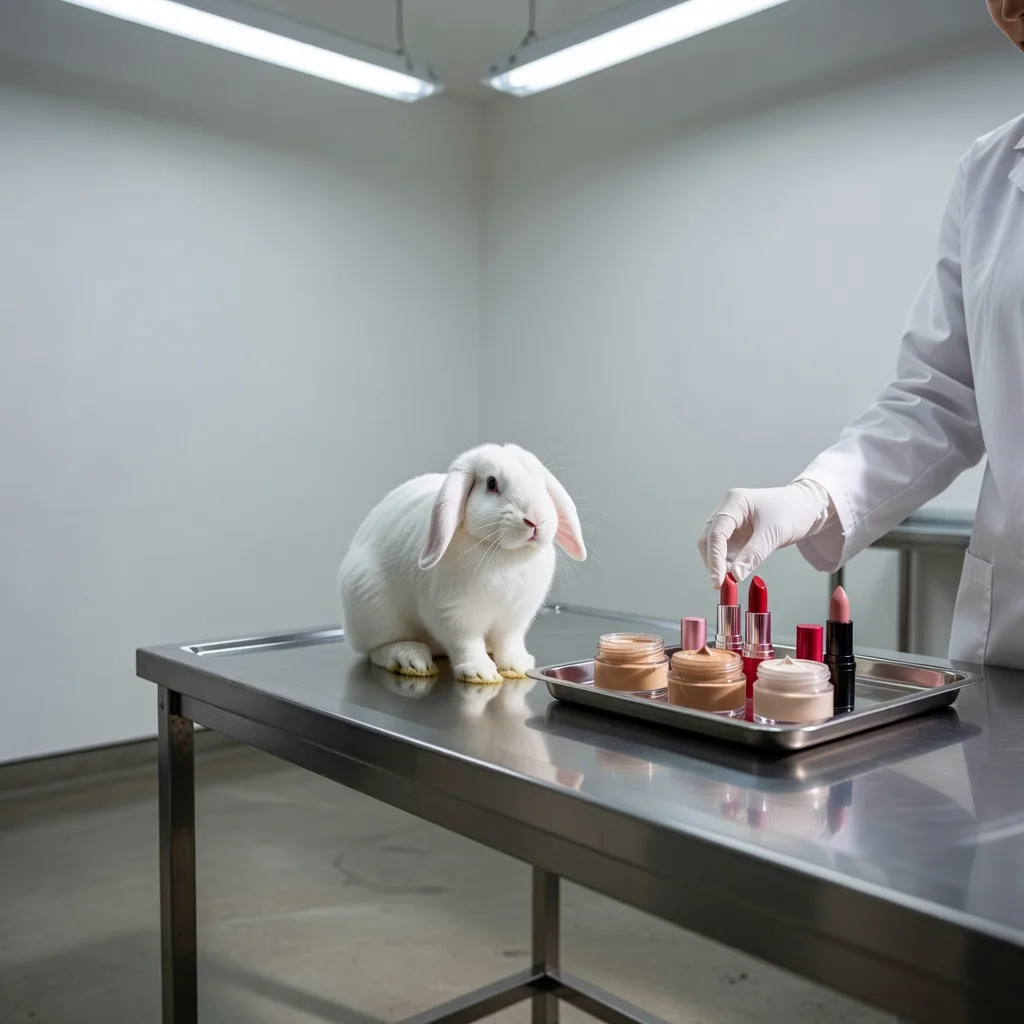
When a cosmetic ingredient or finished product is animal-tested, it’s typically evaluated on rabbits, guinea pigs, mice, or rats for skin and eye irritation, allergic sensitization, and, historically, acute toxicity. These tests were designed decades ago, before validated non-animal alternatives existed, to catch products that would harm human users. The practice is now heavily restricted in some regions and still legal, if uncommon among major brands, in others — and the actual rules vary more by region than most shoppers realize.
US Law: Not Required, Not Banned
The FDA’s own published position is direct: the Federal Food, Drug, and Cosmetic Act “does not specifically require the use of animals in testing cosmetics for safety, nor does the Act subject cosmetics to FDA premarket approval.” Manufacturers are responsible for substantiating their own products’ safety and can use “whatever testing is appropriate and effective” for that purpose — which leaves the door open for animal testing without ever mandating it. In practice, most major cosmetics brands selling in the US have moved away from animal testing voluntarily, partly due to consumer pressure and partly because many also sell in markets, like the EU, where it’s prohibited.
The EU’s Ban: Two Different Dates That Matter
The EU’s Cosmetics Regulation (EC) No 1223/2009 actually contains two separate prohibitions, and conflating them causes a lot of the confusion around this topic. Animal testing on finished cosmetic products has been banned in the EU since September 2004, and testing on cosmetic ingredients specifically was banned starting March 2009. Separately, and more sweepingly, a marketing ban took effect in March 2013: it’s illegal to sell any cosmetic product in the EU, finished product or ingredient, if it was tested on animals anywhere in the world, even outside Europe, after that date.
The REACH Loophole Even the EU Hasn’t Closed
Despite these bans being genuinely strict on paper, a real complication exists: the EU’s separate REACH regulation, which governs the safety of chemicals generally, can still require animal testing on a substance used in cosmetics if that same chemical is also used in other industries and alternative data isn’t available — particularly for worker-safety and environmental-impact assessments unrelated to cosmetic use. This means an ingredient found in a cosmetic sold in the EU may still have animal-test data behind it somewhere in its regulatory history, even though the cosmetic itself was never directly tested on animals for its cosmetic use.
Animal Testing Rules by Region
| Region | Testing required? | Testing banned? | Notable detail |
|---|---|---|---|
| United States | No | No | Neither required nor banned; left to manufacturer discretion |
| European Union | No | Yes, since 2004/2009 | Marketing ban since 2013 blocks sale regardless of where testing occurred; REACH loophole persists |
| United Kingdom | No | Yes, plus stricter 2024 stance | Announced no new licenses for cosmetic ingredient animal testing as of 2024 |
| China (mainland) | Historically yes for some imports | Partial exemptions since reforms | Rules have loosened but requirements can still apply depending on product category |
What Non-Animal Alternatives Actually Look Like
The FDA explicitly states that it “supports the development and use of alternatives to whole-animal testing” and participates in the Interagency Coordinating Committee on the Validation of Alternative Methods (ICCVAM), a body formed in 1997 specifically to develop and validate non-animal testing methods across federal agencies. In practice, these alternatives include reconstructed human skin models grown in a lab, computer-based predictive modeling drawing on existing toxicology data, and in-vitro cell culture assays that can flag irritation or toxicity without a living animal involved. These aren’t hypothetical — they’re validated, used by major manufacturers, and often faster and cheaper than traditional animal testing.
“Cruelty-Free” Labels Aren’t Independently Verified
Here’s the part that surprises a lot of shoppers: in the United States, there is no government body that defines, regulates, or verifies what “cruelty-free” means on a cosmetic label. A brand can print it based on its own internal policy alone. Third-party certification programs exist and do add a genuine layer of verification, but using one is voluntary, and a product without a certification logo isn’t necessarily untested — it may simply not have paid for or pursued the certification process.
Reading a “Cruelty-Free” Claim Critically
| What you see | What it actually means |
|---|---|
| “Cruelty-free” with no logo | Unverified company self-claim |
| Recognized third-party certification logo | Independently audited against that certifier’s specific standard |
| “Not tested on animals” | May still use ingredients that were animal-tested by a supplier, even if the finished product wasn’t |
| Sold in mainland China | Worth checking current import-testing requirements, which have shifted over time |
Why China Still Complicates This
A brand can have a genuinely strict no-animal-testing policy in most markets and still face a more complicated picture if it sells in mainland China, where import and safety testing requirements have historically been stricter and, for some product categories, could require animal testing regardless of the brand’s own global policy. Reforms have loosened this over recent years for many “general use” cosmetics, but the requirements vary by product type and have changed multiple times, so a brand’s presence in that market is worth checking specifically rather than assumed one way or the other. A brand that markets itself as cruelty-free everywhere else but actively sells in mainland China through channels subject to older testing requirements is a common, genuine inconsistency worth asking a brand directly about, rather than assuming their global marketing claim automatically covers every market they operate in.
Do This, Not That
Do
- Do look for a specific, recognizable third-party cruelty-free certification rather than relying on unverified label language alone.
- Do check whether a brand sells in mainland China if animal testing history for that market matters to you.
- Do remember that ingredient suppliers, not just the finished-product brand, can be a separate source of animal-tested data.
Don’t
- Don’t assume “cruelty-free” on a US label means the claim was independently verified by a regulator.
- Don’t assume EU sale automatically means zero animal-test data anywhere in a product’s history, given the REACH loophole.
- Don’t confuse “not tested on animals” with “no animal-tested ingredients were ever used.”
Checking a Brand’s Actual Policy, Step by Step
Look for a specific certification
Search for a named, checkable third-party cruelty-free certification rather than taking label language at face value.
Check the brand’s stated ingredient-sourcing policy
See whether the policy explicitly covers suppliers, not just the brand’s own finished-product testing.
Note where the brand sells globally
Sale in mainland China or other markets with different rules can complicate an otherwise clean policy.
Cross-check with an independent tracking resource
Several third-party organizations maintain updated lists of brands’ actual testing practices.
Reassess periodically
Ownership changes and market expansions can change a brand’s policy, so a one-time check can go stale.
What This Article Can’t Tell You
This article can’t tell you whether a specific product on your shelf right now was, at some point in its ingredient chain, tested on an animal — that requires checking that brand’s specific, current policy and ideally a recognized third-party certification, since neither “cruelty-free” on a label nor sale in a particular country guarantees an answer either way. What it can tell you honestly is which claims are independently verified and which are simply unregulated marketing language.
Frequently Asked Questions
Is animal testing for cosmetics required by law in the US?
No. The FD&C Act doesn’t require it, but it also doesn’t ban it — the decision is left to individual manufacturers.
Is animal testing for cosmetics banned in the EU?
Yes, for cosmetics specifically since 2004 (finished products) and 2009 (ingredients), plus a 2013 ban on selling any cosmetic tested on animals anywhere in the world.
Does “cruelty-free” on a label mean it’s verified?
Not necessarily. In the US, no government body regulates or verifies that claim; only a named third-party certification adds independent verification.
Can a product be tested on animals even if the finished cosmetic wasn’t?
Yes. Individual ingredients from suppliers can carry animal-test data from other industrial uses, separate from the finished product’s own testing history.
What is the REACH loophole?
A provision in EU chemical-safety law that can still require animal testing on a shared industrial ingredient, even though EU cosmetics law itself bans it.
Do non-animal alternatives to testing actually exist and work?
Yes. Reconstructed human skin models, in-vitro assays, and computer-based predictive toxicology are validated and actively promoted by regulators including the FDA.
Why does selling in China matter for a brand’s cruelty-free status?
Mainland China has historically had stricter import-testing requirements for some product categories, which can complicate an otherwise clean global policy.
Are the same animals used across different regions’ testing?
Typically similar species — rabbits, guinea pigs, mice, and rats — are used historically for skin, eye, and toxicity testing regardless of region.
Has the UK gone further than the EU on this?
Yes. The UK announced in 2024 that it would issue no new licenses for cosmetic ingredient animal testing, a stricter stance than the EU’s existing rules.
How can I verify a specific brand’s testing policy?
Check for a named, recognized third-party certification and consult an independent tracking resource, rather than relying on the brand’s own label claim alone.