What Does a Deep Cleansing Facial Do?
What does a deep cleansing facial do that a basic facial or home cleanse can’t, and is “deep” actually about reaching further into your skin?
Steam softens the sebum and keratin plugs sitting inside a follicle, but pores have no muscle tissue and can’t physically open or close the way marketing implies — the real deep-cleaning effect comes from steam-softened material being physically extracted, not from any pore-opening step. A 2016 randomized trial found professional extraction outperformed oral antibiotics for moderate acne at six weeks, though that trial used clinical, not spa, extraction.
There’s a genuine research gap on commercial spa-style deep-cleansing facials specifically, which is worth stating honestly rather than glossing over.
This guide walks through the real step-by-step mechanism, corrects the “opens pores” myth, and covers who should approach this treatment carefully.
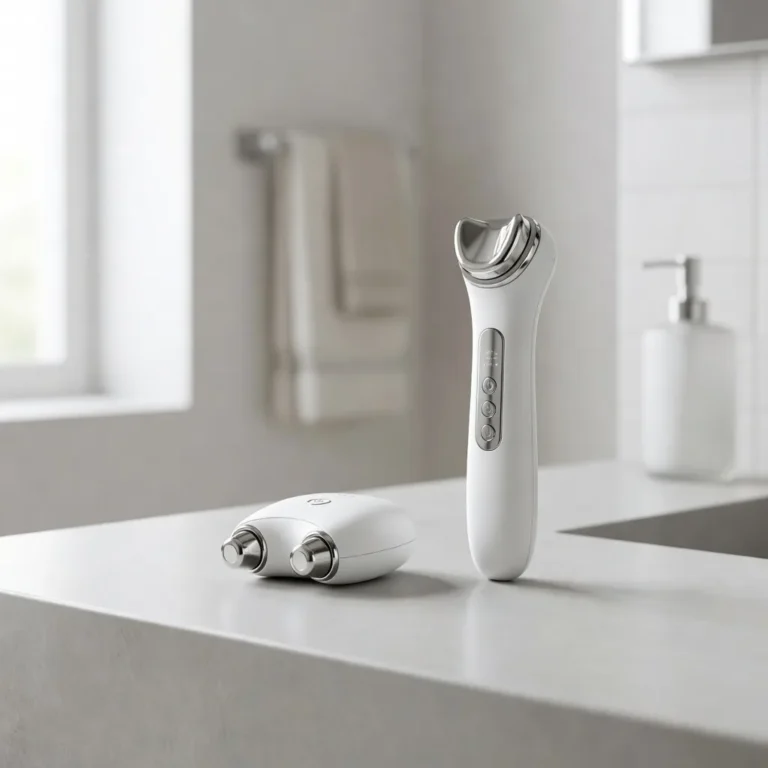
Recommended Products to Support Deep-Cleansing Results
Straight Answers
- Pores have no muscle tissue — they don’t physically “open” or “close.” What steam actually does is soften the sebum and dead-skin plugs inside a follicle, making them easier to extract.
- “Deep cleansing” is real in the sense that steam plus manual extraction together remove material sitting deeper in the follicle than a surface cleanse alone reaches, but the phrase “opens pores” is technically inaccurate marketing shorthand.
- A 2016 randomized controlled trial found biweekly professional extraction outperformed oral antibiotics for moderate acne at 6 weeks — but that trial used clinical, dermatology-office extraction, not spa-style facials specifically.
- Steam and aggressive extraction are contraindicated for rosacea, broken capillaries, and active inflamed acne.
What’s Ahead
- What “Deep Cleansing” Is Actually Claiming
- The Real Step-by-Step Mechanism
- Do Pores Actually Open and Close?
- What Steam’s Real Mechanism Is
- What Extraction Actually Removes
- Reaching Deeper, or Just Marketing Language?
- What Clinical Evidence Says About Extraction
- Deep-Cleansing Facial vs. Basic Facial
- Who Should Approach This Carefully
- Skin Condition and Suitability
- Do This, Not That
- Preparing for a Deep-Cleansing Facial
- What This Article Can’t Tell You
- Frequently Asked Questions
What “Deep Cleansing” Is Actually Claiming
A “deep cleansing facial” is marketed as reaching further into the skin than a basic facial or a standard home cleansing routine. That’s partly true and partly marketing shorthand, and this guide separates the two. The short version: the difference is mostly about which steps are included (steam plus manual extraction, layered onto a longer exfoliation step) rather than some fundamentally different depth of penetration into the skin.
The Real Step-by-Step Mechanism
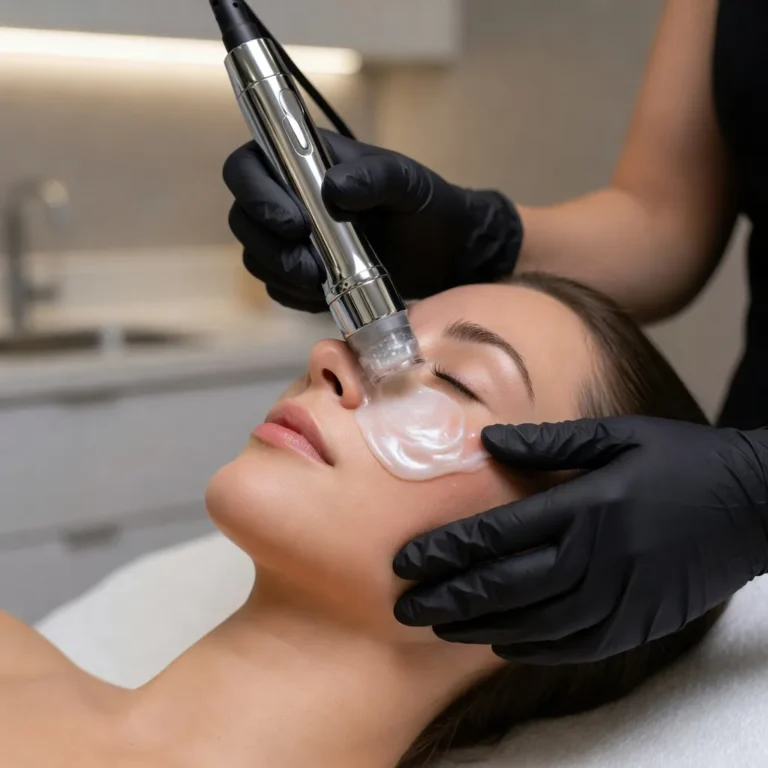
A typical deep-cleansing facial follows this sequence: a double cleanse (an oil-based cleanser followed by a water-based one, to remove both oil-soluble and water-soluble debris), exfoliation (chemical, mechanical, or both, to loosen the top layer of dead skin cells), steam application, manual extraction of comedones with fingers or metal tools, a calming or hydrating mask, and finally moisturizer and SPF. Each step has a distinct, real mechanical purpose; none of them “detoxifies” or works through some mysterious deep-tissue mechanism beyond what’s described here.
Do Pores Actually Open and Close?
No, and this is worth stating plainly because it undercuts a lot of facial marketing language. Pores have no muscle tissue, so they cannot physically open or close the way a valve does. What makes a pore look larger is a buildup of dead skin, dirt, and oil stretching it out from the inside, not a literal opening. When people describe steam as “opening pores,” what’s actually happening is that the heat and humidity soften the material clogging the follicle, making it easier to extract — the pore itself isn’t changing shape through any muscular action.
What Steam’s Real Mechanism Is
Steam’s genuine, mechanistic role is to soften keratin and sebum plugs sitting inside the follicle and to increase local hydration and blood flow, which together make comedones easier to physically extract with less pressure. Steam also temporarily increases skin permeability, which can improve how well a subsequently applied product absorbs. This is real and useful as preparation for extraction and product application — it is not, on its own, an independent “deep cleaning” mechanism separate from the extraction and product-application steps that follow it.
What Extraction Actually Removes
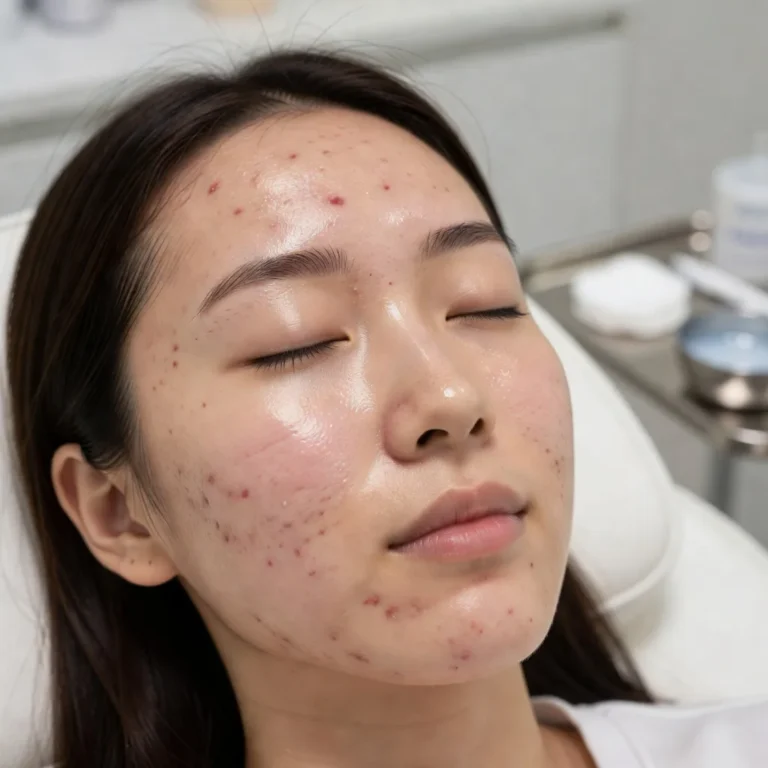
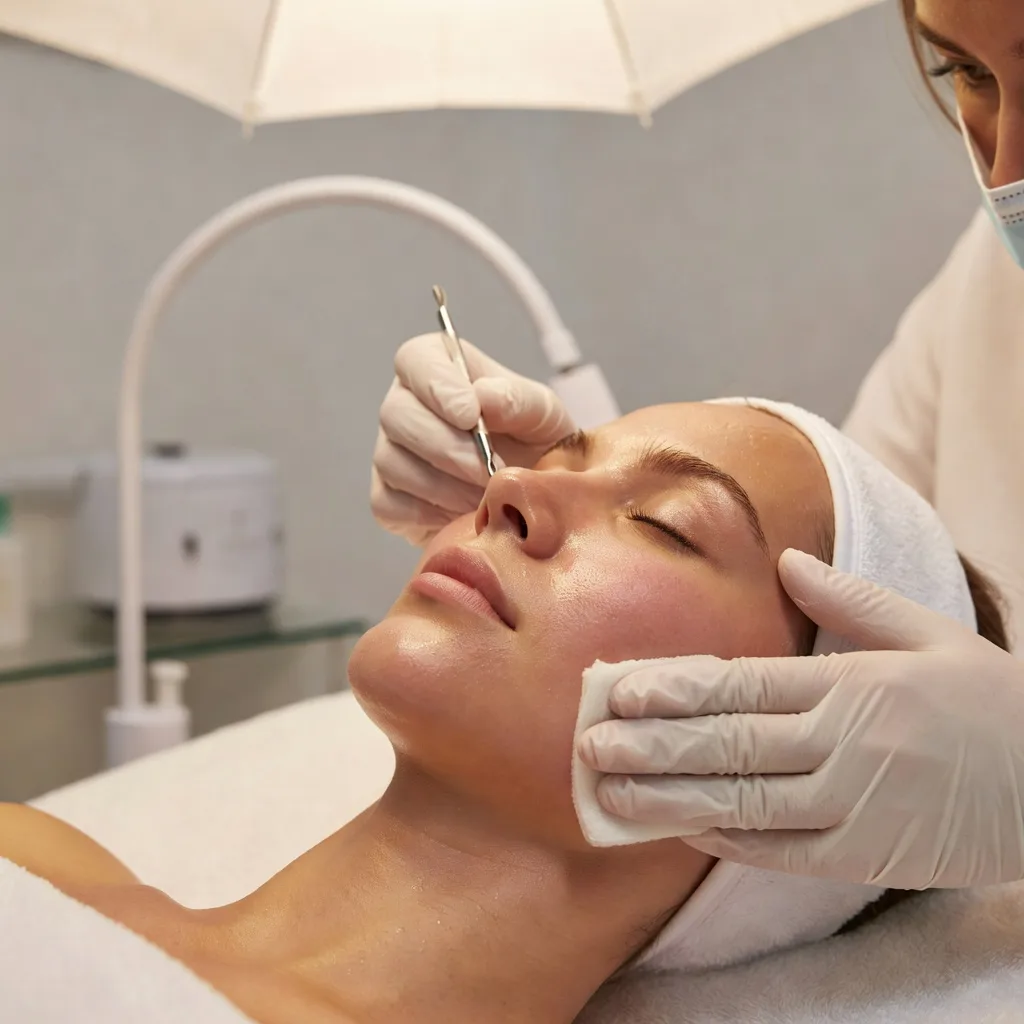
Manual extraction physically removes the softened sebum and keratin plug from inside an open comedone (a blackhead) using gentle, even pressure, typically with fingers wrapped in gauze or a metal extraction tool. This is a genuinely mechanical process: it removes what’s already sitting in the follicle opening, rather than reaching into deeper skin structures. Closed comedones (whiteheads) and inflammatory lesions (papules, pustules, cysts) require different handling and are generally not appropriate for the same extraction technique used on open comedones. A closed comedone sits under a thin layer of unbroken skin, so an esthetician trained in proper technique will typically nick it open with a fine lancet before applying any pressure, rather than pressing directly on intact skin, which is why this step is usually reserved for licensed professionals rather than attempted at home with a drugstore extraction tool.
Reaching Deeper, or Just Marketing Language?
Here’s the honest middle ground: “deep cleansing” is real in the sense that steam-softened extraction removes material sitting further down in the follicle than a surface-level cleanse with a washcloth ever could reach. In that specific, narrow sense, the treatment does go “deeper” than a basic cleanse. But the common marketing phrase “opens your pores for a deep clean” overstates the mechanism by implying pores are structures that mechanically dilate, which they aren’t (see above). The genuine deep-cleaning effect comes from the combination of softening plus physical extraction, not from any pore-opening step on its own.
What Clinical Evidence Says About Extraction
The strongest relevant clinical evidence isn’t from spa research at all — it comes from a 2016 randomized controlled trial published in a dermatology journal, conducted in a clinical (not spa) setting. Researchers compared biweekly professional lesion extraction plus topical treatment against oral doxycycline plus the same topical treatment in 140 patients with moderate acne, with 128 completing the study. At six weeks, the extraction group showed significantly greater improvement than the antibiotic group, with fewer adverse events, and a measurable reduction in a biological marker linked to acne-lesion inflammation. This is genuine evidence that professional, correctly performed extraction can meaningfully clear comedones. The important caveat: this trial used trained clinical staff performing extraction as an adjunct to standard topical acne treatment in a medical setting, not spa-style estheticians performing a standalone deep-cleansing facial — there is no dedicated research measuring comedone-clearance specifically from commercial spa deep-cleansing facials, which is a genuine evidence gap rather than a disproof of their effectiveness.
Deep-Cleansing Facial vs. Basic Facial
| Feature | Basic facial | Deep-cleansing facial |
|---|---|---|
| Steam step | Often brief or skipped | Included, longer dwell time |
| Manual extraction | Often not included | Included as a core step |
| Typical duration | ~30 minutes | 75–90 minutes |
| Best suited for | General maintenance, minimal congestion | Visible congestion, blackheads, clogged pores |
Who Should Approach This Carefully
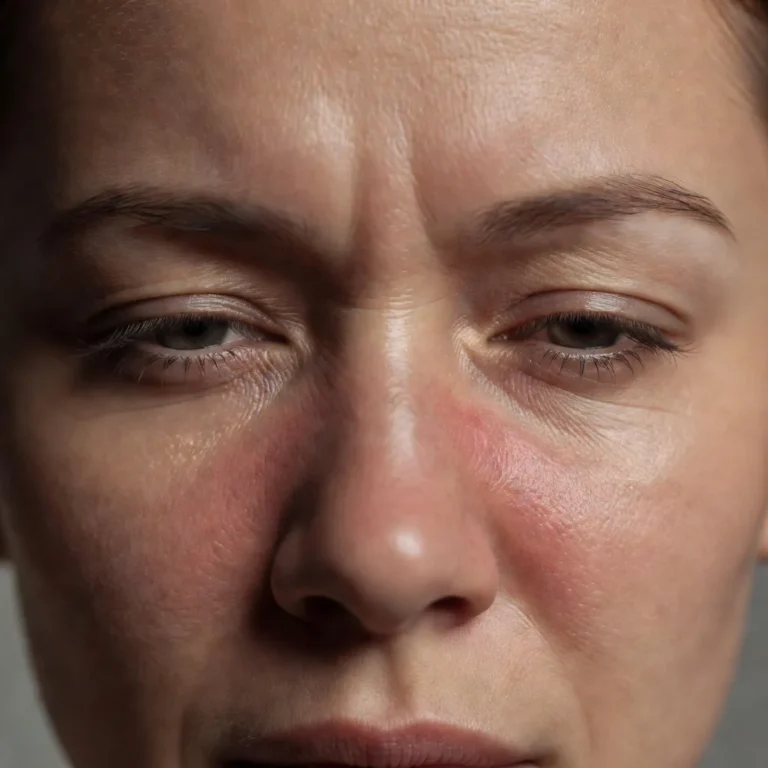
Steam and manual extraction are genuinely contraindicated, or at minimum need real modification, for several skin conditions. Rosacea-prone skin can flare from heat and mechanical manipulation. Skin with visible broken capillaries can worsen with steam-driven vasodilation and pressure. Active, inflamed acne (papules, pustules, cysts, as opposed to plain open comedones) carries real risk of the extraction process spreading inflammatory content into surrounding tissue and worsening the lesion. Very sensitive or eczema-prone skin can react to the combination of heat, friction, and product exposure.
Skin Condition and Suitability
| Skin condition | Suitability for deep-cleansing facial |
|---|---|
| Congested skin, open comedones | Generally well suited |
| Rosacea | Needs significant modification or avoidance |
| Active inflamed acne (papules/pustules/cysts) | Extraction on these lesions specifically should be avoided |
| Very sensitive or eczema-prone skin | Approach cautiously, discuss with provider first |
Do This, Not That
Do
- Disclose rosacea, active inflamed acne, or sensitive-skin reactivity before your appointment.
- Understand that steam is prep work, not the cleaning step itself.
- Expect real (if temporary) removal of surface congestion, not “detoxification.”
Don’t
- Don’t assume “opens pores” is a literal physiological claim — pores have no muscle to open or close.
- Don’t book a deep-cleansing facial with active inflamed lesions without discussing modification first.
- Don’t expect a single session to be a substitute for an evidence-based acne treatment plan.
Preparing for a Deep-Cleansing Facial
Disclose your skin history
Mention rosacea, active breakouts, recent procedures, and any known sensitivities before the appointment.
Skip aggressive actives beforehand
Avoid starting a new retinoid or strong exfoliant in the days right before your appointment.
Arrive with clean skin
Avoid heavy makeup right before your visit so your esthetician can assess your skin accurately.
Ask what will be modified for your skin type
A responsible provider will adjust steam intensity and extraction approach based on your disclosed history.
Plan for temporary redness afterward
Avoid scheduling right before an event, since some redness is a normal, expected part of the extraction process.
What This Article Can’t Tell You
This guide can’t tell you exactly how effective a deep-cleansing facial will be for your specific skin, because the strongest clinical evidence on extraction comes from a medical, not spa, setting, and there’s a genuine research gap on commercial spa-style deep-cleansing facials specifically. What it can tell you honestly is the real mechanism behind each step, so you can evaluate marketing claims like “opens pores” and “deep cleans” against what’s actually happening physiologically.
Frequently Asked Questions
What does a deep cleansing facial actually do?
It combines steam (to soften sebum and dead skin inside follicles), manual extraction (to physically remove that softened material), and a longer exfoliation step, going deeper than a basic surface cleanse.
Does steam really open your pores?
Not literally. Pores have no muscle tissue and cannot physically open or close. Steam softens the debris inside the follicle, which is what actually makes extraction easier.
Is there clinical evidence that facial extraction works?
A 2016 randomized controlled trial found professional extraction outperformed oral antibiotics for moderate acne at 6 weeks, though that trial used clinical, dermatology-office extraction rather than spa-style facials.
Who should avoid a deep-cleansing facial?
People with rosacea, active inflamed acne (not just comedones), or very sensitive/eczema-prone skin should discuss modifications with their provider before booking.
Is “deep cleansing” just a marketing term?
Partly. The combination of steam and extraction does remove material from deeper in the follicle than a surface cleanse, but phrases like “opens pores” overstate the underlying mechanism.
How long does a deep-cleansing facial take?
Typically 75 to 90 minutes, longer than a basic facial’s roughly 30 minutes, because of the added steam and extraction steps.
Can a deep-cleansing facial treat acne on its own?
It isn’t validated as a primary acne treatment. The available clinical evidence involves extraction used as an adjunct to standard topical acne treatment, not as a standalone replacement.
Will my pores look smaller after a deep-cleansing facial?
They may look temporarily less noticeable once congestion is removed, but this is a visibility change from decongestion, not a permanent change in pore structure.
Is redness after a deep-cleansing facial normal?
Yes, mild temporary redness after extraction is common and expected, and it typically settles within a day or so.
What’s the real difference between a basic and deep-cleansing facial?
The main differences are the inclusion of a longer steam step and manual extraction, along with a longer overall appointment time — not a fundamentally different technology.