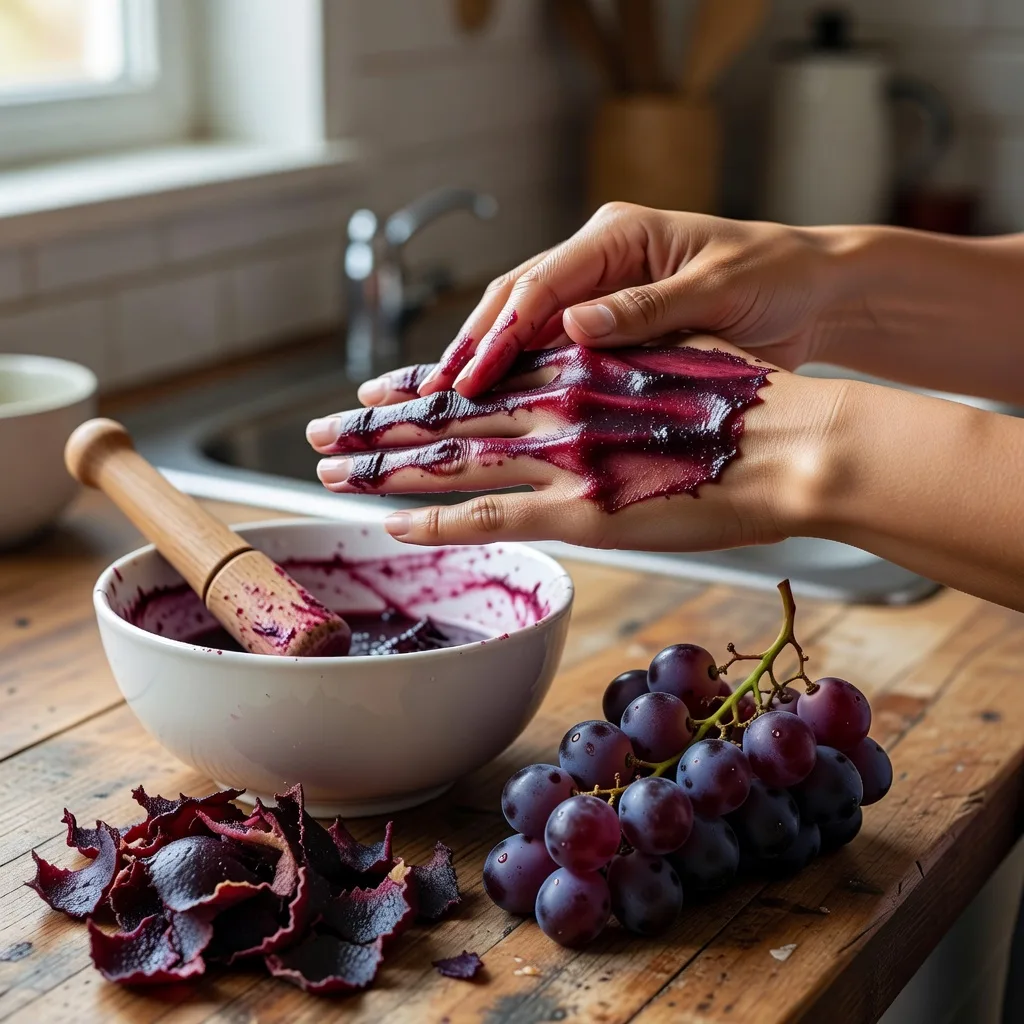
Grape Peel Treatment: What It Really Does
A grape peel treatment sounds like a spa novelty, but it’s built on two genuinely real ingredients, a gentle exfoliating acid and a separate antioxidant, each with its own distinct evidence behind it.
Tartaric acid, the peel’s exfoliating component, is a real alpha-hydroxy acid naturally abundant in grapes, working through the same corneocyte-loosening mechanism as other AHAs, though with roughly double the molecular weight of glycolic acid. That size difference generally means gentler, slower exfoliation with less irritation.
Grapeseed extract, the other half of the treatment, has genuine but narrow evidence for pre-treatment photoprotection against UV damage, not for reversing existing aging or acting as an exfoliant itself.
This guide covers what each ingredient actually does, how a grape peel compares to glycolic and lactic acid, and the patch test worth running before your first application.
Recommended Products for Gentle Exfoliation
Key Takeaways
- A grape peel treatment combines two distinct ingredients that get marketed together: tartaric acid, a genuine AHA, and grapeseed extract, a separate antioxidant.
- Tartaric acid’s molecular weight is roughly double that of glycolic acid, which generally means slower penetration, gentler exfoliation, and less stinging, but also less potency.
- Tartaric acid rides on the well-studied general AHA mechanism, but a 2024 review found it has minimal dedicated clinical evidence of its own.
- Grapeseed extract’s real evidence is for photoprotection, reducing UV-induced sunburn cells and damage markers when applied before sun exposure, not for reversing existing aging or acting as an exfoliant.
- A grape peel is best understood as a gentler, less-studied AHA option with a genuine but narrow antioxidant boost, not a substitute for medium-depth resurfacing.
- Standard patch testing applies here just as it does for any new acid-based product, there’s nothing unique to grape-derived acids that changes this precaution.
Table of Contents
The Two Ingredients Behind a Grape Peel
A grape peel treatment typically combines two genuinely different ingredients marketed as one: tartaric acid, a real alpha-hydroxy acid naturally abundant in grapes, and grapeseed extract, a separate antioxidant compound. Tartaric acid works the way other AHAs do, reducing corneocyte cohesion in the lower stratum corneum to accelerate desquamation.
What sets it apart mechanically is molecular size: tartaric acid’s molecular weight (about 150 g/mol) is roughly double glycolic acid’s (about 76 g/mol). Larger AHA molecules generally penetrate more slowly, which tends to mean gentler, slower exfoliation with less stinging and redness than glycolic acid, at the cost of being less potent.
Note: A comprehensive 2024 review of AHA efficacy found tartaric acid has “minimal clinical evidence” of its own and “shows potential… but further research is needed.” It rides on the general, well-studied AHA mechanism rather than having its own dedicated trial base, worth knowing before assuming it performs identically to better-researched acids.
What Grapeseed Extract Actually Does
Grapeseed extract (rich in proanthocyanidins) is a separate ingredient, not itself an exfoliant, usually formulated alongside the acid. A human study applying topical grapeseed proanthocyanidin extract before UV exposure found it significantly reduced sunburn cells, reduced mutant p53-positive cells (a marker of UV damage), and preserved Langerhans cells compared to untreated skin.
That’s a genuine, but narrow, pre-treatment photoprotective effect, not evidence that it reverses existing sun damage or exfoliates skin. A separate finding that oral grapeseed extract improved melasma is a systemic effect from ingestion, not evidence for a topical grape facial, and shouldn’t be conflated with it.
The Patch Test Before You Try It
Apply a small amount of the grape peel product to your inner forearm and wait 24 to 48 hours:
- No redness, stinging, or irritation: reasonable to proceed to facial use, starting with less frequent application to gauge tolerance.
- Redness or irritation develops: hold off on facial use and consider a gentler acid or professional guidance instead.
This is standard precaution for any new AHA product, not something unique to grape-derived acids specifically.
Grape Peel vs. Glycolic vs. Lactic Acid
| Grape (tartaric) peel | Glycolic acid | Lactic acid | |
|---|---|---|---|
| Molecular weight | ~150 g/mol | ~76 g/mol | ~90 g/mol |
| Penetration speed | Slower | Fastest | Moderate |
| Clinical evidence base | Minimal, dedicated | Extensive | Moderate |
| Tolerability | Generally gentle | Can be irritating at higher % | Well-tolerated |
| Component | Real, evidenced benefit |
|---|---|
| Tartaric acid | Gentle AHA exfoliation, general mechanism |
| Grapeseed extract | Pre-treatment photoprotection against UV damage |
Do This, Not That
Do
- Patch test before your first facial application
- Treat grapeseed extract’s benefit as photoprotective, not exfoliating or age-reversing
- Expect a gentle, mild exfoliation rather than dramatic resurfacing
- Use daily sun protection alongside any AHA treatment
- Consider it a reasonable, gentler alternative if glycolic acid irritates you
Don’t
- Expect a grape peel to match glycolic acid’s clinical evidence or potency
- Assume grapeseed extract reverses existing sun damage
- Confuse oral grapeseed extract research with what a topical facial can do
- Skip the patch test just because it’s marketed as gentle
- Use it as a substitute for medium-depth professional resurfacing
Trying a Grape Peel Safely
Patch test first
Apply to your inner forearm and wait 24-48 hours before any facial use.
Start with infrequent application
Begin with once or twice weekly use to gauge your skin’s tolerance before increasing frequency.
Apply to clean, dry skin
Follow product instructions for contact time, since tartaric acid’s slower penetration still benefits from consistent application.
Tip: Apply grapeseed-extract-containing products before anticipated sun exposure to get the most benefit from their photoprotective properties.
Moisturize afterward
Support your barrier with a moisturizer after any AHA exfoliation step.
Apply sunscreen daily
AHA use generally increases sun sensitivity, making daily broad-spectrum sunscreen essential.
What a Grape Peel Won’t Do
A grape peel won’t deliver the resurfacing power of a medium-depth professional peel, and it won’t reverse existing photodamage the way its antioxidant marketing sometimes implies. It’s best understood as a gentle, well-tolerated exfoliation option with a genuine but narrow photoprotective bonus, similar in spirit to how a professionally administered combination peel occupies a very different tier of intensity and evidence.
When to See a Dermatologist
Warning: Persistent redness, burning, or irritation that doesn’t resolve after stopping use warrants a dermatologist’s evaluation rather than continued at-home experimentation.
If you’re looking for resurfacing results beyond what a gentle AHA can provide, a dermatologist can recommend a treatment matched to your actual goals and skin type.
Frequently Asked Questions
What is a grape peel treatment?
A skincare treatment combining tartaric acid, a gentle AHA naturally found in grapes, with grapeseed extract, an antioxidant, typically marketed together.
Is tartaric acid a real exfoliating acid?
Yes, it’s a genuine alpha-hydroxy acid that works through the same corneocyte-loosening mechanism as other AHAs, though with less dedicated clinical research than glycolic or lactic acid.
Is a grape peel gentler than a glycolic acid peel?
Generally yes. Tartaric acid’s larger molecular size means slower penetration, which typically translates to gentler, less irritating exfoliation.
Does grapeseed extract reverse sun damage?
No. The evidence supports it as a pre-treatment photoprotective agent, reducing UV damage when applied before sun exposure, not reversing existing damage.
How much clinical evidence supports grape peels specifically?
Tartaric acid has minimal dedicated clinical evidence of its own, per a 2024 review, though it shares the general, well-studied AHA mechanism.
Should I patch test before using a grape peel?
Yes, apply to your inner forearm and wait 24-48 hours, the same standard precaution used for any new acid-based product.
Can a grape peel replace a professional chemical peel?
No. It’s a gentler, milder option, not a substitute for medium-depth or professional resurfacing treatments.
Does eating grapes help with skin pigmentation?
A separate study found oral grapeseed extract improved melasma, but that’s a systemic effect from ingestion, not evidence for what a topical grape facial can achieve.
Does a grape peel increase sun sensitivity?
AHAs generally increase sun sensitivity, so daily sunscreen is recommended alongside any grape-peel or AHA-based routine.
Who should avoid grape peel treatments?
Anyone with active irritation, a positive patch test reaction, or a condition needing more than gentle exfoliation should consult a dermatologist instead.
The Bottom Line
A grape peel treatment combines a genuine, if under-researched, gentle AHA with a separate antioxidant that has real but narrow photoprotective evidence. It’s a reasonable, well-tolerated option for mild exfoliation, not a resurfacing powerhouse or a pigmentation cure.
Patch test first, keep expectations realistic, and pair it with daily sun protection, that combination gets you what a grape peel can genuinely deliver without over-relying on its marketing.