
Does Stress Make Your Skin Darker?
Does stress make your skin darker? It’s a question that comes up constantly, usually alongside a new dark patch that appeared during a genuinely stressful stretch of life, and the honest answer is more nuanced than a simple yes or no.
Stress doesn’t directly deposit pigment into skin. What’s actually documented is that stress hormones slow down skin barrier recovery, making skin more reactive and prone to inflammation. That reactivity is the real, indirect bridge to visible darkening, not a direct cortisol-to-pigment pathway.
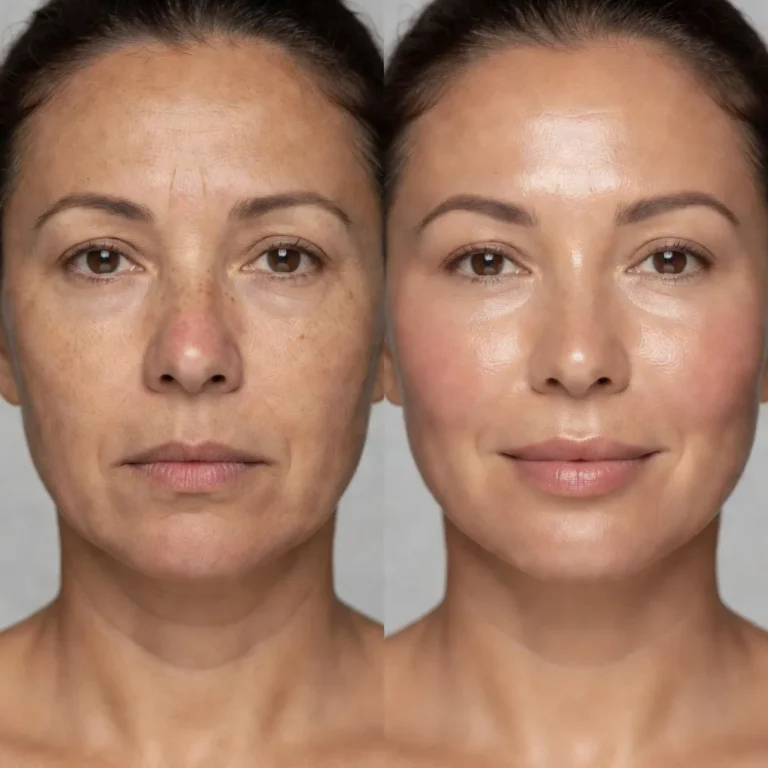
The visible darkening people notice usually traces back to inflammation stress helped trigger, a breakout or flare that heals into a post-inflammatory mark, or in some cases a more theorized connection to melasma, which is primarily hormone-driven.
This guide covers the actual mechanism behind stress and skin reactivity, a 60-second self-check to sort what you’re seeing, and how post-inflammatory hyperpigmentation differs from melasma in both cause and treatment.
Recommended Products for Post-Inflammatory Skin Tone
Key Takeaways
- Stress doesn’t directly deposit pigment in skin; the real, well-documented mechanism is that stress hormones delay skin barrier recovery, making skin more reactive and inflamed.
- A 2001 study in the Journal of Investigative Dermatology found academically stressed women had measurably slower skin barrier repair, correlated with their individual cortisol reactivity.
- Visible darkening usually happens indirectly: stress-driven inflammation worsens acne or eczema, and the healing skin left behind develops post-inflammatory hyperpigmentation.
- Melasma may also be influenced by chronic stress and cortisol, but the evidence there is more theoretical, its best-established drivers remain UV exposure, hormonal fluctuation, and genetics.
- A quick self-check, looking at whether darkening followed a specific breakout, bite, or irritation, helps separate post-inflammatory marks from other patterns.
- Symmetrical patches on the cheeks, forehead, or upper lip that aren’t tied to a prior blemish point more toward melasma than to stress-related post-inflammatory marks.
- Managing the underlying stress response and treating the actual skin condition, not just waiting for darkening to fade, addresses the real cause more directly.
Table of Contents
- What Stress Actually Does to Skin
- The Indirect Path to Visible Darkening
- A 60-Second Self-Check for Your Own Dark Patches
- PIH vs. Melasma vs. Stress-Related Barrier Flares
- Do This, Not That
- Managing Both the Stress Response and the Skin
- What This Doesn’t Explain
- When to See a Dermatologist
- Frequently Asked Questions
- The Bottom Line
What Stress Actually Does to Skin
Stress doesn’t paint pigment directly into skin. What’s actually documented is that stress hormones impair the skin’s ability to repair its own barrier. A frequently cited 2001 study in the Journal of Investigative Dermatology, led by Altemus and colleagues, measured skin barrier recovery in women under real academic exam stress and found their barrier repaired measurably more slowly than in less-stressed peers, an effect that correlated with each woman’s individual cortisol stress-reactivity.
A slower-repairing barrier means skin that’s more reactive, more prone to inflammation, and slower to bounce back from irritation, exactly the conditions under which visible discoloration tends to form.
The Indirect Path to Visible Darkening
There are two documented and theorized routes from stress to something you’d actually notice in the mirror:
- Post-inflammatory hyperpigmentation (PIH): elevated cortisol and stress-related inflammatory signaling can trigger or worsen acne and eczema flares. As those lesions heal, the skin often leaves behind a darker mark, the pigmentation isn’t from stress itself, it’s from the inflammation stress helped cause.
- Melasma: some literature suggests chronic stress and elevated cortisol could potentially influence melanocyte activity, partly through melanocyte-stimulating hormone-related pathways. This is genuinely more theoretical language, melasma is hormonally sensitive and its best-established triggers are UV exposure, hormonal shifts like pregnancy or birth control, and genetics, with stress positioned as a plausible secondary factor rather than a primary cause.
Note: The direct pathway from cortisol to melanocyte to visible pigment hasn’t been definitively mapped in humans. Treat “stress causes dark patches” as a real but indirect and partial explanation, not a complete one.
A 60-Second Self-Check for Your Own Dark Patches
Look at the dark area under good lighting and ask:
- Did it appear after a breakout, bite, rash, or other visible irritation at that exact spot? That pattern is consistent with post-inflammatory hyperpigmentation, not stress darkening the skin directly.
- Is it symmetrical, on both cheeks, the forehead, or above the upper lip, with no prior blemish there? That pattern is more consistent with melasma, which is hormonally driven.
This doesn’t diagnose anything on its own, but it points you toward the right category of cause, and the right category of treatment, before you assume “stress” is the whole story.
PIH vs. Melasma vs. Stress-Related Barrier Flares
| Post-inflammatory hyperpigmentation | Melasma | Barrier-related flare | |
|---|---|---|---|
| Pattern | Follows a specific blemish or irritation | Symmetrical patches, cheeks/forehead/lip | General reactivity, redness, sensitivity |
| Main driver | Inflammation from acne, eczema, injury | UV, hormones, genetics; stress theorized as secondary | Cortisol-slowed barrier repair |
| Stress’s role | Indirect, via worsening the original flare | Theorized, less proven | Direct and well-documented |
| Approach | Best for |
|---|---|
| Treating the underlying acne or eczema | Preventing new PIH from forming |
| Sun protection + hormonal-trigger review | Melasma management |
| Stress-management + gentle barrier-support skincare | General reactive, slow-to-heal skin |
Do This, Not That
Do
- Check whether darkening followed a specific blemish or irritation
- Treat the underlying acne or eczema flare, not just the resulting mark
- Use daily sun protection if symmetrical patches suggest melasma
- Support your skin barrier with gentle, consistent skincare during stressful periods
- Bring persistent or worsening patches to a dermatologist
Don’t
- Assume stress is directly painting pigment into your skin
- Skip treating the actual acne or eczema that’s driving the marks
- Expect stress-reduction alone to fade existing dark patches quickly
- Confuse melasma with post-inflammatory hyperpigmentation, they need different approaches
- Over-exfoliate reactive, stressed skin, that can worsen barrier dysfunction
Managing Both the Stress Response and the Skin
Identify the actual pattern
Use the self-check above to sort what you’re seeing into PIH, melasma, or general barrier reactivity.
Treat the root skin issue
Address active acne or eczema directly, since resolving the underlying flare is what stops new marks from forming.
Support the barrier
Use gentle, fragrance-light, barrier-supporting products, especially during high-stress stretches when repair is already slower.
Tip: A simple niacinamide and hyaluronic acid combination is a reasonable barrier-support pairing to lean on during stressful periods.
Apply targeted pigment treatment
Ingredients like azelaic acid or vitamin C can help fade existing discoloration once the underlying flare is under control.
Protect from UV daily
Sun exposure worsens both PIH and melasma, making daily sunscreen one of the highest-value steps regardless of which pattern you have.
Address stress itself
Sleep, activity, and stress-management approaches won’t erase existing marks, but they support the barrier repair that prevents new ones.
What This Doesn’t Explain
This self-check sorts patterns, it doesn’t diagnose a specific skin condition. A dark patch that doesn’t fit either pattern cleanly, that’s changing shape, growing, or asymmetrical in a way that concerns you, needs a professional look rather than a guess based on stress alone. Persistent redness or flushing that seems tied to stress is also worth mentioning if you’re already tracking how skin reacts to touch or massage during stressful periods.
When to See a Dermatologist
Warning: A darkening patch that’s rapidly changing shape, size, or color, or that’s raised, bleeding, or otherwise looks different from a typical pigment mark, needs prompt evaluation by a dermatologist rather than being assumed to be stress-related.
Frequently Asked Questions
Does stress make your skin darker?
Not directly. Stress hormones slow skin barrier recovery, and that reactivity indirectly contributes to inflammation that can leave dark marks behind.
What’s the actual mechanism linking stress and skin?
A 2001 study found stressed individuals had measurably slower skin barrier repair, correlated with their cortisol stress-reactivity.
What is post-inflammatory hyperpigmentation?
A dark mark left behind after skin inflammation, like acne or eczema, heals; it’s the most common indirect way stress-related flares show up as visible darkening.
Can stress cause melasma?
It’s theorized as a possible secondary influence via cortisol and melanocyte activity, but melasma’s best-established causes remain UV exposure, hormones, and genetics.
How can I tell if my dark patch is from stress or something else?
Check whether it followed a specific blemish or irritation, which points to post-inflammatory hyperpigmentation rather than stress acting directly.
How do I tell melasma apart from post-inflammatory hyperpigmentation?
Melasma tends to be symmetrical on the cheeks, forehead, or upper lip without a preceding blemish, while PIH follows a specific spot of inflammation.
Can reducing stress fade dark patches?
Reducing stress supports barrier repair going forward but won’t quickly erase marks that have already formed; targeted treatment is still needed for those.
What skincare helps stress-related skin reactivity?
Gentle, barrier-supporting ingredients like niacinamide and hyaluronic acid, paired with daily sun protection, are a reasonable starting approach.
When should a dark patch be checked by a doctor?
If it’s rapidly changing shape, size, or color, or raised or bleeding, see a dermatologist rather than assuming it’s stress-related.
Is there a real diagnostic test for stress-related skin darkening?
Not a clinical one for home use, but checking whether darkening followed a specific inflammatory event is a useful practical sorting step.
The Bottom Line
Stress doesn’t directly darken skin the way sun exposure does, but it’s not unrelated either. It slows barrier repair and worsens the inflammatory flares, acne, eczema, and possibly melasma, that leave visible marks behind, which makes it a real contributing factor working through indirect paths.
Sorting what you’re actually seeing, a mark that followed a breakout versus a symmetrical patch with no clear trigger, points you toward the right treatment faster than treating “stress” as the diagnosis itself.