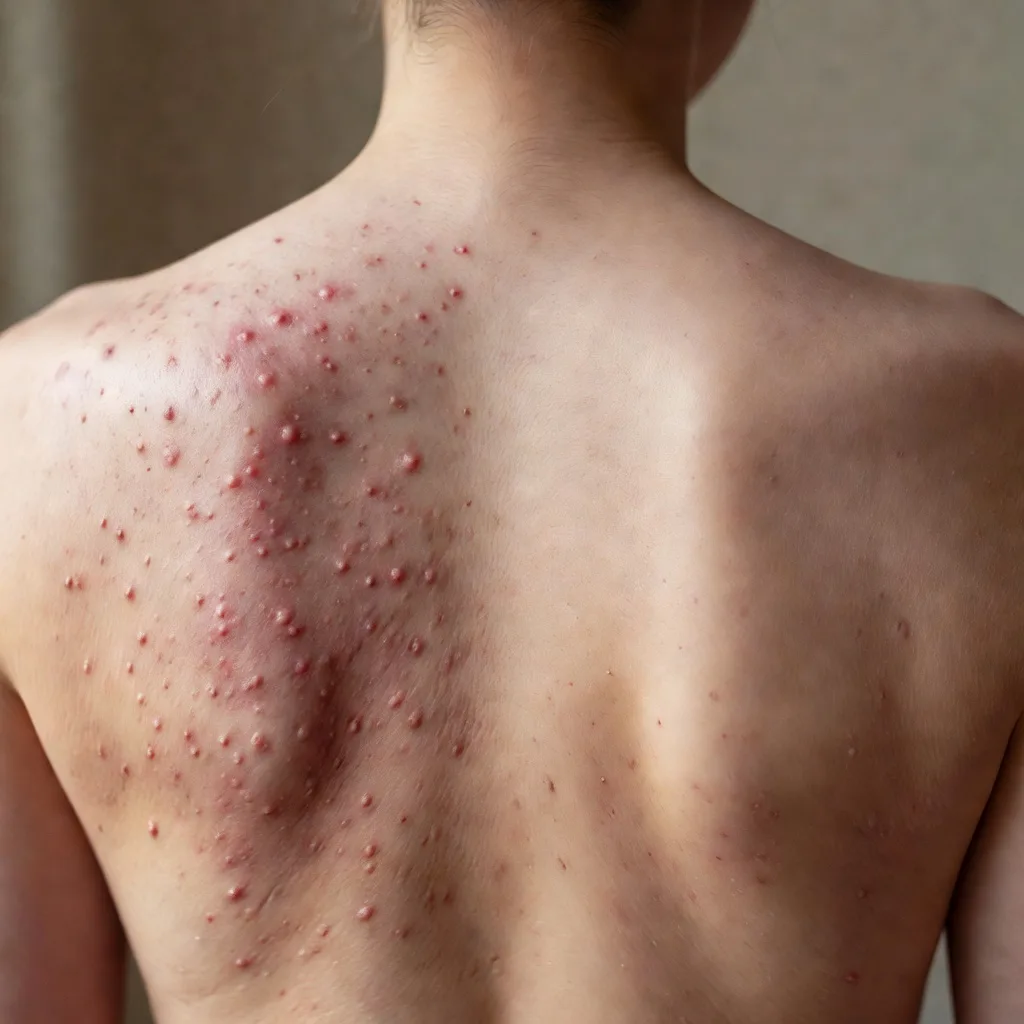
Does Accutane Work for Body Acne?
Does Accutane work for body acne the same way it works on the face?
Yes — isotretinoin is broadly effective for truncal acne through the same systemic mechanisms it uses on the face, since it’s an oral medication rather than a site-specific treatment. But there’s a real gap worth knowing: the AAD’s current guideline doesn’t set a separate truncal-specific dose.
Dermatologists commonly target a higher cumulative dose for back and chest acne based on real anatomical reasoning — thicker skin, larger glands — but that’s clinical practice, not a formal guideline recommendation.
This guide covers real dosing tiers, what changed with iPLEDGE in 2026, and the body-wide side effects worth watching for during treatment.
Find a Board-Certified Dermatologist Near You
Need the Gist?
- Isotretinoin (Accutane and its generics) is broadly effective for truncal (back and chest) acne through the same systemic mechanisms it uses on the face — it’s an oral drug, so it isn’t site-specific.
- The AAD’s 2024 acne vulgaris guideline update, the most current authoritative US source, doesn’t give truncal-acne-specific dosing recommendations distinct from facial acne — a real gap worth stating plainly rather than implying a body-specific protocol exists.
- Dosing is calculated by cumulative total dose (mg per kg over the full course), and higher cumulative-dose regimens are associated with lower relapse rates but more side effects.
- iPLEDGE, the FDA’s mandatory risk program for isotretinoin, was modified in February 2026 to allow pregnancy testing outside a medical setting during treatment, among other changes.
- Body-wide side effects (dryness, retinoid dermatitis, photosensitivity) apply regardless of whether isotretinoin is treating facial or truncal acne, since the drug works systemically.
Page Contents
- Does It Actually Work on Body Acne?
- The Guideline Gap Nobody Mentions
- How Dosing Actually Works
- Why Truncal Acne Often Gets Higher Doses in Practice
- iPLEDGE: What’s Required in 2026
- Body-Wide Side Effects
- Dosing Tiers Compared
- What Monitoring Actually Involves
- What Comes Before Isotretinoin
- What Starting Treatment Actually Looks Like
- Do’s and Don’ts
- A Practical Way to Track Response
- What This Guide Can’t Decide For You
- Frequently Asked Questions
Does It Actually Work on Body Acne?
Isotretinoin — the generic name for the drug originally sold as Accutane — is broadly effective for truncal acne (back and chest) through the same core mechanisms it uses on facial acne: reduced sebum production, reduced comedone formation, an anti-inflammatory effect, and suppression of Cutibacterium acnes. These mechanisms are systemic, since isotretinoin is taken orally, not applied to a specific site — so there’s no inherent reason it would work on the face but not the back or chest. Dermatologist-authored clinical sources consistently affirm that isotretinoin can effectively clear back acne in many people with moderate to severe inflammatory or cystic acne, with a similar general timeline to facial treatment: improvement typically beginning around 6-8 weeks into treatment, with full courses commonly running 4-6 months.
The Guideline Gap Nobody Mentions
This absence is worth stating directly, because truncal acne is extremely common and there’s a real, mechanistically plausible clinical reason to treat it differently — yet the flagship US guideline doesn’t actually differentiate a body-specific protocol. Anyone researching “the right Accutane dose for back acne” won’t find that answer in the authoritative guideline itself, because it doesn’t exist there. What does exist is clinical practice reasoning, described next, which is a genuinely different category of evidence from a guideline-mandated recommendation.
How Dosing Actually Works
Isotretinoin dosing is calculated by cumulative total dose — milligrams per kilogram of body weight over the entire course of treatment — rather than simply by daily dose. Three general tiers appear in the literature:
| Dosing tier | Cumulative total dose | Associated relapse rate | Trade-off |
|---|---|---|---|
| Low-dose | Under 100 mg/kg total | Up to 52% | Better tolerated, higher relapse risk |
| Standard/guideline-recommended | 120-150 mg/kg total | 32-47% | Balanced middle ground |
| High-dose | 220 mg/kg or more | 26.9% (lowest found) | Lowest relapse, more retinoid dermatitis/side effects |
These figures come from the broader isotretinoin dosing literature, not a truncal-specific study — a distinction worth remembering as you read the next section.
Why Truncal Acne Often Gets Higher Doses in Practice
Clinically, dermatologists commonly favor the higher end of the standard cumulative-dose range for truncal acne specifically. The reasoning is mechanistic and reasonable: back and chest skin is thicker, with larger and deeper sebaceous glands than facial skin, which can make the follicles harder to fully treat and more prone to relapse if the course stops too early. But it’s important to be precise about what kind of evidence this is — it’s clinical practice reasoning based on plausible anatomy, not a dedicated head-to-head trial comparing truncal versus facial dosing outcomes. No such trial was found in researching this topic, and that gap should be stated as a gap, not smoothed over into a false certainty about a specific truncal dosing target.
iPLEDGE: What’s Required in 2026
iPLEDGE is the FDA’s mandatory Risk Evaluation and Mitigation Strategy for all isotretinoin prescribing, required because of the drug’s severe teratogenicity (risk of serious birth defects if taken during pregnancy). As of a February 2026 FDA-approved modification to the program:
- Pre-treatment pregnancy testing must still occur in a medical or clinical setting — this requirement is unchanged.
- Patients can now perform required pregnancy tests outside a medical setting, including at home, during treatment and the follow-up period — a real easing of the previous requirement.
- The prior 30-day prescription window for patients who cannot become pregnant was eliminated.
- A 7-day prescription pick-up window now applies, and pharmacies must reverse REMS authorization if a prescription isn’t picked up within that window.
- Mandatory enrollment counseling remains a required part of the program.
These changes take effect 180 days after the February 9, 2026 approval date, with FDA exercising enforcement discretion in the interim. Whether you’re being treated for facial or truncal acne, iPLEDGE applies identically — there’s no separate track for body-acne-specific prescribing.
Body-Wide Side Effects
Isotretinoin’s well-documented dose-dependent mucocutaneous side effects — dry skin, retinoid dermatitis, photosensitivity — apply body-wide, not just to the face. This matters specifically for truncal-acne patients: if you’re on a higher cumulative dose because of the anatomical reasoning described above, you may experience more widespread body dryness and irritation than a facial-only patient on a lower target dose would — a body-surface-area consideration that’s rarely discussed explicitly in patient-facing content, even though it follows directly from the higher-dose-for-truncal-acne practice pattern.
Dosing Tiers Compared
| Factor | Standard-dose course | Higher-dose course (common for truncal acne) |
|---|---|---|
| Relapse rate | 32-47% | As low as 26.9% |
| Mucocutaneous side effects | Moderate | More pronounced, more widespread |
| Monitoring frequency | Standard | Same schedule, closer attention to side-effect severity |
| Guideline basis | AAD 2024 general recommendation | Clinical practice reasoning, not a formal guideline distinction |
What Monitoring Actually Involves
Standard AAD-documented isotretinoin monitoring includes liver function tests and lipid panel monitoring, considered per the 2024 guideline; routine complete blood count monitoring is not required in otherwise healthy patients under that same guideline. This monitoring schedule applies identically regardless of whether the acne being treated is facial or truncal, since the drug’s systemic effects — the reason for monitoring in the first place — don’t change based on where the acne appears.
What Comes Before Isotretinoin
Isotretinoin is typically considered after topical and oral first-line options haven’t adequately controlled moderate-to-severe truncal acne — options like topical retinoids, benzoyl peroxide, and oral antibiotics are usually tried first, consistent with standard acne treatment escalation. If you’re currently managing truncal acne with topical treatments and considering whether isotretinoin is the right next step, that’s a conversation for a dermatologist familiar with your specific treatment history, not something to decide from general information alone.
What Starting Treatment Actually Looks Like
Consultation and diagnosis confirmation
A dermatologist confirms the acne is moderate-to-severe and appropriate for isotretinoin, and reviews your treatment history so far.iPLEDGE enrollment
Mandatory enrollment and counseling happens before any prescription is written, per current FDA requirements.Baseline lab work
Liver function and lipid panel testing establish a baseline before treatment starts.Dose determination
Your prescriber sets a target cumulative dose based on your weight, acne severity, and location (facial vs. truncal reasoning as described above).Ongoing monitoring visits
Regular follow-up appointments track side effects, lab values, and treatment progress across the 4-6 month course.
Do’s and Don’ts
Do
- Ask your prescriber directly if and why they’re targeting a higher cumulative dose for truncal acne.
- Expect body-wide dryness and irritation, not just facial side effects, especially at higher cumulative doses.
- Complete iPLEDGE enrollment and monitoring requirements as scheduled, even though some have eased in 2026.
Don’t
- Assume a specific truncal dosing number is guideline-mandated — the 2024 AAD guideline doesn’t specify one.
- Skip baseline or follow-up lab monitoring, even if you feel fine.
- Assume iPLEDGE requirements are different or lighter for truncal-only acne — they apply identically.
A Practical Way to Track Response
There’s no at-home diagnostic test that tells you whether isotretinoin is working at the right pace for your specific case — that’s a clinical judgment made alongside your prescriber, not something this guide can substitute for. A reasonable practical habit: take consistent, well-lit photos of your back and chest at the same interval each month, and keep a simple log of any new dryness, joint discomfort, or mood changes to discuss at each monitoring visit, since a documented pattern is more useful to your dermatologist than a general impression at your next appointment.
What This Guide Can’t Decide For You
This guide can lay out the real evidence and the real gap in truncal-specific guideline dosing honestly, but it can’t tell you whether isotretinoin is the right choice for your specific case, what dose is appropriate for your body weight and acne severity, or how to manage your specific side-effect risk profile. Isotretinoin is a serious systemic medication with real risks, including its teratogenicity, and decisions about it belong with a licensed prescriber who knows your full medical history.
Frequently Asked Questions
Does Accutane work for body acne?
Yes, isotretinoin is broadly effective for truncal (back and chest) acne through the same systemic mechanisms it uses on the face, since it’s an oral medication rather than a site-specific topical treatment.
Is the dosing for body acne different from facial acne?
The AAD’s 2024 acne vulgaris guideline doesn’t provide separate truncal-specific dosing recommendations — dermatologists often target higher cumulative doses for truncal acne based on anatomical reasoning (thicker skin, larger glands), but this is clinical practice reasoning, not a formal guideline distinction.
How is isotretinoin dosing actually calculated?
By cumulative total dose in milligrams per kilogram of body weight over the entire treatment course, not simply by daily dose, with standard regimens targeting 120-150 mg/kg total.
Why might my dermatologist recommend a higher dose for back acne?
Back and chest skin is thicker with larger, deeper sebaceous glands than facial skin, which can make follicles harder to treat fully and more prone to relapse if treatment stops too early — a mechanistic rationale, not a guideline requirement.
What is iPLEDGE and does it apply to body acne treatment?
iPLEDGE is the FDA’s mandatory risk management program for isotretinoin due to its teratogenicity risk, and it applies identically whether isotretinoin is treating facial or truncal acne.
What changed with iPLEDGE in 2026?
A February 2026 FDA-approved modification allows pregnancy testing outside a medical setting during treatment and follow-up, eliminates the prior 30-day prescription window for patients who cannot become pregnant, and introduces a 7-day prescription pick-up window.
Are the side effects of isotretinoin different for truncal acne treatment?
The side effects (dryness, retinoid dermatitis, photosensitivity) are body-wide regardless of treatment location, but truncal-acne patients on higher cumulative doses may experience more widespread effects than facial-only patients on lower target doses.
What monitoring is required during isotretinoin treatment?
Liver function tests and lipid panel monitoring are part of standard AAD-documented monitoring; routine complete blood count testing isn’t required in otherwise healthy patients, and this schedule doesn’t change based on facial versus truncal treatment.
What’s usually tried before isotretinoin for body acne?
Topical retinoids, benzoyl peroxide, and oral antibiotics are typically tried first for moderate-to-severe truncal acne, with isotretinoin considered when those options haven’t adequately controlled it.
How long does a course of isotretinoin for body acne typically last?
Full courses commonly run 4-6 months, with improvement typically beginning around 6-8 weeks into treatment — a similar general timeline to facial acne treatment.